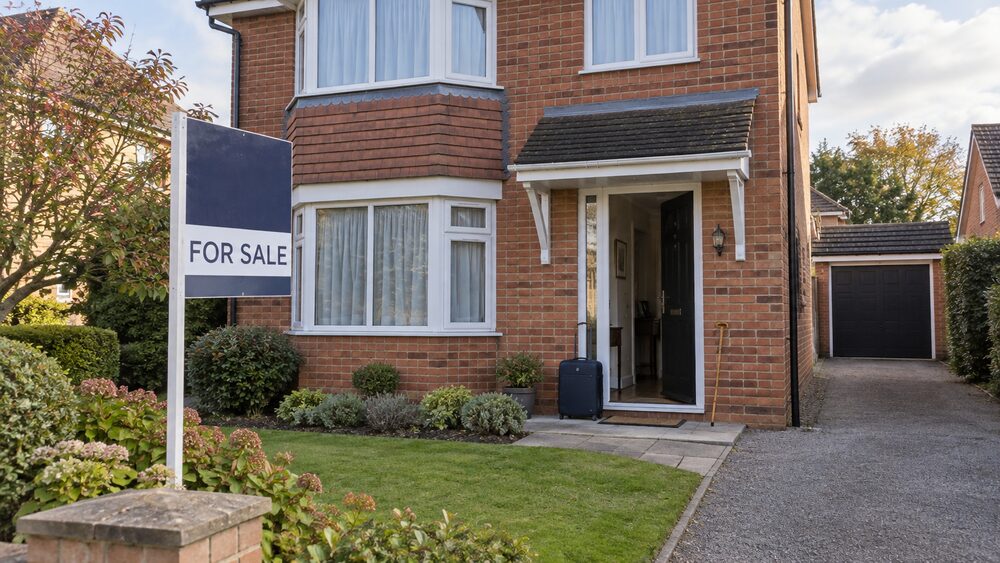
If you are moving permanently into a care home, the value of your main home is not counted in the council's financial assessment for the first 12 weeks of your stay. This is the 12-week property disregard. It exists so that nobody has to sell a home in a hurry to pay for care, and it gives you time to decide what to do with the property.1
If you are moving permanently into a care home, the value of your main home is not counted in the council's financial assessment for the first 12 weeks of your stay. This is the 12-week property disregard. It exists so that nobody has to sell a home in a hurry to pay for care, and it gives you time to decide what to do with the property.1
The disregard applies in England. You must be moving permanently into a nursing or care home, and the property must have been your main residence.1 During those 12 weeks the council works out what you pay from your other capital and your income, not from the value of the house.2
After week 12 the home can be counted, and that is when the question of selling or arranging a deferred payment agreement comes up. There are also circumstances in which a home is ignored for much longer than 12 weeks, or ignored entirely, and it is worth knowing which of them apply to you before you make any decisions.3
What the 12-week property disregard is and who it helps
The disregard is a rule in the council's means test for care home fees. When someone moves into a care home permanently, the council looks at their capital, including property, to decide how much they should pay towards their fees. The 12-week property disregard removes the value of the main home from that calculation for the first 12 weeks.1
It helps people who own their home but do not have large savings. Without the disregard, the value of the house could push someone straight over the capital threshold on the day they move in, making them a self-funder immediately and leaving them to sell the property quickly to release the money. The 12 weeks gives breathing space.2
The disregard is not automatic in the sense that nobody checks. The council still carries out a financial assessment, and it still needs to know what other capital and income you have. What the disregard does is take one specific asset, the home, out of that assessment for a set period.1
It is also not the only protection for a home. If your partner remains living in the property, the home is disregarded in the financial assessment, and that disregard is not limited to 12 weeks. The same applies if a relative over 60 or a relative with a disability still lives there.1
When the disregard applies: moving permanently into a care home
Two conditions have to be met. You must be moving permanently into a nursing or care home, and the property must have been your main residence.1
The word permanent matters. A temporary stay, or a period of respite care, is not the same thing, and the disregard is written for people whose move is intended to be long term. If there is a realistic prospect of returning home, that changes how the council should treat the property.1
The property also has to have been your main home. A second home, a buy-to-let or a property you owned but did not live in does not attract the disregard in the same way.1
The 12 weeks runs from the point you permanently move into the care home. It is not 12 weeks from the date you first enquired about care, or from the date of a needs assessment.1
How the council works out what you pay during the 12 weeks
The disregard removes the home from the calculation. It does not remove everything else. During the 12 weeks the council still assesses your other capital and your income, and if those are enough to pay something towards your care, you will be asked to pay it.2
If your capital is below the upper threshold and your income is not enough to cover all your fees, the council may meet the shortfall. That is the situation the disregard is designed for: someone whose main asset is the house, but whose savings and income would not otherwise make them a self-funder.3
Some types of capital are disregarded altogether in means-tested assessments. These include business assets, rights in pension schemes, life insurance and funeral plans, amounts earmarked for special purposes, benefit arrears payments for up to 12 months, child maintenance, recent grants for a disabled child or person, and disability-related benefits such as Disability Living Allowance, Personal Independence Payment, Adult Disability Payment and Attendance Allowance.4
If you are in the 12-week disregard period and you want a more expensive care home than the council would normally fund, you may be allowed to pay a top-up fee yourself. That is one of the situations in which paying your own top-up is permitted.5
What happens after week 12: selling the home or a deferred payment agreement
Once the 12 weeks end, the value of the home can be brought into the financial assessment. At that point there are broadly two routes: sell the property, or arrange a deferred payment agreement with the council so that the fees are met from the value of the home later.3
A deferred payment agreement is an arrangement with the council under which it pays your care fees and recovers the money from your estate or from the sale of your home at a later date. It is designed for people whose main asset is their home and who do not want to sell immediately.3
If you do decide to sell, the timing matters for other reasons. If you sell your house, you have 26 weeks to buy another before the Department for Work and Pensions will consider money from the sale as savings for benefit purposes.7 There are also rules that allow the value of a property to be ignored for up to 26 weeks if you have acquired it to live in, you are trying to sell it, you are carrying out essential repairs or alterations, or you are taking legal advice about living there.8
If you are selling a property that was your only or main residence, there may be tax consequences to check, and if you are buying another home there are rules about additional dwelling supplement in Scotland that allow repayment in certain circumstances, including where you sell your previous property within 36 months of buying the new one.10
When your home is ignored for longer than 12 weeks
The 12-week disregard is the standard period, but there are several situations in which a home is ignored for longer, or ignored entirely.
If your partner remains living in the property, the home is disregarded in the financial assessment. That is not a 12-week rule; it continues while your partner lives there.1 The same applies if a relative over 60 or a relative with a disability still lives in the house.3
If you do not live in your home right now but intend to move back in, the home can be ignored for benefit purposes. That covers temporary absence such as a period in residential care or a stay in a domestic abuse refuge, where the intention is to return.12
There are also specific periods for particular situations. The value of a property can be ignored for up to 26 weeks if you have acquired it to live in, you are trying to sell it, you are carrying out essential repairs or alterations, or you are taking legal advice about living there.8 Where a property is for sale, it may be disregarded for 26 weeks from the date it was put on the market, or such longer period as is reasonable.13 Where a property has been purchased to live in as a main home, the value can be ignored for 26 weeks from the date of purchase, or such longer period as is reasonable to obtain possession and begin living in it.13
Insurance money paid for damage to or loss of personal possessions is ignored if it is used to repair or replace those possessions, for six months or longer if reasonable.14
Does the disregard apply if my spouse or partner still lives in the home?
Yes, and in that case the protection is stronger than the 12-week disregard. If you move into a care home permanently and your partner remains living in the property, the home is disregarded in the financial assessment.1
The same principle covers other family members. If a relative over 60 or a relative with a disability still lives in the house, the home is disregarded.3
This matters because it changes the whole calculation. With the 12-week disregard, the home comes back into the assessment after 12 weeks. With a partner or eligible relative still living there, the home does not come back into the assessment while those circumstances continue.1
If you are separated from a former partner and they are not a lone parent, the position is different: the former home is ignored for six months from the date you stopped living there.14
Is the 12-week property disregard the same in Scotland, Wales and Northern Ireland?
Care is devolved, so the charging rules are set separately in each nation. The 12-week property disregard as described on this page applies in England.1
In Scotland, Wales and Northern Ireland the care charging systems are different, and the way a home is treated in the financial assessment is set by the rules in each nation. If you live in one of those nations, you need the guidance that applies where you are.15
There are some cross-border rules worth knowing about. Disability and carer benefits paid by the Department for Work and Pensions or the Department for Communities in Northern Ireland should continue to be paid for 13 weeks from the date of a move to Scotland.17 Benefits under special rules, for people expected to live for less than 12 months, usually apply in England, Wales and Northern Ireland.18
Housing Benefit has its own absence rules. You may be able to get Housing Benefit for up to 52 weeks if you live in Northern Ireland but not in your home, in situations including being admitted to hospital, getting medical treatment, being afraid to return home, being on remand or in a bail hostel, having a dependent getting medical treatment, or being in residential accommodation with a plan to return.19
Getting help and challenging a council decision
If you disagree with the council's decision about your care fees or the treatment of your home, there is a route to challenge it.
Start with the council. Ask for the decision and the reasons in writing, and ask which parts of your capital and income it has counted. If you are not satisfied, the council has its own complaints process. For a council in Wales, the complaint response period is 12 weeks.20
If the council's complaints process does not resolve it, you can take the matter to the Local Government and Social Care Ombudsman. You normally need to contact the ombudsman within 12 months of realising that the council has done something wrong.20
For some decisions there are separate appeal routes. If you disagree with a council tax decision, you can ask your local council to review it, and if you do not hear back within 2 months or disagree with the outcome, you can contact the Valuation Tribunal.21
If you are at risk of losing your home, the council has duties towards you. If you contact the council and you are homeless or in danger of losing your home in the next 56 days, the council may have a duty to help you.22 Where you think you may lose your home within the next 56 days, contacting your local council for help as a homeless person is the route the rules provide.23
Free and impartial help is available. Age UK and Independent Age both publish guidance on paying for care and on top-up fees.1 If you are dealing with debt as well as care costs, StepChange and National Debtline offer free advice, and there are rules on how often you can use solutions such as Breathing Space: you cannot apply again for 12 months.24
Sources24 cited
- Paying for a care home Age UK, 2026-04-09
- 9 things you should know about paying for care Which?, 2024-06-23
- Will I have to sell my home to pay for my care home fees? Independent Age, 2026
- Scottish Welfare Fund statutory guidance Scottish Government, 2025-04
- Top-up fees Age UK, 2026-03-09
- Care home top-up fees Independent Age, 2026-09-26
- How savings affect means-tested benefits Scope, 2026-04-01
- Own other property Entitledto, 2026-09-26
- Savings over 60 Entitledto, 2026-09-26
- Additional Dwelling Supplement Revenue Scotland, 2026
- ADS return and payment amendments Revenue Scotland, 2025-11-19
- Can you get Universal Credit if you own a property Shelter England, 2026-08-24
- Savings Entitledto, 2026-09-26
- Disregarded capital Turn2us, 2026-06-09
- Paying for care in a care home Independent Age, 2026-09-26
- Residential care and nursing homes and benefits nidirect, 2026-08-05
- Supporting clients moving to Scotland from the rest of the UK Social Security Scotland, 2026-01-27
- Money FAQs Macmillan Cancer Support, 2026-04
- Changes in your circumstances Housing Rights, 2026
- Council tax arrears Business Debtline, 2026-09-26
- Help with council tax reduction and discount Scope, 2026-08-11
- Homeless people's rights Shelter Cymru, 2026-08-17
- Rent arrears, secure occupation contracts Business Debtline, 2026-09-26
- After Breathing Space StepChange, 2026-09-25







 MoneyHelperFree, impartial money and pensions guidance, set up by government
 Citizens AdviceFree advice on money, consumer and legal problems in England and Wales
 Turn2usFree benefits calculator and grants search from a charity
 GOV.UKOfficial information on tax, benefits and government services