
If you bought a home with a Help to Buy equity loan in Wales, the scheme's rules do not let you sub-let any part of it. The eligibility conditions say you must "not sub-let any part of the house you are buying through the Scheme", and the equity mortgage terms add that "You are not allowed to sublet your home without our consent."1
If you bought a home with a Help to Buy equity loan in Wales, the scheme's rules do not let you sub-let any part of it. The eligibility conditions say you must "not sub-let any part of the house you are buying through the Scheme", and the equity mortgage terms add that "You are not allowed to sublet your home without our consent."1
That covers the whole house, not just a spare room, and it applies from the day you complete. Consent is only considered in exceptional circumstances, so letting the property out is not a routine option while the equity loan is outstanding. The practical route to renting the home out is to clear the equity loan first, which you can do in part or in full at any time3.
Help to Buy - Wales provides an interest-free loan for the first five years, worth up to 20% of the property value, and applications must be submitted by 31 March 20274. The scheme has been running since 2 January 2014 and had funded 15,043 completions by 30 September 20256.
Subletting is not allowed under Help to Buy - Wales
The prohibition is written into the scheme in two places. The eligibility rules for applicants state that you must "not sub-let any part of the house you are buying through the Scheme"1. The equity mortgage terms in the buyers' guide repeat it from the other direction: "You are not allowed to sublet your home without our consent."2
The wording is broad. It says any part of the house, so a lodger in a spare bedroom, a room let to a student, or the whole property let out while you live elsewhere all fall inside it. The scheme is built around the buyer living in the home, and the equity loan is a share of that home rather than an investment product.
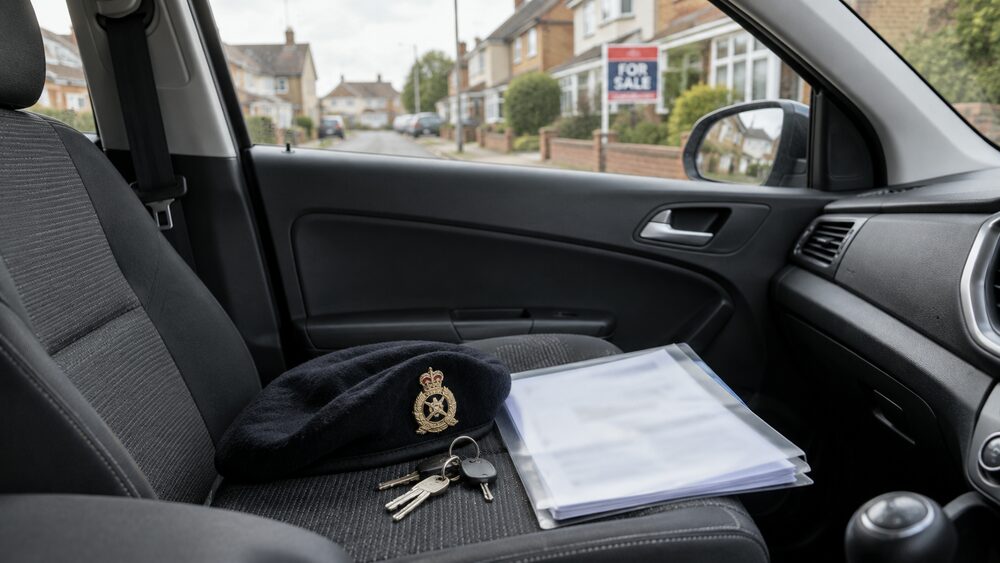
Consent is possible, but the post-completions guide sets out how narrow the door is. It says: "It is our policy to only approve subletting in exceptional circumstances."7 The circumstances listed are an involuntary and temporary relocation by an employer for up to 12 months, a medical condition that prevents you remaining in the property, temporary relocation to care for an ill family member, or an Armed Forces posting away of at least 50 miles or 90 minutes travelling time, up to a maximum of three years with employer evidence7.
Anyone who lets a room or the whole home without consent is in breach of the equity mortgage terms, which is a separate matter from whether the rent covers the mortgage. If a change of circumstances is coming, the time to raise it with Help to Buy Wales Ltd is before the letting starts, not after.
How the equity loan works: up to 20% of a home
Help to Buy - Wales is a shared equity loan scheme for buying a new-build property4. The Welsh Government provides an interest-free loan for the first five years, worth up to 20% of the property value4. Independent analysis of the scheme describes it as "providing a shared equity loan of up to 20% of the purchase price to buyers of new-build homes"9.
The structure matters for subletting because the loan is a percentage of the home's value, not a fixed cash sum. When the loan is repaid, the amount owed tracks the value of the property at that point. That is why the scheme has a direct interest in who occupies the home and how it is used.
The equivalent scheme in England worked differently in scale: Help to Buy: Equity Loan let people borrow up to 20% of the home's purchase price, or 40% in London3. The independent evaluation of that scheme, published in September 2026, covers the English scheme from 2013 to 202310. Wales has its own scheme, its own rules and its own manager, so figures and conditions from England do not carry across.
Wales also runs other home ownership schemes with their own rules. Homebuy - Wales offers an equity loan of between 30% and 50% for those who meet specific criteria11, and Rent to Own - Wales supports the purchase of a home for those who do not have sufficient funds for a mortgage deposit12. Shared Ownership - Wales and Homebuy - Wales both bar sub-letting any part of the home being bought through the scheme13.
Where the rules on second homes and renting apply
The Help to Buy - Wales eligibility rules rule out buying through the scheme while letting another home. An applicant must "not be renting your existing home and buying a 2nd home through the Scheme"1. The scheme is for a home you will occupy, not an addition to a rental portfolio.
That sits alongside the wider tax treatment of second homes and buy-to-let property. In Scotland, the Additional Dwelling Supplement "imposes an amount of tax on transactions involving second homes or buy-to-let properties"15. The legislation setting out the reliefs available under section 25 of the relevant Act is subject to schedule 2A, which deals with additional amounts for transactions relating to second homes16. If you already own property and are buying another, the tax position is a separate question from the scheme rules, and it applies whether or not an equity loan is involved.
The rules differ across the UK. Help to Buy: Equity Loan in England applies to England17, and the guidance on subletting a Help to Buy home also applies to England18. Northern Ireland has a mortgage guarantee scheme rather than an equity loan of this kind19. Scotland has its own shared equity arrangements. Anyone moving between nations, or buying in one and living in another, needs to check the rules of the scheme that applies to the property, not the one they have read about.
For a wider view of how the schemes compare, see First-time buyer schemes in England, Scotland, Wales and Northern Ireland and Shared Ownership, Homebuy and Rent to Own in Wales.
Repaying the equity loan so you can rent the home out
Clearing the equity loan removes the scheme's restriction, because the restriction comes from the equity mortgage rather than from the mortgage lender. The Help to Buy: Equity Loan repayment guide explains that you "can repay it in full, or make part payments from 10% of the current market value of your home, at any time"3. The same guide confirms the loan "can be repaid in part or in full at any time, for example when you sell your home or remortgage"20.
Two features of that process catch people out. First, part payments are calculated on the current market value, so a home that has risen in price costs more to buy back than the original loan amount. Second, the minimum part payment is 10% of that value, which means you cannot chip away at it in small amounts3.
There is a timing advantage to repaying early. Help to Buy - Wales charges no interest for the first five years, and "Pay back your entire loan within the first five years and you'll pay zero interest."4 After that period interest applies to the loan20. Repaying in full inside the window avoids interest altogether, but it requires the money to be available.
The usual ways to raise it are remortgaging or releasing equity. Remortgaging "can improve your situation in two ways: Release equity: This is when you take a lump sum from the value o..."21, and equity release "can be used to help you manage your debt or to repay a mortgage"22. Equity release providers may have restrictions about property type and the process can take longer than raising a standalone equity release mortgage23. A glossary of the terms used in managing and repaying the loan is published by the government24.
Missed payments and arrears: what happens and where to get help
Falling behind on an equity mortgage has consequences that reach past the missed payment itself. Help to Buy - Wales warns that if you are going to miss a payment, "you will need to pay this back when you come to repay your Equity Mortgage"26. The arrears do not disappear; they are settled when the loan is repaid.
The scheme's arrears process has a defined trigger. "A Default Notice will be issued to a customer 180 days after a Equity Mortgage goes into arrears where: there has been n..."8. The full condition is that there has been no engagement or co-operation from the customer, or the customer has not satisfied any arrears management agreements made8. That 180-day window is not a period of safety. It is the point at which the scheme formally escalates, and it is reached faster where a borrower does not respond.
For comparison, the notice period on a standard mortgage arrears position is much shorter. Independent guidance on repossession letters states that "you have 1 month to pay your arrears"27. Personal loan arrears work differently again: "You will be sent a default notice. This gives you a chance to catch up with your missed payments."28
Where a mortgage guarantee scheme applies, "If you're behind with your mortgage payments, the lender may arrange a forbearance agreement with you."19 A forbearance agreement allows you to repay missed payments over time rather than in one go.
Getting advice early changes outcomes. "Getting help and advice can stop mortgage arrears or rent arrears turning into a problem that threatens your home."29 Free, impartial help is available from Shelter Cymru and from the Welsh Government's housing costs guidance26. Missing rent payments leads to falling into arrears and risk of eviction30, and not paying priority debts can mean losing your home through mortgage or rent arrears, facing action by enforcement agents, having gas or electricity supply cut off or accepting an expensive pre-payment meter, or losing belongings on hire purchase31.
Help with rent arrears is limited: "You can only get help with rent arrears if your benefits did not cover your rent when you missed the payments."32 Discretionary Housing Payments are one route where housing benefit or the housing element of Universal Credit does not cover the rent33. Housing Benefit decisions can be challenged by asking the council for a written explanation, asking for a review, or appealing to a tribunal34, and "you can make a complaint if their decision is not reasonable"35.
Who runs the scheme and how to complain
Help to Buy Wales Ltd manages Help to Buy Wales on behalf of the Welsh Government5. The same company collects scheme information on behalf of the Welsh Government6, and it manages the Help to Buy - Wales scheme on behalf of the Welsh Government7. It is the body to contact about consent to sublet, a change in circumstances, arrears or a complaint.
On complaints, the scheme says: "If you feel we have not met these outcomes and have treated, you unfairly then please let us know."36 Further details are on the customer information complaints sheet5. The scheme also publishes a treating customers fairly statement setting out the outcomes it expects to meet36.
If a complaint is not resolved, the escalation route is set out in the scheme's complaints information5. For wider problems when buying a home, see Complaining when buying a home goes wrong.
Sources36 cited
- Help to Buy - Wales: eligibility Welsh Government, 2026
- Help to Buy - Wales buyers' guide, phase 3 extension Welsh Government, 2024
- Help to Buy: Equity Loan repayment guide GOV.UK, 2024
- Buy your dream home with Help to Buy - Wales Welsh Government, 2026
- Help to Buy - Wales: complaints Welsh Government, 2026
- Help to Buy - Wales shared equity loan scheme, July to September 2025 Welsh Government, 2025
- Help to Buy - Wales post-completions guide Welsh Government, 2024
- Help to Buy - Wales: arrears Welsh Government, 2026
- HBF Help to Buy Wales report Home Builders Federation, 2026
- Evaluation of the Help to Buy scheme Ministry of Housing, Communities and Local Government, 2026
- Help to Buy home schemes Welsh Government, 2026
- Rent to Own - Wales Welsh Government, 2026
- Shared Ownership - Wales: eligibility Welsh Government, 2026
- Homebuy - Wales: eligibility Welsh Government, 2026
- Review of Land and Buildings Transaction Tax Scottish Government, 2026
- Land and Buildings Transaction Tax (Scotland) Act 2013, Part 3 legislation.gov.uk, 2026
- Evaluation of the Help to Buy scheme: findings report Ministry of Housing, Communities and Local Government, 2026
- How to sublet your Help to Buy home GOV.UK, 2021
- Help to Buy mortgage guarantee scheme nidirect, 2025
- Paying interest on your Help to Buy equity loan GOV.UK, 2024
- Remortgaging to pay off debt StepChange, 2026
- Releasing equity from your home StepChange, 2026
- Equity release: general questions Equity Release Council, 2026
- Help to Buy: Equity Loan repayment guide GOV.UK, 2024
- Words we use to talk about the Help to Buy equity loan GOV.UK, 2024
- Cost of living Welsh Government, 2026
- Repossession letters Shelter Scotland, 2025
- Personal loan debt StepChange, 2026
- Dealing with debt Shelter Cymru, 2026
- Saving money on private rent StepChange, 2026
- Priority and non-priority debts Shelter Cymru, 2026
- Discretionary Housing Payments Shelter England, 2026
- Apply for Housing Benefit Shelter Scotland, 2025
- Housing Benefit overpayments Turn2us, 2025
- Shared ownership Which?, 2026
- Help to Buy - Wales: treating customers fairly Welsh Government, 2026











 MoneyHelperFree, impartial money and pensions guidance, set up by government
 Citizens AdviceFree advice on money, consumer and legal problems in England and Wales
 ShelterFree housing advice from a charity
 GOV.UKOfficial information on tax, benefits and government services
 Financial Ombudsman ServiceFree, independent help when a complaint about a firm is not put right