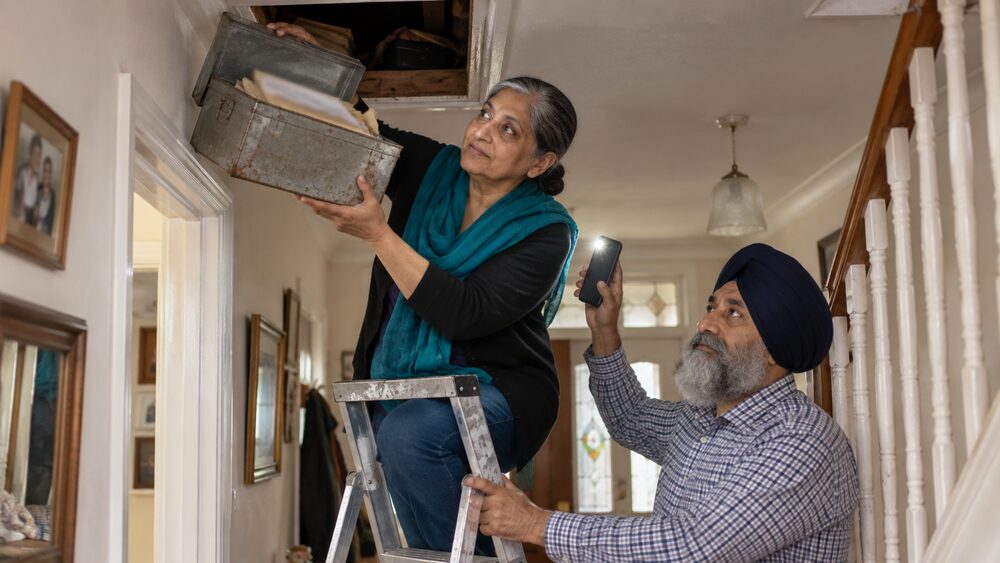
If you cannot find the title deeds to your home, the first thing to establish is whether the property is registered. For registered property in England and Wales, the deeds are usually stored digitally by HM Land Registry, so there is often no physical document to lose1. The Land Register contains more than 27 million titles showing evidence of ownership for more than 90% of the land mass of England and Wales2.
If you cannot find the title deeds to your home, the first thing to establish is whether the property is registered. For registered property in England and Wales, the deeds are usually stored digitally by HM Land Registry, so there is often no physical document to lose1. The Land Register contains more than 27 million titles showing evidence of ownership for more than 90% of the land mass of England and Wales2.
For unregistered property, the position is different. Paper deeds are the proof of ownership, and if you do not have them, your lender could hold them, or they may be with a solicitor1. Unregistered properties may still have physical deeds held by the owner, a solicitor or a lender1.
This page explains what title deeds are, how to check who holds yours, how to check whether your property is registered, when you actually need the deeds, and how the rules differ in Scotland and Northern Ireland.
Unregistered property: paper deeds are the proof of ownership
If your property is unregistered with the Land Registry, there will be paper deeds. If you do not have them, your lender could have them1. Unregistered properties may still have physical deeds held by the owner, a solicitor or a lender1.
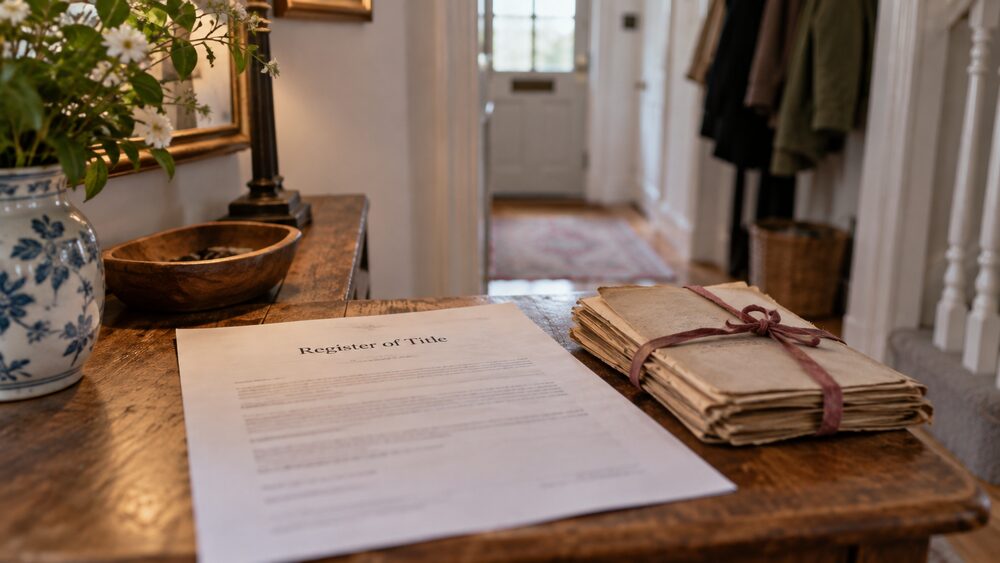
Title deeds are documents that show the ownership of a property1. They include details of the property owner, a description of the property with a plan and boundaries, how much the property sold for, whether there is a mortgage on it, the title number, any restrictive covenants, any easements, maintenance obligations, and property rights and restrictions such as access details1. They also include details about any mortgages on the property1.
A related document is the mortgage deed, which is a legal document relating to, and acknowledging, the mortgage lender's interest in the property5. The title itself indicates who the legal owner is and is normally attached to the title deeds5. Deeds more broadly are a set of legal documents helping to define the ownership and boundary of property and land5.
For unregistered property, the paper deeds are the record of ownership. If they are genuinely lost, establishing ownership becomes harder, which is why checking with your lender and solicitor first matters.
Check who holds your deeds before assuming they are lost
Before treating your deeds as lost, check the likely holders. If you have a mortgage, your lender will keep the title deeds until you pay it off3. For unregistered property, the physical deeds may be held by the owner, a solicitor or a lender1.
If you are not sure who holds them, it is worth asking your lender and any solicitor who acted on your purchase. Nationwide, for example, says that if it holds your deeds, it will send them to you once your mortgage has been fully paid off and closed4. HSBC UK says that if it holds your title deeds, it will return them as soon as possible6.
If your property is unregistered and you have paper deeds, and you are in Scotland, releasing a charge involves instructing your solicitor to remove the charge at the Land Register of Scotland, and you will have to pay a fee for this4.
Check whether the property is registered with HM Land Registry
To find out whether your property is registered, check if it is registered in the Land Registry and fill in a deeds request form for properties in England and Wales1. HM Land Registry is a government department created in 18627.
The Land Register contains more than 27 million titles showing evidence of ownership for more than 90% of the land mass of England and Wales2. The same figure appears in later official statistics, confirming more than 27 million titles8.
If your property is registered, you are unlikely to hold a physical copy of your title deeds, as they are usually stored digitally by HM Land Registry1. If you would like a copy of your deeds, you can do this by contacting the Land Registry4.
Solicitors can request deeds through HM Land Registry's Information for Lawyers page, which explains how to make the request4.
How do I get a copy of my title deeds from the Land Registry?
For registered property in England and Wales, you can get a copy of your deeds by contacting HM Land Registry4. You can also check whether the property is registered in the Land Registry and fill in a deeds request form1.
Solicitors can request deeds through the Land Registry's Information for Lawyers page, which explains how to make the request4. If you are selling or remortgaging, your conveyancer will usually deal with the Land Registry on your behalf as part of the legal work.
If you are buying a house, your conveyancer will apply to the Land Registry to transfer the title deeds to your name1. If you buy through a shared equity scheme, you still have complete title to your home and your name is on the title deeds. The Open Market Shared Equity scheme in Scotland states that you will have complete title to your home and your name will be on the title deeds for it8. The New Supply Shared Equity scheme states that although you will have complete title to your home and your name will be on the title deeds for it9. The First Homes Fund states that you will still own the property and have complete title and deeds to your home10.
When you need your deeds: selling and proving you own your home
You will need your title deeds if you are selling your home, to confirm you are the legal owner of the property1. That is the main moment the deeds matter in practice.
There are other situations where proof of ownership or deeds may be requested. For benefits purposes, evidence requested in a deprivation of capital case can include documents to show that ownership of property has been transferred to another person, deeds to show that money has been given to another person in trust, settlement or as a gift, and receipts to show what cash or savings has been spent on11.
For tax purposes, claims for the Additional Dwelling Supplement made more than 12 months from the filing date of the original return require proof of sale of the previous property12. For Stamp Duty Land Tax refunds, a solicitor or agent making a refund request should include a letter of authority from all of the buyers on the SDLT return13.
Information on whether you own a property as tenants in common or joint tenants may be shown in the Transfer or Lease by which the property was acquired, or in a Trust Deed or Will, and the land register may also provide a clue14.
If you jointly owned your home and there is not enough money elsewhere in the estate to pay off the deceased person's debts, the home may have to be sold14.
Will I get my deeds back when I pay off my mortgage?
If your lender holds your deeds, it will normally return them once your mortgage is fully paid off and closed. Nationwide says that if it holds your deeds, it will send them to you once your mortgage has been fully paid off and closed4. HSBC UK says that if it holds your title deeds, it will return them as soon as possible6.
If you have paper deeds in Scotland, you will need to instruct your solicitor to remove the charge at the Land Register of Scotland, and you will have to pay a fee for this4.
If a property is sold after repossession, the lender and any other secured creditors get their money back, then you get any money left over15. Your lender and any other secured debts will use the money to clear your debt with them, you will get any money left over, and if the sale does not cover your debt, you may be asked to pay this back16. If you sell your home voluntarily and there is a shortfall, you will still have to repay the full amount outstanding on your mortgage, and your lender can take legal action against you to get back any unpaid debts even after the property is sold17.
A lifetime mortgage is paid back when the property is sold, usually if you die or move into a care home18. You usually do not have to make repayments on the loan while you remain in your home, and the loan is paid back after you have moved out or after you have died19.
Scotland and Northern Ireland work differently
The land registration systems differ across the UK. For deeds, you will have to check with the land registries of Scotland and Northern Ireland on their respective websites4.
In Scotland, if you have paper deeds, you need to instruct your solicitor to remove the charge at the Land Register of Scotland, and you will have to pay a fee for this4. Scotland also has its own shared equity schemes, including the Open Market Shared Equity scheme, where you will have complete title to your home and your name will be on the title deeds for it8, and the New Supply Shared Equity scheme, where you will have complete title to your home and your name will be on the title deeds for it9.
In Northern Ireland, the process for a lender taking action against you is set out separately, and the process to make a court claim differs in Scotland and Northern Ireland [S17]. The Scottish courts and Northern Irish courts have similar orders to a charging order, and in Northern Ireland the Taking Control of Goods process is known as distraint [S20][S21]. Title deeds for Scotland and Northern Ireland are held by the land registries of Scotland and Northern Ireland on their respective websites [S22].
More generally, the process to make a court claim for money is different in Scotland and Northern Ireland20. The process to become bankrupt is different if you live in Scotland or Northern Ireland21. The process for reporting a change in circumstances for benefits is different if you are in Northern Ireland22. The Scottish courts and Northern Irish courts have similar orders to charging orders23. In Northern Ireland, the Taking Control of Goods process is known as distraint24.
Sources24 cited
- Your title deeds Lloyds Bank, 2026
- UK House Price Index for April 2026 HM Land Registry, 2026-06-17
- After you buy Shelter Scotland, 2024-07-25
- Title deeds Nationwide, 2026
- Home buying and selling jargon HomeOwners Alliance, 2026-07-31
- Redemption HSBC UK, 2026
- UK House Price Index for March 2026 HM Land Registry, 2026-05-20
- UK House Price Index for May 2026 HM Land Registry, 2026-07-22
- Open Market Shared Equity scheme: how it works mygov.scot, 2026-03-17
- Debt when someone dies nidirect, 2026-06-26
- How to claim a repayment of the Additional Dwelling Supplement Revenue Scotland, 2025-10-02
- Apply for a refund of Stamp Duty Land Tax HM Revenue & Customs, 2026-06-26
- Make a court claim for money GOV.UK, 2026-09-25
- Deprivation of savings and other capital: Universal Credit Entitledto, 2026-09-26
- When a lender takes action against you nidirect, 2025-09-05
- Selling voluntarily Shelter Cymru, 2026-08
- Equity release Independent Age, 2026-09-26
- Equity release Financial Ombudsman Service, 2026-09-26
- Trust deed StepChange, 2026-09-25
- Becoming bankrupt GOV.UK, 2026-09-26
- Report a change in your circumstances GOV.UK, 2026-09-26
- Charging orders and my home StepChange, 2026-09-25
- Problems paying tax debt: county court TaxAid, 2026-06-19
- House repossession StepChange, 2026-09-25







 MoneyHelperFree, impartial money and pensions guidance, set up by government
 Citizens AdviceFree advice on money, consumer and legal problems in England and Wales
 ShelterFree housing advice from a charity
 GOV.UKOfficial information on tax, benefits and government services
 Financial Ombudsman ServiceFree, independent help when a complaint about a firm is not put right