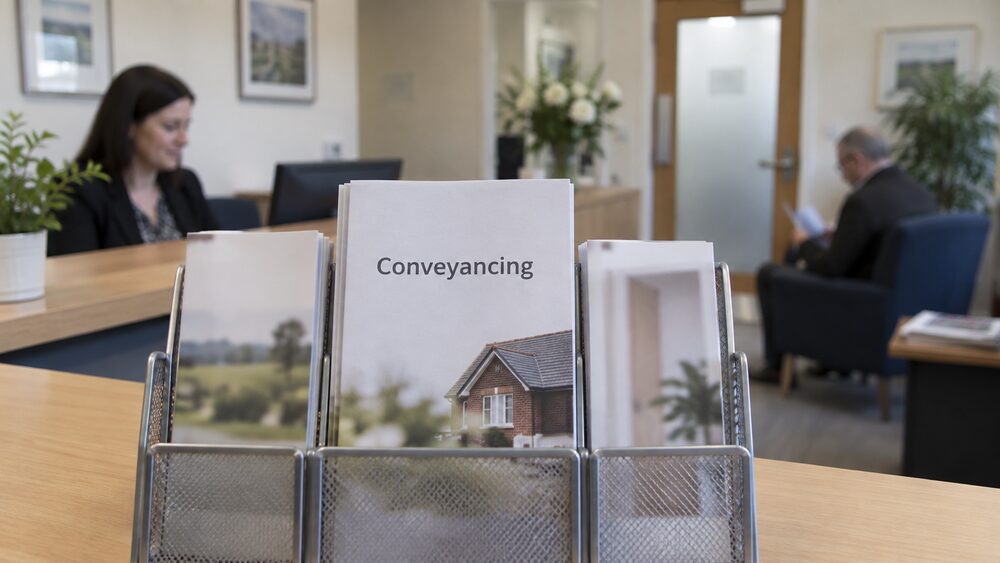
Buying or selling a home in England or Wales means legal work, and you have a straight choice about who does it. A solicitor or a licensed conveyancer can both handle your conveyancing, and both are qualified to act in the sale or purchase of a property1. A licensed conveyancer is an alternative to a solicitor, qualified for exactly this work1. Many lenders will not release mortgage money unless a solicitor or licensed conveyancer is acting for you, so in practice the choice is usually which one, not whether.
The cost is the part most people want first. Average conveyancing fees when buying a house range from around £500 to £1,150 plus disbursements, and legal fees on their own run between £300 and £1,500, usually linked to the value of the property2. On top of that, disbursements such as local searches and Land Registry registration can add up to £700 or more2. Selling is cheaper: expect between £600 and £800 in legal fees2.
The work itself is the same whoever you pick. Your solicitor or licensed conveyancer investigates the legal title, runs searches, deals with Land Registry, arranges payment of Stamp Duty and other charges, collects and transfers money, gives legal advice and draws up contracts4. What changes between firms is the fee, the speed and how well they explain what is happening.
Solicitor or licensed conveyancer: both can do your conveyancing
The two titles describe different training routes to the same job. A conveyancer is an alternative to a solicitor, qualified to act in the sale or purchase of a property1. A solicitor is a broader legal qualification, and conveyancing is one of the things solicitors do. For a standard purchase or sale, the work is identical and the outcome is the same.
What matters more than the title is whether the firm meets your lender's criteria. Lenders check the firm before it can act for you and for them, and some have rules about who they will accept8. HSBC, for example, requires four or more solicitors, licensed conveyancers or regulated managers at the firm where the mortgage is over £2 million5. If you pick someone your lender will not accept, you may have to start again, so it is worth checking before you instruct.
If you are buying and selling at the same time, the same solicitor can deal with both matters7. Some lenders require the same firm for both transactions on a let-to-buy, though not all do9. Using one firm for both can simplify the timing, because the sale money and the purchase money move through the same hands.
There is no rule that one is cheaper. Fees depend on the property, the lender and the firm, not the job title. The practical test is a written quote that separates legal fees from disbursements, and a clear answer on what happens if the purchase falls through.
What conveyancing covers
Conveyancing is the legal process involved in property transactions1. Your solicitor or licensed conveyancer takes care of all the legal aspects of buying your home, including investigating legal title and searches, dealing with Land Registry, payment of Stamp Duty and other charges, collecting and transferring money, legal advice, and drawing up contracts4.
A large part of the job is asking questions of the seller. These are known as preliminary enquiries, and they can cover disputes, boundaries, planning constraints and permissions, rights of way, restrictive covenants, guarantees and insurance policies, and services4. The local authority search checks listed building status, conservation area status, local area plans and compulsory purchase orders4. Depending on the age or location of the property, your solicitor or licensed conveyancer may also recommend an environmental search and a mining search4.
For a leasehold purchase, your solicitor or licensed conveyancer will send a Managing Agents Questionnaire to the seller's representative4. That is how the management company's rules, service charges and any planned works come to light before you are committed.
Early on, your solicitor or licensed conveyancer will draft a terms of engagement, a document outlining the basis on which they will act for you and which sets out their charges4. Read it. It is the document that fixes what you are paying for and what is excluded.
Conveyancing fees: typically £850 to £2,000 including VAT
Quotes vary widely, and the range in the sources reflects that. Average conveyancing fees when buying a house run from around £500 to £1,150 plus disbursements2. Legal fees alone cost between £300 and £1,500, usually linked to the value of the property2. One lender puts legal fees at around £2,000 including VAT5, and another gives a range of £850 to £1,500 including VAT6.
Selling is cheaper than buying. Expect to pay between £600 and £800 in legal fees when selling a house2. A cost of moving breakdown puts conveyancing at £1,050 for buying and selling an averagely priced property2, and a separate estimate puts the average cost in England at £2,18210.
| Item | Typical cost | Source |
|---|---|---|
| Buying: legal fees | £300 to £1,500 | 2 |
| Buying: average fees plus disbursements | around £500 to £1,150 | 2 |
| Buying: legal fees including VAT | £850 to £1,500 | 6 |
| Buying: legal fees including VAT | around £2,000 | 5 |
| Selling: legal fees | £600 to £800 | 2 |
| Buying and selling: conveyancing | £1,050 | 2 |
| Right to Buy: legal fees | £500 to £700 | 11 |
Some schemes cover part of the cost. The Help to Stay scheme in Wales covers conveyancing costs up to £1,000 plus VAT12. On a Right to Buy purchase, legal fees typically run at £500 to £70011.
Fees are usually quoted on the assumption that your case is standard and straightforward, unless you have already told your solicitor that additional work will be needed13. That is the sentence to watch: anything unusual, from a leasehold flat to a boundary dispute, can move the quote.
Searches and other costs on top of legal fees
Disbursements are fees shown separately from the standard legal fees charged by a solicitor or conveyancer, and they include stamp duty, search fees and Land Registry fees1. When buying a house they could add up to £700 or even more, usually for third party services such as local searches2. Local property searches are typically around £250 to £300 on top of the legal fees6, and local searches alone run from £250 to £4502.
For a leasehold sale there is usually an additional charge of between £100 and £300 for the extra legal work involved10. Leasehold purchases also bring the Managing Agents Questionnaire, which the management company usually charges for4.
Solicitors' charges are based on how much time they spend on your case, so get an estimate before you start, but be aware that fees may go up as your case progresses14. Where you can, agree a fixed fee with your solicitor, because fees depend on the work needed15.
Money held by your solicitor usually counts as capital, including compensation payments16. That matters if you are means-tested for benefits, because money sitting in a client account can affect an award.
How long does conveyancing take?
In England and Wales, the conveyancing process takes between 6 to 12 weeks, on average, to complete5. Another source puts it at up to 12 weeks on average for buying or selling6. The two figures are not identical, so treat six to twelve weeks as the working range rather than a promise.
For a remortgage the process is quicker. In England and Wales, the conveyancing process for a remortgage takes between 4 and 8 weeks on average to complete6, and when remortgaging the conveyancing process is typically quicker than if you were to buy or sell a property5.
The period between exchange of contracts and completion can take anywhere between one day and several weeks4. That gap is set by agreement, not by the legal work, and it is where chains most often stall.
Your solicitor will give you an overview of what they will do for you in return for the fee and an estimate of how long they think it will take13. Hold them to it. If the estimate slips, ask what has changed.
From instruction to completion, step by step
Conveyancing consists of several complex steps, and each one must be carried out properly to ensure a smooth completion8. The sequence below is the standard one for a purchase in England and Wales.
- Instruct your solicitor or licensed conveyancer. Arrange this as soon as your offer on the property is accepted7. Your lender will check whether the firm meets its criteria before it can act8.
- Legal work. Your firm investigates the legal title and drafts the contract4.
- Searches. Local authority searches check listed building status, conservation area status, local area plans and compulsory purchase orders, and other searches such as environmental and mining may be recommended depending on the property4.
- Enquiries. Preliminary enquiries go to the seller's side covering disputes, boundaries, planning, rights of way, restrictive covenants, guarantees and services4.
- Sign and exchange contracts. Once contracts are exchanged, you are legally bound to purchase the property and the deposit must be paid to the seller4.
- Pay Land Registry fees and Stamp Duty Land Tax. You must pay these at this stage, and your solicitor will arrange it for you4.
- Completion. Your solicitor must transfer the funds to the seller or licensed conveyancer on the agreed completion date, which finalises the sale4.
- Registration. The property is registered in your name, and in Scotland the solicitor gets the disposition, the deeds and the keys17.
Any interest earned on the deposit during the period is kept by the solicitor or, in England and Wales, the licensed conveyancer, and should be passed on to the seller at completion18.
Remortgaging and leasehold purchases
Whether you need a solicitor for a remortgage depends on what is changing. If you are sticking with the same lender and simply transferring to a different mortgage product, you may not need a solicitor, and the lender might treat it as a product transfer with minimal fees19. If you are remortgaging with your current lender, you will not need a solicitor, as this is a product transfer and does not need extra legal work7.
Move to a new lender and the position changes. If you are moving to a new lender, borrowing more, changing ownership, or having your home revalued, you will need a solicitor or conveyancer19. A solicitor is needed to close the existing mortgage from the previous lender, as well as for Land Registry and title checks7. Where you are adding or removing a joint owner, a solicitor will need to amend the deeds and draw up an ownership agreement19.
One practical trap on a remortgage: the conveyancer cannot accept copies of the redemption statement supplied by you to complete the purchase6. The lender has to send it directly. If you are holding the paperwork, pass it to the lender rather than the conveyancer.
Leasehold purchases add work at both ends. Your solicitor or licensed conveyancer sends a Managing Agents Questionnaire to the seller's representative4, and on a leasehold sale there is usually an additional charge of between £100 and £300 for the extra legal work involved10.
If you are repaying a Help to Buy equity loan, your conveyancer sends a letter of undertaking telling the scheme your completion date, your home's value and your agreement to pay the correct amount20. That is a separate step from the purchase itself and needs to be built into the timetable.
Scotland and Northern Ireland work differently
Conveyancing in Scotland and Northern Ireland works differently compared to England and Wales6. The biggest difference is who is allowed to do the work.
In Scotland, the eligible conveyancer is a solicitor or advocate within the meaning of section 65 of the Solicitors (Scotland) Act 1980, or a conveyancing practitioner as defined in section 23 of the Law Reform (Miscellaneous Provisions) (Scotland) Act 199021. You will need a conveyancing solicitor to help you buy a home, a type of solicitor that specialises in property purchases22. Their work includes making offers on properties, communicating with the seller's solicitor, checking the title deeds, negotiating the contract, dealing with the paperwork, transferring funds and taxes for the purchase, putting the property in your name, and arranging joint ownership if you are buying with someone else22.
In Northern Ireland, the eligible conveyancer is a person enrolled as a solicitor of the Court of Judicature of Northern Ireland under the Solicitors (Northern Ireland) Order 197621. The Law Society of Scotland and the Law Society of Northern Ireland regulate solicitors in Scotland and Northern Ireland respectively23. In Northern Ireland, problems with conveyancing are dealt with by the Law Society of Northern Ireland18.
Before choosing a solicitor in Scotland, get a few quotes to compare the cost, and ask about the total cost including taxes, whether the fee is fixed, when you will pay, and what you will owe if your offer is unsuccessful22. That last question matters more in Scotland, where offers are often made through a closing date.
If you are buying through the Open Market Shared Equity scheme in Scotland, you need a solicitor to act on your behalf, and the Scottish Government has its own solicitor who will handle work involving its equity share24.
What protects you, and where it stops
The main protection is the contract itself. Once contracts are exchanged, you are legally bound to purchase the property and the deposit must be paid to the seller4. If you pull out of the sale at this point, you may lose the deposit you put down and could be sued by the seller25. From the seller's side, if the buyer pulls out after contracts were exchanged, you can sue them for any loss this causes you and you may be able to keep the deposit18.
Before exchange, you are not bound. That is the window in which you can walk away, and it is also the window in which a seller can accept a higher offer from someone else.
If something goes wrong with the firm, there is a route to complain. In Northern Ireland, problems with conveyancing are dealt with by the Law Society of Northern Ireland18. In England and Wales, complaints about a solicitor or licensed conveyancer go to the firm first and then to the relevant professional body.
If you are struggling with mortgage arrears while a purchase or remortgage is going through, free help is available. StepChange offers mortgage help15, and Citizens Advice can advise on problems with buying and selling a home18. In Scotland and Northern Ireland, Citizens Advice Scotland and Citizens Advice Northern Ireland offer the same service26.
Sources26 cited
- Home buying and selling jargon HomeOwners Alliance
- Cost of moving calculator HomeOwners Alliance, 2026-06-11
- Cost of buying house calculator HomeOwners Alliance, 2026-06-11
- Conveyancing first direct, 2026
- Property searches HSBC, 2026
- Conveyancing for existing customers HSBC, 2026
- The role of a solicitor when buying a house Newcastle Building Society, 2026-09-26
- Conveyancing Lloyds Bank, 2026
- Let to buy explained Which?, 2026-06-23
- The cost of selling a house Which?, 2026-01-27
- Your right to buy your home: a guide GOV.UK, 2026-04-08
- Help to Stay Wales: guidance for applicants Welsh Government, 2023-11-06
- Why do I need a solicitor to help me through the equity release process? Equity Release Council, 2026-01-16
- Things to think about Shelter Cymru, 2026-08-13
- How we help with mortgages StepChange, 2026-09-25
- What counts as capital Turn2us, 2026-06-09
- Settlement mygov.scot, 2020-08-12
- Problems with buying and selling a home Citizens Advice, 2026-09-26
- Remortgaging Creditfix, 2026
- Help to Buy equity loan repayment application checklist GOV.UK, 2024-04-04
- The Conveyancing and Feudal Reform (Scotland) Act 1970 (Variation of Standard Conditions) Order 1998 legislation.gov.uk
- Getting a solicitor Shelter Scotland, 2024-07-24
- How to make a will Which?, 2026-02-26
- Open Market Shared Equity scheme: how to apply mygov.scot, 2026-03-17
- Making an offer on a house or flat Which?, 2026-05-29
- Free debt advice contacts Which?, 2025-08-26




 MoneyHelperFree, impartial money and pensions guidance, set up by government
 Citizens AdviceFree advice on money, consumer and legal problems in England and Wales
 ShelterFree housing advice from a charity
 GOV.UKOfficial information on tax, benefits and government services
 Financial Ombudsman ServiceFree, independent help when a complaint about a firm is not put right