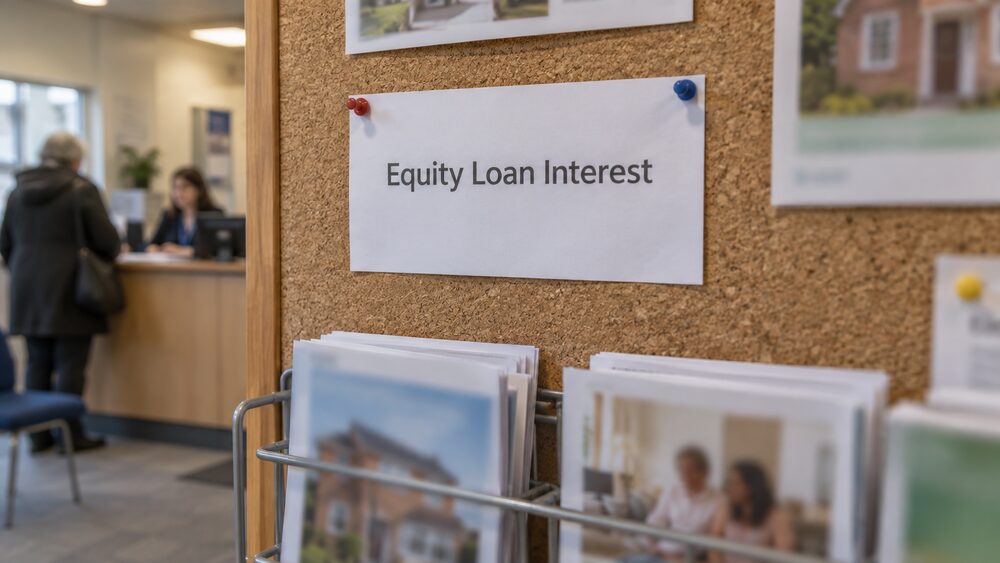
A Help to Buy equity loan charges no interest for the first five years. From year six you pay interest monthly, starting at 1.75% of the equity loan amount you borrowed, and the rate rises every April after that1.
A Help to Buy equity loan charges no interest for the first five years. From year six you pay interest monthly, starting at 1.75% of the equity loan amount you borrowed, and the rate rises every April after that1.
The charge is not a normal mortgage rate. It is a fee for the government's share of your home, and it does not pay the loan back: paying interest does not count towards paying back the equity loan3. The loan itself is repaid separately, in part or in full, usually when you sell or remortgage1.
Two things catch people out. The interest-free clock runs from the equity loan, not from the day you first viewed the property, and the rate can rise even in a year when inflation is zero or negative1. This page sets out when the fee starts, how it is worked out, how it grows, and what reduces it.
Interest-free for the first 5 years
The equity loan is interest free for the first five years4. Official guidance puts it plainly: you are not charged interest for the first 5 years, and you start to pay interest from year 6, on the fifth anniversary that you took out your equity loan2. Interest payments start after the first five years and are then paid monthly until the loan is repaid in full1.
The five years is measured from the equity loan, which is normally dated at completion. In Wales the wording is slightly different but the effect is the same: no interest is charged for the first 5 years of the equity mortgage, and interest begins from year 66. The Welsh post-completions guide says monthly interest is payable from the fifth anniversary of purchasing the property, as set out in the personal worked example given on completion7.
That worked example matters. It is the document that tells you your own figures, and it is issued when you buy rather than when the fee starts. If you no longer have it, the scheme's repayment guide and the paying interest guidance are the places to check the rules1.
The independent evaluation of the scheme describes the same structure: the equity loan was interest free for the first 5 years, with interest starting from 1.75% of the original loan amount8.
The interest fee after year 5: 1.75% of the outstanding loan
In year 6 the interest rate is 1.75%1. The scheme's own example works it through on a £200,000 property with a 20% equity loan of £40,000: (£40,000 x 0.0175) ÷ 12 = £58.33 a month1.
The base for the charge is the amount you borrowed, not the value of your home and not the amount still outstanding. Official guidance describes the rate as starting at 1.75% of the equity loan amount you borrowed1, and the evaluation describes interest starting from 1.75% of the original loan amount8. Help to Build, a separate scheme, uses the same wording: in year 6 you pay a total of 1.75% interest on the equity loan amount you borrowed, divided into 12 monthly instalments3.
Part repayment changes the calculation. After a part repayment, the monthly interest is worked out on the percentage you have left to repay and the original purchase price2. So if you have repaid half the loan, you pay interest on the half that remains, but the figure is still anchored to what the home cost when you bought it. The scheme's own example uses a £10,000 balance after a part repayment: £10,000 x 1.75% = £175 a year, or £14.58 a month2.
| What the charge is based on | What it is not based on |
|---|---|
| The equity loan amount borrowed1 | The current value of your home |
| The percentage left to repay after a part repayment, applied to the original purchase price2 | Your mortgage balance |
| A fixed 1.75% in year 6, rising each April1 | Your income or circumstances |
How the fee rises each year with inflation
From year six a fee of 1.75 per cent is payable, which rises annually by inflation plus 1%4. Official guidance describes the mechanism as the increase in inflation, if any, applied each April1. Interest rates charged on the equity loan rise every year starting from year 62.
One detail is easy to miss: your interest rate will increase each year from year 6, even when inflation is 0% or less1. A year of falling prices does not cut the fee.
The scheme's own illustration shows what a rise looks like in cash. On an equity loan of £62,000 with RPI at 5%, a 6% increase takes the annual interest to £1,150.10, or £95.84 a month1. The same guidance also carries a figure of £1,204.35 for the same scenario, and the two do not agree; where they conflict, the monthly figure of £95.84 is the one that matches the £1,150.10 annual total.
Wales uses a different index and a different margin. Under Help to Buy Wales, interest fees rise each year in April in line with the Consumer Price Index (CPI), plus 2%9. Help to Build, the scheme for people building their own home, uses the same CPI plus 2% formula from year 7 onwards3.
Reducing or repaying the loan to cut the fee
Because the monthly charge is tied to the share you still owe, paying part of the loan back reduces it. After a part repayment, the monthly interest is based on the percentage you have left to repay and the original purchase price2. The loan can be repaid in part or in full at any time, for example when you sell your home or remortgage1.
There are costs attached to acting. You will need to pay an admin fee when you apply to make changes to your equity loan5, and the published fee for a remortgage is £1155. When you bought your home with an equity loan, you agreed to pay monthly interest and management fees when they are due10, so the interest is an obligation rather than an optional extra once year six arrives.
If you are raising money through your existing lender rather than remortgaging elsewhere, the permitted reasons are narrow. One lender states that additional lending can only be considered for staircasing, using the proceeds from the additional loan to repay your equity loan, essential modifications, and transfer of equity, which means purchasing the full equity of the property from the current joint borrower11. Another sets out the same three purposes for Help to Buy customers13.
Overpaying on a loan generally helps you pay it back more quickly and saves interest14, though the equity loan fee works differently from a mortgage rate and is not reduced by overpaying your mortgage. The route that cuts the fee is repaying the equity loan itself.
Staircasing or repaying in full: how each one works
Staircasing means buying more of the equity loan in stages rather than clearing it in one go. One lender describes the option as borrowing more to reduce or repay your Help to Buy equity loan, either in stages, known as staircasing, or all at once, with the extra borrowing unable to be used for any other purpose11. The same lender's criteria list staircasing, essential modifications and transfer of equity as the only purposes it will consider12.
Repaying in full is the simpler version: the loan is cleared in a single payment, usually when you sell or remortgage1. Both routes need a valuation of the home, and the scheme sets rules on who can carry it out. For Help to Buy: Equity Loan (2021-2023), the valuer must be a RICS member or fellow (MRICS or FRICS)15.
In Wales the repayment rule is tied to value at the time you repay. Under Homebuy Wales you can repay the loan before you sell your home, in which case you repay based on the value of your home at that time16. That is a different basis from a fixed sum, and it means the amount owed moves with the market.
Before committing, read the scheme's repayment guide2 and your lender's own material. One lender tells customers thinking about reducing or paying off a Help to Buy equity loan to read its implications and considerations document first17. If you are remortgaging, check whether your current deal carries an early repayment charge, because that sits alongside the scheme's fees; independent guidance on equity release plans makes the same point about checking early repayment charges before choosing a product18.
Does the London Help to Buy loan of up to 40% have the same interest terms?
Yes. The London version changes the size of the loan, not the way interest works. Help to Buy: Equity Loan let people borrow up to 20% (40% in London) of the home's purchase price2, and the evaluation records that the loan was worth up to 20% of the property value, increased to 40% in London from February 20168. The buyer needed to take out a 75% loan-to-value mortgage, or less in London8.
A London lender describes the terms in the same shape as the rest of the scheme: you will not have to pay borrowing fees or interest on the equity loan for the first 5 years after buying your home19. The larger loan does mean a larger fee once year six arrives, because the charge is a percentage of the amount borrowed1.
The evaluation also records a market effect worth knowing about. It estimated that the increase in the maximum loan value in London led to an 8% increase in new build prices in London8. That is a finding about the scheme as a whole, not about any individual purchase.
Who could use an equity loan, and what replaced it
The English scheme was not limited to people buying their first home. Independent guidance describes Help to Buy: equity loan as a shared equity scheme for first time buyers and existing homeowners who want to move4. Some lenders describe it more narrowly as being available to first-time buyers purchasing a new-build property20, so the scheme rules and a lender's own criteria are not always worded the same way.
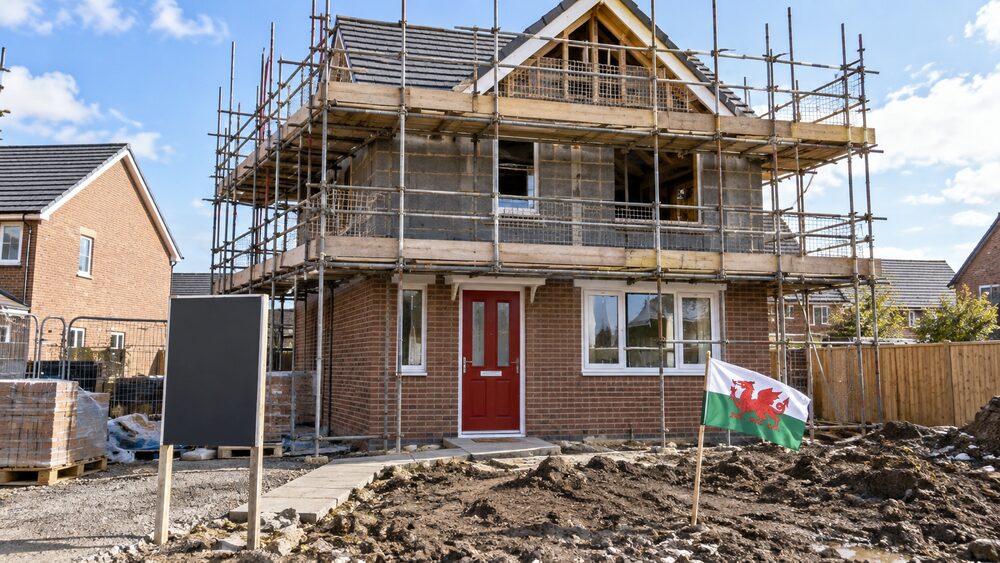
Help to Buy Wales works differently and is still running on its own timetable. It provides an interest-free loan for the first 5 years, up to 20% of the property value21. Applications for Help to Buy Wales must be submitted by 31 March 20279.
A newer scheme has been announced for England. People will be able to access equity loans with an initial interest free period22, and independent coverage describes an initial interest-free period on the equity loan23. The detail of that scheme is not yet settled, so anyone weighing it up should treat the terms as unconfirmed.
If you are still deciding how to buy, the wider picture of first-time buyer schemes in England, Scotland, Wales and Northern Ireland sets out what each nation offers, and the Help to Buy equity loan in England page covers the scheme itself. For the Welsh scheme, see Help to Buy - Wales.
Where to get help if the fee becomes a problem
The interest is a monthly obligation, and missing it has consequences. When you bought your home with an equity loan, you agreed to pay monthly interest and management fees when they are due10. If you are behind, the scheme publishes separate guidance on arrears10.
If the position is more serious than a missed payment, free and impartial help exists. StepChange, a debt charity, sets out how remortgaging can release equity or reduce a monthly mortgage payment24, and its guidance on equity release tips covers the questions to ask about early repayment charges18. In Wales, the Help to Stay scheme offers free financial advice and a shared equity loan to reduce your monthly mortgage payments to a more affordable level25.
Before any of that, the practical step is to check your own paperwork: the personal worked example issued on completion, the repayment guide2, and the paying interest guidance1. Those three documents carry the figures that apply to your loan.
Sources25 cited
- Paying interest on your Help to Buy equity loan GOV.UK, 2024-07-18
- Help to Buy: Equity Loan repayment guide GOV.UK, 2024-07-29
- Apply for Help to Build: Equity Loan GOV.UK, 2026-09-27
- Buying a home Citizens Advice, 2026-09-25
- Help to Buy equity loan administration fees GOV.UK, 2025-06-23
- Help to Buy Wales post-sale information leaflet Welsh Government, 2025-06
- Help to Buy Wales post-completions guide Welsh Government, 2024-07
- Evaluation of the Help to Buy scheme: findings report Ministry of Housing, Communities and Local Government, 2026-09-16
- Help to Buy Wales buyers guide, phase 3 extension Welsh Government, 2024-09
- Help to Buy equity loan arrears GOV.UK, 2024-05-20
- Help to Buy equity loan Cambridge Building Society, 2026-09-26
- Lending criteria Accord Mortgages, 2026-09-26
- Additional loans Accord Mortgages, 2026-09-26
- Loans explained HSBC, 2026
- How to get a valuation of your Help to Buy home GOV.UK, 2025-08-18
- Homebuy Wales Welsh Government, 2026
- Equity loan Santander, 2026
- Equity release tips StepChange, 2026-09-25
- London Help to Buy Barclays, 2026
- Affordable housing TSB, 2026
- Buy your dream home: Help to Buy Wales Welsh Government, 2026
- New first-time buyer scheme to be confirmed at Budget GOV.UK, 2026-09-26
- Your First Home scheme HomeOwners Alliance, 2026-09-26
- Remortgaging to pay off debt StepChange, 2026-09-25
- Help to Stay Wales guidance for applicants Welsh Government, 2023-11-06











 MoneyHelperFree, impartial money and pensions guidance, set up by government
 Citizens AdviceFree advice on money, consumer and legal problems in England and Wales
 ShelterFree housing advice from a charity
 GOV.UKOfficial information on tax, benefits and government services
 Financial Ombudsman ServiceFree, independent help when a complaint about a firm is not put right