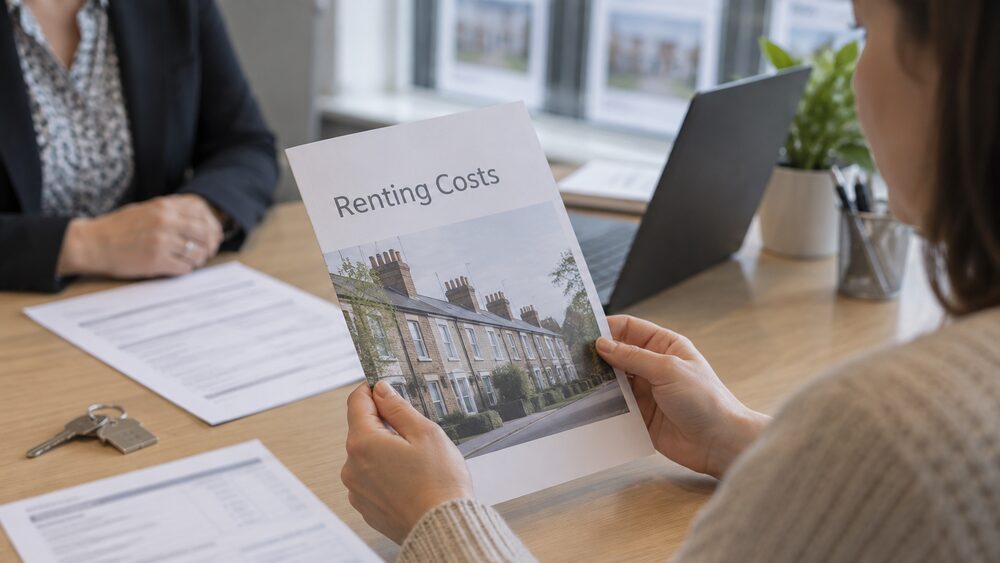
Rent is nearly always the largest single item in a household budget, and the question most renters ask is how much of their income it should take up. One widely used yardstick comes from research on affordability: households in the bottom 40% of incomes spending more than 30% of their income on rent are counted as facing high housing costs. On that measure, around 1.4 million low-income private renters receiving Universal Credit or Housing Benefit spend more than 30% of their income on rent, and a further 2.1 million households on low incomes with high housing costs receive no support at all1.
But rent alone understates what a home costs. Council tax, water charges, insurance and service charges all come on top, and official measures of poverty treat all of these as housing costs when working out what a household has left to live on2. Council tax in particular catches many renters out, because it is billed separately from rent, arrives in March, and is a bill the council can enforce quickly if it goes unpaid.
Rent is not the only housing cost: council tax comes on top
When researchers and government statisticians measure how much a household spends on keeping a roof over its head, they count more than rent. The official "after housing costs" measure deducts rent (including housing benefit), water rates and community or council water charges, mortgage interest payments, structural insurance premiums, ground rent and service charges2. For a renter, that means the true housing line in a budget is rent plus council tax plus water and sewerage charges, plus any service charge on a leasehold flat.
Council tax is the item most often missed. It is a tax paid on homes in the council's area, and since 1993 local councils have had the job of collecting it under the Local Government Finance Act 19923. The money pays for local services such as rubbish collection, roads and maintenance of the local area7. Unlike a gym membership or a phone contract, council tax is not a contract and you do not "sign up" for it: liability arises from living in a home, most people aged 18 or over must pay it, and it must be paid in pound sterling3. There is no VAT on council tax3.
For budgeting purposes, the amount you include should be your full council tax, with any Council Tax Reduction counted in the income side of your budget instead, and any arrears listed separately8. If you are building a budget from scratch, the guides to how to make a budget and the 50/30/20 rule show where housing costs sit among your other spending.
Who pays council tax when you rent
Most tenants have to pay council tax direct to the council10. The bill arrives addressed to the people registered at the property, and it is your responsibility to pay it even if your rent is paid by benefits or by someone else. You get a council tax bill for the year and can usually pay in monthly instalments10.
The arrangement changes in shared homes. If you have a joint tenancy for the whole property, then you are usually all responsible for the council tax, meaning the council can pursue any one of you for the full amount10. If everyone living in the property has their own agreement for their room or bedsit, your landlord is usually responsible for the council tax instead10. Houses in multiple occupation where rooms are let individually are among the properties where the owner, not the tenants, must pay5.
What a landlord cannot do is charge you council tax on the side. Council tax can be included in the rent where that is agreed in the tenancy agreement, but a landlord cannot require a tenant to make a separate, additional payment for council tax to them directly11. The same rule appears in the official guidance for tenants on the Tenant Fees Act 2019: your landlord cannot require you to make a separate payment to them for council tax12. If you see a "council tax" line in a landlord's invoice on top of the agreed rent, that is worth questioning, because permitted tenancy payments are limited and any fee outside the permitted list may be prohibited11.
How your council tax bill is worked out: bands A to H
To work out your bill you need three things: the valuation band for your home, how much your local council charges for that band, and whether you can get a discount, reduction or exemption from the full bill13. In Scotland the same three pieces apply: the band, the council's charge for it, and any discount, reduction or exemption14.
Properties are placed in bands based on their value, and in England and Wales the valuations still used today are based on the value of the house in 19914. Band A is the cheapest band and band H, or band I in Scotland, is the most expensive: more expensive houses pay a higher annual bill4. Your bill tells you who is registered for council tax in your home, how much you have to pay for the year, how that amount has been worked out, and the dates you have to pay14. The bill is sent in March for the financial year that begins in April4.
You can challenge your council tax band if you think your home is in the wrong valuation band13, and in Scotland you do this on the Scottish Assessors website14. A property may be moved to a different band in certain circumstances, for example if you demolish part of it and do not rebuild, if you alter it to create two or more self-contained units, if you split a single property into flats or convert flats into a single property, if you start or stop working from home, if the previous owner made changes, if there are significant changes to your local area such as a new road, or if a similar property in your area has its band changed13.
In Scotland, two new high-value bands are being added: band I for properties valued between £1 million and £2 million, and band J for properties valued above £2 million, from 1 April 2028, with fewer than one per cent of households affected15. Wales has its own reduction for people with disabilities: for example, if the property is in band D, the council tax bill will be worked out as if it were in band C16.
Single person discount: 25% off if you live alone
If you live alone, you will be entitled to 25% off your instalments8. The discount applies where there is only one resident of the dwelling and that resident is not disregarded for council tax purposes17, and in Wales it applies when there is only one adult living in the property, or when there is more than one adult but all the other adults are disregarded18. You may also qualify for 25% off if you are the only adult in your home or you live only with adults who are exempt or disregarded19.
The discount is not automatic in every case: you claim it from the council, and it is worked out on who is counted as a resident, not on who is on the tenancy. That matters in shared homes. If you previously lived alone and qualified for the single person discount, you lose it once you take in a lodger, because the lodger counts as another adult in the property20.
The 25% figure is consistent across England, Scotland and Wales, though each council administers the claim itself. If your circumstances change during the year, for example a partner moves in or a disregarded person stops being disregarded, tell the council promptly, because the discount is recalculated and an overclaimed discount becomes an amount you owe.
Students, carers and others who are not counted
No one has to pay council tax if everyone who lives in the property is a full-time student10. This is an exemption rather than a discount: the bill simply does not arise while the property is entirely occupied by full-time students. If a student shares with non-students, the non-students remain liable, but the student is not counted as a resident for discount purposes, which can leave the remaining residents with a 25% discount as if only one countable adult lives there19.
Student income is treated separately too. Student grants and loans do not count as income when some benefits and assessments are worked out21, and among the payments not counted as income are the Student Loan for Tuition Fees, the Parents' Learning Allowance, the Childcare Grant, and the Special Support Grant or Loan, as well as grants for tuition and examination fees, disability expenses, residential study away from an educational establishment, travel expenses and childcare costs22.
Some other residents are disregarded rather than exempt. For a person with a severe mental impairment, the discount will be 100% if the person is living alone, and 25% if they live with one other adult16. Carers, and people with certain other statuses, are treated similarly under local schemes, and disability organisations set out who qualifies for council tax reductions and discounts19. If you think someone in your household is disregarded, ask the council, because a disregarded resident can turn a full bill into a 25% discount or remove it altogether.
Council Tax Reduction and exemptions on a low income
If you are on a low income or get benefits, you may be entitled to Council Tax Reduction6. Each council can create its own scheme, so the rules and the amount of help differ from one authority to another23, but the reduction can be substantial: if you are on a low income or claim benefits, you might be able to get your bill reduced by up to 100%5. In Wales, the Council Tax Reduction scheme helps people on low incomes and certain welfare benefits to pay their council tax by reducing their bill16, and councils in England can also offer council tax support if you have a low income24.
Claiming the reduction has a knock-on benefit for the rest of your budget: it can increase your income and help you pay your rent25. Because the reduction is normally credited against the bill rather than paid to you, remember to include your full council tax as the cost in your budget and the reduction on the income side8.
Before claiming, a benefits calculator can show what you might be entitled to. To use one you will need accurate information about your savings, your income including your partner's, existing benefits and pensions including anyone living with you, your outgoings such as rent, mortgage and childcare payments, and your council tax bill26.
Spreading the cost: 10 or 12 monthly instalments
Council tax bills show how much you will pay over the whole year, but the cost is usually split into 10 monthly payments14. Some councils will accept payments every week or every two weeks instead8, and some authorities offer alternatives such as 11 or 12 payments a year to help spread the cost5. You can ask the council to pay in 12 monthly payments, and they must allow this if you ask4. Councils prefer to receive payment by direct debit5.
The timing of the bill matters. It is sent in March for the financial year beginning in April, so a standard 10-instalment schedule runs from April to January, with nothing to pay in February and March4. If the bill arrives later than April, which can happen if you move house, you have less time to pay and the bill must be paid in full before the end of the financial year in March4.
If you keep the 10-month schedule but budget monthly, the trick is to even the payments out:
The same conversion logic applies to rent itself when it is not paid monthly. The rules used for working out relevant payments on a monthly basis are that weekly payments are multiplied by 52 and divided by 12, two-weekly payments are multiplied by 26 and divided by 12, four-weekly payments are multiplied by 13 and divided by 12, three-monthly payments are multiplied by 4 and divided by 12, and annual payments are divided by 1229. The guide to converting weekly amounts to monthly works through examples, and budgeting for annual and irregular bills covers the wider habit of setting money aside for bills that do not arrive every month.
Council tax is a priority bill: pay it before other debts
"Council Tax is a priority debt."
mygov.scot, official Scottish Government guidance30
Council tax is a priority bill, which means you need to pay it first before other bills19. The reason is enforcement: councils have powers to collect that ordinary unsecured creditors do not, and arrears can escalate to court action faster than credit card or loan debts. Council tax is a priority debt whether the amount owed is your current bill or any arrears31.
That priority has consequences for how you order your payments. If money is short, the current year's council tax instalments come before non-priority debts such as credit cards, personal loans and overdrafts, because the consequences of missing council tax are more severe. The page on the order to sort out your finances sets out where priority bills sit in a full money plan.
The priority also follows council tax into formal debt solutions. Your current council tax bill is classed as a debt in insolvency solutions if you are the only person named on your household council tax bill, or if you and your partner enter an IVA at the same time, and that ruling only impacts you in the first year of your IVA31. If you are considering any debt solution, tell your adviser about council tax arrears specifically, because they are treated differently from ordinary consumer debts.
What happens if you fall behind, and where to get help
The enforcement process moves quickly, and each stage is triggered by a missed instalment:
If you miss one of your monthly payments, your council should send you a reminder notice giving you seven days to pay it5. The reminder tells you which instalments you have missed and gives you seven days to pay them, plus any other instalment that becomes due during that time23. If you do not pay within the seven days, you may be asked to pay the whole year's council tax at once5. In Wales, from 1 April 2026, if you miss a council tax payment the council will send you a reminder notice23. If you miss a payment for the third time, your council will send you a final notice saying you must pay the whole year's council tax6. If you still do not pay, the council can take you to court19. For homeowners, if the debt is for £1,000 or more, the council can apply to the County Court for a legal charge on the home23.
Help is available, and it is free. In Scotland, official guidance on what to do if you cannot pay your council tax sets out the options30, and the Scottish cost of living campaign covers help with rent and mortgage costs if you are unemployed, on a low income or getting benefits33. In England and Wales, Shelter explains emergency grants, loans and money help, including help with rent if benefits do not cover your full rent, rent increases and arrears, a deposit, rent in advance or moving costs24. Debt charities including StepChange and National Debtline publish guides to council tax arrears and will advise on your situation without charging31. If you are struggling with rent as well as council tax, the debt and benefits sections explain the wider options, and free money guidance lists where to get it.
Moving in: the costs before the first rent payment
Before the first monthly rent payment even leaves your account, a private tenancy typically requires money up front. Shelter's guidance on the upfront costs of private renting sets out what to expect, including the deposit and rent in advance, and notes that most tenants then have to pay council tax direct to the council on top10. A deposit and a month's rent in advance together can add up to a sum worth several weeks of income, so it belongs in the plan before you commit to a tenancy rather than after.
Since the Tenant Fees Act 2019, landlords in England cannot charge whatever they like on top of that. The fees a landlord can charge as part of a tenancy are limited to a defined list, and council tax can only be included in the rent where that is agreed in the tenancy agreement, never charged as a separate additional payment to the landlord11. The official guidance for tenants explains which payments are permitted and what to do if you are charged a fee that is not12.
If the upfront costs are the barrier, help sometimes exists. Housing payments could help with rent if benefits do not cover your full rent, rent increases and arrears, a deposit, rent in advance or moving costs24. Check what is available before borrowing, and if you do need to borrow, the loans section explains the options and their costs. Building a small emergency fund once you are settled is what protects you from the deposit-and-rent-in-advance problem the next time you move.
Sources33 cited
- Under pressure: the affordability challenges facing private renters Joseph Rowntree Foundation, 2026-04-13
- Poverty and Income Inequality in Northern Ireland Quality and Methodology Report 2024/25 NISRA, 2026-03-26
- Council tax and the law Carmarthenshire County Council, 2026-01-19
- Paying council tax bills StepChange, 2026-09-25
- Paying council tax Which?, 2026-04-17
- Council tax arrears GOV.UK, 2026-09-26
- Information about other Scottish taxes Revenue Scotland, 2025-09-12
- Your business and household budget Business Debtline, 2026-09-26
- Private rent and house prices, UK Office for National Statistics, 2026
- Upfront costs of private renting Shelter England, 2026-05-01
- Fees you can charge as part of a tenancy GOV.UK, 2026-05-01
- Tenant Fees Act 2019: guidance for tenants GOV.UK, 2026-04-07
- Council tax GOV.UK, 2026-09-26
- Pay your council tax bill mygov.scot, 2026-04-01
- Scottish Budget 2026-27 Scottish Government, 2026-03-06
- Council tax Shelter Cymru, 2026-08-28
- Local Government Finance (Wales) explanatory memorandum Senedd Cymru, 2025-12-09
- Council tax discounts, disregards, exemptions and reductions Welsh Government, 2026-03-17
- Help with Council Tax Reduction and discounts Scope, 2026-08-11
- Increasing your income Shelter Cymru, 2026-09-14
- How we work out child maintenance GOV.UK, 2026-09-26
- Benefits and higher education students nidirect, 2026-06-30
- Council tax arrears in England and Wales National Debtline, 2026-09-25
- Emergency grants, loans and money help Shelter England, 2026-07-03
- Tenant rent arrears and benefits mygov.scot, 2025-04-01
- Benefits calculator Epsom and Ewell Borough Council, 2026
- Family Resources Survey Quality and Methodology Report 2024/25 NISRA, 2026-05-28
- How to make a budget StepChange, 2026-09-25
- Universal Credit (Northern Ireland) Schedule: relevant payments calculated monthly legislation.gov.uk, 2026
- Council tax if you cannot pay mygov.scot, 2026-04-01
- Council tax debt and IVAs StepChange, 2026-09-25
- Council tax arrears (England and Wales) Business Debtline, 2026-09-26
- Rent and mortgage Scottish Government, 2026-09-26

 MoneyHelperFree, impartial money and pensions guidance, set up by government
 Citizens AdviceFree advice on money, consumer and legal problems in England and Wales
 StepChangeFree debt advice and solutions from a charity
 Turn2usFree benefits calculator and grants search from a charity
 GOV.UKOfficial information on tax, benefits and government services