Falling behind on gas, electricity or water bills is common, and the rules that follow are different from those for credit cards or loans. Energy suppliers can, in the last resort, disconnect your supply or move you to a prepayment meter, which is why gas and electricity arrears with your current supplier are treated as priority debts: bills to pay before most other debts1. Water companies cannot cut off a household supply at all, though they can take court action to recover what you owe2.
The first step in every case is to tell your supplier. If you will struggle to pay, the supplier has to help you find a solution3, and they must help you work out a plan to repay the debt that is affordable for you4. This page explains what that help must look like, what happens with prepayment meters and disconnection, how water arrears differ, and the discounts and grants that can reduce the bill itself.
What your energy supplier must do when you fall behind
When you cannot pay an energy bill, the supplier is not allowed simply to demand the full amount. They must help you work out a solution, such as a payment plan, and some suppliers also offer grants to help pay off energy debts9. The first thing to do is tell them: they can check the charges are correct and help you work out a way forward2. Beyond a payment plan, the practical options a supplier can offer include delaying your bill, removing late payment charges, allowing you to pay over a longer period, changing your payment plan so it is more affordable, giving you more time to pay, offering access to hardship funds or grants, and offering advice on how to use less energy10.
One point worth checking before anything else is whether the bill is actually yours. You do not have to pay for energy that was used before you moved in3. If you have recently moved into a property, the previous occupier or landlord should have notified the supplier that they were leaving and arranged to pay any outstanding energy costs before you arrived12. If the charges relate to a period before your tenancy or ownership started, raise that with the supplier rather than treating the debt as yours.
Because gas and electricity suppliers can disconnect your supply or force a pre-payment meter if it is safe and reasonable, arrears with your current supplier sit alongside rent and council tax in the queue to be paid, ahead of unsecured debts like credit cards and loans1. The practical advice from independent sources is consistent: try to pay your energy bills, council tax and rent or mortgage before your other debts13. If the arrears have grown beyond what a payment plan can handle, the formal and informal options on the debt solutions page, including breathing space, may buy time while the arrangement is sorted out.
Repayment plans you can afford: how they are set up
All energy suppliers should agree, under their standard licence conditions, to accept an offer of repayment in instalments at a rate that you can afford5. That is a licence obligation, not a favour, and it means the figure on the plan matters less than whether it is sustainable from your budget. A free debt adviser can help you build that budget, and the page on budgeting for repayments explains the standard tools advisers use.
A typical arrangement has two parts. The amount you pay will include an estimated amount for the fuel you use going forward, plus an amount for the arrears14. In other words, the plan does not pause your ongoing consumption: you keep paying for current usage while clearing the backlog alongside it. When you draw up a household budget to support your offer, include only your normal energy payments in the outgoings section, with any payments towards arrears listed separately, so the figures you give the supplier are clear15.
Suppliers are expected to assess your ability to pay rather than impose a standard figure. Under the Consumer Energy Charter in Northern Ireland, electricity and gas suppliers commit to assessing credit customers' ability to pay, and where the assessment identifies issues, to looking at reducing repayment rates or extending debt repayment timeframes16. Water companies follow a similar principle: your company should offer you a reasonable repayment plan to allow you to spread repayments17.
Some water companies run named schemes that combine ongoing payments with debt clearance. For example, SES Water's Clearstart scheme starts qualifying customers on a repayment plan to pay the debt off manageably, and Bristol Water's Restart scheme puts customers on a two year payment plan designed to cover current usage and clear some of the arrears18. If you pay your water bill monthly but over less than 12 months, ask your water company to reset your payments over the full 12 months, which lowers the monthly amount6.
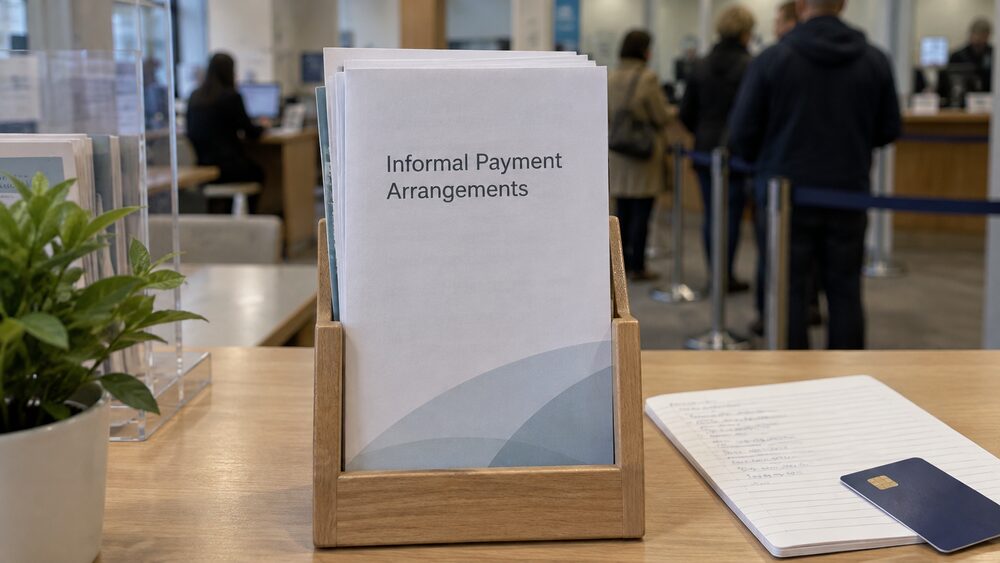
If a supplier rejects an offer you cannot improve on, you do not have to accept their counter-offer. The page on what to do when a creditor refuses your repayment offer sets out the next steps, and informal payment arrangements explains how these agreements work in practice.
Hardship funds and grants for energy debt
Most major energy suppliers run hardship funds to support customers who fall into arrears, offering support such as grants to write off debt and help with energy efficient white goods and appliances8. Some suppliers offer hardship grants if you cannot pay your bills, and some energy companies have set up trust funds that may be able to help you pay your energy bills if you are in financial difficulties15. The practical step is to ask your own supplier directly what they run: schemes are not always advertised prominently, and eligibility rules differ from one fund to another.
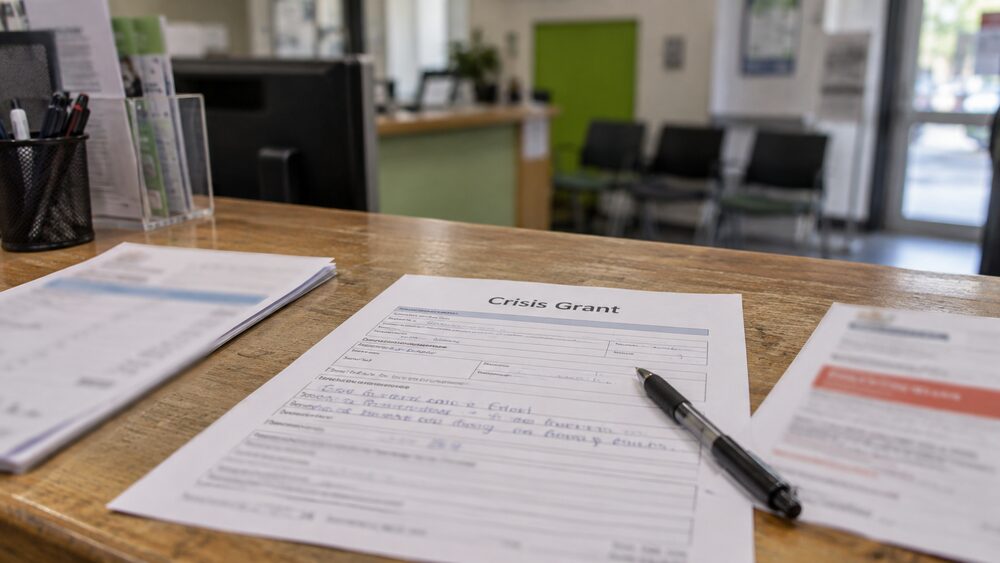
Grants are not limited to suppliers. You could try to get a grant through a charity, your council, your energy supplier, a trade union if you are a member, or your university, college or student union10. Some water companies also have hardship schemes and debt support schemes of their own10. The page on emergency grants and loans covers the wider landscape of one-off help when money runs short.
Two things are worth knowing before you apply. First, hardship funds usually require evidence of your income and debts, and many expect you to have taken advice or to have an arrangement in place already, so a conversation with a free debt adviser can strengthen an application. Second, a grant that clears part of an energy debt changes what a repayment plan needs to cover, so it is worth revisiting the plan with the supplier once any grant comes through rather than continuing to pay the old figure.
Prepayment meters and debt: your rights before and after installation
A prepayment meter works like a pay-as-you-go account: you top up, and the meter deducts the cost of the energy you use. If you have a prepayment meter, you are probably paying more for your energy than you would on a credit meter19. The meters can also be set to recover fuel debts as well as to pay for the gas or electricity you use14, which is why suppliers sometimes see them as a way of collecting arrears.
Your rights before installation are substantial. If it is safe to install a prepayment meter, your supplier must ask you if you want one before your supply is cut off, and cannot insist on one if you have not fallen behind on an arrears repayment arrangement5. Suppliers should carry out a site welfare visit before a prepayment meter is installed20. In some circumstances suppliers may be able to take steps to install prepayment meters even without your consent, for example if you already owe them a debt, and the supplier can programme the meter to deduct part of your credit to pay the debt21. Once fitted, the supplier cannot disconnect you if you live at your business premises, depending on contract type5.
The licence conditions also require information. Where a supplier offers a prepayment meter, it must provide, prior to or upon installation, appropriate information about the advantages and disadvantages of a prepayment meter, its operation, the emergency credit, friendly-hours credit and additional support credit facilities, and the procedures for removing or resetting the meter. In plain terms: you are entitled to be told how the meter works, what happens when you run out of credit, and how to get off it later.
After installation, debt recovery works by deduction. Your supplier will use a part of your payments to pay off your debt over an agreed period4. If you cannot afford to top up, contact your supplier to check whether they have grants available22, and under their licence conditions your supplier is required to provide emergency credit if you are unable to top up5, though you may be charged a fee for it11. Non-payment on a credit account can result in higher bills and affect your credit file, and your supplier could look at fitting a prepayment meter or, if you have a smart meter, switching it to prepayment mode19.
There are limits on how far enforcement can go. Under the debt respite scheme regulations, enforcement action includes installing or using a pre-payment meter to take payments for moratorium debt unless the debtor consented to installation before the moratorium started23. That means breathing space can pause the forced installation route for debts covered by the moratorium. If you find debt left on the meter by a previous occupier, contact your electricity supplier: they will give you a new key and start a new account for you21.
Disconnection: when an energy supplier can cut you off
Disconnection is real but rare, and the rules push it to the very end of the process. If you have not paid a bill after 28 days, there may be a possibility that you could be cut off from your energy supply, but this is often a last resort, and energy suppliers must offer alternative solutions first, such as payment plans or a prepayment meter11. Suppliers should only cut off your supply as a last resort, must give you notice first, and cannot cut off your supply unless they have first offered you a range of payment methods5.
Suppliers must work through alternatives before disconnection, which is a last resort.
Most energy suppliers will not disconnect you in a set of defined circumstances: if you agree to a payment arrangement, if you agree to have a pre-payment meter installed, if the debt belongs to a previous occupier, or if it is between October and March and all adults in the household are over retirement age5. You can also ask your energy company for their code of practice, which sets out the steps the supplier must follow before disconnection and the options they must offer for paying arrears, including regular payment plans or other alternatives25.
The practical protection is therefore engagement. A household that responds to the supplier, agrees a plan or accepts a meter is very hard to disconnect lawfully. A household that ignores letters moves along the process above, and the winter protection for households where every adult is over retirement age adds a seasonal safeguard between October and March5. If you are in shared accommodation, the responsibility for bills can be more complicated, and the rules on who owes what are worth checking before assuming a disconnection threat is valid12.
Water bill arrears: water companies cannot cut off your supply
Water arrears work differently from energy arrears in one decisive way: a water company cannot disconnect your domestic water supply if you are in arrears, or install anything in your home that restricts the flow6. Water companies cannot disconnect your supply if you do not pay your bills, but they can make a claim in the County Court if you do not come to a repayment arrangement1, and they can take court action to recover the debt if they do not hear from you2. Water companies will do their best to support you with your bill26.
What a water company will actually do follows a familiar sequence: send a reminder notice, telephone you to request payment, pass your debt to a debt recovery agent, and, as a last resort, take you to court to recover the money you owe17. Most people are billed at least twice a year, and your company should offer you a reasonable repayment plan to allow you to spread repayments17. You can ask your water company to send you a free copy of its code of practice on debt, which explains its own procedures17.
Two special cases change the picture. If your water rates are included in your rent, water arrears can count as rent arrears and could lead to court action to repossess your home, so treat water rates arrears in that situation as a priority payment6. And if you receive Income Support, Pension Credit, Employment and Support Allowance, Jobseeker's Allowance or Universal Credit, you can ask the Department for Work and Pensions to deduct a sum from your benefit or Universal Credit payment to cover the current water bill and a standard amount towards arrears6. The page on deductions from Universal Credit explains how these third-party deductions work.
You cannot be disconnected for water debt, but it is important to keep up with your ongoing bills so the debt does not grow27. Beyond repayment plans, some water companies run social tariffs and support schemes that reduce the bill itself for low income households, and the schemes named earlier, such as Clearstart and Restart, combine ongoing payments with debt clearance18. Free debt charities can help you approach a water company, and free debt advice lists where to get it.
Warm Home Discount: £150 off your electricity bill
The Warm Home Discount is a government scheme in England, Wales and Scotland, running between November 2025 and March 2026, that is usually worth £1507. Participating suppliers are obligated to provide a direct discount of £150 for those eligible into their electricity account, or into the gas account on request29. The money is not paid to you: it is taken off your energy bill by your supplier7.
Eligibility differs by nation. In England and Wales, to get the Warm Home Discount you must get the Guarantee Credit element of Pension Credit, or be on a low income28. In Scotland, you must be on a low income and meet your energy supplier's criteria for the scheme28. The scheme is not available in Northern Ireland28. You need to have met the criteria on 24 August 2025 to get the discount, though you may still qualify if your benefits claim or Pension Credit is backdated to 24 August 2025 or before28.
The discount is not a cash payment and does not affect your benefits13. Nor does it interact with the other winter payments: getting a Warm Home Discount does not affect your entitlement to a Winter Fuel Payment or the Cold Weather Payment30, and it will not affect your Cold Weather Payment, Winter Fuel Payment or other extra cost of living and fuel support31. The Winter Fuel Payment, also called the heating allowance, is a separate tax-free payment towards the cost of heating bills11.
On timing, the guidance documents disagree: one states your energy supplier will apply the discount to your bill by 31 March 2026, while another gives 28 February 2026 as the deadline28. If the discount has not appeared by late winter, it is worth querying with your supplier rather than waiting, since either date falls within the scheme year.
Back billing: the 12-month limit on energy and six years for water
Back billing is when a supplier suddenly bills you for energy or water used long ago, often after years of estimated or missing bills. The protection is strongest for energy. Ofgem's rules on back billing mean that customers cannot be charged for energy used more than 12 months ago if they have not had an accurate bill for it before8. Usually, your supplier should not charge you for energy used more than 12 months ago32.
The ban has limits. It does not apply to customers who actively prevent suppliers from taking readings: if you were at fault, the supplier can back-bill you for up to six years. So a customer who refuses meter access over a long period is in a very different position from one whose supplier simply failed to bill correctly. Bills also need to show the cost of your energy for the last 12 months, unless you have been with your supplier for less than a year33, which makes it easier to check whether a back bill respects the limit.
For water, the limit is longer. Companies may charge you up to six years of unpaid water and sewerage charges17. There is no 12-month protection equivalent to the energy rule, so a water back bill can reach further back, though the same practical steps apply: check the readings, query anything you cannot verify, and ask for the charges to be broken down by period.
If you are disputing a bill, do not simply stop paying everything. Keep paying the parts you do not dispute and ask for the disputed part of the bill to be put on hold while the complaint is resolved34. A payment made by card for goods or services also has a separate route: you usually have around 120 days to raise a chargeback about goods or services35, though that applies to card purchases rather than to the bill itself.
Switching supplier while you owe money
Switching with debt is possible in some circumstances and blocked in others. The rules give you the right to switch supplier if you have been in debt to your current supplier for less than 28 days20. If you owe money to your energy supplier, a new supplier may not accept you, but the rules allow switching if you have a prepayment meter and owe less than £50015. The same £500 threshold appears in the switching rules: if you have a prepayment meter and owe £500 or less to your current supplier, switching is allowed32.
The restrictions bite after that. Your arrears being outstanding for over 28 days on a normal meter blocks a switch, and arrears of more than £500 on a prepayment meter do the same36. In practice this means the window to switch with debt is early and narrow: within 28 days of falling behind on a credit meter, or below £500 on a prepayment meter.
Two related points are worth knowing. You do not need your landlord's permission to switch unless bills are included in your rent13. And price is not the only reason people switch: most companies offer a discount for paying by Direct Debit, and you could switch if one supplier offers a dual fuel discount when you currently get gas and electricity from different suppliers36. Ofgem has also highlighted money sitting in closed accounts: around £240 million is owed back to customers from energy accounts that were closed while still in credit33, so if you switched in the past, a refund may be due.
Complaints and where to get free help
If something has gone wrong with your bill, the complaints route is fixed. Common grounds for a complaint include late or inaccurate bills, problems resulting from switching supplier or tariff, and issues with the supplier's website34. You must complain to your supplier first; you can complain to the Energy Ombudsman about a billing or transfer problem, but only after that5. While the complaint is live, do not stop paying your bills: keep up the payments and ask for the disputed part of the bill to be put on hold34.
If the supplier does not resolve the matter, the Energy Ombudsman is the next step for energy complaints. For water complaints, the water company's own code of practice on debt is the starting point, and CCWater, the consumer body for water, can escalate unresolved complaints17.
Free, independent help with the debts themselves is available and worth using before arrears grow. Charities including StepChange, National Debtline and Business Debtline publish guidance on energy and water arrears, and a free debt adviser can help you build a budget, make offers to suppliers and check whether any grants or benefits apply. If your heating bills are very high, call 0800 098 7950 or see GOV.UK's Find ways to save energy in your home website27. For the wider picture of which debts to tackle first, see priority and non-priority debts, and for the full range of formal options, see debt solutions.
Sources36 cited
- Student money and debt National Debtline, 2026-09-25
- Different types of debt Independent Age, 2026-09-26
- Check if you're responsible for paying an energy bill Citizens Advice, 2023-11-28
- Government payments and discounts for heating bills Scope, 2026-09-01
- Your priority debts Business Debtline, 2026-09-26
- Water arrears National Debtline, 2026-09-25
- Financial help in cold weather Independent Age, 2026-09-26
- Powering up support University of Bristol PFRC, 2025-10
- Help if you're in debt Independent Age, 2026-09-26
- Emergency grants, loans and money help Shelter England, 2026-07-03
- Struggling to pay energy bills Christians Against Poverty, 2026-08-20
- Energy costs in shared accommodation Shelter Cymru, 2026-08-29
- Help with gas and electricity bills Shelter England, 2025-07-25
- How to avoid gas and electricity disconnection Shelter Cymru, 2026-08-29
- Your business and household budget Business Debtline, 2026-09-26
- Electricity and gas consumer protection Consumer Council Northern Ireland, 2026-09-26
- Problems paying your water bill Ofwat, 2026-09-28
- Help with water bills StepChange Debt Charity, 2026-09-25
- Making the most of your money National Debtline, 2026-09-25
- Prepayment meters Shelter Cymru, 2026-08-28
- Mesuryddion rhagdalu Shelter Cymru, 2026-09-17
- Energy grants if you cannot afford your prepayment meter mygov.scot, 2026-02-04
- The Debt Respite Scheme (Breathing Space Moratorium and Mental Health Crisis Moratorium) Regulations 2020 legislation.gov.uk, 2020
- Can your energy company force you to have a prepayment meter? Which?, 2023-03-29
- Help with household bills Contact, 2026-08-27
- Water bills Scope, 2026-08-05
- Your business and household budget Business Debtline, 2026-09-26
- Warm Home Discount StepChange Debt Charity, 2026-09-25
- Warm Home Discount eligibility Ofgem, 2026
- Warm Home Discount Age UK, 2026-09-15
- Warm Home Discount Scheme: England, Scotland and Wales Turn2us, 2026-09-08
- Gas and electricity arrears National Debtline, 2026-09-25
- Understanding energy bills StepChange Debt Charity, 2026-09-25
- Energy complaints Age UK, 2026-08-26
- Goods or services bought on credit Financial Ombudsman Service, 2026-09-25
- Switching utility providers StepChange Debt Charity, 2026-09-25


 StepChangeFree debt advice and solutions from a charity
 National DebtlineFree debt advice by phone, webchat and online
 MoneyHelperFree, impartial money and pensions guidance, set up by government
 Citizens AdviceFree advice on money, consumer and legal problems in England and Wales
 Citizens Advice ScotlandFree advice across Scotland