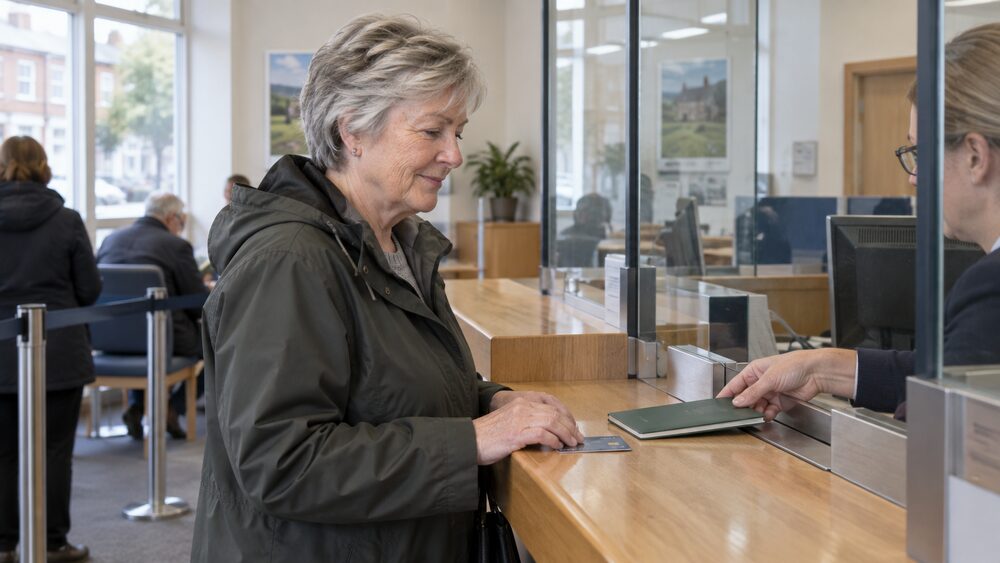
The main difference between a building society and a bank is who owns it. A building society is owned by its members, the people who save with it or borrow from it. A bank is owned by its shareholders. That single difference shapes what each one does with its profits, what rights you get when you open an account, and how the firm answers to the people who use it.
Everything else is largely the same. Both offer current accounts, savings and mortgages. Both are regulated to the same standards, and deposits at both are covered by the Financial Services Compensation Scheme up to the same limit. The 14 largest banks and building societies must follow the same rules on access to cash, and the same rules on switching, complaints and payment checks apply to both.
There are 42 UK building societies, and the Building Societies Association also represents two mutual-owned banks and 7 credit unions1. Building societies and mutual-owned banks hold total assets of almost £650 billion2. Building societies and mutual-owned banks operate through approximately 1,300 branches, a 30% share of branches across the UK3.
Who owns a building society and who owns a bank
Banks tend to be owned by shareholders, whereas building societies are referred to as mutuals, meaning they are owned by their members1. Building societies and credit unions are customer-owned financial institutions based across the UK in local communities1.
That ownership model has a direct consequence for where the money goes. Instead of paying a dividend to shareholders, a building society can focus on growing members' savings and investing in the organisation2. The Building Societies Association estimates that in 2024/25 members received an extra £4 billion in additional benefits compared to the rates and benefits offered by banks, though this figure covers building society members only and excludes mutual-owned banks2.
The building society sector has changed shape over time. Between 1989 and 2000, ten building societies changed their status completely, converting into or merging with a Plc bank7. The societies that remain have largely stayed mutual, and the sector continues to grow as consumers seek better value2.
For a reader, the practical question is not which model is better but what each one gives you. A bank account is a contract with a company owned by investors. A building society account is a contract with an organisation owned by the people who hold its accounts. Both are regulated, both hold your money under the same protections, and both can refuse your business.
What being member-owned means for savers and borrowers
You become a member when you open a savings account, or take out a mortgage with a building society5. As a member of a building society you are more than just a customer: unlike a depositor with, or borrower from, a bank, you have rights to receive information and to voice your opinions on the way your building society is run8.
Those rights are specific. Members are entitled to a copy of the society's rules and memorandum on request, a copy of the annual summary financial statement, which is sent before the AGM and when an account is first opened, a copy of the detailed annual report and accounts, and notice of the AGM9. Members also have a say in how the organisation is run, including charity partnerships and decisions about running the society2.
Voting is where the model gets more complicated than it first appears. If you are both a saver and a borrower with a society, you will still normally have just one vote, except when asked to vote on a conversion or merger, when two separate votes are given9. Customers of a subsidiary of a building society are not members of the society9. Depositors, as distinct from members, are not members and have no member rights9.
For savers, the member-owned structure means there is no shareholder dividend to fund, which is the basis for the BSA's claim that members received an extra £4 billion in benefits in 2024/252. For borrowers, the same structure applies, and building societies and mutual-owned banks account for 46% of all cash ISA balances10.
Branches and access to cash: the same rules for both
Building societies are not exempt from the branch closure trend. Banks and building societies have closed over 6,000 branches across the UK since January 201511. In the two years to Q1 2023, 1,391 bank and building society branches closed, as did 2,176 free-to-use cash machines12. The number of brick-and-mortar branches of the larger banks and building societies providing cash services fell by 210 branches, a decrease of 4.7%, in 2023 Q213. Earlier, between 2022 Q2 and 2022 Q4, the number of branches of the larger banks and building societies providing personal current accounts fell by 429 branches, a decrease of 8.6%14.
What changed is the rulebook. The 14 largest banks and building societies in the UK must conduct cash access assessments in response to trigger events4. The FCA's new regulatory regime requires banks and building societies designated by the Government to assess and fill gaps15. Fourteen firms are designated under Part 8B of the Financial Services and Markets Act16. The rules came into force on 18 September 2024, from which point banks and building societies must assess local cash access and plug significant gaps when services such as branches close17.
Building societies are part of that regime, not outside it. Building societies and mutual-owned banks operate through approximately 1,300 branches, a 30% share of branches across the UK3. Some are opening branches rather than closing them: Newcastle Building Society is opening new branches in local community centres to provide services to rural towns which have lost their banking services18.
Banking hubs where branches have closed
Where branches have gone, banking hubs are one of the replacements. A banking hub opened in Market Harborough in March 2025 in a temporary home in The Symington Building, with a Post Office counter service and community banker days19. Nationwide has tested using technology to bring financial services to communities left without a bank20.
The rules that decide whether an area gets a new cash solution have been tightened. Under the previous approach, LINK would not consider whether an area required a new cash solution if there was a remaining bank or building society branch in town, subject to exceptions including if the branch opened for less than 12 hours a week, was cashless, or did not service small and medium-sized businesses12. That is the gap the current regime is designed to close.
For a reader in a town that has lost its last branch, the practical position is that the largest banks and building societies must assess the local gap and act on it. The assessment is triggered by events such as a closure, and it applies to the 14 designated firms4. Building societies with a branch network are among the firms that can provide the counter service a hub relies on.
Basic bank accounts at the biggest banks and building societies
Basic bank accounts are offered by most high street banks and some building societies21. They are designed for people who cannot open a standard current account, often because of a poor credit history or no credit history at all. Basic bank accounts are offered by 16 banks and building societies, according to parliamentary evidence22.
A bank or building society account, also called a current account, is the easiest way to access your payments23. Benefits are usually paid straight into your bank, building society or credit union account, and you will be asked for those account details when you claim24. A Budgeting Loan or Advance is paid directly into your bank or building society account or through the Payment Exception Service26.
There are limits on who can get an account. A bank or building society can refuse to open an account for you, and they do not always have to give you a reason27. Banks and building societies must not open a new current account for you or add you to an existing account if you are disqualified under the immigration rules28. In Northern Ireland, if you are bankrupt you may open a new bank or building society account but should tell them you are bankrupt, and they may impose conditions and limitations29.
When bank accounts move to a building society
Accounts can move from a bank to a building society, and the largest example is Nationwide. All personal current accounts, savings accounts and mortgages held with Clydesdale Bank, including under its Virgin Money trading name, were legally transferred to Nationwide on 2 April 2026, making most holders Nationwide members29. Nationwide states there were no changes to interest rates, services, sort codes, account numbers or cards as a result of the transfer29.
For customers, the practical effect is that a bank account became a building society account, and with it came membership. Nationwide has been the largest beneficiary of bank account switching in the past six years, having received nearly 550,000 current accounts via switching since 201430.
If you are switching by choice rather than by transfer, the process is the same whichever type of firm you move to. It is very easy to switch accounts by applying for an account with a new bank or building society who will move your accounts and payments for you31. Your new bank or building society will take care of moving all your incoming and outgoing payments, your outstanding balance and closing your old account31. If you prefer to do it yourself, open a new account before closing your old one, cancel or move standing orders and direct debits, return unused cheques and cards cut into pieces, and leave enough money to cover uncleared cheques if transferring a balance27.
The Current Account Switch Service moves payments, balance and closure to the new provider.
Payment checks and outages affect both
Building societies are not immune to the operational problems that hit banks. Nationwide had four faster payment problems in recent months, with faster payments delayed and temporarily queued while Bacs payments were unaffected and cards, internet banking and ATM cash withdrawals continued working32. The building society experienced a similar faster payments issue on 31 December32.
Confirmation of Payee, the name-checking service used when you set up a new payee, is being adopted by building societies as well as banks. Banks use this service to check if the name and account type you enter when setting up a new payee matches the details registered with the bank receiving the money33. Furness Building Society introduced the service in 202434. Coverage is not universal, so a payment to a building society account may not always be checked, and if money goes to the wrong account the recovery process depends on the receiving firm's cooperation33.
On the lending side, banks and building societies apply the same assumptions about capacity. Unless there is a reason to think otherwise, all banks and building societies will assume that you can understand the credit agreement and have the capacity to make a decision about your money35. Banks and building societies must also make sure their services are accessible36.
What happens to money left in a dormant building society account
Under the Dormant Bank and Building Society Accounts Act 2008, banks and building societies who opt into the scheme can transfer the money held in dormant accounts to a central reclaim fund37. Where a bank or building society transfers the balance of a dormant account to an authorised reclaim fund and the fund consents, the customer no longer has any right against the bank or building society to payment of the balance, but has against the reclaim fund whatever right to payment they would have had against the firm if the transfer had not happened6.
Building society membership rights are preserved where the balance of a dormant account held by a member is transferred, until the point at which the customer is repaid38. A smaller bank or building society whose group assets were less than £7 billion at the end of the most recent financial year for which accounts have been prepared can use an alternative scheme38.
An account is not treated as dormant if the holder instructed the bank or building society not to communicate about the account, or if withdrawals were prevented or penalised under the account terms39. If you think there may be savings in a lost bank or building society account, a search can be carried out by using a free application online37.
Where the two are the same, and where they differ
The two models converge on almost everything a consumer experiences day to day. Both are regulated, both are covered by the same deposit protection arrangements, both must follow the access to cash rules, and both can refuse an account. The differences that matter are ownership, what happens to profits, and the member rights that come with a building society savings account or mortgage.
| Question | Building society | Bank |
|---|---|---|
| Who owns it | Members1 | Shareholders1 |
| What happens to profits | No dividend to shareholders; can be used to grow members' savings and invest in the organisation2 | Dividends paid to shareholders2 |
| Member rights | Information rights and a say in how the society is run8 | None by virtue of being a customer |
| Current accounts | Offered, alongside savings and mortgages23 | Offered |
| Basic bank accounts | Offered by some building societies21 | Offered by most high street banks21 |
| Cash access rules | The 14 largest banks and building societies are designated4 | Same regime4 |
| Switching | Current Account Switch Service applies31 | Current Account Switch Service applies31 |
Where the rules differ between the four nations, it is usually in the detail of insolvency and debt rather than in banking itself. In Northern Ireland, bankruptcy guidance sets out what you may and may not do with a bank or building society account29. Benefits payment rules are set out separately for Northern Ireland25 and for England, Scotland and Wales24.
Where to get help
If something goes wrong with a bank or building society account, the first step is the firm's own complaints process. If that does not resolve it, the Financial Ombudsman Service can look at complaints, including discrimination in opening an account30. Citizens Advice can help with getting a bank account and with complaints about banks and building societies27. MoneyHelper provides free, impartial guidance, including on what to do when an account closes23. The Consumer Council in Northern Ireland offers guidance on choosing a current account and managing your finances31.
For anyone struggling with debt, the options include the formal insolvency routes set out by the Northern Ireland Executive40 and the emergency grants and loans available in England41.
Sources41 cited
- The mutual difference Building Societies Association
- The benefits of saving with a building society Building Societies Association, March 2024
- Building society sector continues to grow as consumers seek better value Building Societies Association
- Cash access assessments House of Commons Library
- What is a building society Yorkshire Building Society
- Dormant Bank and Building Society Accounts Act 2008, section 1 legislation.gov.uk
- Mergers and conversions Building Societies Association
- Your rights as a building society member Building Societies Association
- Your rights leaflet Building Societies Association
- Bank rate cut is not the only answer for first-time buyers Building Societies Association
- Response to Prudential Regulation Authority consultation on depositor protection Consumer Scotland
- CP23/29: Access to cash Financial Conduct Authority
- Access to cash coverage UK 2023 Q2 Financial Conduct Authority
- Access to cash coverage UK 2022 Q4 Financial Conduct Authority
- PS24/8: Access to cash Financial Conduct Authority
- Access to cash coverage UK 2025 H2 Financial Conduct Authority
- Bank branch closures: is your local bank closing Which?
- First time buyer news Building Societies Association, October 2023
- Basic bank accounts with no credit check Shelter England
- Basic bank accounts Treasury Committee
- What to do now your Post Office card account is closing MoneyHelper
- How to have your benefits paid GOV.UK
- How benefits and pensions are paid nidirect
- How much Budgeting Loan or Advance will I get Turn2us
- Getting a bank account Citizens Advice
- Current account closed or refused based on immigration status GOV.UK
- Bankruptcy restrictions Northern Ireland Executive
- Complaints about banks and building societies Citizens Advice
- Virgin Money accounts moving to Nationwide Virgin Money
- Nationwide to slash current account interest Which?
- Choosing the right current account Consumer Council
- Nationwide customers hit by outages Which?
- How do I get money back that I've sent to the wrong account Which?
- How to make a payment Furness Building Society
- Can a bank lend to me when I am unwell Mental Health and Money Advice
- Making the most of your bank account Independent Age
- Review of the Dormant Bank and Building Society Accounts Act 2008 GOV.UK
- Dormant Bank and Building Society Accounts Act 2008, notes legislation.gov.uk
- Dormant Bank and Building Society Accounts Act 2008 legislation.gov.uk
- Making yourself bankrupt Northern Ireland Executive
- Emergency grants, loans and money help Shelter England




 MoneyHelperFree, impartial money and pensions guidance, set up by government
 FSCSProtects your money if a bank, insurer or investment firm fails
 Financial Ombudsman ServiceFree, independent help when a complaint about a firm is not put right
 Citizens AdviceFree advice on money, consumer and legal problems in England and Wales