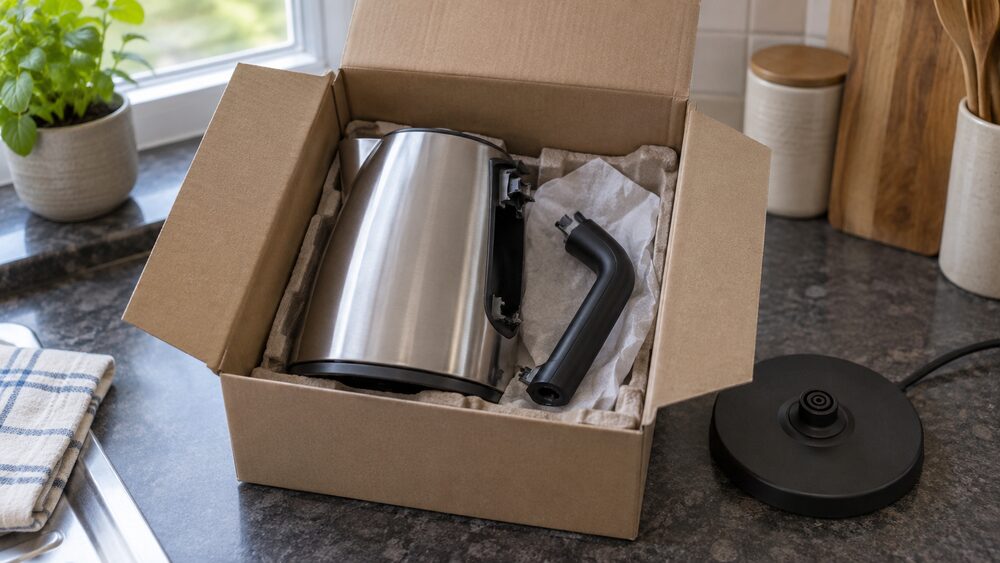
When something you buy turns out to be faulty, not as described, or simply never arrives, the law gives you rights that no shop policy can take away. The main source of those rights is the Consumer Rights Act 2015, which sets the standards everything you buy must meet and the remedies you can demand when they are not met1. It applies to contracts between a trader and a consumer for the supply of goods, digital content or services, whether you buy in a shop, at home, online or by phone2.
The Act's core promise is simple: goods must be of satisfactory quality, fit for purpose and as described; services must be carried out with reasonable care and skill; and digital content must meet equivalent standards4. If what you bought fails those tests, you have a ladder of remedies: a full refund within 30 days, then a repair or replacement, then a price reduction or a final right to reject4. The Act came into force for consumer transactions on 1 October 2015 and covers the whole of the UK, with some differences in Scotland on time limits for court claims5.
What the Consumer Rights Act covers and who it protects
The Consumer Rights Act 2015 applies where there is an agreement between a trader and a consumer for the trader to supply goods, digital content or services. Part 1 of the Act is organised by what you bought: Chapter 2 covers goods, Chapter 3 covers digital content and Chapter 4 covers services2. Part 2 deals with unfair terms in consumer contracts and notices, giving you redress where a term is unfair12.
The Act extends to the whole of the UK, apart from one section, and it applies whether you buy remotely or in person14. It replaced the earlier patchwork of the Sale of Goods Act 1979 and the Supply of Goods and Services Act 1982 for transactions made on or after 1 October 2015; older purchases are still governed by the previous law5. The Act excludes contracts of employment or apprenticeship, which are not consumer supply contracts at all12.
Two other pieces of law work alongside it. The Consumer Contracts Regulations 2013 give you protection before you buy and a 14-day cooling-off period for most purchases made at a distance, such as online, by phone or by catalogue15. And if you paid by credit card, Section 75 of the Consumer Credit Act makes the card provider equally responsible with the seller for faulty, unsatisfactory or undelivered items costing more than £100 but less than £30,00011. Our guide to consumer protection in UK financial services sets out the wider framework.
Goods must be of satisfactory quality, fit for purpose and as described
Every product you buy, from a kettle to a car, must meet three standards at once4. Goods must be of satisfactory quality, meaning they meet the standard a reasonable person would regard as satisfactory, taking account of any description of the goods, the price and all the other relevant circumstances16. A cheap item is not held to the same standard as an expensive one, but even a budget item must do its job safely and without defects a reasonable buyer would not expect.
Second, goods must be fit for purpose. This covers both the ordinary purpose of the goods and any particular purpose you made known to the trader: if you told the shop you needed boots for hillwalking and they sold you fashion shoes, the shoes are unfit for that purpose. Third, goods must be as described. If the label, the advert or the salesperson said one thing and the product is another, the contract has been broken regardless of whether the item is otherwise decent.
The same three standards apply where a service includes the supply of materials, such as building work: the bricks, windows or fittings the trader supplies must be of satisfactory quality, fit for purpose and as described5. If what you bought fails any one of the three tests, you have the right to a refund, repair or replacement depending on how long you have had the item1. A trader cannot contract out of these rights: the Act treats them as terms included in every consumer contract, and a term that would exclude or restrict the trader's liability is not binding on you17.
The 30-day right to reject: a full refund
The strongest remedy is the short-term right to reject. You have 30 days from the day after the goods were supplied to reject them for a full refund11. Which? describes the clock as running from taking ownership of the product, which could be the date of purchase or the date it was delivered, whichever is later7. Within that window, if the goods are faulty, of unsatisfactory quality, unfit for purpose or not as described, you can insist on a full refund regardless of what the retailer's returns policy says7.
Two limits matter. First, the 30-day right does not apply to faulty digital content: for downloads, apps and streaming, the retailer gets one opportunity to repair or replace before a refund can be claimed4. Second, the clock can pause. If you ask for a repair or replacement within the 30 days, the time limit stops running for the length of the waiting period, and then restarts, so you do not lose your rejection right while the trader works on the item18.
The retailer's returns policy cannot override any of this. A policy may state that customers only receive a credit note or vouchers, but that should only apply where the item is unwanted; where an item is returned because it is faulty, the policy cannot require you to take vouchers7. The retailer is also responsible for the good condition and safe delivery of your order, so if it arrives damaged or faulty you have the right to refuse it and get a refund, repair or replacement19.
After 30 days: one chance to repair or replace
Once the 30-day window closes, the remedy ladder changes. Outside the short-term right to reject, you must give the retailer one opportunity to repair or replace the faulty goods before claiming a refund4. You can ask for a repair or replacement within six months of purchase, and the trader must carry it out within a reasonable time and without significant inconvenience4.
If the repair or replacement fails, or is not possible or proportionate, or the trader drags its feet, further remedies open up. Under section 19 of the Act, the consumer may move to a price reduction or the final right to reject only after one failed repair or replacement, where neither is possible or proportionate, or where the trader breached the requirement to act within a reasonable time and without significant inconvenience18. The Act also preserves other routes: claiming damages, seeking specific performance or, in Scotland, an order for specific implement, and relying on the breach against a trader's claim for the price, though not so as to recover twice for the same loss20.
A price reduction is a partial refund reflecting the item's reduced value; the final right to reject ends the contract and returns your money, though with a possible deduction for use. The trader must put things right at no extra cost to you, within a reasonable time and without causing you significant inconvenience5. If a repair or replacement is not successful, you may be entitled to reject the goods or keep them with a price reduction21.
Who has to prove the fault: the six-month rule
One of the most practical protections in the Act is the six-month burden of proof. Goods that fail to conform to the contract at any time within six months of delivery are taken not to have conformed on the day they were delivered, unless the trader can prove otherwise20. In plain terms: if a fault appears within the first six months after purchase, it is for the trader to prove the fault was not present at the time of sale21. The same presumption applies to digital content, where a fault discovered within six months of supply is assumed to have been there from the start8.
After the first six months, the burden of proof switches to you: you must prove the fault you have found was present at the time you purchased the goods in store, or when you first took ownership if you bought online7. This is why evidence matters. Trading standards guidance advises keeping receipts, order confirmations, photographs and any correspondence, because proving when the fault existed is what decides the claim once the presumption no longer helps you8.
The six-month rule does not apply to everything. It does not bite if it is established that the goods did conform to the contract on the day of delivery, or where its application is incompatible with the nature of the goods or with how they fail to conform, for example where misuse after delivery is the real cause20. A contractual term that tried to put the burden of proof on you rather than the trader would run against the unfair terms rules22.
Refunds: within 14 days, by the same payment method
When you are entitled to a refund, the law sets a deadline and a method. The trader must give you the refund without undue delay and, in any event, within 14 days from the time they agreed you were entitled to it9. The same 14-day rule applies to a price reduction under the Act, and the refund must be given by the same means of payment you used to make the purchase, unless you expressly agree otherwise17.
For online purchases cancelled under the Consumer Contracts Regulations, the refund of the goods and the standard delivery cost must be paid within 14 calendar days after you return the goods, or provide evidence that they were returned23. Refunds for distance sales can be withheld until the consumer has returned the goods, and traders can deduct money if it appears the item has been used15.
On deductions, the general rule is that a retailer usually cannot make deductions from a refund in the first six months. After the first six months, a deduction for fair use can be made if an attempted repair or replacement has failed and you are claiming a refund. Motor vehicles are the exception: for cars, a retailer can make a deduction for fair use after the first 30 days4.
Services must be carried out with reasonable care and skill
The Consumer Rights Act also covers services, from haircuts and car repairs to building work and professional advice1. The law says any services you buy must be carried out with reasonable care and skill, finished within a reasonable period if no time limit was agreed in advance, and charged at a reasonable price if a price was not agreed in advance5. If a service fails to meet those conditions, the trader must put things right at no extra cost to you, within a reasonable time and without causing you significant inconvenience5.
The Act adds an information rule: a service must conform to any information the trader provides about it, either in writing or verbally5. If a plumber quotes for a specific boiler and installs a cheaper model, or a decorator promises a particular paint and uses another, the service does not conform. It is you, the consumer, who holds the rights and remedies against the trader if the service is not carried out with reasonable care and skill9.
If the trader will not put things right, the remedies include a price reduction reflecting the drop in the value of the service, or, where the failure is serious enough, treating the contract as at an end. Where a service includes the supply of materials, the goods element carries the same satisfactory quality, fit for purpose and as described standards as any other purchase5. Disputes about services can be taken to alternative dispute resolution or, if needed, the small claims track.
Digital content: downloads, streaming and ebooks
Chapter 3 of the Act covers digital content supplied for a price paid by the consumer: downloads, apps, ebooks, games and streamed media that you pay for17. The contract is treated as including a term that the trader has the right to supply the content, so if you buy a download that the seller had no right to sell, the contract is broken17. The content must also match any description the trader gave, mirroring the goods rules17.
The remedies differ from goods in one important way: there is no 30-day right to reject for faulty digital content. The retailer has one opportunity to repair or replace the digital content before a refund can be claimed4. If the content does not conform, you have the right to a repair or replacement, and the right to a price reduction, and a refund under the price reduction right must be given without undue delay and in any event within 14 days of the trader agreeing you are entitled to it, using the same means of payment unless you agree otherwise17.
Digital content has one remedy goods do not. Where digital content supplied under a contract causes damage to your device or to other digital content, damage of a kind that would not have occurred with reasonable care and skill, the trader must repair the damage or compensate you17. A contract term that would exclude or restrict the trader's liability for digital content is not binding on you17. Our page on faulty digital content and apps goes into this in more detail.
Buying a car from a dealer
A car bought from a UK dealer must meet the same three standards as any goods: it must be of satisfactory quality taking into account its age and mileage, fit for its purpose, and match any description given in the advert or in discussions before the sale24. The Consumer Rights Act gives you an initial 30 days to reject a faulty vehicle and claim a full refund from the dealer24. After that period, the trader normally has one opportunity to repair or replace the vehicle21.
If the repair or replacement is not successful, you may be entitled to reject the vehicle or keep the car with a price reduction21. The six-month rule applies with force here: if you take the vehicle back within six months of purchase, the dealer should accept there was a problem when the vehicle was sold, because the burden of proof is on the trader24. Beyond six months, it is up to you to prove there was a problem with the vehicle beyond normal wear and tear when it was sold to you24.
For cars, a deduction for fair use can be made from a refund after the first 30 days, which is the exception to the general six-month rule on deductions4. Government guidance on buying repaired or written-off vehicles confirms the underlying standards: any vehicle sold must be as described, of satisfactory quality and fit for purpose25. Consumer Scotland's work on the used car sector highlights the six-month burden of proof as a key protection for used car buyers21.
Late, damaged or missing deliveries
Delivery problems are governed by a default rule: your delivery must be made without undue delay and within 30 days from the point of purchase, unless you and the retailer agree otherwise19. If you made it clear at the time of ordering that delivery by a certain date was essential, for example a birthday, and the order is late, you can treat the contract as at an end and claim a refund19. If you paid extra for special delivery and the order arrived later than agreed, you can claim back the extra delivery cost, because that service was not delivered as promised19.
The retailer, not the courier, is responsible for the good condition and safe delivery of your order19. If the order arrives damaged or faulty, you have the right to refuse it and get a refund, repair or replacement19. On returns, the fault decides who pays: any terms and conditions saying you must cover the cost of returning an item do not apply where the goods being returned are faulty23. For unwanted items cancelled under the online cooling-off period, you must cover the delivery cost of returning them unless the retailer says it will pay26.
The cooling-off period is not the right to reject
Two different rights are often confused. The 14-day cooling-off period comes from the Consumer Contracts Regulations 2013 and applies to most purchases made at a distance: you have the right to cancel at any time from the moment you place your online order, and up to 14 days from the day you receive your goods26. It needs no reason at all; changing your mind is enough.
The 30-day right to reject comes from the Consumer Rights Act and needs a reason: the goods must be faulty, of unsatisfactory quality, unfit for purpose or not as described11. The clocks run separately and the refunds are calculated differently. A cooling-off cancellation refunds the cost of the goods and the standard delivery charge26; a rejection refunds the price, though for cars a fair-use deduction can apply after 30 days4. Our page on cooling-off periods and cancelling financial products covers the cancellation rules in full.
Where the Act does not apply, and where other rules take over
The Act's protections have edges. Buying from a private seller gives you fewer rights, because parts of the Consumer Rights Act do not apply24. If a vehicle is sold at a public auction and you had the opportunity of attending the sale in person, most of your rights under the Act do not apply24. The Consumer Contracts Regulations, by contrast, cover sales made in person or remotely, including online auction sites and app stores15.
Some sectors have their own regimes. The Consumer Contracts Regulations do not apply to contracts for services of a banking, credit, insurance, personal pension, investment or payment nature, which sit under financial regulation instead27. Financial services have their own protections, from the Financial Ombudsman Service to the FSCS. The unfair terms rules in Part 2 of the Act do not apply to terms that reflect mandatory statutory or regulatory provisions or international conventions12, and Schedule 2 carves out areas such as the core terms of financial contracts: paragraphs 8, 11, 14 and 15 do not apply to transactions in transferable securities, financial instruments and other products where the price is linked to market fluctuations the trader does not control28, nor to contracts for the purchase or sale of foreign currency, traveller's cheques or international money orders denominated in foreign currency29.
A trader cannot use a contract term to escape liability for goods, digital content or services: section 62 of the Act restricts how liability can be excluded, and it does not affect the specific exclusion of liability provisions in sections 31, 47, 57 and 6530. The old Sale of Goods Act exclusion route is closed too: section 55(1) of that Act does not apply to contracts covered by the 2015 Act31. And a guarantee never replaces your statutory rights: you can raise a problem about a product for up to six years from the date of buying it regardless of the terms of any guarantee10.
Time limits and courts in each nation
The final deadline for taking a faulty goods claim to court is six years from the date of purchase in England, Wales and Northern Ireland, and five years in Scotland10. Which? gives the same split: up to six years to take a claim to the small claims court for faulty goods in England, Wales and Northern Ireland, and five years in Scotland4. The same six-year, five-year split applies to breaches of the Act generally, including being sold a faulty car24.
These long limits sit at the end of the ladder, not the start. The practical sequence is the 30-day rejection, the six-month burden of proof, the repair or replacement attempt, and only then, if the trader still refuses, a court claim. Court is a last resort: complaining to the trader first, then using alternative dispute resolution or an ombudsman where one covers the sector, is usually faster and cheaper. Claims in England and Wales go through the small claims court; Scotland uses simple procedure; Northern Ireland has its own small claims process.
Sources31 cited
- What are my statutory rights and when do they apply? Which?, 2026
- Consumer Rights Act 2015, Section 1 legislation.gov.uk
- Consumer protection rights GOV.UK
- What do I do if I have a faulty product? Which?, 2026
- Your consumer rights when buying services Consumer Council
- Consumer Rights Act 2015 (as enacted) legislation.gov.uk, 2015
- I want to return my goods, what are my rights? Which?, 2026
- Getting evidence to prove your claim Trading Standards Wales
- Problems with services Anglesey County Council
- Guarantees and warranties nidirect
- Remedies and redress: an overview of your key consumer rights Trading Standards Wales
- Consumer Rights Act 2015, Part 2 legislation.gov.uk
- Unfair terms in consumer contracts and notices Trading Standards Wales
- Consumer Rights Act 2015, Parts 1 and 2 extent legislation.gov.uk
- Other laws protect your consumer rights Consumer Council
- Supply of Goods (Implied Terms) Act 1973, Section 10 legislation.gov.uk
- Consumer Rights Act 2015, Part 1 Chapter 3 legislation.gov.uk
- Consumer Rights Act 2015, Part 1 legislation.gov.uk
- My delivery or online order hasn't arrived, what can I do? Which?, 2026
- Consumer Rights Act 2015, Section 19 legislation.gov.uk
- Consumer challenges in Scotland's used car sector Consumer Scotland, 2026
- Consumer Rights Act 2015, Section 63 notes legislation.gov.uk
- I want to return something bought online Which?, 2026
- Is there a 14-day cooling-off period when buying a car? Which?, 2026
- Buying repaired or written-off vehicles: a consumer guide GOV.UK
- I want to return something bought online Which?, 2026
- Consumer Contracts (Information, Cancellation and Additional Charges) Regulations 2013 legislation.gov.uk, 2013
- Consumer Rights Act 2015, Schedule 2 Part 2 legislation.gov.uk
- Consumer Rights Act 2015, Schedule 2 legislation.gov.uk
- Consumer Rights Act 2015, Section 62 legislation.gov.uk
- Sale of Goods Act 1979, Schedule 1 amendment legislation.gov.uk




 Citizens AdviceFree advice on money, consumer and legal problems in England and Wales
 Financial Ombudsman ServiceFree, independent help when a complaint about a firm is not put right
 MoneyHelperFree, impartial money and pensions guidance, set up by government
 Citizens Advice ScotlandFree advice across Scotland