A cooling-off period is a legal window in which you can cancel a financial product you have bought, without giving a reason and without having to justify the decision. For most things arranged online, over the phone or by mail order, that window is 14 days1. For life insurance, pensions and annuities it is longer: 30 calendar days under the FCA's conduct rules2.
The right exists because these products are often bought at a distance, without a face-to-face conversation, and sometimes after pressure or a snap decision. It gives you time to read the terms properly, compare alternatives and back out cleanly. Cancelling in time unwinds the deal: the contract is treated as ended, and in the case of credit agreements the whole arrangement is treated as if it had never existed3.
What a cooling-off period lets you do
A cooling-off period is a right to withdraw, not a complaint or a dispute. You are not saying the firm did anything wrong; you are simply saying you have changed your mind. The legal effect is set out plainly in the FCA's rulebook:
"By exercising a right to cancel, the consumer withdraws from the contract and the contract is terminated."
That means the product stops existing from the moment your cancellation takes effect. An insurance policy lapses, an investment is unwound, a savings account is closed and the money returned. What you may have to pay back, and what you get refunded, depends on the product and is covered later on this page.
The right is not a one-off that expires the first time you use a product. Providers can apply it again when a product rolls over. Ford Money, for example, applies a 14-day cooling-off period from the maturity date when a savings account matures into another Ford Money account, so a customer can still request closure of the account as part of their rights7. Al Rayan Bank similarly gives a 14-day window each time funds in its Fixed Rate Saver are reinvested for a further term, with the period beginning on the commencement of the new term8.
Cooling-off periods also sit alongside your ordinary statutory rights. Cancelling within the window is not the same as rejecting faulty goods or complaining about poor service; those rights are separate and are not used up by a cancellation.
Cooling-off periods by product: 14 or 30 days
The length of the window depends on what you bought and how you bought it. The general rule for services bought at a distance, including online, is 14 days from the day you place your order9. The Financial Services (Distance Marketing) Regulations 2004 give consumers 14 days to cancel most services, starting from the date of purchase3. Life and pensions contracts get 30 calendar days2.
| Product or situation | Cooling-off period | Notes |
|---|---|---|
| Services bought online, by phone or mail order | 14 days | Minimum period a seller must give1 |
| Most financial services bought at a distance | 14 days | From the date of purchase3 |
| Life policies, pensions, annuities, pension transfers | 30 calendar days | FCA conduct rules2 |
| Income protection insurance | Usually 30 days | Full refund of the policy10 |
| Credit agreements at a distance | 14 days | Agreement treated as never entered into4 |
| Credit agreements signed off trade premises | Five clear days | Consumer Credit Act 19745 |
| Distance contracts for accepting deposits | 14 calendar days | FCA rulebook11 |
| Pawnbroking loans | 14 days | To withdraw from the agreement12 |
| Regulated sale and rent back | 14 days | From the written pre-offer document13 |
| Subscription contracts | Initial and renewal cooling-off periods | Digital Markets, Competition and Consumers Act 202414 |
Two points are worth noticing in that table. First, 14 days is a minimum, not a ceiling: a seller must give you at least that long for a service arranged online, by phone or by mail order, and some firms choose to give more1. Second, some products pick up their own dedicated rules. Sale and rent back schemes, where you sell your home and rent it back from the buyer, must give you a 14-day window from the time you are supplied with the written pre-offer document, giving you more time to decide what to do13. Subscription contracts, under legislation from 2024, carry a right to cancel during an initial cooling-off period and any renewal cooling-off period, and no penalty or charge may be imposed for cancelling during those windows14.
Pensions, life insurance and annuities: 30 days to cancel
The longest cooling-off period in UK financial services belongs to the products that are hardest to reverse once they are in motion. Under COBS 15.2, a consumer has the right to cancel, within 30 calendar days, a life policy (including a pension annuity), a contract to join a personal pension scheme or stakeholder pension scheme, a pension contract, a pension transfer, and a contract to vary a personal or stakeholder pension scheme by exercising an option to make income withdrawals2.
Thirty days rather than fourteen reflects what these products do. A pension transfer moves your retirement savings out of one scheme and into another, sometimes with guaranteed benefits left behind that cannot be recovered. An annuity converts a pot of money into an income for life and generally cannot be undone after it starts. The longer window gives you time to take advice, read the illustrations and check the numbers before the decision becomes permanent.
Insurance in this family gets the same treatment. If you take out income protection insurance, you usually have 30 days to cancel the policy and get a full refund10. NS&I applies a 30-day window to its Guaranteed Growth Bonds and Guaranteed Income Bonds: if you change your mind after investing, you can cancel within 30 days of receiving confirmation of your Bond17, and its key features document confirms the same 30 days from confirmation19.
The 30-day right is not automatic for every pension-related purchase. For lifetime ISAs and certain non-life contracts bought face to face rather than at a distance, the right arises only where the contract followed a personal recommendation or a ready-made suggestion from the firm or another person2. More on that distinction in the next section.
ISAs and investment wrappers: one right covers the whole arrangement
ISAs are tax-free savings and investment plans which allow you to save a certain amount of money each year tax free20. Individuals have the right to access their investment at any time and there are no statutory lock-in periods20, so the question of cancelling is usually about unwinding a recent purchase, not about escaping a long-term commitment.
Where a cooling-off right applies to something bought inside a wrapper, the right covers the whole arrangement, not just the piece you might have expected. The FCA's rules state that for a life policy effected when opening or transferring a wrapper, the 30 calendar day right to cancel applies to the entire arrangement2. For a unit bought when opening or transferring a wrapper or pension wrapper, the 14 calendar day right to cancel applies to the entire arrangement2. A contract for a cash deposit ISA carries a 14 calendar day right16.
The practical point is that cancelling one holding does not necessarily close the wrapper, and closing the wrapper cancels everything inside it. If you opened an ISA and bought a life policy within it, the 30-day right applies to the whole arrangement; if you bought fund units, the 14-day right does. Which one applies depends on what was bought, so check the contract documents rather than assuming a single rule for all ISAs.
Money held in cash ISAs is also covered by the Financial Services Compensation Scheme alongside current accounts, savings accounts and savings bonds21, though that protection is about the provider failing, not about changing your mind. The two things are separate: FSCS cover does not give you a cancellation right, and a cancellation right does not compensate you for a firm's collapse.
Loans and credit agreements: 14 days to withdraw
Credit agreements taken out at a distance carry a 14-day right of withdrawal. In addition to a five-day cooling-off period for agreements signed off trade premises, you have a 14-day period in which to change your mind and cancel a credit agreement4. The 2010 regulations that implemented this right state that the consumer has the right to withdraw from a credit agreement within 14 days23, and the rule on how notice is timed works on despatch rather than receipt: sending your cancellation notice on time determines whether it is timely24.
The effect of cancelling is unusually thorough. The agreement and any linked transactions are treated as if they had never been entered into; the loan company must repay all sums you have paid, and you must return any goods you have received4. You do not, however, have an automatic right to return goods bought under a linked credit agreement unless the supplier is willing to take them back24.
The 14-day period starts from the day the agreement is concluded or, if later, from when you receive a copy of the agreement4. For credit cards, it starts from when you receive notification of your credit limit4.
The older Consumer Credit Act 1974 route still matters for agreements signed away from the lender's premises. Under it, a debtor may serve notice of cancellation between signing the unexecuted agreement and the end of the fifth day following the day on which he received a copy of the agreement or the required notice5. In practice that gives five clear days, not counting the date of receipt22.
Not every credit agreement can be cancelled. There are some agreements that cannot be cancelled, for example where the amount of credit exceeds £60,260 and for agreements secured on land4. Pawnbroking customers have 14 days to withdraw from the loan agreement12. More on the gaps in the next section.
Where there is no right to cancel
The cooling-off right has edges, and it is worth knowing where they are before you rely on one.
- Bought in person at the business's premises. If you went into the business's shop or premises to arrange the service, you do not get the cooling-off period1. The right exists for distance and off-premises sales, not for walk-in purchases.
- The service is already complete. If the service is complete before the cooling-off period ends, you do not have the right to cancel9.
- Sealed goods opened. You do not have a right to cancel goods with a seal that has been broken for health protection and hygiene reasons9.
- Large or land-secured credit. Agreements where the amount of credit exceeds £60,260, and agreements secured on land, cannot be cancelled under the 14-day right4.
- Buy now pay later. Guidance added in July 2026 confirms that regulated deferred payment credit agreements, the form most buy now pay later takes, do not carry the standard right to cancel, because the cancellation rules do not apply to them.
- Exempt contracts. The FCA rulebook maintains a list of exemptions from the right to cancel, last updated on 6 April 202626.
Two further points about the edges. The 14-day period for goods is the time you have to decide whether to cancel, so a seller cannot insist you must already have returned the goods within that timeframe9. And asking for a service to start straight away does not waive your right: unlike the old Distance Selling Regulations, you do not waive your right to cancel a contract within this cooling-off period even if you asked for the service to begin immediately9, though you could be charged for the service you have already had the benefit of.
If you were pressured or misled into a contract rather than simply changing your mind, a different remedy may apply: the right to unwind a contract after misleading or aggressive selling.
When the clock starts and what firms must tell you
Getting the start date right is where most cancellations go wrong, because the clock does not always begin when you might expect.
For financial services under the FCA's rules, the cancellation period begins either from the day of the conclusion of the contract, except for contracts relating to life policies where the time limit begins from the time the consumer is informed that the contract has been concluded, or from the day the consumer receives the contractual terms and conditions and any other required pre-contractual information, if that is later2. So if the documents arrive a week after you signed up, the window may run from the later date.
For general consumer services, your cooling-off period begins the day after you enter a contract with the business, whether the contract is written down or not1. For building work, the 14 days start when you tell the trader you would like them to do the work or sign a written contract27. For credit cards, the 14-day period starts from when you receive notification of your credit limit22. And where a savings product rolls over, the clock can start again: Al Rayan Bank's reinvestment window begins on the commencement of the new term8.
Firms must actively tell you about all this. Under COBS 15.2, the firm must disclose, in good time before or, if that is not possible, immediately after the consumer is bound by the contract, and in a durable medium, the existence of the right to cancel or withdraw, its duration, the conditions for exercising it, the amount the consumer may be required to pay, the consequences of not exercising it, and practical instructions including the address to which the notification of cancellation should be sent2. For general insurance, a firm must provide a consumer with information on the right to cancel a policy covering the same ground: existence, duration, conditions, amount payable if exercised, consequences of not exercising it and practical instructions28. Cancellation rights do not reduce what else a firm must tell you to enable an informed purchasing decision28.
How to cancel: notice, deadlines and no reason needed
Cancelling is deliberately simple. You do not need to give a reason, and you do not need the firm's agreement.
- Check which period applies to your product: 14 or 30 days, and from which start date2.
- Find the address. The firm must have told you, in a durable medium, the address to which the notification of cancellation should be sent2.
- Send notice. To cancel the contract in the cooling-off period, write to or email the business to let them know you want to cancel the purchase29.
- Keep proof of sending. For credit agreements, it is the despatch of the notice, not its receipt, that determines whether the cancellation is in time24.
- Settle up. Repay any credit drawn down plus accrued interest, and return any goods received4.
Some firms make it easier still. Gatehouse Bank states that within its 14-calendar-day cooling-off period for its fixed term deposit, no notice period or charges will apply30. Authorised claims management companies must offer a 14-day cooling-off period when you can cancel your contract without being charged, alongside duties to give clear written information about the service and fees before the contract, get your signature before taking money or starting a claim, tell you about ombudsman schemes and explain how to complain31. Subscription contracts go furthest: a consumer has the right to cancel during the initial cooling-off period and any renewal cooling-off period, in any circumstances and without conditions, and no penalty or charge may be imposed for doing so14.
If your mental health affected the decision, the same cancellation routes apply: writing to or emailing the business within the window is the mechanism, and support is available from Mental Health and Money Advice on returning things bought when unwell29.
Refunds and repayments after you cancel
What comes back to you, and what you owe, depends on the product.
For services, if you paid up front or made a deposit and cancel in the cooling-off period, you are entitled to receive all of the money back, unless you asked for the service to be provided during the period and it was1. If you cancel a service that has already started, you could be charged for the service you have had the benefit of9.
For credit, the position is two-sided. The agreement and any linked transactions are treated as if they had never been entered into, and the lender must repay all sums you have paid, but you have to repay the amount borrowed along with any interest that has accrued up to the point at which you cancel4. You must also return any goods you have received4.
For investments and insurance, refunds are generally full within the window, but check the small print on advice fees. Where a firm offers to facilitate payment of adviser charges or consultancy charges, it must disclose whether any refund will include an adviser charge, and that you may be liable to pay any outstanding adviser or consultancy charges2. The refund of the product and the refund of the advice are separate questions.
Insurance cancellation fees are a live issue even inside the window. If you decide you no longer want your car insurance policy, even within the 14-day cooling-off period, your insurer may charge you a fee32. Which? has documented insurers charging, for example, £25 for cancelling during the 14-day cooling-off period33. A fee for administration is different from a penalty for exercising the right, and the firm must have told you the amount payable if you cancelled before you were bound2.
For savings bonds, NS&I's Guaranteed Growth Bonds and Guaranteed Income Bonds allow cancellation within 30 days of receiving confirmation of your Bond17, with the key features document confirming the same window19.
If a firm did not tell you about your right to cancel
The disclosure duties are not optional. A firm must tell you, in a durable medium and at the right time, that the right exists, how long it lasts, what it costs to use and where to send notice2. If it did not, that is a compliance failure on the firm's side, and it is the starting point for a complaint.
- Complain to the firm first, setting out that you were not told about your right to cancel and what you want done. Which? publishes a template letter for complaining that you could not cancel an online order34.
- Escalate to the Financial Ombudsman Service if the firm does not resolve it. The ombudsman can look at whether the firm met its disclosure obligations and can award redress. See taking a complaint to the ombudsman for the process and time limits.
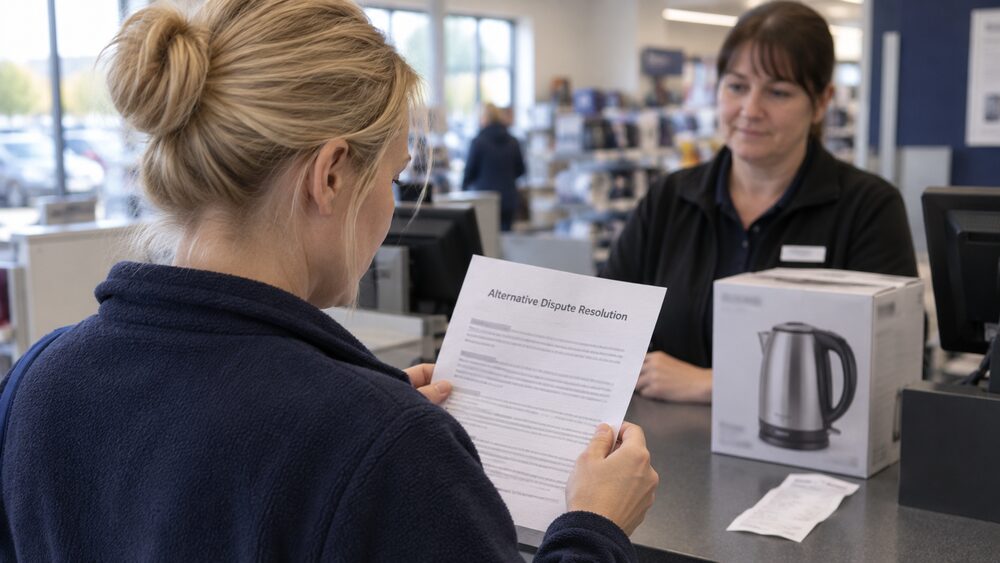
- Consider other routes if the matter is wider than one firm, including alternative dispute resolution and, where money is genuinely owed, the small claims court.
If the reason you signed up was pressure or misrepresentation rather than a simple change of mind, the remedy for misleading and aggressive selling, which can unwind the contract entirely, may be stronger than a cooling-off claim. And if the "firm" that contacted you was not a real firm at all, what you are dealing with is a scam, not a contract; scams and fraud covers how to spot one and what to do. Free, impartial help is available from Citizens Advice on consumer problems and from the ombudsman on financial ones.
Sources34 cited
- Cancelling a service you've arranged Citizens Advice, 2026-09-25
- COBS 15.2 The right to cancel FCA Handbook, 2026-04-06
- The Financial Services (Distance Marketing) Regulations 2004 Which?, 2025-06-18
- Consumer Credit Act Which?, 2025-06-18
- Consumer Credit Act 1974 legislation.gov.uk, 1974-07-31
- COBS 15.4 Effects of cancellation FCA Handbook, 2026-09-26
- Ford Money FAQs Ford Money, 2026
- Online banking cooling off Al Rayan Bank, 2026
- Can I cancel an online order? Which?, 2025-07-30
- Income protection insurance Citizens Advice, 2026-09-26
- COBS 15 Distance contracts FCA Handbook, 2026
- Pawnbroking Customers in 2020 University of Bristol, 2020-07
- MCOB 6.9 Regulated sale and rent back FCA Handbook, 2010-06-30
- Digital Markets, Competition and Consumers Act 2024, Part 4 legislation.gov.uk, 2024-05-24
- Sale and rent back schemes run by private firms Citizens Advice Scotland, 2026-09-25
- COBS 15.2 The right to cancel FCA Handbook, 2026-04-06
- NS&I Guaranteed Growth Bonds NS&I, 2026-09-15
- NS&I Guaranteed Income Bonds NS&I, 2026-09-04
- Guaranteed Growth Bonds key features NS&I, 2025-06-30
- Annual savings statistics 2025: background and methodology GOV.UK, 2025-09-18
- What is the Financial Services Compensation Scheme? Bank of England, 2025-12-01
- Consumer Credit Act Which?, 2025-06-18
- Consumer Credit (Disclosure of Information) Regulations 2010 legislation.gov.uk, 2010
- Consumer Credit (Disclosure of Information) Regulations 2010, article 14 legislation.gov.uk, 2010
- I want to cancel a loan I've taken out, what do I need to know? Which?, 2025-06-18
- COBS 15 Annex 1 Exemptions from the right to cancel FCA Handbook, 2026-04-06
- Before you get work done on your home Citizens Advice Scotland, 2026-09-25
- ICOBS 6.2.5 FCA Handbook, 2026
- Can I return things I bought when I was unwell? Mental Health and Money Advice, 2024-02-27
- 18 month fixed term deposit key product information Gatehouse Bank, 2026-08-20
- Claim compensation for injury or financial loss GOV.UK, 2014-06-16
- Car insurance add-ons, fees and charges Which?, 2026-01-22
- Legal expenses insurance reviews Which?, 2025-12
- Letter complaining that you couldn't cancel an online order Which?, 2025-06-18


 Citizens AdviceFree advice on money, consumer and legal problems in England and Wales
 Financial Ombudsman ServiceFree, independent help when a complaint about a firm is not put right
 MoneyHelperFree, impartial money and pensions guidance, set up by government
 Citizens Advice ScotlandFree advice across Scotland