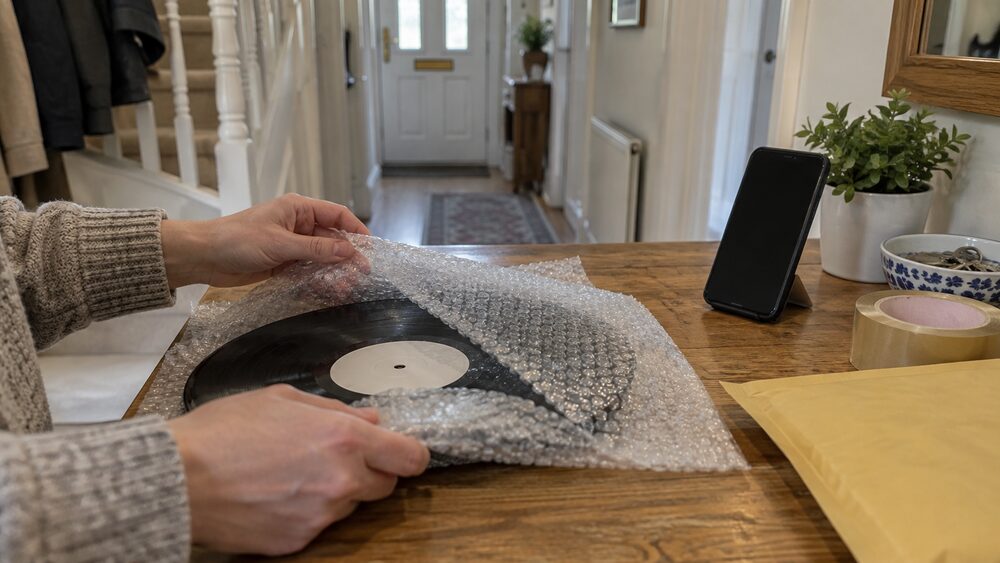
Selling your own unwanted things online usually does not mean a tax bill. If you are selling unwanted items from your home, it is unlikely that you will need to pay tax1. Clearing out old personal items, such as clothes on Vinted or old records on eBay, does not normally attract income tax2.
Selling your own unwanted things online usually does not mean a tax bill. If you are selling unwanted items from your home, it is unlikely that you will need to pay tax1. Clearing out old personal items, such as clothes on Vinted or old records on eBay, does not normally attract income tax2.
What changes the picture is why you are selling. If you buy items with the intention to resell them for a profit, this is considered trading and you will usually have to pay tax1. The same applies if you sell things you have made, or provide a service through a marketplace.
The figure that matters most is £1,000. If you earn less than £1,000 from online selling, you do not have to inform HMRC or pay tax1. You only have to report income of over £1,000 from selling activity if it arises from a trade3. Above that, you may have to complete Self Assessment, and the deadline to register is 5 October4.
Selling online: tax applies once income tops £1,000
The £1,000 figure is a threshold for reporting, not a tax-free allowance you can stack on top of everything else. If you earn less than £1,000 from online selling, you do not have to inform HMRC or pay tax1. You only have to report income of over £1,000 from selling activity if it arises from a trade3. Selling a one-off personal possession is not a trade, so it sits outside this entirely.
Where you are trading, you may have to complete Self Assessment if your gross income before expenses is more than £1,0003. Note the word gross: the test is your sales, not what is left after costs. Where you are taxed, it is on the profit, not the gross income3.
There is a choice here, and it is worth understanding before you file. You can use the £1,000 tax-free trading allowance, which means the first £1,000 of trading income is not taxed and you do not need to report it. But you cannot claim expenses if you use your £1,000 tax-free trading allowance7. So for a seller with high costs, such as someone paying significant marketplace commission, deducting actual expenses may leave less taxable profit than using the allowance. For a seller with few costs, the allowance is simpler.
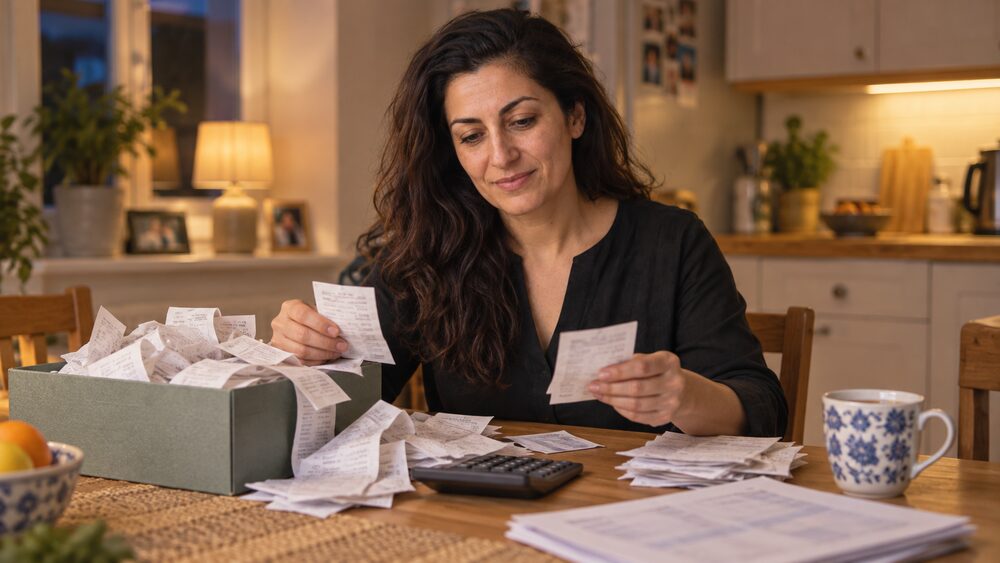
Marketplace commission is a real cost. If you sell a dress for £5.00, the 10 per cent commission will be £1.001. That £1.00 is the kind of expense that reduces your profit if you claim expenses rather than the allowance.
When you need to register for Self Assessment
If you need to send a tax return, you will need to register for Self Assessment by 5 October4. That date is not the filing deadline; it is the point by which HMRC needs to know you are coming. Those who need to file a Self Assessment tax return for the first time for 2025 to 2026 must register by 5 October 20268.
The pattern is easier to hold in your head with an example. For the tax year that ends on 5 April 2026, you would have to register by 5 October 20269. Registration is not only for the self-employed. You also need a return if you were self-employed and earned more than £1,000 before any deductions, or if your total taxable income was more than £150,0004. Having foreign income, such as savings or investment income or a foreign pension, is another route in10.
There is a wrinkle for people who have filed before. Customers who are already registered for Self Assessment but did not submit a tax return for the 2024 to 2025 tax year will need to reactivate their account if they need to submit one for the 2025 to 2026 tax year8. The online registration service is available to individual customers with a Personal Tax Account8.
If you also rent out property, the registration deadline is 5 October following the end of the tax year, where your profit is over £2,50011.
Self Assessment deadlines: online, paper and payment
The deadline to complete and return your tax return online is 31 January4. Online tax returns need to be submitted by 12pm on 31 January after the tax year12. Paper returns are due by 31 October, with an online tax return by 31 January5. You will be fined if you miss the deadline, and it is earlier if you are sending your return by post, at 31 October13.
| What you are doing | Deadline |
|---|---|
| Registering for Self Assessment | 5 October after the tax year4 |
| Sending a paper return | 31 October5 |
| Sending an online return | 31 January4 |
| Paying your bill | 31 January5 |
One source gives the online deadline as 31 January, another as 31 January 2027, and the conflict is not resolved. Treat the 31 January date as the one to work to, and check your own HMRC account for the year in question.
If you cannot pay in full, an online payment plan may be available. One condition is that it is within 60 days of the payment deadline14. If your income has gone down, you can ask to reduce your payments on account online, by phone, or by completing form SA303, with a realistic estimate of the year's tax bill15.
How to pay the tax you owe
You need to register online before you can pay16. You can file your tax return online, and 97% of people already do it this way17. Your Self Assessment statement, also known as your bill, sets out what is owed18.
If you have overpaid, you can check and claim for a refund online on GOV.UK, or on the HMRC app, or by asking HMRC to send you a cheque19. HMRC may also reduce the tax collected from future wages19.
There is a specific rule for the High Income Child Benefit Charge. You must pay the tax charge through Self Assessment if you need to send a tax return for another reason, or if it is later than 31 January in the year after the tax year you need to pay for20.
Making Tax Digital: what changes for online sellers
From 6 April 2026 onwards, HMRC is introducing a requirement for some sole traders and individual landlords to use Making Tax Digital22. Making Tax Digital is now a legal requirement and customers in scope should check now that they are signed up, that their details are correct and that they are ready to send their first quarterly update23.
The first phase covers landlords and sole traders earning over £50,000 a year, before tax and expenses, from April 202624. The draft legislation for Making Tax Digital for Income Tax and penalty reform was introduced by these measures25.
If you sell online as a sole trader and your income is below these levels, nothing changes yet. If you are above them, you will move from one annual return to quarterly updates through compatible software. The exemption route exists for people who cannot use digital tools, and there is a separate page on digital exclusion exemption from Making Tax Digital.
If you stop selling or receive a return you do not need
If you have stopped selling, or you were sent a return you do not need, you can ask HMRC to withdraw it. This is a common situation for people who sold a few things during a clear-out, registered to be safe, and then found they had nothing to report.
If you are already registered for Self Assessment but did not submit a tax return for the 2024 to 2025 tax year, you will need to reactivate your account if you need to submit one for the 2025 to 2026 tax year8. Reactivating is not the same as registering for the first time, and the online service handles both.
If HMRC has corrected your return, you will receive a revenue correction notice. If your tax return contains an obvious error or is missing information, HMRC corrects the return and sends a notice explaining why26. You can also make changes yourself online within 12 months of the self-assessment deadline27. If you disagree with a correction, there is a formal route to challenge it.
Where to get help
If you are struggling with a tax bill, or you are not sure whether your selling counts as trading, free and impartial help exists. TaxAid and Tax Help for Older People give free advice to people on lower incomes. Citizens Advice and Advice NI can help with the paperwork. MoneyHelper covers the wider picture of managing money and debt.
If you cannot pay, contact HMRC before the deadline rather than after it. The penalty for a late final Self Assessment tax bill is 5% of the tax unpaid at 30 days, 6 months and 12 months, plus interest on the amount owed6. An online payment plan is one option, and it is available if it is within 60 days of the payment deadline14.
Sources27 cited
- Selling unwanted items StepChange, 2026-09-25
- HMRC improves Self Assessment registration Which?, 2026-09-20
- Self-employment: buying and selling TaxAid, 2026-03-23
- Tax and money advice Independent Age, 2026-09-26
- How rental income is taxed Which?, 2026-04-06
- Timely payments in Income Tax Self Assessment GOV.UK, 2026-06-23
- Expenses if you're self-employed GOV.UK, 2026-09-26
- Improved Self Assessment registration service launched GOV.UK, 2026-09-09
- How to register for Self Assessment TaxAid, 2026-10-05
- Pensions, Self Assessment and simple assessment TaxAid, 2026-03-09
- Property rentals TaxAid, 2025-10-06
- Self Assessment Advice NI, 2026
- Tax on UK income if you live abroad GOV.UK, 2026-09-26
- Problems paying tax debt: time TaxAid, 2026-06-19
- Problems paying tax debt: wrong TaxAid, 2026-06-19
- How to spot a copycat website Which?, 2026-08-14
- How to complete your Self Assessment tax return GOV.UK, 2025-10-01
- Understand your Self Assessment bill GOV.UK, 2026-09-26
- Tax code changes GOV.UK, 2026-08-05
- High Income Child Benefit Charge GOV.UK, 2026-09-28
- Check if a text message you've received from HMRC is genuine GOV.UK, 2026-09-18
- Income tax debt Business Debtline, 2026-09-26
- Deadline approaches for first Making Tax Digital quarterly update GOV.UK, 2026-07-23
- Self Assessment tax Which?, 2026
- Making Tax Digital for Income Tax and penalty reform GOV.UK, 2025-07-21
- Disagree with a revenue correction notice GOV.UK, 2026-08-13
- 5 questions for pension savers filing their 2024-25 tax return Which?, 2026-01-22




 GOV.UKOfficial information on tax, benefits and government services
 MoneyHelperFree, impartial money and pensions guidance, set up by government
 Citizens AdviceFree advice on money, consumer and legal problems in England and Wales
 Turn2usFree benefits calculator and grants search from a charity
 Citizens Advice ScotlandFree advice across Scotland