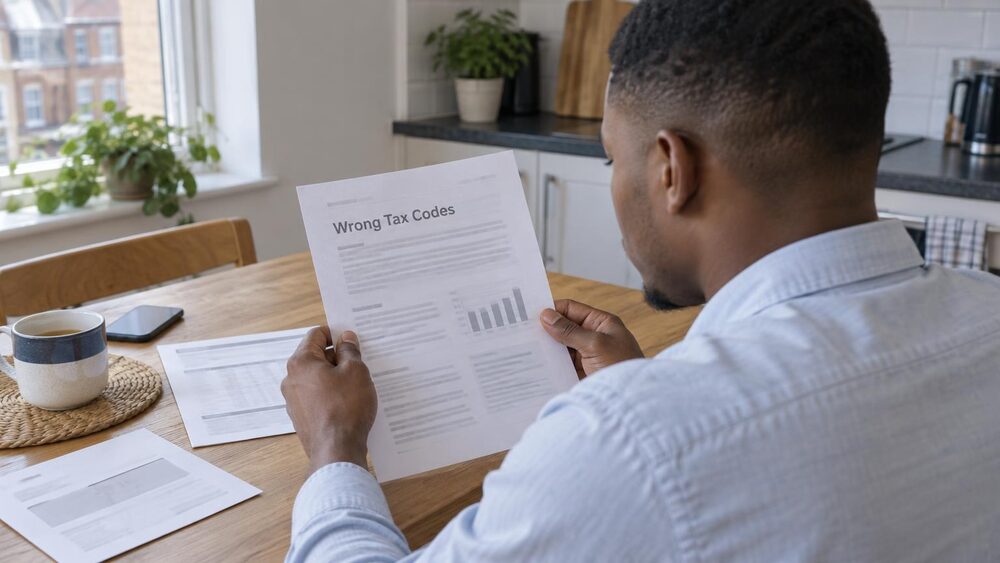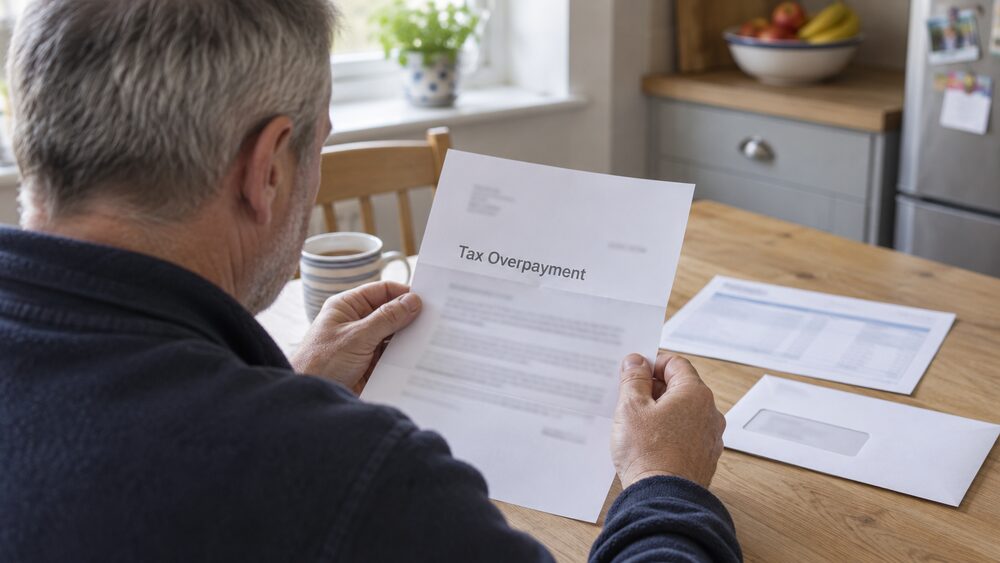
If you have paid more income tax than you owed, HM Revenue and Customs (HMRC) will usually spot it after the tax year ends on 5 April and send you a letter: either a tax calculation known as a P800, or a Simple Assessment letter1. A P800 can tell you that you are owed a refund or that you owe more; a Simple Assessment letter is a bill for tax that could not be collected through your tax code2. You can then claim your money back online, in the HMRC app, or by asking for a cheque3.
Overpayments happen for ordinary reasons, most often because too much tax was taken at source from employment or savings income before the year's figures could be checked4. Emergency tax codes on a first job, changing circumstances mid-year, and deductions by banks when your income was actually below your Personal Allowance are all common triggers5. This page explains why overpayments happen, how HMRC tells you about them, the ways to get a refund, and how to avoid the companies and scammers who want a share of your money.
Why you might have paid too much income tax
The most common reason for a refund is that tax was overpaid at source, meaning it was taken from your wages, pension or savings interest before anyone looked at your whole year's income4. PAYE works by spreading an estimate of your annual tax across the year, so anything that makes the estimate wrong, such as starting or leaving a job, a change of pension, or income arriving in an unusual pattern, can leave you out of pocket until the year-end check1.
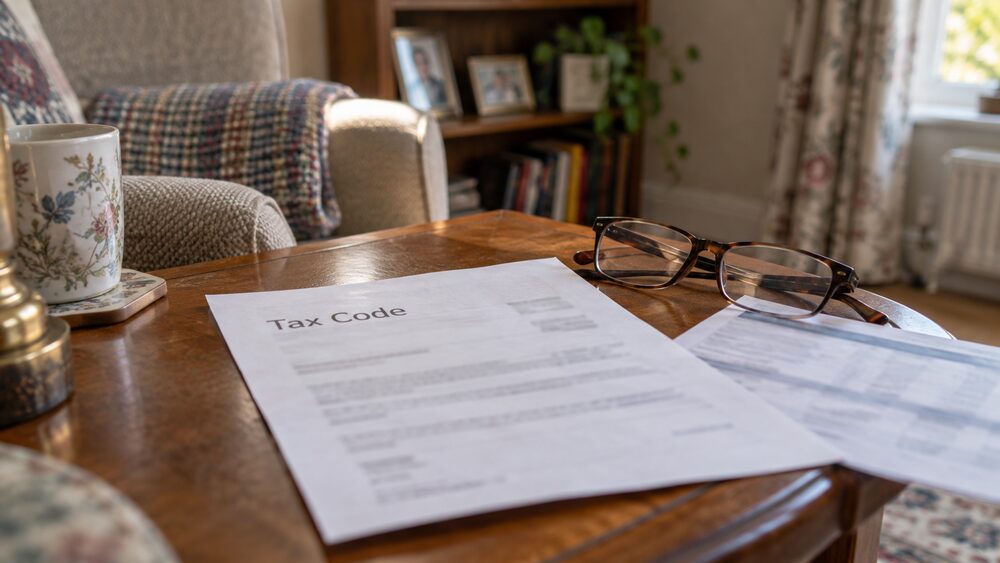
Emergency tax codes are a frequent cause. If you start a first job and HMRC does not yet have all the information it needs, you may be put on a temporary code, and once the right information arrives the code is corrected and any tax you overpaid is refunded5. You can check your code yourself online on GOV.UK or in the HMRC app, and let HMRC know if it still does not look right3.
Overpayments also arise where income varies. If your income falls during the tax year, your total for the year can end up below the repayment threshold even though some months exceeded the weekly or monthly threshold, which is why student loan repayments taken through PAYE sometimes produce a refund at year end10. Savings income is another route: tax can be deducted automatically by your bank when your total UK income is in fact below your Personal Allowance, and people who live abroad can face the same problem with UK tax taken at source6. Where you are taxed in more than one country, you may be able to claim relief under a double-taxation agreement11.
Not every overpayment comes from HMRC. If you do not report a change in your circumstances to the benefits system, you can be paid too much in benefits and then have to pay some of the money back, which is the mirror image of a tax refund12. The common thread is that the year-end reconciliation is what usually surfaces the error, which is why most refunds arrive after 5 April rather than during the year.
P800 and Simple Assessment letters: how HMRC tells you about a refund
If you have paid too much or too little tax by the end of the tax year on 5 April, HMRC will send you a tax calculation letter, known as a P800, or a Simple Assessment letter1. The P800 goes out when HMRC finds a difference between what you paid and what you owed, and it can show a repayment due to you or tax still owing7. A Simple Assessment letter, formally a PA302, is different: HMRC sends it when you did not pay enough tax and could not collect the shortfall through your tax code2. Simple Assessment is not the same as making a Self Assessment tax return2.
If you receive a P800 showing a refund, it is important to check that the figures are correct before claiming, because HMRC's calculation is only as good as the information it holds4. For a Simple Assessment letter, you have 60 days from the date of the letter to let HMRC know if anything does not look right7. HMRC has urged customers not to ignore these letters: it issued around 1.8 million Simple Assessment letters for the 2025 to 2026 tax year in summer 2026, and the letters are official, arriving by post or appearing in your Personal Tax Account online8. The bills can be paid using the free HMRC app, online via GOV.UK, by bank transfer or by cheque8.
HMRC may also send you a text message saying you are due a tax refund, also known as a P800 refund, but only where it has already sent a letter and had no response9. A separate text may be sent if you request a Self Assessment refund, telling you it is being processed and when to expect it9. Because scammers copy exactly this kind of message, check any text against HMRC's own guidance on genuine contact before acting on it9.
Ways to get your refund: online, in the HMRC app or by cheque
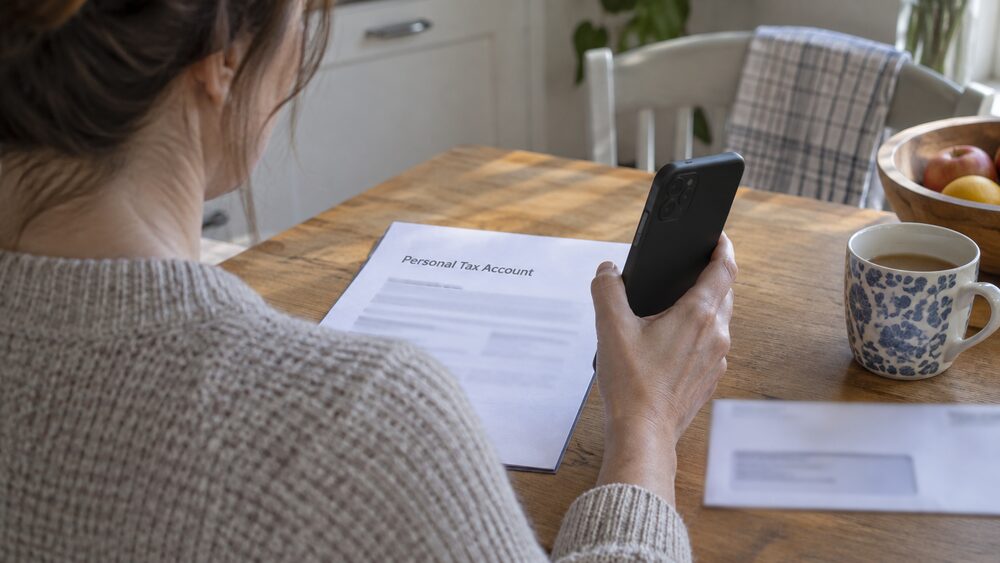
There are three main routes to a refund that HMRC has already identified: claim online on GOV.UK, claim in the HMRC app, or ask HMRC to send you a cheque. HMRC may also simply reduce the tax collected from your future wages or pension instead of making a payment3. Which route suits you depends on how you deal with HMRC generally and whether you have a bank account you can have the money paid into.
For overpaid tax on savings or pension income, you can download form R40 and send it to HMRC, or contact HMRC directly13. If you are due over £50, you may be able to apply for a refund before the end of the tax year rather than waiting for the year-end check4. People who live outside the UK use form R43, or claim the refund in their Self Assessment tax return if they are already completing one; HMRC will usually send refunds by cheque unless you include your bank account number and sort code on the tax return, and you need to include those details each time you complete a return6.
If you cannot use a bank account, there are alternatives. The Payment Exception Service sends you either a payment card or a voucher code by text message or email, which you show at a counter with a form of ID to collect your money14. Where money is held in the Certificate of Tax Deposit scheme, repayments are made as a credit to your bank account by Faster Payment, and HMRC will not leave any balance due sitting as a credit on your tax records, so you must give bank details for the balance to be refunded15.
Refunds of other taxes follow their own processes. National Insurance contribution refunds can be claimed online by signing in, or using the form on the back of HMRC's letter, but only if HMRC has written to you about overpaid contributions or contributions paid in error by your employer16. Stamp Duty Land Tax refunds are claimed by applying online or in writing, and HMRC then has up to 9 months to make a compliance check on your amended return or claim17. If you need to speak to HMRC about Self Assessment forms, you can call 0300 200 3610 to request blank tax return forms or guidance notes, or download them online18.
Refunds through your tax code instead of a payment
Not every refund arrives as money in your account. Where HMRC corrects your tax code during the year, the overpaid tax can come back to you through your next payslip, or as a refund from HMRC directly5. This is the standard route when an emergency code was in place: the code is temporary and switches to the right one as soon as HMRC has all the right tax information for you, and any overpaid tax is refunded at that point5.
The tax code also works in the other direction, collecting money rather than paying it. If a Winter Fuel Payment has to be recovered, HMRC will automatically collect it through your tax code unless you already file Self Assessment tax returns19. Similarly, a Self-Employment Income Support Scheme grant claimed by someone not entitled to it can be recovered through a tax charge20. So the same mechanism that quietly repays you can also quietly take money, which is one reason to check your payslips and your code rather than assume all is well.
Scottish taxpayers have the same core routes for relief: money paid into a private pension can be claimed either on your Self Assessment tax return on GOV.UK or through your tax code21. Checking your tax code is straightforward: you can do it online on GOV.UK or in the HMRC app, and if it still does not look right after HMRC has updated it, tell HMRC3. Our guide to checking your tax code explains the numbers and letters, and emergency tax codes covers the temporary codes that most often cause an overpayment in the first place.
Claiming a refund through Self Assessment
If you file a Self Assessment tax return, refunds work differently. Whether you submit your return on paper or online, the overpaid tax should be shown on the tax calculation, and HMRC should automatically send you any refund due once the return has been processed4. The online filing deadline for the 2025 to 2026 tax year is 31 January 202718. You do not need to chase a refund in most cases, but if nothing arrives after the return has been processed, contact HMRC.
Self Assessment is also where many reliefs are claimed, and claiming a relief you are entitled to is one way an overpayment is corrected. Reliefs you can claim on your Self Assessment tax return include tax relief on private pension contributions, the blind person's allowance, the marriage allowance, tax reliefs for employees, reliefs on investments such as Enterprise Investment Scheme subscriptions, and reliefs on qualifying loans22. UK tax relief on contributions to an overseas pension scheme is claimed in the Self Assessment return's 'Additional information' section, including the scheme name and address23.
Some charges pull you into Self Assessment even if you would not otherwise file. The High Income Child Benefit Charge must be paid through Self Assessment if you need to send a tax return for another reason, or if it is later than 31 January in the year after the tax year you need to pay for24. HMRC can also answer a yes or no question about whether your partner or ex-partner gets Child Benefit or has a higher income than you, without giving financial information or their National Insurance number, and you can only ask if you lived together or separated within the tax year you want information for24.
Non-residents face restrictions. You cannot use HMRC's online services to tell HMRC about your income if you are non-resident: instead you fill in a Self Assessment tax return and an SA109 form and send them by post, use commercial software that supports SA109 reporting, or get a tax professional to report your UK income for you6. You do not need to report your income to HMRC at all if you have already claimed tax relief under a double-taxation agreement6. Our pages on Self Assessment and registering for it cover the mechanics.
Working from home relief can no longer be claimed directly from HMRC
Employees who worked from home used to be able to claim tax relief on household costs directly from HMRC, but since September 2026 direct claims to HMRC have ended. Instead, employers are able to reimburse home working expenses tax-free under the £6 per week exemption. This means the route to relief now runs through your employer rather than through a claim to HMRC, and if your employer does not reimburse, the direct claim route is no longer available.
If you have an old claim outstanding, or you believe you overpaid tax in earlier years because relief was not applied, the general refund routes still apply: HMRC's year-end check, a P800, or a claim through Self Assessment where you file one. The change affects how relief is obtained going forward, not HMRC's obligation to repay tax it genuinely owes you. Our page on working from home relief explains the £6 a week flat rate in detail, and claiming tax relief on job expenses covers what else can be claimed through your employer or your return.
Tax refund companies: what HMRC warns about
A refund claim is free to make yourself, and HMRC's guidance points people to the online, app and cheque routes rather than to any intermediary3. HMRC also warns repeatedly about messages and firms that mimic its communications.
The scale of the problem is significant. HMRC has warned around 1.5 million tax credits customers to be alert to scams that mimic government communications25. Fraud recovery scams work the same way from the other end: a company contacts you saying it is authorised to recover money you have lost, asks you to give them your details, and wants you to send them more information26. HMRC publishes guidance on how to check whether a letter you have received is genuine, and the same caution applies to emails and texts27.
Legitimate refund agents exist, and you can appoint an accountant or tax adviser to deal with HMRC for you, but a company that takes a share of a refund you could have claimed yourself for free reduces what you receive. HMRC is also aware that a small number of individuals are being contacted by third parties about repaying loans taken from disguised remuneration schemes, and that these requests can be unexpected and distressing28. Our guide to fake HMRC calls, texts and emails goes further, and complaining about HMRC covers the formal complaint route.
When HMRC gets the figures wrong the other way
The same year-end check that produces refunds also produces bills. If your tax return contains an obvious error or is missing information, HMRC will correct the return and send a notice explaining why29. If you disagree with a correction, you can challenge it, and the 60-day window on a Simple Assessment letter is the time to raise it7. HMRC's compliance work is not trivial to its finances: returns from additional funding to improve compliance averaged around 7:1 over the last decade, according to the National Audit Office30.
Accuracy matters on your side too. HMRC may charge a penalty if you have sent a return or other document with an inaccuracy that was the result of not taking reasonable care, or that was deliberate, where it results in an understatement of tax, a false or inflated statement of a loss, or a false or inflated claim to repayment of tax31. If HMRC finds you have deliberately sent inaccurate returns or documents, you could be charged a higher penalty or be taken to court31. You can appeal against a penalty if you have a reasonable excuse32, which our page on reasonable excuse explains.
Some corrections arrive from outside HMRC altogether. Student loan refunds of overpaid repayments are handled by the Student Loans Company, and its digital refund service has been used by more than 11 million customers; a below-threshold refund cannot be requested until the end of the tax year, once HMRC has provided the customer's annual earnings information to the SLC33. If you owe money rather than being owed it, HMRC has an online tool to help you find the right guidance and support, covering what happens if you do not pay your tax bill and what help is available if you cannot pay on time34.
Where to get help with a refund claim
Free, impartial help is available, and it is worth using before paying anyone. TaxAid publishes guidance on tax refunds for people on low incomes4. HMRC's own guidance covers checking whether a letter is genuine, getting extra support due to your health or personal circumstances, disagreeing with a tax decision or penalty, help with signing in to HMRC online services, and what happens if you do not pay your tax bill34. MoneyHelper, a free government-backed service, explains alternative payment routes such as the Payment Exception Service14.
Specialist helplines exist for particular situations. If you are handling the tax affairs of someone who has died, call HMRC's Bereavement Helpline, and if you cannot call, fill in form P1000 to tell HMRC who is dealing with the person's money, property and possessions35. Welsh language versions of forms and guidance are available on 0300 200 190036. For wider reading, our guides to income tax, PAYE, tax codes and the HMRC app and online account cover the ground on either side of a refund claim, and claiming a refund after you stop work deals with the common situation of overpaying in your final months of a job.
Sources36 cited
- Tax overpayments and underpayments HM Revenue and Customs, 2026-09-25
- Understand Simple Assessment HM Revenue and Customs, 2026-09-25
- Tax code changes HMRC Tax Confident campaign, 2026-08-05
- Tax refunds TaxAid, 2025-10-21
- Tax in your first job HMRC Tax Confident campaign, 2026-08-05
- Tax on UK income if you live abroad HM Revenue and Customs, 2026-09-26
- Common letters from HMRC HMRC Tax Confident campaign, 2026-09-28
- HMRC urges customers not to ignore Simple Assessment letters HM Revenue and Customs, 2026-07-28
- Check if a text message you've received from HMRC is genuine HM Revenue and Customs, 2026-09-18
- Repaying student loans more quickly and getting refunds nidirect, 2026-06-04
- Tax on foreign income HM Revenue and Customs, 2026-09-26
- Report a change in your circumstances HM Revenue and Customs, 2026-09-26
- Tax and allowances in retirement nidirect, 2026-03-30
- What to do now your Post Office card account is closing MoneyHelper, 2026-09-25
- Certificate of Tax Deposit scheme HM Revenue and Customs, 2014-11-03
- Apply for a refund of National Insurance contributions HM Revenue and Customs, 2026-06-22
- Apply for a refund of Stamp Duty Land Tax HM Revenue and Customs, 2026-06-26
- Paying tax when self-employed Which?, 2026-04-06
- Understanding tax and your pension HM Revenue and Customs, 2025-03-27
- Updates to tax charges when a person is no longer eligible to SEISS payments HM Revenue and Customs, 2021-03-03
- Scottish income tax: allowances and reliefs mygov.scot, 2026-04-06
- Help with other tax reliefs on your Self Assessment tax return HM Revenue and Customs, 2025-04-25
- Overseas pensions: tax relief on your contributions HM Revenue and Customs, 2016-12-05
- Pay the High Income Child Benefit Charge through Self Assessment HM Revenue and Customs, 2026-09-28
- HMRC issues scam warning to tax credits customers HM Revenue and Customs, 2023-05-30
- Insolvency Service related scams and fraud HM Government, 2024-08-21
- Check if a letter you've received from HMRC is genuine HM Revenue and Customs, 2025-08-18
- Loan schemes and the loan charge: an overview HM Revenue and Customs, 2026-06-03
- Disagree with a Revenue correction notice HM Revenue and Customs, 2026-08-13
- Tackling the tax gap National Audit Office, 2020-07-22
- Reasonable care: tax returns and other documents HM Revenue and Customs, 2018-02-14
- Pay a Self Assessment penalty HM Revenue and Customs, 2026-09-25
- More than 11m customers have used SLC's digital refund service HM Government, 2025-10-29
- Find out what to do if you owe money to HMRC HM Revenue and Customs, 2025-08-18
- Report a death to HMRC without Tell Us Once HM Revenue and Customs, 2026-09-28
- Probate and Inheritance Tax guidance notes HM Revenue and Customs, 2021


 GOV.UKOfficial information on tax, benefits and government services
 MoneyHelperFree, impartial money and pensions guidance, set up by government
 Citizens AdviceFree advice on money, consumer and legal problems in England and Wales
 Turn2usFree benefits calculator and grants search from a charity
 Citizens Advice ScotlandFree advice across Scotland