
If HMRC has charged you a late filing penalty, you can appeal against it if you have a reasonable excuse. HMRC defines a reasonable excuse as "normally something unexpected or outside your control that stopped you meeting a tax obligation"1. Illness, disability, bereavement, a postal delay or problems with HMRC's own online service can all qualify, depending on the circumstances.
If HMRC has charged you a late filing penalty, you can appeal against it if you have a reasonable excuse. HMRC defines a reasonable excuse as "normally something unexpected or outside your control that stopped you meeting a tax obligation"1. Illness, disability, bereavement, a postal delay or problems with HMRC's own online service can all qualify, depending on the circumstances.
The penalty itself is usually £100 if your return is up to three months late, with further charges if the delay continues1. But a penalty can be cancelled if you can show that your circumstances meet the reasonable excuse test, and you appeal within the time limit.
This page explains what counts as a reasonable excuse, how to appeal, what happens if you never needed to file a return in the first place, and the deadlines you need to know.
Self Assessment deadlines: online by the end of January, paper by the end of October
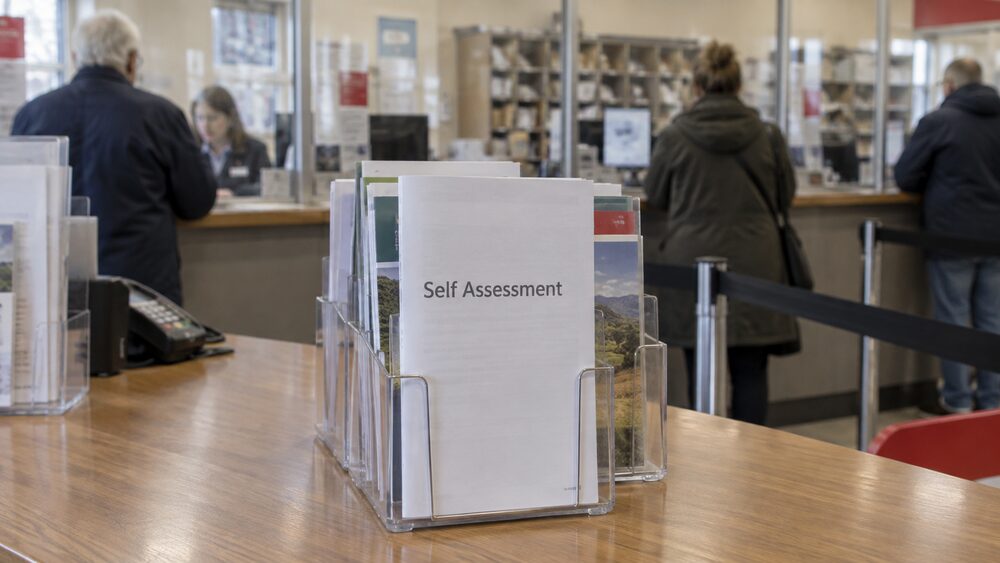
The deadline for filing your Self Assessment tax return depends on how you send it. Online returns must be submitted by 31 January following the end of the tax year2. Paper returns must be submitted by 31 October following the end of the tax year3. The paper deadline is three months earlier than the online one.
If you miss the deadline, HMRC can charge penalties automatically. The initial penalty is £100 if your return is up to three months late1. If the return is still outstanding after three months, HMRC can charge a daily penalty of £10 for each day, up to a maximum of £9005. After six months, a further penalty applies, and after twelve months an additional £300 fine or 5% of the tax due, whichever is higher, is charged1.
The deadline for paying any outstanding tax is also 31 January after the end of the tax year, unless you are paying through PAYE1. If you cannot pay in full, you may be able to set up a payment plan online if it is within 60 days of the payment deadline6.
You must file once HMRC sends a notice, even with no income or tax to pay
A common misunderstanding is that you do not need to file a return if you have no income or no tax to pay. That is not correct. Unless the return is withdrawn by HMRC, you will have to submit the return by the due date, even if there is no income to report, and penalties for failing to file by the due date will still apply7.
The obligation to file begins when HMRC sends you a notice to file. If you are not registered for Self Assessment, HMRC will not send you a tax return or notify you to complete one8. But once you are registered and HMRC has issued a notice, the filing requirement is live.
There are separate deadlines for telling HMRC about new income. If you start earning untaxed income, you must let HMRC know by 5 October following the end of the tax year9. If you need to pay the High Income Child Benefit Charge and do not usually send a tax return, you need to tell HMRC by 5 October following the tax year you need to pay the charge10.
When HMRC can cancel a return and the penalties that go with it
HMRC can withdraw a return it should not have issued. If a return is withdrawn, the filing obligation and any associated penalties are cancelled. This might happen if HMRC issued a notice in error, for example because it did not have up-to-date information about your circumstances.
If a taxpayer believes they should not have been asked to file, HMRC can be contacted and the position explained. If the return is not withdrawn, the filing obligation and any penalties that apply remain in place.
HMRC can also correct obvious errors on a tax return within nine months of the date it was filed12. If your tax return contains an obvious error or is missing information, HMRC will correct the return and send a notice explaining why13. If you disagree with a correction, you can ask HMRC to review it.
If you have already filed and then realise you made a mistake, you can amend your return within 12 months of the date it was due (31 January or 31 October)14. If the change means you need to pay less tax, HMRC will process a repayment on request14.
Stopped self-employment or left the UK: the last return you need to file
If you have stopped being self-employed, you need to complete a final Self Assessment tax return to cover your last period of trading. This needs to be done at the end of the tax year15.
If you have left the UK or are planning to, your tax position depends on your residence status. If you are a non-UK resident and were stuck in the UK because of COVID-19 between 5 April 2020 and 5 April 2022, special concession rules may apply. HMRC may ask you for proof that you could not leave the UK when you intended, paid tax in another country on what you earned while stuck in the UK, and left the UK as soon as you reasonably could16.
For most people who leave the UK, the final return covers the period up to the date you left, and you may need to file a return for the tax year in which you left.
Points-based penalties: what changes for Self Assessment taxpayers
The government plans to expand the points-based penalty system for late filing and revised late payment penalty rules to all Self Assessment taxpayers from 6 April 202717. Under a points-based system, penalties are triggered after a certain number of points are accumulated, rather than automatically for a single late filing.
The current system for Making Tax Digital taxpayers uses points. A change from monthly to quarterly reporting results in a -1 point adjustment to the points total18. This means that if you change your reporting frequency, your points total is reduced.
For now, the existing penalty regime applies to most Self Assessment taxpayers. If a final Self Assessment tax bill is paid late, there is a penalty of 5% of the tax unpaid at 30 days, 6 months and 12 months, plus interest on the amount owed19.
How to appeal against a penalty
You can appeal against a penalty if you have a reasonable excuse4. The appeal process usually starts with a written request to HMRC explaining why you believe the penalty should be cancelled.
Your appeal should include:
- What the penalty is for
- Why you believe you have a reasonable excuse
- Any evidence that supports your case, such as medical letters or proof of a postal delay
HMRC will consider your appeal and either cancel the penalty, reduce it, or reject it. If your appeal is rejected, you can ask for a review by an independent HMRC officer, or appeal to the tax tribunal.
If you miss the deadline to send HMRC information it has requested, you may be charged a penalty22. The same reasonable excuse principles apply.
What counts as a reasonable excuse
HMRC's definition of a reasonable excuse is "normally something unexpected or outside your control that stopped you meeting a tax obligation"1. This is a broad definition, and what counts depends on your circumstances.
Circumstances that may count include:
- Serious illness or disability that prevented you from filing
- Bereavement or a family emergency
- A postal delay that was not your fault
- Problems with HMRC's online service that stopped you filing
- Not receiving a notice to file that HMRC sent
If you took reasonable care to get things right but your return or other documents were still inaccurate, HMRC will not charge you a penalty23. This is a separate protection from reasonable excuse, and applies where you made an honest mistake despite taking care.
"If you took reasonable care to get things right but your return or other documents were still inaccurate, HMRC won't charge you a penalty"
Can HMRC look into my tax return after I have filed it?
Yes. HMRC can open an enquiry into a return after it has been filed. HMRC can go back six years if it thinks the error was due to lack of reasonable care, or 20 years in the case of suspected fraud or if you have never submitted a tax return24.
If the return was submitted late, HMRC can start an enquiry within 15 months instead of 1222. This gives HMRC longer to look into returns that were filed late.
If HMRC finds an obvious error on a tax return, it can correct it within nine months of the date it was filed12. If you disagree with a correction, you can ask HMRC to review it.
Where to get help
If you are struggling with a tax problem, free and impartial help is available. TaxAid provides free tax advice to people on low incomes. Business Debtline offers free debt advice for self-employed people and small businesses. MoneyHelper provides free guidance on money matters.
If you cannot pay your tax bill, contact HMRC as soon as possible. HMRC will not add penalties to your debt if a payment plan is agreed before the penalties would have been applied, as long as you keep to the arrangement5.
Sources24 cited
- Late tax returns and penalties for mistakes Which?, 2026-04-06
- Understand your Self Assessment bill GOV.UK, 2026-09-26
- Self Assessment tax returns Which?, 2026-04-06
- Pay a Self Assessment penalty GOV.UK, 2026-09-25
- Income Tax Debt Business Debtline, 2026-09-26
- Problems paying tax debt: time TaxAid, 2026-06-19
- Pensions, Self Assessment and Simple Assessment TaxAid, 2026-03-09
- How to register for Self Assessment TaxAid, 2025-10-06
- Self Assessment tax Which?, 2026-04-06
- Pay the tax charge through Self Assessment GOV.UK, 2026-09-28
- How you pay tax on savings interest GOV.UK, 2026-09-28
- Tax enquiries TaxAid, 2025-09-26
- Disagree with a revenue correction notice GOV.UK, 2026-08-13
- Enquiries and other problems with the returns you have submitted TaxAid, 2025-09-26
- Previously self-employed TaxAid, 2025-01-24
- Tax on your UK income if you live abroad GOV.UK, 2026-09-26
- Making Tax Digital frequently asked questions ATT, 2027-04
- Penalties for late submission GOV.UK, 2023-11-17
- Timely payments in Income Tax Self Assessment factsheet GOV.UK, 2026-06-23
- Keeping your pay and tax records GOV.UK, 2026-09-26
- Keeping records for Self Assessment TaxAid, 2026-03-23
- Enquiries TaxAid, 2025-09-26
- Reasonable care: tax returns and other documents GOV.UK, 2018-02-14
- Preparing for Self Assessment TaxAid, 2026-03-10




 GOV.UKOfficial information on tax, benefits and government services
 MoneyHelperFree, impartial money and pensions guidance, set up by government
 Citizens AdviceFree advice on money, consumer and legal problems in England and Wales
 Turn2usFree benefits calculator and grants search from a charity
 Citizens Advice ScotlandFree advice across Scotland