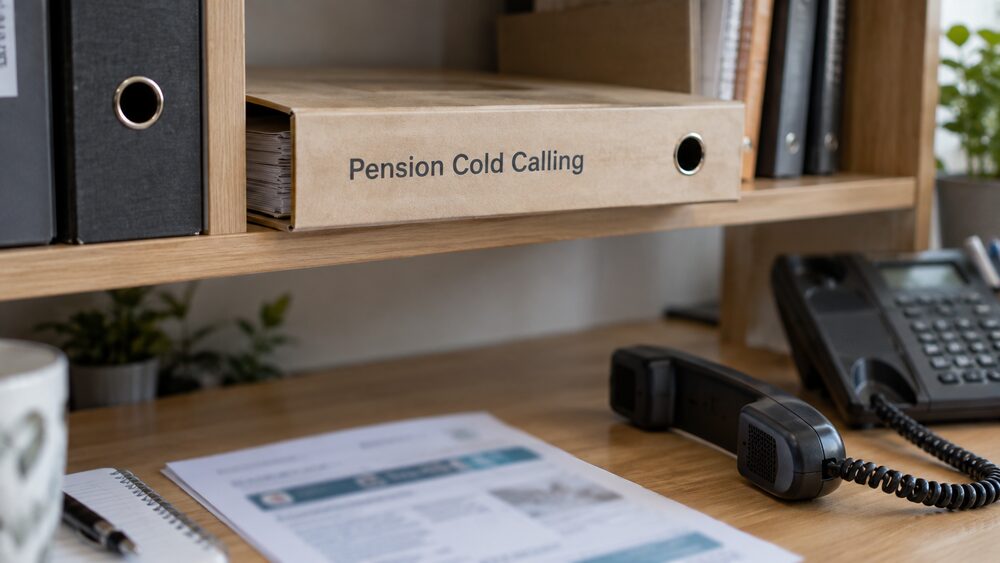
Cold calls about pensions are illegal in the UK. The ban came into force in 2019, and since then it has been against the law for firms to make unsolicited calls to people about their pensions1. Firms that break the rules can face penalties of up to £500,0004.
Cold calls about pensions are illegal in the UK. The ban came into force in 2019, and since then it has been against the law for firms to make unsolicited calls to people about their pensions1. Firms that break the rules can face penalties of up to £500,0004.
That means an unexpected phone call about your pension is, in almost every case, either a firm breaking the law or a scam. The same ban covers unsolicited emails and text messages about pensions, not just phone calls5. Pension savings are an attractive target for fraud because many people do not engage with them until later life, and it can be many years before someone realises they have been scammed5.
Cold calls about pensions are illegal
The legal rule is straightforward. Regulation 21B states that a person must not use, or instigate the use of, a public electronic communications service to make unsolicited calls to an individual for the purpose of direct marketing in relation to occupational pension schemes or personal pension schemes, except in limited circumstances2. In plain terms, it is illegal to make cold calls in relation to pensions in most circumstances1.
The ban is not absolute. It does not apply where the caller is a trustee or manager of a pension scheme, or a firm authorised by the Financial Conduct Authority, and you are an existing customer who expects to receive such calls and has been given the chance to withhold your contact details. It also does not apply where you have consented to receive calls from the organisation making the call1. So a call from your own pension provider, which you have agreed to hear from, can be legitimate. A call from a stranger is not.
Firms that break the rules could face penalties of up to £500,0004. For a consumer, the practical point is simpler: if you did not ask to be contacted, the call itself is a red flag, whatever the caller says next.
What the ban covers: calls, emails and texts
The ban covers cold calling in relation to pensions, including emails and text messages5. Any cold call, text or email you receive about your pension, including one offering a free pension review, a lifetime investment scheme or a pension loophole, is illegal and likely to be a scam8.
The ban has limits, however. There are concerns that it is being bypassed by initial contact from outside the UK, with referrals then passed to UK-based advisers9. And since the ban was introduced, tactics have evolved, so you may be contacted through social media instead10. The law has not kept pace with every channel, so treat any unexpected approach about your pension, on any platform, with the same suspicion as a cold call.
Why a pension cold call is almost always a scam
Official guidance is blunt on this point. Do not withdraw or transfer your pension because of a cold call, visit, email or text: it is likely a scam designed to steal your savings11. The same warning applies to transferring money to a new pension provider or investing any money because of such contact12.
Pension scams are fake investments designed to con you out of your money13. They commonly feature attempts to gather information for future scams, false or unrealistic promises, and acting without the consent of a pension saver5. They tend to occur at moments when money moves: when someone seeks to transfer benefits to a different arrangement, takes early retirement, or takes their benefits14.
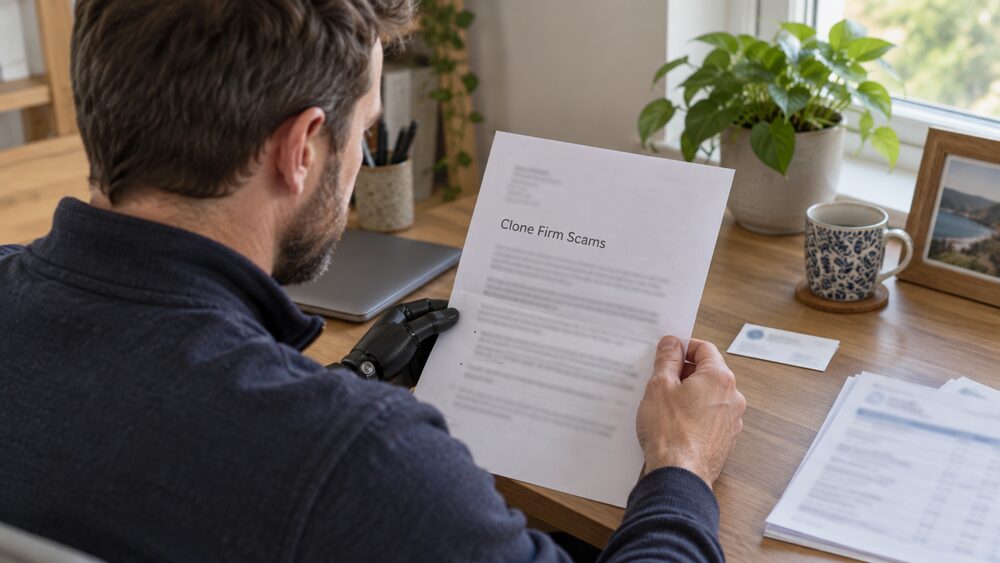
One tactic to know about is the clone firm. Clone firm scams use the details of legitimate companies to trick people into believing they are dealing with a reputable adviser or pension provider15. A caller may quote a real firm's name, address and registration number, so a quick check of those details alone is not enough. See our page on clone firms for how these work and how to see through them.
Warning signs: early access before 55, loopholes and free reviews
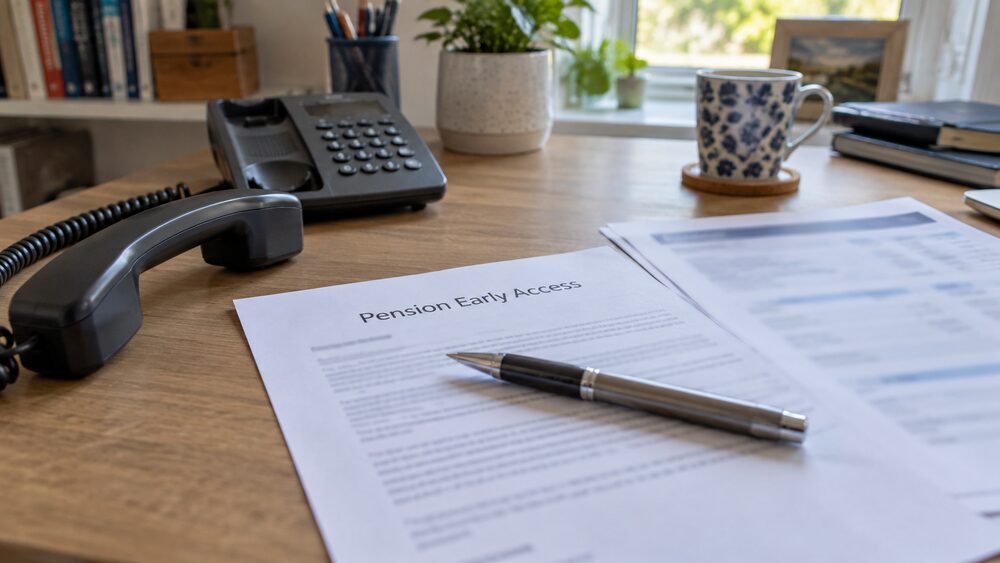
The classic pattern is well documented. Fraudsters may contact you offering a free pension review and say that they can use a loophole to help you release your pension before age 5516. Early release of pension money is not normally allowed before age 55 under current pension legislation17, and if anyone tells you that you can take your money out before age 55, this may be a sign of a scam18.
The age matters because it is rising. From 6 April 2028, the age at which you can use pension freedoms increases to 57 or over6. So an offer of early access is a warning sign twice over: it breaks the normal rules today, and the normal access age is moving further away, not closer. Our page on pension liberation and early access offers explains these schemes in detail.
Other warning signs to act on:
- A free pension review out of the blue16
- Claims of a loophole or special arrangement to release money early16
- Pressure to act quickly, or an offer that seems too good to be true5
- Contact through social media or from overseas numbers9
What you could lose: your pension and a tax bill
The consequences of falling for a pension scam are severe. You could lose your pension and in some cases also be left with a tax bill20. There is no guarantee of the savings being returned, and there may be little or no opportunity to rebuild pension savings5.
Even a transfer that is not an outright scam can carry costs. You may have to make payments to the new scheme, pay a fee to make the transfer, lose any right you had to take your pension at a certain age, lose any fixed or enhanced protection, or lose any right you had to a tax free lump sum of more than 25 per cent of your pension pot21.
How to check who contacted you and where to get help
If you receive a cold call about your pension, you can report it to the Information Commissioner's Office online or by calling 0303 123 11137. If you have already lost money, report the scam to the police through Action Fraud on 0300 123 2040, and contact MoneyHelper on 0800 015 4402 for information and guidance22.
Before dealing with anyone who contacts you about your pension, check that the provider or adviser is registered with the Financial Conduct Authority, or with the Pensions Regulator if it is a stakeholder pension23. You can use the online FCA register or telephone the FCA consumer helpline24. Our page on checking a firm is authorised walks through the steps, and the FCA Warning List lists firms the regulator has flagged.
Two further cautions. If a cold caller contacts you asking you to pay to register with the Telephone Preference Service, this is a scam25. And beware of recovery room scams: firms that contact victims promising to recover lost money for a fee rarely deliver.
If you think you have been targeted, our pages on the warning signs of scams and what to do straight away after paying a fraudster set out the immediate steps, and where to report a scam covers the reporting routes in each UK nation.
Sources25 cited
- Pension cold calling rules, Anglesey County Council trading standards 2025-10
- Regulation 21B, unsolicited calls and pensions, legislation.gov.uk 2026
- Pension scams action group, The Pensions Regulator 2026-09-26
- £30m lost to pension scams since 2017, Which? 2020-09-03
- Pension scams research briefing, House of Commons Library 2026-09-26
- Pension freedoms and debt, National Debtline 2028
- Pension scams, Age UK 2026-04-13
- Avoiding pension scams, Nucleus Financial 2026
- Pension scams threat assessment summary, The Pensions Regulator 2022-06-15
- 7 pension scams to watch out for, Which? 2022-08-10
- Take your whole pot, Pension Wise 2026-09-28
- Pension transfer of defined contribution pot, FCA 2026-09-25
- Preparing your finances for retirement, Citizens Advice 2026-09-26
- Scams, information to members, The Pensions Regulator 2026-09-26
- Pension scams fraud guide, NatWest 2026-09-25
- Dealing with fraud, National Debtline 2026-09-25
- SIPP frequently asked questions, Hargreaves Lansdown 2026-09-26
- Private pensions, Independent Age 2026-09-26
- Working in retirement Which?, 2026-03-17
- Dealing with fraud, National Debtline 2026-09-25
- Transferring your pension, nidirect 2026-09-25
- Pension scams common topics factsheet, The Pensions Ombudsman 2022-02
- Personal pensions and your rights, GOV.UK 2026-09-26
- Getting information and help with pensions, nidirect 2026-06-26
- How to avoid a scam, Independent Age 2026-09-26






 FCA Warning ListCheck whether a firm is authorised before you deal with it
 Financial Ombudsman ServiceFree, independent help when a complaint about a firm is not put right
 Citizens AdviceFree advice on money, consumer and legal problems in England and Wales
 MoneyHelperFree, impartial money and pensions guidance, set up by government