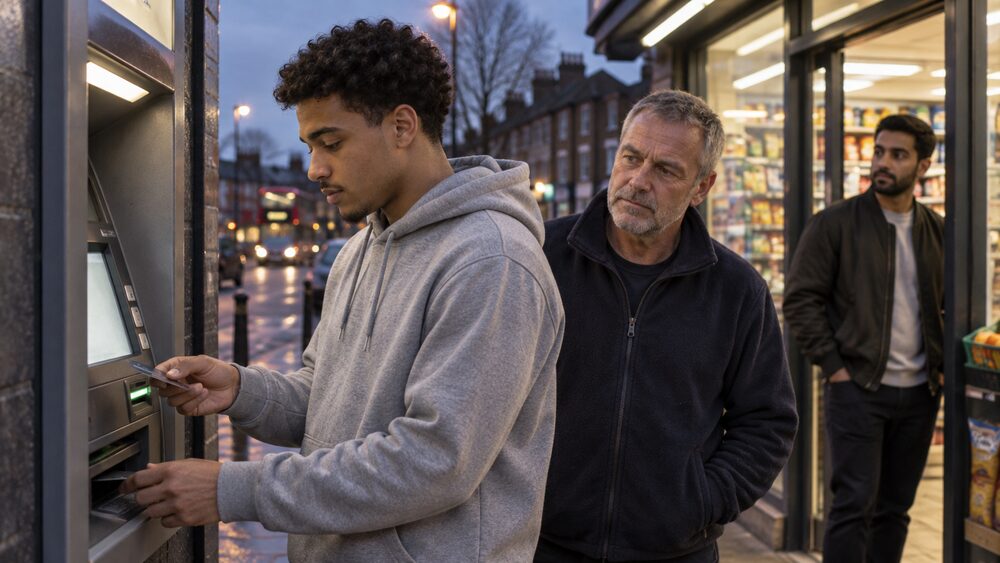
A money mule is someone who lets another person use their bank account to move money1. The money is usually the proceeds of crime, and moving it helps criminals hide where it came from. Falling for this scam means you could be breaking the law by money laundering2.
A money mule is someone who lets another person use their bank account to move money1. The money is usually the proceeds of crime, and moving it helps criminals hide where it came from. Falling for this scam means you could be breaking the law by money laundering2.
The consequences are serious. If you are caught acting as a money mule, you could get up to 14 years in prison3. Even if you were unaware that the money you were transferring was illegally obtained, you have played an important role in the crime and can still be prosecuted4. Beyond prison, the practical fallout includes a criminal record, closed bank accounts, difficulty opening new accounts, problems applying for loans, mortgages or even mobile phone contracts, being dismissed from university, and challenges finding future employment5.
This page explains how criminals recruit mules, the warning signs to look for, what happens if money arrives in your account, and where to get help.
Consequences: prison of up to 14 years, a criminal record and closed accounts
The legal risk is the headline. Money muling is a form of money laundering that helps criminals hide where the money came from5. It is an offence under the Proceeds of Crime Act 2002, and it can lead to a criminal record and the bank account being closed6. The maximum sentence is up to 14 years in prison3.
The financial and personal consequences often arrive before any court case. Banks that suspect a mule account will close it, and a closed account for suspected fraud makes it hard to open a new one elsewhere. The knock-on effects listed by banks include being left with debts to repay, difficulty opening new bank accounts, problems applying for loans, mortgages or even mobile phone contracts, being dismissed from university, and challenges finding future employment5.
For a student, the university angle matters. A criminal record and a closed account can derail a course, and the difficulty does not stop at graduation: employers in regulated sectors run checks. The criminal record follows you.
There is also a debt risk. If money passes through your account and is later clawed back, or if you were persuaded to take out a loan or credit in your name as part of the arrangement, you can be left owing money you never benefited from. The banks' own guidance lists being left with debts to repay as a direct consequence5.
How criminals recruit mules: fake jobs, loans and online friends
Recruitment is deliberate and often friendly. Criminals create fake adverts and posts, target students, target people in need of money, and try to be your friend8. They post ads on social media made to look like a quick way to make money, a currency exchange deal or a job, or they approach people in person at college or university9.
The methods are consistent across the banks' guidance. Criminals approach people online or through social media, advertise fake job opportunities offering "quick cash" with "no experience needed", send spam emails offering "easy money", and convince victims that the activity is harmless and without consequences5. They also make fake online profiles to trick people into helping them10.
Targeting is not random. Fraudsters often prey on people who need extra money, which can include students or those in financial difficulty, and they make contact by phone, by social media, in person, through familiar contacts, and by targeting vulnerable groups11. Students are more vulnerable because criminals approach them near schools, colleges, universities, sports clubs or other places young people socialise, and through social media or job advertisements12.
Young people are easy targets for mule herders because they are often new to managing their finances, and they may not know money muling is a crime or what could happen if they are caught13.
Warning signs in job adverts and requests to move money
The clearest warning sign is a request to use your account. Be wary of job advertisements that might seem genuine but promise a quick and easy way to make money, and simply ask that you have a bank account14. Red flags include someone asking to transfer money to your bank account for you to pass on, someone asking you to open a bank account or apply for a loan in your name for their use, and job adverts offering quick and easy money with no experience necessary15.
Other signs cluster around how the "job" is presented. Watch for unexpected job offers, a vague job description, requests to use your bank account, high-pressure tactics, a lack of professionalism, and unusual payment methods such as cryptocurrency or gift cards11. Job scams often pressure you to act fast and share your information or pay a fee to "secure your position"16. Pressure to send money within hours or days is a red flag17.
The pattern to recognise is simple: someone you have not met face to face asks you to move money for them, or offers you money in exchange for taking control of your bank account18. Say no if anyone asks for access to your bank account or to open a new one18. Watch out for fake loan schemes too: criminals may offer you a cheap loan regardless of your lending history, claim to overpay you, and ask you to repay it to a different account18. Research any investment opportunity, because criminals might offer some money upfront to get you to move it around with the promise of high returns18.
Should I send the money back if a stranger paid it into my account?
No. Do not move the money on, and do not send it back yourself. Contact your bank immediately using the number on the back of your card, and report it anonymously to Crimestoppers if you prefer5.
The payment rules matter here. Where a mule account is a feature of an authorised push payment scam, the in-scope transaction is the initial transaction between the victim and the mule, and any onward transmission from a mule account to a fraudster does not constitute an in-scope transaction19. In plain terms, the payment that counts for reimbursement is the one the victim made into the mule's account, not whatever the mule did next.
If you have already moved money, act quickly. Tell your bank what happened, keep any messages or adverts that led to it, and report it. Reporting early can limit the damage to your account and your record. If you have been a victim of fraud, you can report it to Action Fraud4.
Why students and young people are targeted
Students and young people are often targeted and recruited as money mules14. Scammers often target students, young people and those in financial difficulty to act as money mules5. Fraudsters target young people, those in need of money, and people in vulnerable situations15.
The reasons are practical. Young people are often new to managing their finances, and they may not know money muling is a crime or what could happen if they are caught13. Criminals exploit that gap, approaching students near schools, colleges, universities and sports clubs, and through social media or job adverts12.
Universities and schools have been running awareness work. The Don't Be Fooled schools programme has educated more than 33,000 pupils at 470 schools about the risks of becoming a money mule, and holds the Young Enterprise Quality Mark20.
If you are a student and money has moved through your account, the priority is to tell your bank and, if relevant, your university. A criminal record and closed accounts can affect your course and your future employment5.
Will being a money mule affect my credit rating or a student loan?
The direct effect on your credit file comes from what happens to your accounts, not from the mule activity itself. Having your bank accounts closed and a criminal record can make it hard to open new accounts or get credit, loans, mortgages or even mobile phone contracts5.
Student loans are a separate matter. Student loans are not recorded on your credit report, so a student loan does not directly affect your credit score21. Student loans will not appear in your credit file22, and if you check your credit report you will not find any record of a Plan 2 student loan, even if you owe £50,00023.
Where credit damage does arise is through missed payments or defaults on other borrowing. A debt management plan affects your credit file because you are paying less than you first agreed24, and your credit score could go down by making smaller payments25. Your credit rating is affected any time you pay less than you first agreed, and creditors might default your account after a few months of a debt management plan26. A debt management plan affects your credit rating because you make lower payments to your debts27.
If you are struggling with debt after a money mule arrangement, free and impartial help is available from MoneyHelper and from debt advice charities such as StepChange.
What crimes does money mule activity help to fund?
Money laundering through mule accounts funds serious crimes. It funds terrorism, proliferation financing, drug trafficking and people smuggling28. Money laundering funds serious crimes like drug dealing, sexual exploitation, fraud, scams, human trafficking, and even terrorism15.
Criminals rely on money mules to launder profits from crimes such as fraud and scams, terrorism, human and drug trafficking, and tax evasion5. This is a serious crime29.
The money moving through a mule account is not abstract. It is the proceeds of offences that cause direct harm to victims, and the mule is the link that lets the criminal keep the money and stay hidden.
Where to get help and how to report
If you think you have been used as a money mule, or someone has asked you to move money, act quickly.
- Contact your bank immediately using the number on the back of your card5.
- Report it anonymously to Crimestoppers if you prefer not to give your name7.
- Report fraud to Action Fraud4.
- If you are a student, tell your university so it can support you.
- If debt is a problem, get free help from MoneyHelper or a debt advice charity such as StepChange.
For more on spotting the approaches that lead to money muling, see how to spot a scam: the warning signs and fake job offers and payments through your account. If you have already paid a fraudster, what to do straight away sets out the first steps, and where to report a scam in England, Wales, Scotland and Northern Ireland covers the reporting routes.
Sources29 cited
- Student scams Bank of Scotland
- Types of scam MoneyHelper
- Common scams HSBC UK
- Money muling Action Fraud
- What is a money mule? HSBC UK, 7 May 2026
- Internet safety for children Barclays
- Money mules first direct
- Money mules Halifax
- Student scams Halifax
- Money mules NatWest
- Money mule Yorkshire Building Society
- Money mules Bank of Ireland UK
- Money mule scams Barclays
- Mul arian Principality Building Society
- The money mule Virgin Money
- Job scams Take Five
- The 7 signs of an investment scam Which?, 23 August 2023
- Money mules Ulster Bank
- APP scams policy clarifications Payment Systems Regulator
- UK Finance Annual Fraud Report 2026 UK Finance, June 2026
- Student loans and finance Prospects
- Eight myths around your credit score debunked Which?
- Five things you need to know about your student loan Which?
- DMP and your mortgage, home or tenancy StepChange
- Debt consolidation and debt management StepChange
- DMP questions StepChange
- Managing a DMP StepChange
- Money mule Skipton Building Society
- Borrowing and keeping money safe Mencap









 FCA Warning ListCheck whether a firm is authorised before you deal with it
 Financial Ombudsman ServiceFree, independent help when a complaint about a firm is not put right
 Citizens AdviceFree advice on money, consumer and legal problems in England and Wales
 MoneyHelperFree, impartial money and pensions guidance, set up by government