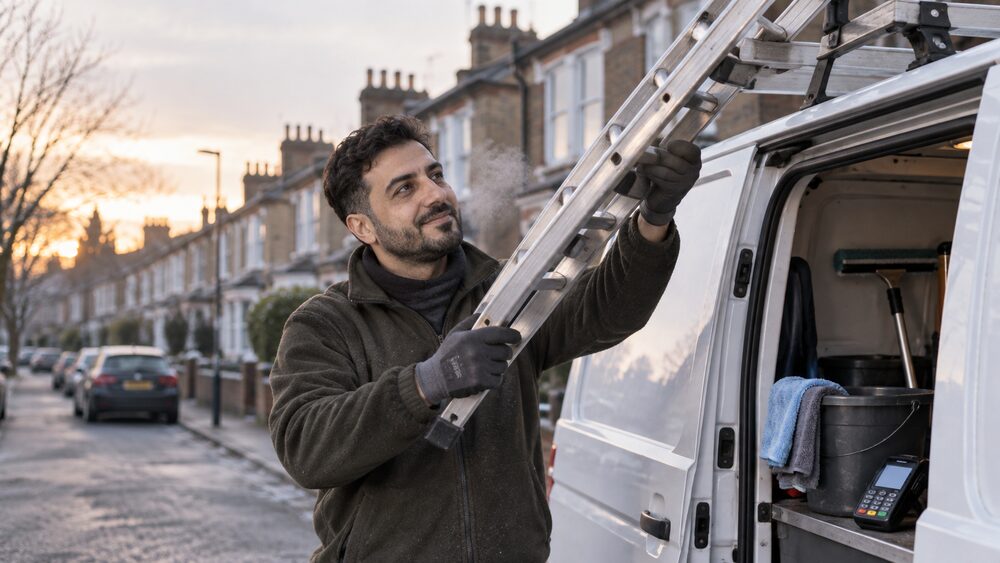
Yes, self-employed people can get income protection. Income protection is available for the self-employed and small business owners, and self-employed individuals can take out income protection insurance1. The policy protects your income if you fall ill and cannot work, paying a percentage of your income each month3.
This matters more if you work for yourself than if you are employed, because the safety net is thinner. If you are self-employed and need to stop working, you are not eligible for Statutory Sick Pay4. Statutory sick pay is only payable to those employed by a company, and people who work for themselves are not able to claim it5. Self-employed people are also not covered by occupational sick pay6 or by Industrial Injuries Disablement Benefit7.
Income protection fills part of that gap. It pays a regular tax-free monthly income if you cannot work because of any illness or injury, including physical conditions such as cancer or a heart attack and mental health conditions including stress8. The income you get from the policy is tax free9.
What income protection pays and how a claim works
Income protection pays a percentage of your income each month while you are unable to work3. It is a regular monthly income rather than a lump sum, and it is paid tax free9. The cover applies to any illness or disability that leaves you unable to work for a period of time, including physical conditions such as cancer or a heart attack and mental health conditions including stress8.
The definition of "unable to work" is where policies differ most, and it is the single most important thing to check before buying. Some cover pays if you cannot do your own job or occupation. Others pay only if you cannot do your job or a similar one you are qualified or have the experience for10. The second is narrower: an insurer could decline a claim on the basis that you could reasonably retrain or move to related work. There is more on how these definitions work in our guide to own occupation, suited occupation and other income protection definitions.
A claim normally runs through a deferred period first, then pays out monthly. Income protection claims are typically paid until the person returns to work, retires or the policy ends1. Once payments begin, they will usually continue until you are able to return to work, or until the policy ends8.
One interaction to plan for: getting payments from your income protection insurance can affect the benefits you get or are eligible for10. If you are claiming means-tested support at the same time, the policy payout may reduce it. Our page on whether income protection affects your benefits covers how the two are assessed together.
Why some cover excludes the self-employed
Not every policy is open to you. Some payment protection policies will not cover people who are self-employed, casual or temporary contract workers, or consumers on maternity leave at the time the policy would be taken out11. Policies might also exclude or limit the unemployment cover provided to company directors with shares in the company, temporary or fixed term contract workers, casual workers, and sometimes consumers employed by relatives11.
The same pattern appears in short-term accident, sickness and unemployment cover. Many such policies will not cover self-employed, part-time or contract workers12. Many payment protection policies will not cover you in certain circumstances, for example if you are self-employed, over retirement age or have a medical condition13.
Even where a policy is open to you, the illness cover itself may have gaps. Illness insurance policies do not always cover every type of illness and may exclude pre-existing medical conditions, and some policies say you cannot claim if you can do other kinds of work than your own9. Pre-existing conditions are not always an automatic no: sometimes cover is available, but there are usually conditions and higher premiums involved2. Our guide to getting cover with a pre-existing medical condition sets out how insurers approach it.
How insurers work out your income when you are self-employed
This is the part that trips people up, because there is no employer payroll figure to point at. If you are self-employed the rules are slightly different14. For self-employed people, benefits are worked out on your net profit, after deducting allowable expenses from takings to give gross profit, with an estimate made of tax and National Insurance from gross profit15.
Income from self-employment includes all paid directly to the self-employed person or into their bank account, including payments for goods and services, tips and gratuities, payments in kind, refunds of income tax or National Insurance contributions, and taxable grants or subsidies16. Self-employed workers can claim tax relief on business-related expenses via self-assessment17.
The document insurers and lenders usually want is the SA302. Sole traders declare their income using self-assessment and have their tax calculated by HMRC, and lenders base their calculations on the SA302 form, which outlines total income and tax paid18. If you are self-employed, you pay income tax through self-assessment19, and you will need to submit a self-assessment tax return every year if you earn more than £1,00020.
| Your situation | How income is usually evidenced |
|---|---|
| Sole trader | Self-assessment, with the SA302 form showing total income and tax paid18 |
| Limited company director | Salary and dividend payments, both taken into account18 |
| Director retaining profits | Some lenders do not factor retained profits into their calculations18 |
If you run a limited company, you are not self-employed, even if you are the owner and sole employee21. You will usually pay yourself a salary and dividend payments, which will both be taken into account by lenders when you apply18. Some lenders do not factor retained profits into their calculations18, which can pull the income figure used for cover below what the business actually generates.
What affects the cost of cover
The costs of taking out income protection insurance are affected by your age, your health, your job, hobbies and lifestyle, the waiting period, and whether you might be prepared to do other kinds of work than your own9. Each of those is a lever you can move, though some are fixed.
The waiting period is the most direct one. A longer deferral period usually means a lower premium, because the insurer is not on the hook for the first stretch of your illness. The trade-off is that you have to fund that period yourself from savings or other income.
There is also a question of how much cover you actually need. If you receive sick pay or have access to group income protection through work, you may not need as much individual cover8. Most self-employed people have neither, which is why the calculation tends to come out differently for them. Our page on whether you need income protection if you have sick pay or savings works through that comparison.
Deferred periods and how long payments last
The deferred period is the amount of time you have to have been off work before the policy will start paying you benefit, agreed when you took out the policy22. Most policies include a waiting period, known as a deferral period, which can range from a few weeks to several months after you stop working8. This deferral period can generally range from one to 12 months after you were taken ill, with longer waiting periods often reducing the cost2.
Once payments begin, they will usually continue until you are able to return to work, or until the policy ends8. Income protection claims are typically paid until the person returns to work, retires or the policy ends1. There is more detail on this in our page on how long income protection claims pay out for.
Applying for income protection as a self-employed person
You are self-employed if you are a sole trader or an individual in a business partnership21. If you start working for yourself, you are classed as a sole trader even if you have not yet told HMRC, and you must register and follow the rules for self-employed tax and National Insurance23. Sole traders and people in a partnership are treated as self-employed in the benefit system24.
You can buy income protection insurance from an independent financial adviser, who may charge, or directly from an insurance company9. Our guide to buying protection insurance covers how advisers, brokers and going direct compare.
A practical sequence for a self-employed applicant:
- Gather your SA302 forms for the last few years, or ask your accountant for them18.
- Work out your net profit, after allowable expenses are deducted from takings15.
- Decide what deferral period you could fund from savings, since this drives the premium2.
- Check the occupation definition in the policy, because it decides when a claim is paid10.
- Disclose your medical history fully, since non-disclosure is a common reason claims fail.
If you have only just started trading, expect difficulty. Insurers need evidence of earnings, and a new business has little. If you are starting to work for yourself after State Pension age, the same registration rules apply23.
If a claim is refused: complaints and where to get help
A refused claim is not necessarily the end of it. The Financial Ombudsman Service looks at income protection complaints and at the deferred period that applies to a policy, which is the amount of time you have to have been off work before the policy will start paying you benefit22.
There is precedent for the ombudsman finding against insurers on self-employment terms. In one case, the insurer would only pay unemployment benefit to self-employed people if their business ceased to trade through insolvency25. That is a narrow condition, and it is the kind of term the ombudsman will examine.
If you are unhappy with how a claim has been handled, complain to the insurer first, then take it to the Financial Ombudsman Service if you are not satisfied. Our guide to claiming on critical illness cover or income protection sets out the process.
Where a claim is refused and money is tight, other support may be available. If you or your partner are working or thinking of starting work as a self-employed person, you might qualify for benefits to top up your income26. As a self-employed person you might qualify for welfare benefits to top up your income27. You can apply for Employment and Support Allowance if you are employed, self-employed or unemployed28. You can claim Personal Independence Payment if you are self-employed, employed or unemployed29, and you can claim PIP if you are working or not30.
Sources30 cited
- Redundancy insurance Which?, 2025-11-19
- 9 myths about income protection busted Which?, 2025-05-27
- Income protection insurance Financial Ombudsman Service, 2026-09-27
- Stopping work due to ill health or retirement Scope, 2025-12-31
- Statutory Sick Pay explained Which?, 2026-04-14
- Occupational sick pay Entitledto, 2026-09-26
- Industrial Injuries Disablement Benefit Entitledto, 2026-09-26
- The overlooked insurance that could pay if you're signed off work Which?, 2026-04-04
- Income protection insurance Citizens Advice, 2026-09-26
- Protection insurance and cancer Macmillan Cancer Support, 2023-09-01
- PPI mis-sale complaints: the ombudsman's approach Financial Ombudsman Service, 2026-09-26
- Mortgage protection Shelter Cymru, 2026-08-28
- Top tips for borrowing Citizens Advice, 2026-09-25
- Earnings from employment Entitledto, 2026-09-26
- Employee or self-employed Entitledto, 2026-09-26
- Self-employed expenses claimed Entitledto, 2026-09-26
- 4 mistakes to avoid when trying to lower your tax bill Which?, 2026-06-26
- Mortgages for self-employed buyers Which?, 2025-12-18
- PAYE Advice NI, 2026
- Self-assessment tax return Which?, 2026-04-06
- Expenses if you're self-employed GOV.UK, 2026-09-26
- Income protection insurance complaints Financial Ombudsman Service, 2026-09-26
- Tax and allowances in retirement nidirect, 2026-03-30
- Company directors and self-employment Entitledto, 2026-09-26
- PPI case studies Financial Ombudsman Service, 2026-09-18
- In-work on a low income Turn2us, 2026-09-26
- What if I have less work than usual Turn2us, 2025-01-24
- Benefits and financial help if you're a disabled adult Sense, 2026-03
- Self-employment benefits Scope, 2026-05-19
- Personal Independence Payment Age UK, 2026-04-06



 MoneyHelperFree, impartial money and pensions guidance, set up by government
 Financial Ombudsman ServiceFree, independent help when a complaint about a firm is not put right
 FSCSProtects your money if a bank, insurer or investment firm fails
 Citizens AdviceFree advice on money, consumer and legal problems in England and Wales
 Turn2usFree benefits calculator and grants search from a charity