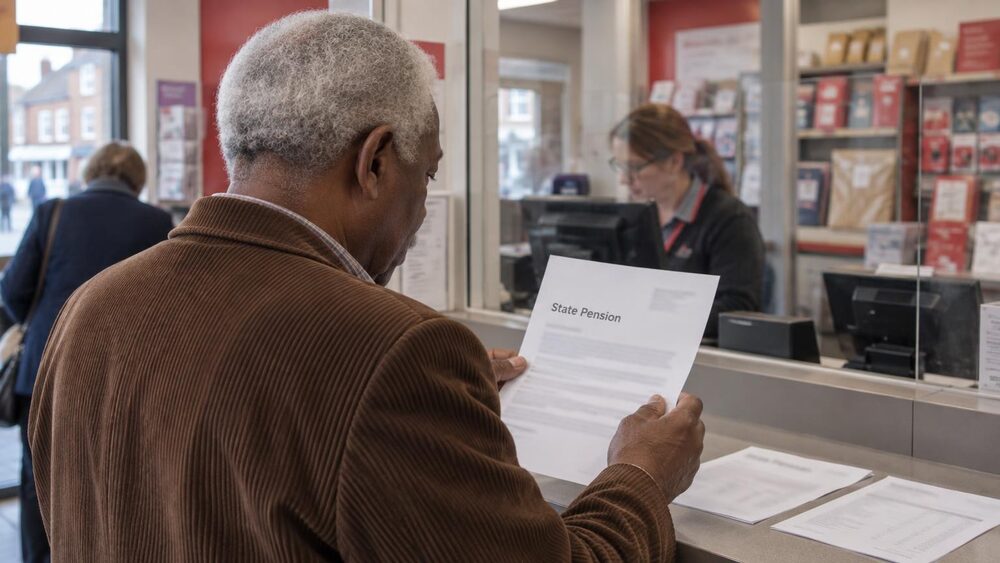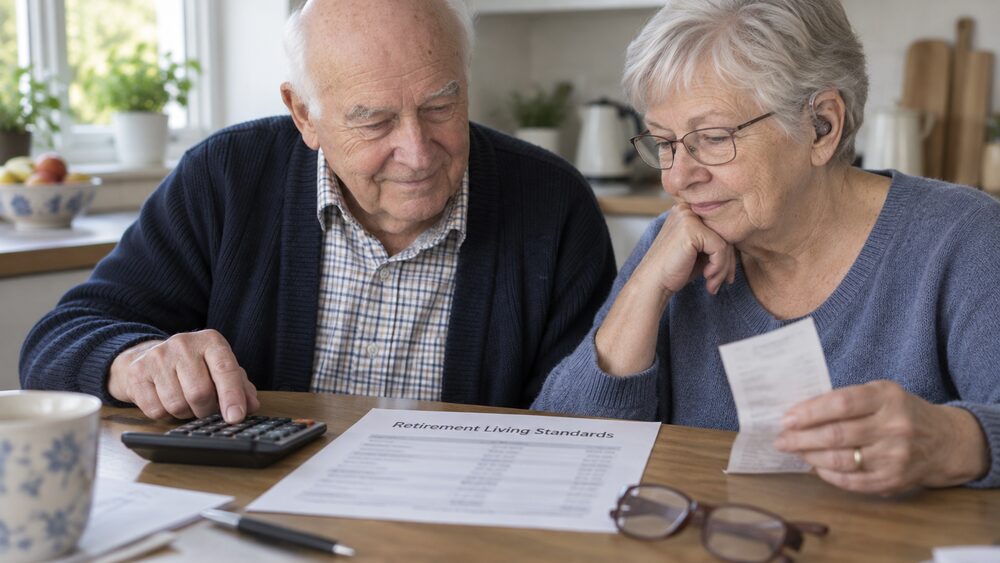
Most people working out whether they can afford to retire start from the same question: how much income will I actually need? The most widely used answer in the UK comes from the Retirement Living Standards, benchmarks that set out what three different lifestyles cost: a minimum, a moderate and a comfortable standard of living. The most recent guidance puts the minimum for a single person at £13,900 a year, rising to £32,700 for a moderate standard, with couples needing £22,500, £45,400 or £62,700 a year depending on the standard1. The 2025 edition of the standards, which the later figures update, put the single person's minimum at £13,400, moderate at £31,700 and comfortable at £43,900, with couples at £21,600, £43,900 and £60,6002.
These are spending targets, not pension pot sizes. They describe what a household needs to live on each year once it has stopped working, and they assume you own your home outright, with no rent or mortgage to pay2. Turning a yearly income into a pot size depends on how you take your money: one estimate puts the pot for a comfortable single-person retirement at around £600,000 using drawdown from age 65 alongside a full State Pension, and around £680,000 for a couple's combined pots3.
Three living standards: minimum, moderate and comfortable
The Retirement Living Standards were launched by the Pensions and Lifetime Savings Association (PLSA) in October 2019, and are pitched at three levels: minimum, moderate and comfortable5. They are based on a basket of goods and services: groups of members of the public decide what a person needs at each level, and researchers price it5. The standards are now presented under the Pensions UK name and are used across the pensions industry to help savers compare what they will need with the income their savings are on track to provide6.
The three levels are deliberately distinct. The minimum covers essentials plus a little more: food, warmth, a basic social life. The moderate adds more choice and some spending on leisure. The comfortable standard, as the PLSA described it when the framework was launched, is about having a broad range of opportunities and choices7. The headline yearly figures for each level, for single people and couples, are set out below.
| Standard | Single person | Couple |
|---|---|---|
| Minimum | £13,400 | £21,600 |
| Moderate | £31,700 | £43,900 |
| Comfortable | £43,900 | £60,600 |
These are the 2025 figures2. Later guidance raised them: £13,900, £32,700 and £43,900 for a single person, and £22,500, £45,400 and £62,700 for couples1. Where this page quotes a figure, it uses the 2025 standards unless it says otherwise, and flags the newer numbers where the two differ.
The minimum standard: about £13,900 a year for one person
The minimum standard is the floor: enough to cover what you need, with a small amount left over. The most recent guidance puts it at £13,900 a year for a single person1, while the 2025 standards put it at £13,4002. The two figures describe the same lifestyle at different points in the update cycle, and the difference between them is itself a lesson: these numbers move, usually upwards, so any plan built on them needs revisiting.
What does the minimum buy? The weekly version of the 2025 standards gives a single person £266.62 a week excluding rent, of which £62.17 a week is food4. The transport budget at this level is a free bus pass, £100 per person per year on rail plus £70 for a three-year senior railcard, and a taxi allowance of £10 a week for a single person: no car6. Each standard also includes around £200 for replacement glasses every two years where these are needed6.
The minimum standard is produced through ongoing research funded by the Joseph Rowntree Foundation on Minimum Income Standards, the same work that underpins the real living wage campaign6. That lineage matters: this is not an arbitrary poverty line but a budget negotiated by ordinary people asked what they consider the least acceptable standard of living in the UK today.
For context, the State Pension and Pension Credit sit close to this level. Pension Credit tops up weekly income to a guaranteed minimum of £201.05 a week for single pensioners, or £306.85 for a couple10, and the average weekly amount of Pension Credit paid has risen to over £7511. A single person on the full State Pension plus a small amount of savings income can therefore land near the minimum standard, provided housing costs are gone.
Moderate or comfortable: what the extra money buys
The step from minimum to moderate is the biggest in cash terms: £13,400 to £31,700 for a single person2. Much of the difference goes on choice: eating out, a car, regular holidays, more money for clothes and hobbies. The moderate standard includes a car, specified as a three-year-old Ford Fiesta replaced every five years, the same car as at the comfortable level6. At the comfortable standard, a single person's food budget alone is £172.56 a week, against £62.17 at the minimum4.
The comfortable standard for one person is £43,900 a year2. In weekly terms, the 2025 standards give a single person £870.51 a week excluding rent at the comfortable level, and £627.14 at moderate4. For couples, the comfortable standard was £60,600 in the 2025 figures2, updated to £62,700 in later guidance12. Earlier editions show how fast this level has moved: the comfortable standard was reported at £43,100 per year in February 202413, and at £33,600 when the framework was described to the Work and Pensions Committee7.
What the extra money buys is partly visible in the small items. The comfortable standard's celebration budget for food and drink is £250 a year for a couple and £150 a year for a single person6. Eating out budgets at the moderate level have been reported both as £30 per person per week for eating out plus £10 per person per week for takeaway, and as a rise from £75 per person per month in 2019 to around £170 per person per month in 2023: the documents describe the same spending in different terms, and the figures are not reconciled6.
Independent research gives a cross-check. Which? found that households with two people pursuing a comfortable lifestyle spent an average of just under £2,340 a month, around £28,000 a year, in 202214, below the standards' comfortable figure for couples, though the two measure different things: one is reported spending, the other a negotiated budget.
Couples and single people: how the figures differ
Two people do not need twice one person's budget. A couple's minimum is £21,600 against a single person's £13,400, and a couple's moderate is £43,900 against £31,7008. The most recent guidance gives £22,500 for a couple's minimum, described as roughly £22,500 each a year, and £62,700 for a comfortable retirement as a household of two1. Shared costs, from heating to a single car, explain why the per-person figure falls as the household grows.
Living alone changes the arithmetic in the other direction. A single person bears every fixed cost alone, which is one reason the standards quote separate budgets for single and partnered retirees6. Research on living alone highlights the same point for planning: the minimum and moderate standards for a single person, £13,400 and £31,700, are the benchmarks to use15.
Income prospects also differ by household type. Women approaching retirement typically have £5,000 a year less private pension income than men16. Among homeowner households aged 55 to 79 with housing wealth of £400,000 or more, 41% of single women will have retirement income below the moderate standard, and around 650,000 such households in total fall below it despite their property wealth8. Official statistics add a longer view: many people retiring in 2050 could have £800 a year less private pension income than today's pensioners16.
Living in London costs more in retirement
The Retirement Living Standards publish separate London budgets because the capital costs more. A single retiree at the minimum standard needs £14,630 a year in London without rent, against £13,902 outside4. With a social rent, the London figure rises to £21,859; with a private rent it reaches £32,0894. For a retired couple at the minimum, London costs £32,693 a year with a social rent and £43,711 with a private rent4.
Rent is the driver. Covering a social rent in London adds around £7,200 a year for a single retiree and £8,600 for a couple, and private rent outside London adds between around £7,000 and £8,000 a year for retired households in urban areas4. These additions sit on top of the standard budgets, which assume no housing costs at all.
For older homeowners who cannot buy outright, the Older Persons Shared Ownership scheme allows a share of between 10% and 75% of a home's full market value, and once you own 75% you do not pay rent on the remaining 25% share17. For renters approaching retirement with some savings, schemes of this kind are one of the few ways to reduce the housing cost the standards leave out.
What the figures leave out, including rent and mortgages
The single biggest omission is housing. The figures assume you will no longer be paying rent or a mortgage2. If you will be, the budgets need the additions set out above, and a mortgage still running past State Pension age has the same effect. Official data shows the scale of housing wealth among retired households: households that owned their property outright had median household wealth of £647,400 in April 2020 to March 202218.
The standards also exclude private healthcare. When the budgets were rebuilt in 2023, the groups concluded that publicly provided, free-at-the-point-of-need healthcare was still sufficient to meet needs across all three living standards, so nothing is budgeted for private treatment6. Anyone who intends to pay for private care needs to add it separately.
Other costs sit outside the headline numbers too. One estimate puts the average single-person household's comfortable retirement at about £20,000 a year, well below the standards, because it is built on reported spending rather than a negotiated budget19. And for those tempted to fund retirement from their home, the numbers are sobering: a 55-year-old drawing £5,000 a year through equity release could owe 51.1% of their home's value at 85, and in a subdued property market a modelled 55-year-old would owe 100.4% of the home's value19.
Support exists for those whose income falls short, and it interacts with these figures. Pension Credit tops up income to £201.05 a week for a single pensioner10, and £10,000 of capital is disregarded in Pension Credit and Housing Benefit for those above the qualifying age20. The savings credit threshold in Pension Credit has been increased to deliver an increase in the savings credit maximum in line with CPI21.
How rising prices have pushed the figures up
The standards have risen every year since 2019. Between 2019 and 2023, the minimum standard for a single retiree rose 37.2%6. Measured as averages since 2019, the annual amount needed has increased by around £2,500 a year at the minimum standard, around £3,000 at moderate and around £4,300 at comfortable, all excluding rent22. In a single year, 2021 to 2022, a retired couple's moderate budget rose £64.28 a week and their comfortable budget £91.81 a week22.
Specific costs have driven much of this. For couples at the moderate standard, domestic fuel prices rose 29% (£13.75) in the year to 2023 and 190% (£40.44) since 20196. The cost of owning and running a car rose 68% (£32.29) for a single retiree at the moderate level between 2022 and 20236, and average car insurance was nearing £1,000 a year by 20246. Eating out rose 24.7% between October 2019 and October 20236. Headline CPI rose 8.7% in the year to April 20236, and by 3.5% in the year to April 2025, the same as the average increase across all the retirement living standards that year4.
Income in retirement has partly kept pace. The basic State Pension increases every year by whichever is highest: average earnings growth in Great Britain, CPI price growth in the UK, or 2.5%23. Public sector pensions are increased in line with CPI every April24. The Pension Schemes Act 2026 introduces a new law allowing inflation increases on pension benefits built up before 6 April 199725. Official statistics also show the gap between retired and non-retired households' costs widened by 0.4 percentage points in the period to June 202626.
How the Retirement Living Standards are worked out
The standards are produced by the Centre for Research in Social Policy at Loughborough University for the PLSA6. They set out three budgets for single and partnered retirees, detailing the expenditure needed to reach each standard6. The minimum comes from the Joseph Rowntree Foundation's Minimum Income Standards research; the moderate and comfortable standards were built with the public directly6.
The method is worth understanding, because it explains both the strengths and the limits of the numbers. In the 2023 rebase, 54 hours of discussions were undertaken with groups of members of the public, reviewing what is needed for both standards in the UK and in London6. Groups were held in Belfast, Bristol, Edinburgh, Liverpool, Manchester, Milton Keynes, Newcastle, Norwich, Nottingham, Sheffield and Swansea, so all four nations are represented6. All groups included participants who were retired and non-retired, over the age of 506.
Between rebases, the figures are updated with inflation measures: the 2022 update used the Consumer Prices Index for the year to April 2022, with domestic fuel and water rates repriced22. In 2023 the standards were rebased, starting from scratch with groups of members of the public4. The standards were first published in 20194.
Turning the income figures into a savings target is where calculators come in, and their assumptions matter. One set of calculations puts the total monthly contributions needed to achieve the moderate standard of £31,700 a year at £423 if you start saving at 30, rising to £675 if you start at 40, using drawdown27. The PLSA's own modelling, put to the Work and Pensions Committee, suggested a contribution rate of 12% of whole salary would help households achieve a moderate retirement in certain circumstances, on an incremental basis from 2027 to 20327. Back in 2017, consumers told a parliamentary committee they believed £23,000 a year was needed to live comfortably in retirement28, well below today's moderate standard: expectations have moved with the figures.
Where the figures do not fit your own retirement
The standards are UK-wide averages built from group discussions, and your retirement may not look like the basket. If you will still be renting, or carrying a mortgage, or paying for private healthcare, or supporting family members, the headline numbers understate what you need. If you plan a modest car-free life in a low-cost area, they may overstate it. The right response is to treat the standards as a starting point and adjust them, not to follow them blindly.
The evidence says many people are some way short. Research suggests 17 million UK adults are not saving enough to meet their retirement goals29. A Pensions Policy Institute review found that of the 11 million people in the UK between 50 and State Pension age, around three million would not receive a minimum income, around five million would not receive a personally acceptable income, and around 10 million would not receive a comfortable income7. And 22.5 million UK adults do not understand enough about pensions to make decisions about retirement30. Official statistics show most employees yet to retire, 52%, expect private pensions to be their main source of retirement funding31.
Tools have limits too. A Pension Credit estimate may be incorrect if you input incorrect or incomplete information, if your circumstances change, or if benefit rates and rules change33. MoneyHelper's retirement guidance tool is explicit that you will not see all your pensions or your exact pension income34. And official guidance is clear that if you are behind on your mortgage, rent, credit card or other debt payments, a pension might not be the right step now35.
Where income falls short, the safety net has its own gaps. Pension Credit unfulfilled eligibility was 2.0%, £130 million, in the financial year ending 2026, up from 1.7% (£100 million) the year before36. Underpayments due to official error were 1.0% (£50m) in the year to March 202337, and a National Audit Office investigation found an estimated £146 million owed to around 37,000 pensioners who should have had an increase in their pension at their 80th birthday38. Checking your entitlement, and your National Insurance record, is part of retirement planning.
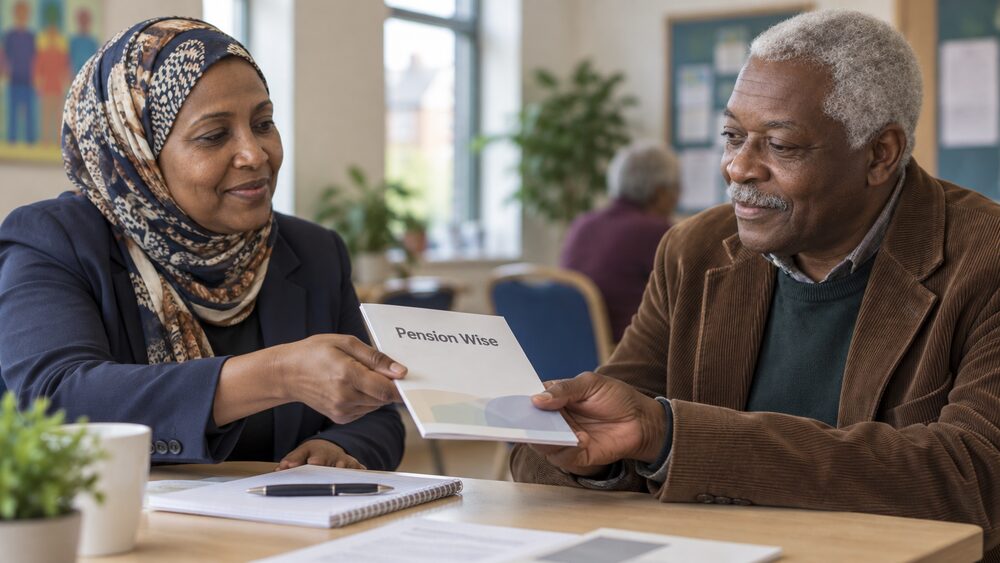
Free help is available. Pension Wise offers free guidance on your pension options for those aged 50 and over, and MoneyHelper provides retirement guidance, with the caveat above about what its tools can show34. For the State Pension side of the picture, the guides to the new State Pension, how the State Pension goes up each year and your State Pension forecast cover the income the standards assume you will have. The Pensions and Lifetime Savings Association's own vision for retirement income, and the wider pensions guides on this site, cover how to build the private income on top5.
Sources38 cited
- How long does my pension need to last? Which?, 2026-06-05
- Are you saving enough for retirement? Which?, 2026-02-16
- How to boost your pension Which?, 2026-08-10
- Retirement Living Standards in the UK in 2025 Pensions and Lifetime Savings Association, 2026-06
- Hitting the Target: A Vision for Retirement Income Pensions and Lifetime Savings Association, 2026-09-26
- Retirement Living Standards in the UK in 2023 Pensions and Lifetime Savings Association, 2023
- Hitting the Target: a vision for retirement income, Work and Pensions Committee report UK Parliament, 2022-09-30
- Retirement Compass Equity Release Council, 2026-06-11
- Five ways to reduce your risk of pension poverty Which?, 2026-05-17
- Pension Credit Carmarthenshire County Council, 2024-11-11
- Pension Credit toolkit GOV.UK, 2023-12-04
- What pension can you get if you're self-employed? Which?, 2026-09-15
- Can equity release help stretched retirees? Which?, 2024-02-16
- What is the Living Pension standard? Which?, 2022
- What living alone means for your retirement planning Which?, 2025
- Pension reforms under review: what it means for your retirement savings Which?, 2025-07-22
- Older Persons Shared Ownership (OPSO) GOV.UK, 2025-12-03
- Total wealth in Great Britain: April 2020 to March 2022 Office for National Statistics, 2025-01-24
- When is equity release worth it? Which?, 2024-06-29
- Benefit and pension rates 2026-2027 GOV.UK, 2026
- The State Pension (Amendment) Regulations 2026, explanatory memorandum legislation.gov.uk, 2026
- Retirement Living Standards in the UK in 2022 Pensions and Lifetime Savings Association, 2022-11
- Basic State Pension rate nidirect, 2026-07-15
- Annual pension increase NHS Scotland Pensions, 2026
- Will my payments increase? Pre-1997 benefits Pension Protection Fund, 2026-09-26
- Household Costs Indices for UK household groups: April to June 2026 Office for National Statistics, 2026
- The high cost of pausing your pension contributions Which?, 2026-03-15
- Written evidence to the Work and Pensions Committee UK Parliament, 2017-12
- How small boosts can add thousands to your pension pot Which?, 2024-10-25
- Nearly eleven million UK adults are too busy or confused to think about their pension Money and Pensions Service, 2024
- Pension wealth in Great Britain Office for National Statistics
- Sidecar savings, Commons Library research briefing House of Commons Library, 2026-07-08
- Get a Pension Credit estimate nidirect, 2026-06-26
- Get retirement guidance MoneyHelper, 2026-09-27
- Deciding if a workplace pension is right for you nidirect, 2026-09-25
- Unfulfilled eligibility in the benefit system, FYE 2026 estimates GOV.UK, 2026
- Fraud and error in the benefit system, FYE 2023 estimates GOV.UK, 2023
- Investigation into underpayments of State Pension National Audit Office, 2021-09-22

 Pension WiseFree guidance on your options for a defined contribution pension, from age 50
 FSCSProtects your money if a bank, insurer or investment firm fails
 GOV.UKOfficial information on tax, benefits and government services