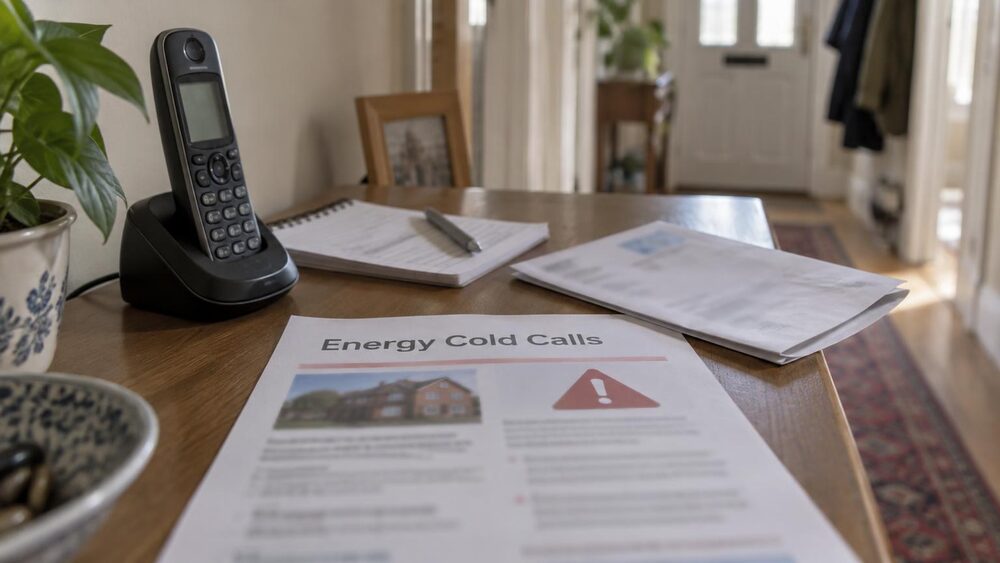
Which? has reported that scammers are impersonating British Gas through cold calls, according to reports it received and published on 31 March 20261. Some recipients said the caller knew information about them, including their email address and postcode1.
The reports describe several approaches. In one, a cold caller claiming to be from British Gas asked for personal information, including a sort code, to check whether the recipient was covered for boiler breakdown and repairs1. In others, callers asked for billing details and meter information and said there was a problem with the recipient's upcoming bill1. Which? said all appear to be an attempt to get bank details1. It also reported cold calls from an "energy savings adviser", which it said is also likely to be a scam1.
"Recent reports to Which? show that scammers are impersonating British Gas through cold calls."
Which? also reported text messages impersonating the Department for Work and Pensions. One version says the winter allowance offers a one-off payment of £200 to £300; another mentions an "application for the fuel subsidy" resulting in a "one-time" payment of £3001. The messages contain a link to claim that leads to a copycat government website which steals personal and financial information1. The Department for Work and Pensions issued a warning to pensioners about Winter Fuel Payment scam texts last October1. Most people eligible for the Winter Fuel Payment will receive it automatically in November or December 20261.
A separate advert on Facebook and Instagram appears to be a deepfake video of a person promoting a plug-in energy-saving device1. At the time of writing it had reached roughly 155,260 accounts and included a phishing link to buy the £34.95 device1. The website claims the device must be plugged in 24/7 and leads to up to 90% savings on electricity bills without changing usage habits1. Which? said these devices do not work and could be dangerous1.
| Scam reported | What it asks for or claims |
|---|---|
| British Gas cold call | Sort code, billing details, meter information; claims a problem with the upcoming bill1 |
| "Energy savings adviser" cold call | Which? says this is also likely to be a scam1 |
| DWP winter allowance text | One-off payment of £200 to £300, with a link to claim1 |
| DWP "fuel subsidy" text | "One-time" payment of £300, with a link to claim1 |
| Energy-saving device advert | £34.95 device, up to 90% savings on electricity bills1 |
Why it matters for households
The calls and texts target people's bank and personal details directly. A sort code, billing details or meter information can be used to attempt payments or to make a later approach seem genuine, and the callers in these reports already held some details about the people they rang1. The fake DWP texts point to a copycat government site built to collect personal and financial information1. The device advert takes payment of £34.95 through a phishing link, and Which? said the devices do not work and could be dangerous1.
Which? said people who believe a call could be genuine should end it and contact their energy supplier using a trusted contact number taken from a recent bill1. It said government services should be accessed only on the Gov.uk website, and that links from text messages should not be followed1. Anyone who has lost money or spots an unauthorised transaction should contact their bank immediately using the phone number on the back of their card1.
What happens next
Scam calls can be reported on an iPhone by texting the word "call" followed by the phone number to 7726; on Android, texting "call" to 7726 prompts a message asking for the scam number1. Scam texts can be forwarded to 7726 to report them to a phone operator1. On WhatsApp, the chat with the number can be blocked and the contact reported1. Scam websites can be reported to the National Cyber Security Centre, and suspicious Facebook and Instagram ads reported through the platform1. Scams can also be reported to Report Fraud, or by calling police on 101 in Scotland1.
More on phishing, vishing and smishing, clone firms and British Gas.
 FCA Warning ListCheck whether a firm is authorised before you deal with it
 Financial Ombudsman ServiceFree, independent help when a complaint about a firm is not put right
 Citizens AdviceFree advice on money, consumer and legal problems in England and Wales
 MoneyHelperFree, impartial money and pensions guidance, set up by government