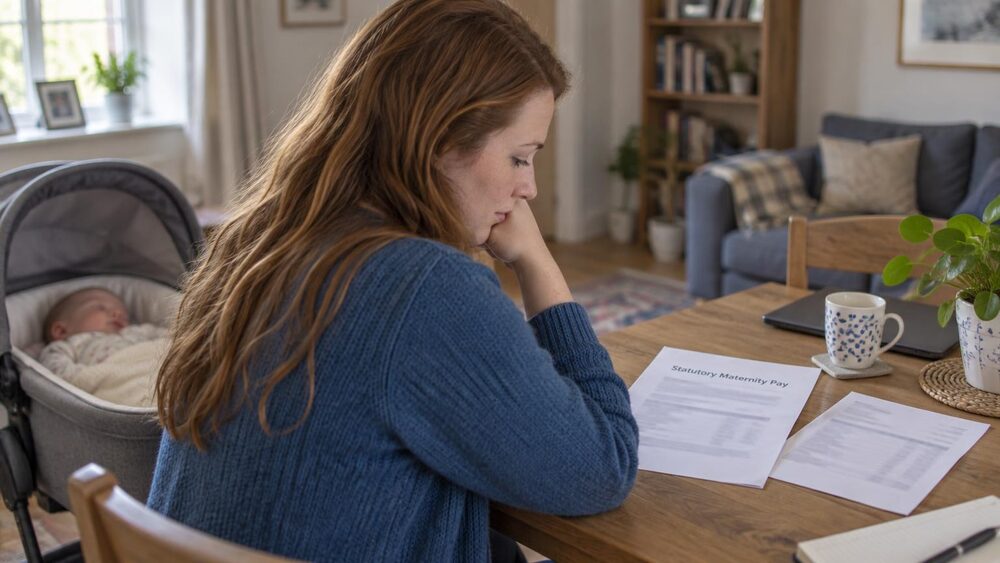
Statutory maternity and parental pay stood at £184.03 a week from April 2024, according to Maternity Action, the charity that campaigns on rights at work and benefits for pregnant women and new mothers1. The figure appears in its Cost of Living on Maternity Leave 2024 report, published in June 20241.
The charity set the rate against two other earnings figures: £400.40 a week at the National Minimum Wage for 35 hours at the adult rate, and average weekly earnings of £6771. It said UK mothers have some of the lowest rates of maternity pay among European countries1. The report also states that around 13% of women receive Occupational Maternity Pay, which it describes as a sharp decline from 44% in 2008 and 36% in 2011, citing Government research1.
The report is the third in an annual series looking at the impact on women of taking maternity leave1. A total of 1,039 women responded to the digital survey, which was self-selecting, and not all respondents answered all questions1. It was circulated in March and April 2024 and asked women who had been on maternity leave from work at any time between January 2023 and April 2024 about their financial situation during that time1.
"From April 2024 statutory maternity and parental pay are £184.03 weekly"
Among the findings, the proportion who said they worried a lot about money while pregnant or on maternity leave rose from 64% in 2022 to 71% in 2023 and 73% in 2024, with a further 25% worrying sometimes and 2% not worrying at all, down from 5% in 20221. The share relying on a credit card or borrowing rose from 51% in 2022 to 60% in 2023 and 62% in 2024, and those reporting borrowing of more than £4,000 rose from 17% in 2023 to 23% in 20241. The proportion who said money worries had affected their health or wellbeing rose from 56% in 2022 to 57% in 2023 and 65% in 20241.
On household costs, 69% reduced the hours their heating was switched on, 63% turned down the thermostat and 52% turned the heating off in some rooms1. Half bought less healthy food, 26% went without food themselves to prioritise feeding their children, 38% had smaller meals or skipped meals and 7% went without eating for a whole day1. Asked for the first time about formula, 13% said they struggled to afford to buy formula feed and 27% had cut down on buying food for themselves or their family because of the cost of formula1. The report cites Competition and Markets Authority figures that the cost of baby formula milk rose by approximately 22% to 25% over the past two years1.
The number returning to work earlier than they wanted because of money worries rose from 42% in 2022 to 58% in 2023 and 59% in 20241. Twenty-eight per cent said the amount of parental leave the father or co-parent could take had to be reduced, up from 27% in 2023, and 20% said they could not afford to take any parental leave, up from 17%1.
Why it matters for households
Statutory maternity and parental pay is a flat weekly rate, so the gap between it and a salary depends on what the claimant earned before leave. The report gives the rate as £184.03 a week from April 20241, against average weekly earnings of £6771. Eligibility matters too: the report says women who do not meet the criteria may get no maternity pay at all and be able to claim very little extra in benefits1. Self-employed women who do not qualify for statutory maternity pay are described as facing particular problems on Maternity Allowance1. The survey covers women on leave between January 2023 and April 2024, so its findings describe that period rather than the position after April 20241. The report notes that although inflation was falling, prices for food, clothing, gas and electricity were not falling1.
What happens next
The report does not set out dated next steps. It records that the survey ran in March and April 2024 and was published in June 20241. No further announcement on rates is reported in it.
Sources1 cited
- Cost of Living on Maternity Leave 2024 - Maternity Action maternityaction.org.uk

 MoneyHelperFree, impartial money and pensions guidance, set up by government
 Citizens AdviceFree advice on money, consumer and legal problems in England and Wales
 Turn2usFree benefits calculator and grants search from a charity
 GOV.UKOfficial information on tax, benefits and government services