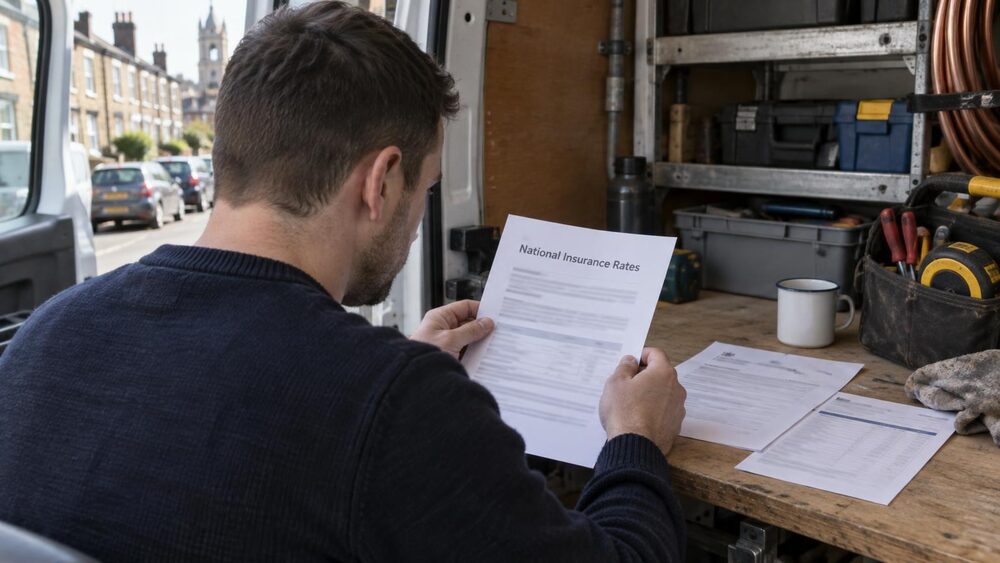
The National Insurance Contributions (Reduction in Rates) Act 2024 cut the main rate of primary Class 1 National Insurance contributions (NICs) paid by employees from 10% to 8%, and cut the main Class 4 rate paid by the self-employed from 9% to 6%1. The Act received Royal Assent on 20 March 2024 and all its provisions came into force on 6 April 20241. The reduction in employee NICs to 10% had been legislated in the National Insurance Contributions (Reduction in Rates) Act 2023, and the 2024 Act provided the further cut1. The House of Commons Library records that the changes "took the main rate of employee NICs from 12% to 8%" across 2023 and 20242.
The Act applies in England, Wales, Scotland and Northern Ireland, and amends both the Social Security Contributions and Benefits Act 1992 and its Northern Ireland equivalent1. The explanatory notes state that the Act "is intended to provide a further cut in the amount of NICs paid for 29 million working people, worth over £450 to the average employee earning £35,400 per annum and £310 to the average self-employed person with profits of £28,000 per annum"1.
"This Act introduces a cut in the main rate of primary (employee) Class 1 National Insurance contributions (NICs) from 10% to 8% and a cut in the main rate of self-employed Class 4 NICs from the previously announced rate of 8% to 6%."
Separately, liability to pay Class 2 NICs was removed from 6 April 2024 under the National Insurance (Reductions in Rates) Act 20233. From that date no self-employed person is liable to pay Class 2 NICs; those with profits at or above £6,725, the small profits threshold, are treated as having paid them, while those with profits under £6,725 can continue to pay Class 2 NICs voluntarily to maintain access to contributory benefits3. The regulations making the consequential amendments state that qualifying women, including their spouse and civil partner, will continue to be able to pay Class 2 NICs before their profits are established, to ensure entitlement to Maternity Allowance is maintained, and that those whose profits are later confirmed at or above the small profits threshold can apply to HMRC for a refund3.
The nidirect guidance on Maternity Allowance states that from April 2024 Class 2 contributions are treated as having been paid to protect the National Insurance record, and that a self-employed claimant who has not paid enough Class 2 National Insurance to get the standard rate will get between £27.00 and £194.32 a week for 39 weeks4. The standard rate is £194.32 a week, or 90 per cent of average weekly earnings if lower, for up to 39 weeks4.
| Contribution | Main rate before | Main rate from 6 April 2024 |
|---|---|---|
| Employee Class 1 | 10% | 8%1 |
| Self-employed Class 4 | 9% | 6%1 |
| Self-employed Class 2 | Liability to pay | No liability; treated as paid at or above £6,725 profits3 |
Why it matters for households
The rate cuts change how much is deducted from pay for employees and from profits for the self-employed, from 6 April 2024, across all four nations of the UK1. The employee rate had already been reduced from 12% to 10% in 2023, so the April 2024 change is the second cut in the main employee rate in two tax years2. For the self-employed, the Class 4 rate falls from 9% to 6%, and the separate flat-rate Class 2 charge no longer applies to anyone, though the contribution record is protected for those with profits at or above £6,7253.
The Class 2 change also affects benefit entitlement calculations. Class 2 NICs are used in earnings calculations for Housing Benefit, Jobseeker's Allowance and Employment and Support Allowance, and in calculations of reductions in Council Tax liability; the 2024 regulations remove references to Class 2 NICs from those calculations because the figure would now be nil3. Maternity Allowance entitlement for self-employed claimants depends on Class 2 contributions, and the option to pay them before profits are established remains4.
The House of Commons Library notes that income tax thresholds have been frozen at their April 2021 levels, so taxpayers pay more income tax on their income than if thresholds rose with inflation2. It also records that in April 2024 benefits linked to inflation were uprated by 6.7%, and that the basic and new State Pension rose by 8.5% for 2024/252.
What happens next
The rate cuts and the removal of Class 2 liability took effect on 6 April 20243. The regulations on Class 2 include a retrospective change applying to the 2022-23 tax year and subsequent years, covering late filing of Self Assessment tax returns and a residence and presence condition for those treated as having paid Class 23. HMRC said guidance on the Class 2 changes would be updated and published on GOV.UK3. No further rate changes for 2024/25 are set out in these documents.
Sources4 cited
- National Insurance Contributions (Reduction in Rates) legislation.gov.uk
- Rising cost of living in the UK - House of Commons Library commonslibrary.parliament.uk
- The Social Security (Class 2 National Insurance Contributions) (Consequential Amendments and Savings) Regulations 2024 legislation.gov.uk
- Maternity Allowance | nidirect nidirect.gov.uk
 GOV.UKOfficial information on tax, benefits and government services
 MoneyHelperFree, impartial money and pensions guidance, set up by government
 Citizens AdviceFree advice on money, consumer and legal problems in England and Wales
 Turn2usFree benefits calculator and grants search from a charity
 Citizens Advice ScotlandFree advice across Scotland