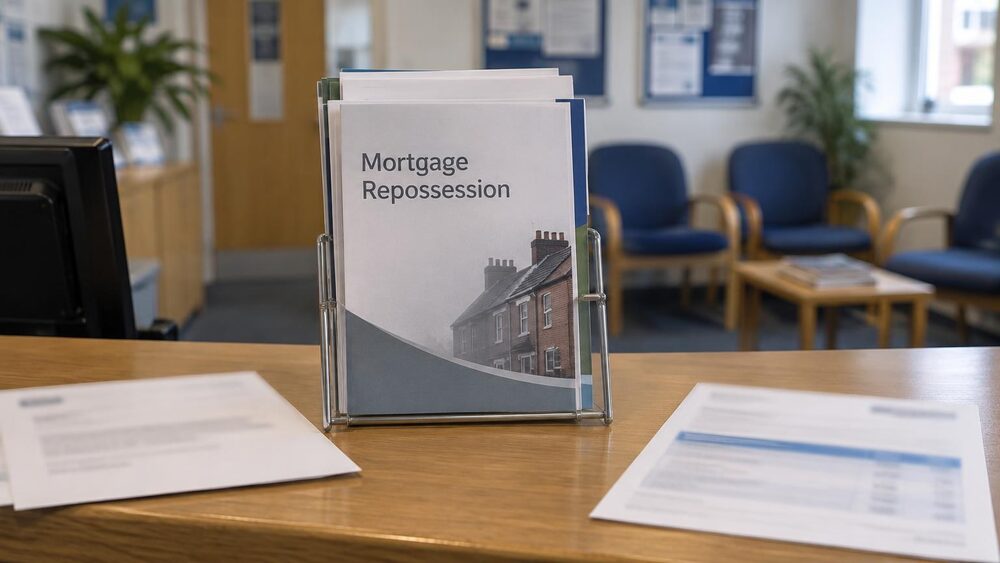
The UK's major mortgage providers agreed in June 2023 to extend the arrears threshold at which repossession action can start, from three months to 12 months, according to Which?1. Lenders could previously begin repossession orders after three months of arrears1. The government estimated that 90% of the market agreed to the policy change1.
Repossession is treated as a last resort after other options have been exhausted1. Before starting court action, a lender must consider any request a borrower makes to change how they pay their mortgage and must write to the borrower five working days before it starts court action, explaining why it is applying to court1. Mortgage arrears is a priority debt, and a borrower who consistently fails to repay could have their home repossessed1. Missed payments also appear on a credit report and can affect the ability to take out credit in future1.
Where a borrower is already in arrears, lenders may allow the shortfall to be cleared by adding an extra amount to later payments. Which? gives the example of a missed £700 payment being repaid by adding £100 to monthly payments for the next seven months1. Alternatively, a provider may allow arrears to be added to the total owed and repaid over the life of the loan, known as "capitalising your arrears"1. Which? notes this increases the debt and the interest paid over the long run1.
Lenders may also offer a temporary payment holiday, during which repayments are paused but interest continues to be added, or a temporary switch to interest-only payments, where only the interest is paid for a set period1. A borrower can also extend the mortgage term to reduce monthly payments, for example from 30 years to 35 years, repaying the same debt over a longer period1. Borrowers who change the length of their repayment term or move to interest-only can now reverse that decision within six months without it affecting their credit rating1.
"Lenders could previously start repossession orders after three months of arrears; however, the UK's major providers agreed in June 2023 to extend this to 12 months."
Support differs by nation. Benefits claimants in England may be able to get help through the government's Support for Mortgage Interest (SMI) loan, which covers some of the interest on their mortgage1. To qualify, a claimant must receive one of Income Support, Jobseeker's Allowance, Employment and Support Allowance, Universal Credit or Pension Credit1. The SMI loan is repayable when the property is sold1. Homeowners in Scotland who are struggling may be eligible for the Home Owners' Support Fund, where measures can include the government buying a stake in the property to reduce mortgage payments1. Some local authorities in Wales provide mortgage rescue schemes1. Housing Rights Northern Ireland provides a support line for people concerned about their mortgage payments1.
Why it matters for households
The 12-month threshold applies to the point at which a lender can start repossession action, not to when arrears begin. A borrower who falls behind still accrues arrears from the first missed payment, and those missed payments still appear on a credit report1. The change, agreed in June 2023, means the court stage is reached later for borrowers whose lender has signed up, and the government estimated 90% of the market did so1. Which? does not report which lenders are outside that 90%, so the position of any individual provider has not been reported.
The support options carry costs. A payment holiday and a switch to interest-only both tend to increase the total interest paid over the life of the loan, and extending the term means repaying the same debt over a longer period1. Capitalising arrears increases the debt and the interest paid1. Borrowers who take the term-extension or interest-only route can reverse the decision within six months without an impact on their credit rating1.
What happens next
No further dated steps are set out in the reported material. The June 2023 agreement is described as a policy change by major providers rather than a change in the law, and no end date or review point is given1. Borrowers in England and Wales can read how the court stage works in mortgage repossession in England and Wales and how long mortgage repossession takes; the process in Northern Ireland is covered in repossession in Northern Ireland. Help with interest payments is set out in Support for Mortgage Interest (SMI) explained, and the Scottish scheme in the Home Owners' Support Fund in Scotland. The effect of missed payments on credit records is covered in how long mortgage arrears stay on your credit file, and lender fees in can my lender charge fees for mortgage arrears.

 MoneyHelperFree, impartial money and pensions guidance, set up by government
 StepChangeFree debt advice and solutions from a charity
 Financial Ombudsman ServiceFree, independent help when a complaint about a firm is not put right
 Citizens AdviceFree advice on money, consumer and legal problems in England and Wales
 ShelterFree housing advice from a charity