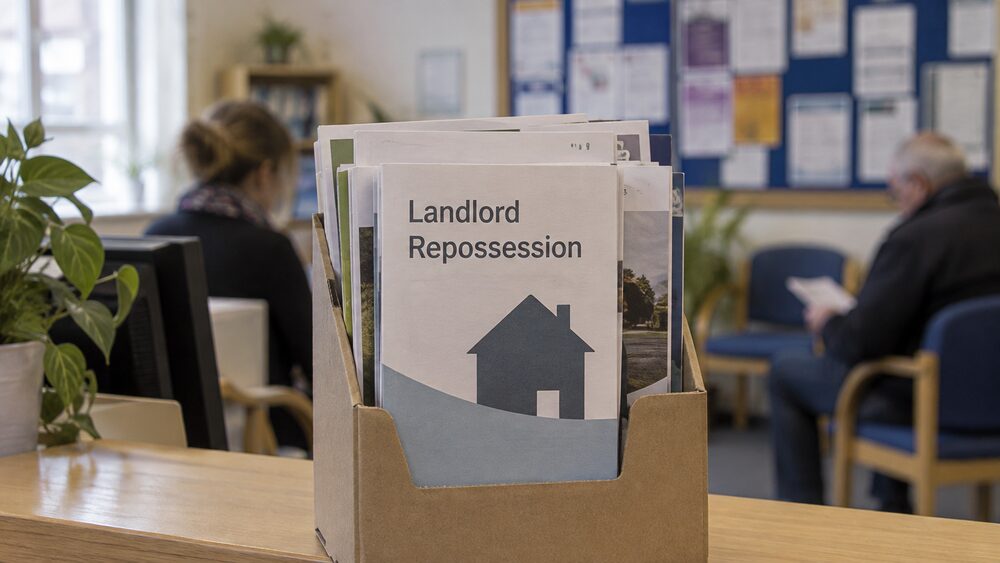
If your landlord falls behind on their buy-to-let mortgage, the lender can take court action to repossess the home you rent. Repossession is a legal process where a mortgage lender or secured loan provider takes ownership of a property1. Your landlord's lender will usually apply to court2.
If your landlord falls behind on their buy-to-let mortgage, the lender can take court action to repossess the home you rent. Repossession is a legal process where a mortgage lender or secured loan provider takes ownership of a property1. Your landlord's lender will usually apply to court2.
Most lenders do not start repossession action until at least three payments have been missed3. Under the Mortgage Charter, there is a minimum 12-month period from the first missed payment before there is a repossession without consent4. Lenders could previously start repossession orders after three months of arrears, but that changed in June 20235.
If your landlord bought the property through a buy-to-let mortgage, you probably have no right to stay in the property after it is repossessed by the lender6. However, if you have a binding tenancy, you become a tenant of the lender if your landlord's property is repossessed7.
What repossession means when your landlord is behind on the mortgage
Repossession is when a mortgage company takes your home because you have not paid9. It is a legal process where a mortgage lender or secured loan provider takes ownership of a property1. If you have a mortgage or secured loan on your home and you fall behind on payments, the lender could take court action to repossess your home, and it could be sold to repay what you owe10.
For tenants, the situation is different. Your landlord's lender has the right to repossess the property if the landlord falls behind on payments. The most common reason for repossession is missed mortgage payments or a loan secured on the home11.
If your landlord bought the property through a buy-to-let mortgage, written notice explaining that there is probably no right to stay in the property after it is repossessed by the lender is a standard part of the arrangement6. However, with a binding tenancy, the tenant becomes a tenant of the lender if the landlord's property is repossessed7.
The trigger conditions for repossession by a landlord's lender are that the landlord misses mortgage payments or rents the property out without their permission2.
Buy to let mortgages: why your landlord's lender can take the home
A buy-to-let mortgage is a mortgage taken out specifically to buy a property that will be rented out. The lender's security is the property itself, not the tenant's rent payments.
If your landlord bought the property through a buy-to-let mortgage, you probably have no right to stay in the property after it is repossessed by the lender6. The Law of Property Act 1925 gives the lender the right to repossess the property or land without a court order by appointing LPA receivers for most business mortgages, for example buy-to-let or commercial mortgages12.
A buy-to-let mortgage contract is regarded as entered into for business purposes where the borrower owns other land occupied on a rental basis and not by the borrower or a related person, or secured by a buy-to-let mortgage contract13.
If you rent out your home, you may need permission from your mortgage lender and your mortgage interest may increase8. Terms in mortgage agreements or insurance which prevent landlords renting to people who get benefits are no longer permitted14.
Missed payments to court action: how the lender moves
The process from missed payments to court action follows a set pattern. If you miss your mortgage repayments and cannot agree a repayment plan, your mortgage lender might start court action to repossess your home15. Most lenders do not start repossession action until you have missed at least 3 payments3.
If you do not contact your lender or you miss up to three payments, your lender may start legal action against you16. The mortgage provider will contact you to find out why your payment has not come through. At this point, they should give you the chance to get payments back on track17.
Before they go to court, they must give you a list of all missed payments, details of the total amount of your arrears, and information about how much you still owe on your mortgage18.
Your landlord's lender will usually apply to court2. In most cases, the landlord cannot repossess the home without a court order, except where abandonment is believed19.
Is repossession always a last resort for lenders?
Repossession is always a last resort17. Lenders must be fair and reasonable. Repossession should be the last option they consider20. They have to follow a mortgage pre-action protocol8.
Lenders will only start court action to repossess your house as a last resort1. They only repossess homes as a last resort21. Repossession is very much a last resort for lenders22.
The Mortgage Charter introduced a minimum 12-month period from the first missed payment before there is a repossession without consent4. Lenders could previously start repossession orders after three months of arrears5.
If you are struggling with rent arrears, there is help available. MoneyHelper provides guidance on rent arrears and problems paying your rent23.
After repossession: the lender sells the property
Once the lender has possession, the property will usually be sold. Your home will then usually be sold as quickly as possible, often for less than the market value, meaning you would owe the bank even more than you would have if you had sold the property yourself24.
Your lender is entitled to use the money from the sale to recover what you owe25. Your lender must use the money from the sale to pay off the court costs, estate agent's and solicitor's bills, the mortgage and any second or third mortgages26.
When the sale goes through, your lender and any other secured creditors get their money back. You get any money left over18.
If you voluntarily surrender the property, your lender sells the property for you and you get back any money made from the sale27.
In some circumstances, you can use Palk v Mortgage Services, which is a case where the lender was ordered to sell the property after repossession rather than rent it out indefinitely28. The lender was ordered to sell the property after repossession rather than rent it out indefinitely because the rent would not have covered the interest being added to the mortgage29.
Where your landlord's debt does not follow you
Your landlord's mortgage debt is their responsibility, not yours. If the mortgage or secured loan is in someone's sole name, this will also continue to be the sole liability of that person, even if they have left the property30.
If the sale does not cover the mortgage, the landlord remains liable for the shortfall. This will include any arrears, ongoing mortgage and interest payments, buildings insurance and penalty charges for missed payments25.
If you owe rent to an old landlord that you no longer have a tenancy with, it is no longer a priority debt. You can treat it like a credit card or unsecured loan debt31.
Even if you include rent arrears in a Debt Relief Order, your landlord can still take court action to evict you. However, they cannot recover rent arrears built up before your DRO32.
If you have a mortgage or secured loan on your home and you fall behind on payments, the lender could take court action to repossess your home and it could be sold to repay what you owe. You would get any money left over33.
Does it matter if my landlord's mortgage is in a limited company name?
If your landlord's mortgage is in the name of a limited company, the company must not have any insolvency proceedings34. A buy-to-let mortgage contract is regarded as entered into for business purposes where the borrower owns other land occupied on a rental basis and not by the borrower or a related person, or secured by a buy-to-let mortgage contract13.
The Law of Property Act 1925 gives the lender the right to repossess the property or land without a court order by appointing LPA receivers for most business mortgages, for example buy-to-let or commercial mortgages12.
This means that if your landlord holds the property through a limited company, the lender may be able to act more quickly than if the mortgage were in the landlord's personal name.
Does repossession work differently in Northern Ireland?
Repossession rules differ across the UK. Housing Rights provides information for homeowners in Northern Ireland35. There is a different scheme in Northern Ireland for rent to own36.
If you do not pay, the items you bought can be repossessed. The creditor can also apply for a Money judgment19.
For tenants in Northern Ireland facing their landlord's repossession, the same principles apply: the lender must follow due process, and repossession should be a last resort.
Where to get help
If you are facing eviction because your landlord's lender is repossessing the property, there are free and impartial services that can help.
MoneyHelper provides guidance on rent arrears and problems paying your rent23. StepChange offers help with cost of living pressures21. National Debtline provides guides on mortgage arrears26.
If you are a homeowner in Northern Ireland, Housing Rights provides guidance on mortgage problems35.
For tenants in England, Shelter provides advice on repossession by a landlord's lender2. For tenants in Wales, Shelter Cymru provides similar guidance6.
Sources36 cited
- House repossession StepChange, 2026-09-25
- Repossession by a landlord's lender Shelter England, 2026-05-01
- How to deal with missed mortgage payments Shelter England, 2026-08-26
- Mortgage Charter House of Commons Library, 2026-07-08
- What to do if you can't pay your mortgage Which?, 2025-12-10
- Repossession by a landlord's lender Shelter Cymru, 2026-08-28
- Binding tenancy Shelter England, 2026-05-01
- Problems paying your mortgage Independent Age, 2026-09-26
- How to leave your home to a disabled family member Scope, 2026-09-08
- Selling assets to clear debt National Debtline, 2026-09-25
- Losing home you own Housing Rights, 2026
- Your priority debts Business Debtline, 2026-09-26
- Article 61A legislation.gov.uk, 2026
- No DSS benefit discrimination Shelter Scotland, 2026-04-30
- Repossession GOV.UK, 2026-09-26
- Sorting out mortgage problems Housing Rights, 2026
- Mortgage arrears StepChange, 2026-09-25
- Home repossession process Shelter England, 2026-08-24
- What debts to pay first StepChange, 2026-09-25
- At risk of losing your home Independent Age, 2026-09-26
- Cost of living StepChange, 2026-09-25
- How to tackle your interest-only mortgage Which?, 2026-04-02
- Rent arrears: problems paying your rent MoneyHelper, 2026-09-25
- Negative equity Which?, 2025-12-10
- Sale by mortgage lender Shelter Cymru, 2026-08-28
- Mortgage arrears National Debtline, 2026-09-25
- Surrendering your property StepChange, 2026-09-25
- Negative equity National Debtline, 2026-09-25
- Negative equity Business Debtline, 2026-09-26
- What happens to debts when you get divorced National Debtline, 2026-09-25
- Guarantor loans explained MoneyHelper, 2026-09-25
- Debt relief orders National Debtline, 2026-09-25
- Selling assets to clear debt Business Debtline, 2026-09-26
- Product switch Vida Homeloans, 2026-09-26
- Taken to court by your mortgage lender Housing Rights, 2026
- Rent to buy GOV.UK, 2026-09-26











 MoneyHelperFree, impartial money and pensions guidance, set up by government
 StepChangeFree debt advice and solutions from a charity
 Financial Ombudsman ServiceFree, independent help when a complaint about a firm is not put right
 Citizens AdviceFree advice on money, consumer and legal problems in England and Wales
 ShelterFree housing advice from a charity