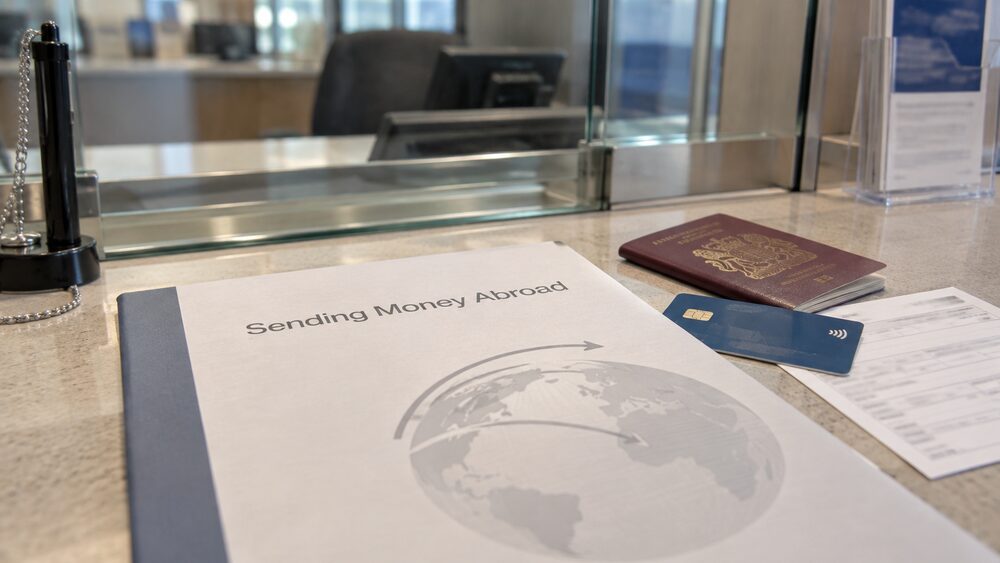
Travellers cheques were once the standard way to carry money abroad: you bought them from a bank or travel agent before a trip, signed each one at the point of purchase, and countersigned it in front of whoever cashed it. If they were lost or stolen, the issuer could replace them, which made them safer than cash in the decades before chip-and-pin cards and phone banking. They are no longer widely sold in the UK, and most people now use debit cards, credit cards or multi-currency accounts abroad.
That does not mean old cheques are worthless. Issuers have generally continued to honour cheques they sold, and some banks still cash them. What you get back depends on two things above all: any service charge the cashing outlet applies, and the exchange rate on the day the cheque is processed. This page explains what happened to travellers cheques, what it costs to turn old ones back into money, and where your rights stop.
What happened to travellers cheques
The cheque itself has a long history in UK payments, and the rules around it shaped the world travellers cheques lived in. The Cheques Act 1994 resulted in all cheques being crossed "a/c payee only", meaning they could generally only be paid into an account in the name of the person they were made out to. Following that change, cheque cashing outlets were set up to serve people who needed money from a cheque without a bank account, and these outlets became the places where many travellers cheques were also exchanged1.
The decline of travellers cheques came from several directions at once. Card payments spread worldwide, cash machines abroad became reliable, and the security advantage of the cheque, replacement if lost, was matched by card protections. The wider cheque system also contracted. Credit card providers are no longer allowed to send out cheques you can use to withdraw money or pay for goods and services unless you have asked them to, a change Citizens Advice highlights as part of the tightening of rules around cheque-based credit9. Cheque fraud has fallen with usage: UK Finance figures show cheque losses of £4.1m in 2025, down 49% on 2024, and losses on fraudulently altered cheques of £1.9m, down 67%10.
The regulator has also had to decide what a modern, electronic version of the product is. Financial Conduct Authority guidance distinguishes two types of "electronic travellers cheque": one that can only be used to withdraw foreign currency from cash machines owned by the issuer, which is unlikely to be electronic money, and one that can also be used to buy goods and services from third parties, which is likely to be electronic money and so regulated as such11. That distinction matters if you hold a card-based travel product rather than paper cheques, because it determines which protections apply.
Cashing old cheques: what it costs
The headline cost of cashing a cheque without a bank account has been documented for decades. Research on cheque cashing outlets found they typically charged a flat fee of around £2 plus 7% to 9% of the face value of the cheque1. That is where the familiar "7% service charge" comes from: on a £100 cheque, a fee in that range would take roughly £7 to £9 plus the flat fee, before any exchange rate margin is applied to a cheque in a foreign currency.
Banks take a different route. RBS and NatWest both state in their current account charges that they cash travellers cheques in foreign currency and in Sterling with 0% commission2. That does not mean the service is free in every sense: a cheque in a foreign currency still has to be converted into pounds, and the bank's exchange rate and any collection fee apply, as the next sections explain. What 0% commission means is that no separate percentage charge is added on top for the cashing itself.
Where you cash a cheque therefore changes what you keep:
| Where | Typical charge | Notes |
|---|---|---|
| Cheque cashing outlet | Flat fee of around £2 plus 7% to 9% of face value1 | Serves people without a bank account |
| RBS or NatWest | 0% commission on travellers cheques in Sterling or foreign currency2 | Conversion costs may still apply |
| The issuer | Varies by issuer | Contact the company named on the cheque |
If your cheque is in pounds and you have a UK bank account, paying it in is usually cheaper than using a cashing outlet. If it is in a foreign currency, the costs stack up in more places, and it is worth comparing the total you would receive before choosing.
The exchange rate decides how much you get
A travellers cheque in US dollars, euros or any other currency has to be converted into pounds before it reaches you, and the rate used is the one that applies when the conversion happens, not when you bought the cheque. The Post Office explains the mechanics with an example: if £1 equals €1.15, you get €1.15 for every pound you exchange, and the rate moves constantly with the currency market7. Some institutions fix rates at set times: Revenue Scotland guidance, for example, translates foreign currency into sterling using the London closing exchange rate on the effective date of a transaction12, and HMRC uses a similar rule for stamp duty, converting overseas amounts at the exchange rate on the date of the transfer or a rate agreed between buyer and seller13. For a state pension paid abroad, the amount is usually converted into your local currency using the exchange rate at the time of the conversion14.
Banks apply a margin to the rate rather than passing it on at cost. Lloyds Bank publishes an exchange rate margin of 3.55% to 2.40% for international payments valued up to £50,000, with the lower margin applying to larger amounts15. HSBC states its travel money service uses the same exchange rates online and in branch16. The practical point for old travellers cheques is that the rate you are quoted, and any margin, will be set by whoever processes the cheque, and the rate can move between the day you post the cheque and the day it is paid.
Timing can matter too. Santander's international payments guidance shows cut-off times for sending money in euros, with a branch cut-off of 2.30pm17, a reminder that currency transactions are processed within windows rather than instantly. ABTA's travel money advice includes a tip that applies to any currency purchase: when asked whether you want to be charged in pounds or the local currency, choose the local currency, because you will get a better exchange rate18. The same logic applies when a foreign currency cheque is converted: the rate the processor uses, not the rate you remember from your holiday, decides what lands in your account. Our page on exchange rates explains mid-market rates and margins in more depth.
Paying cheques in: which accounts take them
Not every UK account accepts cheques at all, and this is the first thing to check. Chase's current account terms state you can only pay money in from another Chase account or directly from another UK bank in pounds sterling, that you must use the app, and that no cheque books are provided19. App-based accounts of this kind generally cannot be used for travellers cheques, so if your only account is with a branchless bank, you may need a different route.
Traditional banks and building societies do take cheques, including foreign currency cheques, though with conditions. Lloyds Bank notes it may not be able to accept cheques in all foreign currencies15. If you do not have an account with a high street bank, the Post Office provides bank account services at UK branches where personal and business customers can pay in a cheque, take out cash and check a balance20. Opening a basic account is another route: MoneyHelper explains how to open, switch or close a bank account, including options for people who may struggle with standard credit-checked accounts21.
When you send a cheque in for encashment, follow the payer's instructions exactly. Guidance on paying money by cheque shows the kind of endorsement that can be required: HMRC asks people paying Inheritance Tax by cheque to write the name of the deceased and the payment reference number on the back of the cheque22. A travellers cheque needs its own handling: the holder signs once at purchase and countersigns in front of the person or institution cashing it, and the two signatures must match. Someone else cannot sign and cash your cheque for you, which is the security feature that made the product work.
A numbered process for encashing old cheques:
- Identify the issuer named on the cheque and check its current encashment process, which may involve posting the cheques to a specified address.
- Sign or countersign the cheque exactly as instructed, in front of whoever cashes it if that is required.
- Note the currency and face value, and ask what exchange rate and charges will apply.
- Send the cheque by a tracked method and keep a record of what you sent.
- Wait for the payment, and query it if the amount differs from what you were told to expect.
Getting paid: fees for collecting a foreign cheque
A cheque in a foreign currency is not simply credited like a sterling cheque. The bank has to send it abroad for collection, wait for the foreign bank to pay, and then convert the proceeds, and it charges for that work. The fees vary widely between banks:
| Bank | Fee for collecting a foreign cheque |
|---|---|
| first direct | £28 for cheques issued by banks outside the UK or in a foreign currency4 |
| Cater Allen | £7.50, €8.50 or US$12 depending on the currency of the account5 |
| Union Bank of India (UK) | £25 plus the foreign bank's charge for a euro cheque collection6 |
first direct's tariff also shows a £28 charge for returned cheques4, which is relevant if a travellers cheque is refused, for example because a signature does not match. The foreign bank's own charge, as in Union Bank of India's fee, can be unknown in advance, so the final amount you receive may be less than the face value minus the UK fee.
Where the money ends up also matters. If you live abroad, many accounts aimed at British expats are held in the Channel Islands, including international accounts offered by Barclays, Lloyds, NatWest and Santander23. A UK state pension paid into an overseas account is paid in the local currency, so the amount you get changes with the exchange rate24. If you are encashing cheques from abroad, ask the issuer whether it can pay a foreign account directly and in which currency, because conversion at the receiving end may cost more than conversion in the UK. Our guides on receiving a payment from abroad and foreign cheques cover these routes in more detail.
When a travel money firm has problems
The travel money market has had visible failures, and they explain some of what happened to travellers cheques. In January 2020 Travelex, the company behind travel money services at UK airports and high streets and the provider behind several brands' travel money, suffered a cyber attack. Cashiers resorted to pen and paper to keep money moving at cash desks, online orders were affected, and services ran on a manual basis25. Travelex provides Tesco Travel Money ordered online or by telephone, and Travelex Agency Services provides Tesco Travel Money ordered in store26, while first direct's Travel Money service is provided in association with Travelex Currency Services27. A disruption at one provider therefore reached customers of several household names.
Prepaid currency cards have failed too. The easyJet Euro Currency Card programme closed after a number of disruptions to the service, and cardholders were eventually refunded during the closure28. The lesson for anyone holding older travel money products, including travellers cheques, is that the value depends on the issuer remaining willing and able to pay, and that getting money back out of a disrupted firm can take time and persistence.
Where your rights stop
Consumer law gives weaker protection to travel money than to most purchases. Schedule 2 Part 2 of the Consumer Rights Act 2015 states that several of its provisions, including those on certain information and cancellation rights, do not apply to contracts for the purchase or sale of foreign currency, traveller's cheques or international money orders denominated in foreign currency8. In plain terms, the rights you have when buying goods do not fully extend to buying currency or travellers cheques, so the terms the issuer gives you carry most of the weight.
The contrast with other travel products is sharp. Holiday vouchers can only be used to book a holiday and become worthless when they expire29, and during the pandemic British Airways told customers they could postpone trips or take vouchers but would not get cash refunds30. Where consumers pushed back, results could follow: in one case decided by the dispute resolution service CEDR, a British Airways customer was awarded £1,099 after the airline was told to withdraw the voucher and issue a refund31. The pattern is that money-like products, vouchers, cheques and currency, sit outside many protections, and persistence or complaint routes often decide the outcome.
Lost or stolen payment instruments are a further limit. A Financial Ombudsman Service case study describes a couple, Tesh and Iona, whose joint current account was hit by unauthorised contactless payments made with Tesh's lost cards32. Cards have a route to reimbursement through the bank; a lost travellers cheque depends on the issuer's own replacement promise, which is only as strong as the issuer. If you still hold cheques, keep them somewhere secure and keep any purchase receipt, because the receipt is often what an issuer asks for before replacing a lost cheque.
Should you accept travellers cheques as payment?
Very few people are offered travellers cheques as payment today, but the question still arises, for example when selling goods privately or settling with someone abroad. The general rule in consumer protection is that money owed should be paid in money. Under EU Regulation 261/2004 on denied boarding, compensation can be paid by cash, bank transfer or cheque, and only if the passenger agrees can it be paid in travel vouchers or other services33. Ferry passenger rights take the same line: compensation must be paid in money if you request it, otherwise it may be paid in vouchers for future travel, provided the conditions are flexible on validity and destination34.
Some organisations still use cheques as their standard payout. The Motability Foundation's transitional support payment is sent as a cheque within 14 days of returning the vehicle35. So accepting a cheque is normal in some contexts, but a travellers cheque is different: it is a prepaid instrument whose value depends on the issuer, not a cheque drawn on a bank. Before accepting one, check that the issuer still exists, that you can cash it where you are, and what the charges and exchange rate would cost you. A bank transfer avoids all three questions, and our page on how international payments work explains that route.
Free help
If you are unsure how to cash old cheques, or a firm has refused to pay out, free and impartial help is available. MoneyHelper, the government-backed money guidance service, explains everyday banking including how to open, switch or close a bank account, which is often the first step to paying a cheque in cheaply21. Citizens Advice sets out your rights on borrowing and payment costs, including the rules that ended unsolicited credit card cheques9.
If you have complained to a travel money firm or bank and the complaint is rejected or unresolved after eight weeks, the Financial Ombudsman Service can look at it, as it did in the case of Tesh and Iona's disputed card payments32. Its case studies show the kind of disputes it settles and how. For anything involving sending money abroad, our money transfers guide brings together the costs, the protections and the alternatives in one place.
Sources35 cited
- Cheque cashing outlets research (PFRC, 1999) University of Bristol, 1999-06
- RBS current account rates and charges RBS, 2026-09-25
- NatWest current account terms and conditions NatWest, 2026-09-25
- first direct personal account terms and conditions first direct, 2026-06-23
- Cater Allen banking tariff Cater Allen, 2026
- Union Bank of India (UK) current account Union Bank of India (UK), 2026-09-25
- How do exchange rates work Post Office, 2026-09-14
- Consumer Rights Act 2015, Schedule 2 Part 2 legislation.gov.uk, 2015
- The costs and charges of credit cards Citizens Advice, 2026-09-25
- UK Finance Annual Fraud Report 2026 UK Finance, 2026-06
- FCA PERG 3A.3 guidance on electronic money Financial Conduct Authority, 2013-04-01
- LBTT: what is chargeable consideration Revenue Scotland, 2026-08-19
- Stamp duty on shares HMRC, 2014-06-24
- State pension if you retire abroad HMRC, 2026-09-26
- Receiving an international payment Lloyds Bank, 2026-09-27
- Understanding travel money HSBC, 2026
- Making international payments Santander, 2026
- Travel money tips ABTA, 2026
- Chase general account terms and conditions Chase, 2026-08-24
- Cash and debit card changes Bank of Ireland UK, 2026-09-25
- How to open, switch or close your bank account MoneyHelper, 2026-09-25
- Paying Inheritance Tax at a bank or building society HMRC, 2026-09-28
- How to open a bank account online Which?, 2026-04-23
- Six things to know about your state pension if you retire abroad Which?, 2022-01-15
- Travelex cyber attack: what can customers do Which?, 2020-01-08
- Travel insurance for seniors Tesco, 2026-09-26
- first direct Travel Money first direct, 2026
- I can't get my money out of my prepaid foreign currency card Which?, 2021-10-08
- Will my holiday go ahead or should I cancel Which?, 2021-05-07
- Lockdown restrictions: can I get a refund on my holiday Which?, 2020-10-19
- Can I get a holiday refund when your tour operator or airline ignores you Which?, 2021-02-04
- FOS case study: blocks on payments Financial Ombudsman Service, 2026-09-26
- Denied boarding: EU Regulation 261/2004 Which?, 2025-06-18
- Ferry travel: passenger rights Consumer Council Northern Ireland, 2026
- Transitional support payments Motability Foundation, 2026-09-26
 MoneyHelperFree, impartial money and pensions guidance, set up by government
 Financial Ombudsman ServiceFree, independent help when a complaint about a firm is not put right
 FCA Warning ListCheck whether a firm is authorised before you deal with it
 Citizens AdviceFree advice on money, consumer and legal problems in England and Wales