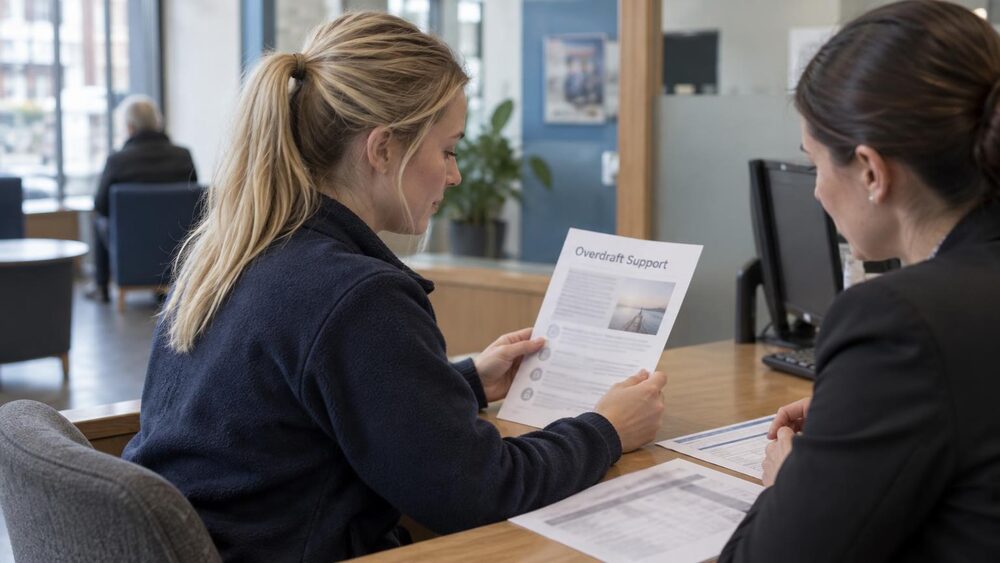
An arranged overdraft is a loan that runs through your current account. You agree a limit with your bank in advance, you can spend up to that limit, and you pay interest on the money you actually use. It is a type of credit linked to a bank account, and it is designed for emergencies or as a short-term option only1.
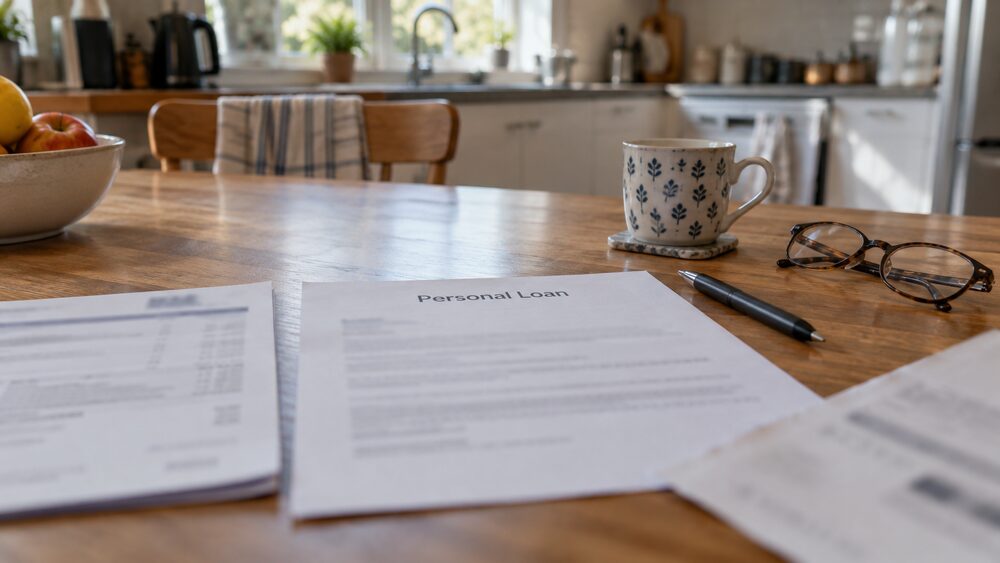
The alternative for a small, short-term gap is a small loan, which spreads a fixed sum over an agreed term at a rate set when you take it out. The two work in different ways. An overdraft has no fixed repayment date and is repayable on demand, so the bank can ask for the whole amount back in one go if it chooses to3. A loan has a schedule, so you know what you pay each month and when it ends.
Which costs less depends on how you use the money. An overdraft is cheaper if you do not use it often or use it in small amounts, but it is an expensive way to borrow if you stay in it, because interest is usually charged daily and some banks add a monthly fee and a setting up fee4. This page sets out what each option is, what it costs, what can go wrong, and where to get free help.
An arranged overdraft is a loan through your current account
An arranged overdraft, also called an authorised overdraft, is arranged in advance. You agree a limit with your bank and can spend money up to that limit1. In the regulator's rulebook it is the facility provided for in an authorised non-business overdraft agreement that is a regulated credit agreement8. In plain terms, it is borrowing attached to the account you already use.
The bank lets you spend more than your balance, sets a limit, and charges interest for using the overdraft. Under the rules that came in after the 2019 reforms, there are no other charges on an arranged overdraft beyond that interest2. That matters because it changed how overdrafts are priced: instead of daily fees and caps, the cost is now carried in a single interest rate.
You only pay interest on the overdraft money you use, not on the whole limit6. Interest is normally charged on a daily basis, and the bank can ask that the overdraft is cleared on demand9. Some banks set an agreed amount you pay no interest on, for example the first £50 of your overdraft, but this is not always the case5.
Because it is a form of debt, an overdraft should only be used for emergencies or as a short-term option1. It is not a substitute for an emergency fund, and it is not designed to carry a balance for months at a time.
Overdraft or loan: which suits short-term borrowing
The two options suit different situations, and the difference comes down to how the cost is worked out and how the money is repaid.
| Arranged overdraft | Small loan | |
|---|---|---|
| How you get it | Agreed with your bank in advance, attached to your current account1 | A separate credit agreement with a fixed sum and term |
| What it costs | Interest charged on what you use, usually daily; some banks add a monthly fee and a setting up fee9 | Interest over the agreed term, at a rate set when you take it out |
| Repayment | No fixed schedule; repayable on demand3 | Fixed monthly payments over a set period |
| Best fit by circumstance | A short gap, used occasionally and in small amounts4 | A known sum you want to clear over a set period |
An overdraft is a very expensive way to borrow money due to high interest rates if you stay in it2. It is cheaper if you do not use it often or use it in small amounts4. You will be charged much less if you agree the overdraft beforehand rather than going over your limit without agreeing it12.
If you are carrying an overdraft balance you cannot clear, one option is to repay it using credit with a lower interest rate, such as a balance transfer to a credit card or an affordable loan13. That converts an open-ended, repayable-on-demand debt into a fixed schedule. It is not right for everyone, and it depends on being accepted for the cheaper credit, but it is the route the guidance sets out.
For a wider look at how borrowing is priced and repaid, see how personal loans work and how loan interest is calculated.
Built for short-term use, not ongoing debt
The design of an overdraft tells you what it is for. It has no end date, the rate can be high, and the bank can withdraw it. That combination makes it workable for a brief gap and unsuitable for a debt you intend to carry.
Repeat overdraft use is when you often go into your overdraft, for example being in your overdraft for ten months of the year, being charged a high level of normal interest, or using an unauthorised overdraft and paying very high charges2. The regulator treats this as a warning sign. Its repeat use rules apply to any customers who are showing signs of financial strain or are in financial difficulty14.
Where a firm identifies repeat users in financial difficulty, the rules set out what support should look like. Options may include advice on budgeting and money management; forbearance and other support including reducing or waiving interest and other charges; refinancing to an alternative credit agreement on more favourable terms; or agreeing staged reductions in the overdraft limit and balance. A reduction in the credit limit, or suspension or removal of the overdraft facility, is also an option where it would not cause financial hardship15.
"Sub-paragraphs (5)(b) and (6) do not apply if the suspension or removal of the overdraft facility or a reduction in the credit limit would cause financial hardship to the customer"
The practical point is that an overdraft is not a stable home for a debt. It can be reduced, and it can be removed.
How banks review the way you use your overdraft
Banks watch how an overdraft is used, and the rules require them to act on patterns rather than wait for a missed payment. The regulator asked all firms that provide overdrafts to personal account customers to share their overdraft repeat use strategies, and assessed the policies and procedures firms have in place for their overdraft repeat use borrowers17.
Where a firm spots a repeat user who may be in difficulty, it must promptly communicate with the customer, encourage them to make contact, explore the reasons for the pattern of use, identify and set out suitable options to reduce overdraft use and provide support, and warn that failure to engage may lead to suspension or removal of the overdraft facility or a reduction in the credit limit16.
What this means in practice is that a letter or message from your bank about your overdraft is not routine. It is the point at which the bank is deciding whether to keep the facility at its current level. If you are in financial difficulty, the rules say the bank should not simply remove the overdraft where doing so would cause hardship16.
Your credit rating can be affected if you often go over your overdraft limit or owe too much on your overdraft4. If you are worried about how this shows on your file, how loans affect your credit file explains what lenders see.
Accounts that do not offer an arranged overdraft
Not every current account comes with an overdraft, and some are designed specifically without one. A basic bank account does not accommodate overdrafts4. Because basic bank accounts do not provide an overdraft facility, you will not be charged interest on the account and fees are not added for returned direct debits or standing orders18. A basic account does not offer any credit facilities, such as an overdraft, but does have a debit card and standard banking facilities9.
You cannot have an overdraft with a basic bank account20. Accounts of this kind normally have no fees or overdraft21. Several named accounts follow the same pattern:
- The HSBC No Fixed Address Account does not offer an overdraft, credit facilities or a cheque book22.
- The Lloyds Banking Group Basic Account does not offer interest, an arranged overdraft or a cheque book22.
- The NatWest Foundation Account does not include overdraft protection or a cheque book22.
These accounts exist for people who cannot open a standard current account, including those with a poor credit history or no fixed address. If you are in that position, current accounts: a complete guide covers what is available. Credit union current accounts are another route: you usually will not have to pass a credit check, even if you apply for an overdraft, because credit unions normally use manual checks to decide whether to lend23.
Arranged and unarranged overdrafts: the difference
An unarranged overdraft, also called unplanned or unauthorised, happens when you spend more than you have in your bank account without agreeing it in advance, including going over the limit of an arranged overdraft1. In the rulebook, an unarranged overdraft is an agreement that arises as a result of a personal current account becoming overdrawn in the absence of an arranged overdraft, or the firm making available funds that exceed the limit of an arranged overdraft24.
The cost of an unarranged overdraft is defined as a charge, by way of interest or otherwise, that a firm is contractually entitled to levy and that would not be due but for the fact that the customer has borrowed, borrowed further or continues to borrow, using an unarranged overdraft24. The rules now stop banks and building societies from charging higher prices for unarranged overdrafts than for arranged overdrafts26.
Before those reforms, the gap was wide. Banks made 10 times more revenue from unarranged overdrafts than from arranged overdrafts and, in some cases, unarranged overdrafts cost more than a payday loan27. The regulator estimated that for customers who regularly used an unarranged overdraft, the cost of borrowing £100 could fall from £5 a day to less than 10p a day under the new rules29.
If you go into an unarranged overdraft, you may have to pay a penalty charge and a high rate of interest. Your bank may also charge for sending a reminder letter and for direct debits or cheques put through the account, and it may freeze the account until the overdraft is paid off6. If a payment takes you over your agreed overdraft limit you may also pay a fee, and some banks apply a charge every day you are over your limit30.
Other small short-term borrowing and its risks
An overdraft is one of several ways to cover a short gap, and the alternatives carry their own risks. Payday loans are only for a few weeks, and they are a high-cost form of short-term credit31. If you are considering one, payday lending and high-cost short-term credit sets out how the cost cap works, and cheaper alternatives to a payday loan covers the options.
Borrowing from family or friends is common but carries its own risk to the relationship. There are safer ways to borrow than from family or friends, including credit union loans, using an authorised overdraft, loans or help from a local authority, a wage advance from your employer, and a budgeting loan or advance from the Department for Work and Pensions if you receive benefits32. Credit union loans explains how those work.
Overdrafts sit in a particular place in the order of debts. They are non-priority debts, alongside bank loans, credit card or store card bills and money borrowed from friends and family33. That means they are usually a lower priority than debts to your university or college or council tax, because they cannot be enforced by evicting you from your home, sending you to prison or disconnecting an essential service35. There is one exception worth knowing: if the overdraft is interest-free, you could treat such debts as priorities so that you keep the overdraft, because if the bank starts charging interest, your overdraft could increase very quickly35.
If you are paying off several debts, two common methods are the debt avalanche method and the debt snowball method, which order payments differently. Debt consolidation loans are another route, and consolidation loan or free debt advice compares the two.
What happens if you stay in your overdraft for months
Staying in the red for months turns a short-term tool into a long-term debt, and the costs build. Interest is charged daily, so the balance grows faster the longer it sits there9. Your credit rating can be affected if you owe too much on your overdraft4. And because the overdraft is repayable on demand, the bank can ask for the whole amount back in one go3.
There is a real example of how far this can go. In a case study published by the Financial Ombudsman Service, Glenn's overdraft reached £40,000, at which point his bank wrote to tell him it would only extend his overdraft facility for a further three months38. That is the pattern: the facility is extended in short blocks rather than left open indefinitely.
Graduate accounts show the same design. On a graduate account, the overdraft limit goes down every 12 months39. If you took a student account with a large interest-free overdraft, the reduction is built into the product from the start. When choosing a student bank account, the things to weigh are the amount of interest-free overdraft you can have, the charges and interest on authorised and unauthorised overdrafts and loans, and how long you can keep using the account after graduation35.
If you want to clear an overdraft, the options include asking the bank to reduce or remove the overdraft, or switching to a basic bank account with no overdraft13. Lenders could agree to reduce your overdraft limit over time or stop interest and charges for a while13. A bank may also separate any overdrafts from your existing account, set up a new clean basic bank account, and help you reduce your overdraft at a rate you can afford40.
Switching is possible even while overdrawn. You can switch using the Current Account Switch Service even if you are overdrawn1. If the new account's overdraft covers what you owe, the funds will be sent to your old bank and you will owe the overdraft balance on the new account instead. If it is a lower amount, or you cannot get one, you will need to arrange to pay off the remainder separately before you can switch or close your old account41. Some providers will even let you switch if you have a large overdraft debt outstanding, but there may be a charge to do this39.
Where to get free help with overdraft debt
Going into your overdraft every month may be a sign that you need free, expert debt advice13. More than half of StepChange's clients have overdraft debt, so it is a common position rather than an unusual one42. Nine in ten survey respondents from Money and Mental Health's Research Community agreed that overdrafts are a form of debt43.
Free help is available and it does not cost anything. StepChange offers free, online debt advice44. There are free advice services that can help45. National Debtline and Citizens Advice also provide free guidance, and debt: a complete guide to help, solutions and your rights sets out the full range of options.
If you are struggling, the first step is usually to contact your bank. Banks might reduce or waive interest, offer a continuation of overdraft borrowing at the current rate of interest, or agree on a repayment programme possibly including a personal loan1. If you are unhappy with how a bank has handled your overdraft, complaining about a lender or finance company explains how to take it further, including to the Financial Ombudsman Service.
Sources45 cited
- Overdrafts explained MoneyHelper, 2026-09-25
- Overdraft debt StepChange, 2026-09-25
- Debt consolidation (Scotland) Business Debtline, 2026-09-26
- Overdrafts: things to consider StepChange, 2026-09-25
- Understanding interest charges StepChange, 2026-09-25
- Overdrafts and other bank debts nidirect, 2025-11-07
- How to open, switch or close your bank account MoneyHelper, 2026-09-25
- BCOBS 8: Overdrafts FCA Handbook, 2026-09-25
- Individual voluntary arrangements (IVA) Advice NI, 2026
- Consumer Credit (Advertisements) Regulations 2010 legislation.gov.uk, 2010
- How to choose the right bank account MoneyHelper, 2026-09-25
- Top tips for borrowing Citizens Advice, 2026-09-25
- How can I stop living in my overdraft? StepChange, 2026-09-25
- Overdrafts: coronavirus temporary guidance for firms FCA, 2020-11-30
- CONC 5D (draft) FCA Handbook, 2026-06-26
- CONC 5D FCA Handbook, 2024-11-04
- Overdraft repeat use FCA, 2023-04-19
- Safe bank accounts (England and Wales) National Debtline, 2026-09-25
- What is the debt snowball method? National Debtline, 2026-09-25
- Basic bank accounts with no credit check Shelter England, 2025-03-27
- Managing money for someone else Scope, 2025-11-27
- Banks join scheme to help homeless people open bank accounts Which?, 2025-11-14
- Credit union current accounts MoneyHelper, 2026-09-25
- FCA instrument 2019/71 FCA, 2019-05-30
- CONC 5C.5 FCA Handbook, 2020-04-06
- FCA introduces reforms to the overdraft market Finance & Leasing Association, 2019-06-07
- Extortionate overdraft fees to be banned Which?, 2018-12-18
- Will the base rate rise hit your credit card bill? Which?, 2017-11-06
- How to pay off your overdraft before April's rate changes Which?, 2020-02-01
- Payday loan calculator StepChange, 2026-09-25
- Housing costs rules under 60 Entitledto, 2026-09-26
- Owing money to family or friends StepChange, 2026-09-25
- Overdrafts, buy now pay later StepChange, 2026-09-25
- Practical and emotional advice when in debt Scope, 2026-08-05
- Student money and debt (Scotland) National Debtline, 2026-09-25
- Student money and debt (England and Wales) Business Debtline, 2026-09-26
- Debt consolidation (England and Wales) National Debtline, 2026-09-25
- Bank transferred money but didn't tell me Financial Ombudsman Service, 2026-09-26
- Graduate overdrafts StepChange, 2026-09-25
- Banking and borrowing StepChange, 2026-09-25
- Basic bank accounts Advice NI, 2026
- Stuck in the red StepChange, 2026-09-25
- Gambling in the red Money and Mental Health, 2026-04-22
- Student debt Debt Advice Foundation, 2026
- Debt advice (Scotland) Shelter Scotland, 2026-01-16

 MoneyHelperFree, impartial money and pensions guidance, set up by government
 StepChangeFree debt advice and solutions from a charity
 National DebtlineFree debt advice by phone, webchat and online
 Financial Ombudsman ServiceFree, independent help when a complaint about a firm is not put right
 Citizens AdviceFree advice on money, consumer and legal problems in England and Wales