The No Interest Loan Scheme (NILS) was a UK pilot that offered small loans at 0% interest to people who could not get ordinary credit. Loans ran from £100 to £2,000, repaid over an average of 12 months, with no interest charged at any point1. The scheme was run by Fair for All Finance with funding from HM Treasury, the devolved administrations in Scotland and Wales, the JP Morgan Chase Foundation and others, and delivered through seven lenders across Great Britain1.
Lending on the pilot ceased in August 20251. In total, 14,175 NILS loans were disbursed across Great Britain, worth over £10.7 million1. A final evaluation by PwC is due to be published by the end of 2026, and the aim was to roll the scheme out more widely if it proved successful1. This page explains what the scheme offered, who it was for, how it worked, and what interest-free borrowing still exists now that NILS has stopped.
The NILS pilot has stopped lending: what it means for you
The most important fact for anyone arriving at this page is that the scheme is no longer taking applications. Fair for All Finance, which delivered the pilot, states plainly: "Lending on the No Interest Loan Scheme Pilot ceased in August 2025"1. There is no waiting list, no application form and no route to a new NILS loan, whatever a search result or advert may suggest.
If you already have a NILS loan, nothing changes about the loan itself. It remains a loan you took out, repayable on the terms you agreed, and it continues to be reported to the credit reference agencies as before. The end of lending means no new loans, not the end of existing ones. If you are struggling with repayments on a NILS loan, the same options exist as with any other borrowing: contact the lender, and take free debt advice from a charity such as StepChange or National Debtline. Our guide to what to do if you can't repay a loan sets out the steps.
If you were hoping to apply, the alternatives are covered in the section on interest-free help that still exists below. In brief: Budgeting Loans for people on certain benefits, the Discretionary Support Loan in Northern Ireland, credit union and community lender borrowing, and, for some purposes, grants rather than loans.
The scheme's future depends on the evaluation. Fair by Design, a founding partner of the national pilot alongside Fair for All Finance and Toynbee Hall4, reported that a full evaluation would take place in 2026, "with the aim of rolling the scheme out more widely if successful"3. Until that report is published, no one can say whether a permanent no interest loan scheme will return.
What a NILS loan offered: £100 to £2,000 at 0% interest
A NILS loan was a small sum loan with a lending cap of £2,0002. Loan amounts ranged from £100 to £2,000, and the average loan value was £7551. The interim evaluation put the average slightly differently, at £591, with a median loan of £500 across all lenders2. The two figures differ because they were measured at different points in the pilot and in different ways, but both point the same way: most loans were small, and many were very small indeed.
The defining feature was the interest rate: zero. A borrower who took £500 repaid £500, spread over the term. Repayment terms were on average one year but could be up to two years1. The most common loan was £500 or less with a term of 12 to 18 months, representing 75% of the loans offered2.
| Feature | What the pilot offered |
|---|---|
| Loan range | £100 to £2,0001 |
| Average loan value | £7551 |
| Median loan | £5002 |
| Interest | 0%1 |
| Typical term | 12 months on average, up to 2 years1 |
| Most common loan | £500 or less over 12 to 18 months, 75% of loans2 |
The scale of the pilot was modest. By the time the interim evaluation reported in July 2024, £2.066 million of loans had been issued2. By the later count, 14,175 loans worth over £10.7 million had been disbursed across Great Britain by seven lenders1. Fair by Design reported a similar picture in February 2025: seven lenders, over £7.9 million lent, across 14,000 loans3. The numbers grew quickly towards the end, with 53% of NILS loans issued in the last three months of reporting to December 20232.
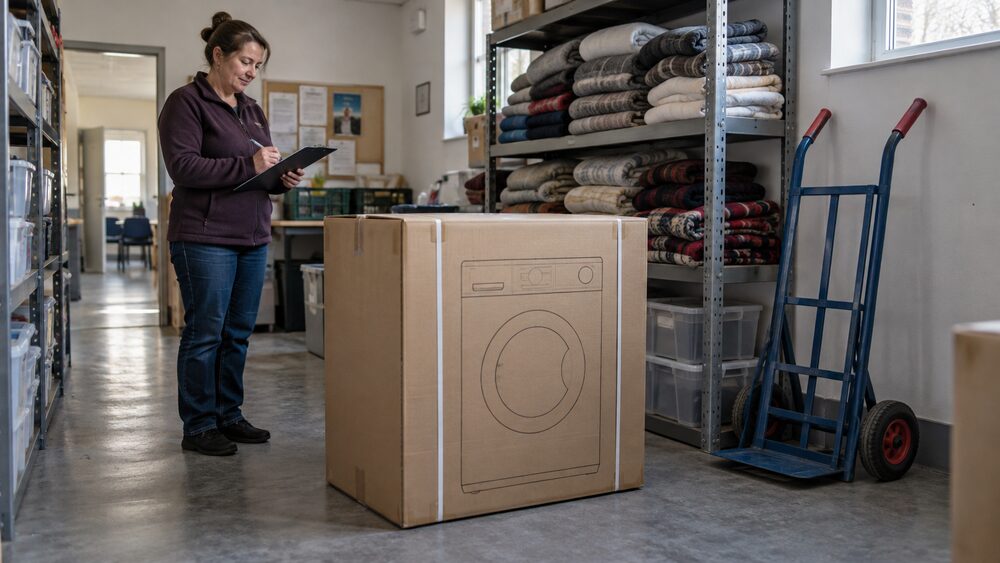
The point of the design was to test whether genuinely interest-free credit could reach people who would otherwise be pushed towards high-cost borrowing, or towards going without. Fair by Design's work on local no interest loan schemes in the North East, run by organisations including a credit union, a housing association and a county council, found they were used to cover unexpected expenses such as a washing machine breaking down or a bill arriving4. The national pilot took that idea to scale.
Who NILS was for
NILS was aimed at people who were excluded from mainstream credit. The eligibility rules had two specific requirements: the loan purpose had to meet agreed criteria providing a social or other defined benefit to the borrower, and, at the time of applying, the applicant had to be otherwise excluded from existing credit products2. In other words, it was for people who had been, or would be, turned down for an ordinary loan.
The profile of borrowers bears that out. Among NILS beneficiaries profiled by Equifax, 74% had some form of negative payment status, such as arrears, defaults or court judgments, and half had defaulted repayments on an account in the 12 months before applying2. Some 59% had engaged in credit searches in the six months before their NILS application, and 29% were using more than 90% of their total available credit card limit2. These were people actively looking for credit and not getting it on affordable terms.
The broader picture of who borrowed:
- 86% of NILS customers were in full time employment1
- 32% lived in social housing, and 41% were private renters1
- 43% were in receipt of benefits2
- 55% were female, and 58% were single2
- 51% had no dependants, and 12% had a disability2
- 11% of borrowers belonged to ethnic minority groups, against 17.6% of the GB population2
The evaluation also segmented borrowers using a model built with Trajectory and CACI, identifying six core segments focused on people in vulnerable financial circumstances2. The two most vulnerable segments, "credit crisis families" and "forgotten families", together accounted for 51% of all beneficiaries2. Credit crisis families alone made up 28% of the sample of 3,494 profiled borrowers2.
Notably, most borrowers were in work. The scheme was not primarily for people out of employment, but for people whose income was too low or too precarious, or whose credit history was too damaged, for mainstream lenders to serve them. That is the group most exposed to high-cost credit when a washing machine fails or a bill arrives early.
What people used NILS loans for
The loans were for essentials. Fair for All Finance reports that 22% of NILS loans were issued for essential household items or furniture, and 21% for utilities or bills1. The interim evaluation found bills accounted for 19% of second loans2. This matches the pattern seen in the local schemes studied in the North East, where loans covered unexpected expenses such as a broken washing machine or an arriving bill4.
The survey responses show how stretched borrowers' budgets were. Just over seven in ten (72%) said the loan was enough to cover what they needed, while 28% said it was not2. Half of respondents had cut down on electricity use because of rising energy costs, and two fifths had reduced home heating2. Over two fifths rated their anxiety at 7 or above out of 10, almost a quarter rated their life satisfaction at 3 or less, and over one in ten described their health as very bad or bad2.
These figures matter for understanding what the scheme was testing. A no interest loan does not increase someone's income; it smooths a gap. Where the underlying problem is an income that does not cover essentials, a £500 loan helps for a month or two and then the repayments begin. That is why the pilot paired the loans with money coaching and benefits checks, covered later on this page.
How applying worked: declined for a standard loan, then tested for NILS
There was no separate NILS application form. Borrowers applied for a standard product with one of the participating lenders and were declined. Their application was then tested for NILS eligibility and for affordability1. The eligibility test checked the two requirements described above: a loan purpose meeting the agreed criteria, and exclusion from existing credit products2.
Borrowers could also be referred through referral partners who worked with the lenders, for example charities, housing associations, local authorities, religious or community groups1. But the destination was the same: an application to a lender, a decline on the standard product, then the NILS test.
The affordability check was a real check, not a formality. Among beneficiaries whose loans were not performing, 57% had been declined from an interest bearing loan due to "affordability and lending risk", against 19% of all beneficiaries2. The scheme was reaching people whose finances were genuinely at the edge, and the arrears figures later on this page show what that meant in practice.
Over nine in ten beneficiaries surveyed were satisfied with the application process for the loan, and over nine in ten experienced no problems applying2. For a group used to being declined, the process itself seems to have worked smoothly.
Repaying a NILS loan and your credit file
Repayment worked like any other loan, minus the interest. Terms were on average one year, up to two1, and because the rate was 0%, the total repaid equalled the amount borrowed. All lenders reported to all three credit reference agencies2, so a NILS loan appeared on the borrower's credit file in the usual way. That cuts both ways: a completed NILS loan adds a repayment record to a thin or damaged file, while missed payments are recorded as missed payments anywhere else would be. Our guide to how loans affect your credit file explains the mechanics.
A payment holiday option existed within the scheme. Only 2% of beneficiaries officially made use of it, and 98% had made use of it or were yet to need it2. In other words, the option was there, and almost nobody had needed it at the time of reporting.
If a borrower was persistently unable to pay the loan back, the pilot had a guarantee mechanism for the lenders along with outcome based payments to encourage effective collections activity1. This was a feature of the pilot's design rather than a borrower protection in itself: it meant lenders were not simply absorbing losses, which in turn made them willing to lend to this group at all. At the end of December 2023, 16% of loans were in arrears or default, and 1% had been written off2.
Borrowers who could not keep up repayments had the same rights as with any regulated credit agreement, including the right to complain to the lender and then to the Financial Financial Ombudsman Service. Free debt advice was, and remains, available from charities. The debt section of this site sets out the full range of help.
How NILS borrowers got on with repayments
The headline from the interim evaluation is that most borrowers managed. 89% of beneficiaries stated they had or were having no problems repaying the loan2. Satisfaction with the process, from application through to repayment, ranged from 86% to 96% very or quite satisfied across the lenders surveyed2.
The loan book itself broke down as follows at the interim stage: 78% of loans were performing, 14% were in arrears, 4% were already paid off, 2% were in default, and 1% had missed payments but were back on track2.
Performance varied by loan size and term. For loans of £500 or less over 12 to 18 months, 81% were performing or fully repaid; for loans of £501 to £1,000 over the same term, 94%; and for loans of more than £1,000 over 12 to 18 months, 86%2. The pattern is not simply that bigger loans performed worse: the mid-sized band performed best in this reporting.
The profile of borrowers whose loans were not performing tells its own story. Compared with all beneficiaries, a larger share of this group were in receipt of benefits (73% versus 43%), were not employed (40% versus 17%), had a disability (22% versus 12%), and fell into the credit crisis families segment (40% versus 28%)2. The loans that went wrong were concentrated among the people with the least to fall back on, which is what you would expect, and is the central question any evaluation of such a scheme has to answer.
Money coaching and benefits checks alongside the loan
The pilot was not only about the loans. Fair for All Finance secured funding from JPMorgan for an additional pilot site and financial coaching, with financial coaching delivered until June 20241. Borrowers were offered two non-financial products alongside the loan: money coaching with Debt Free Advice, and a benefits and grant calculator2.
Take-up was low. A quarter of beneficiaries surveyed were offered money coaching and 23% were offered the benefits or grant calculator, but only 14% of those offered coaching made use of it, while 40% of those offered the calculator did so2. Almost six in ten beneficiaries surveyed (58%) claimed they were not offered non-financial products at all2. As of the end of December 2023, no beneficiaries had taken up the opportunity of money coaching with Debt Free Advice2.
The low take-up matters because of who the borrowers were. 64% of beneficiaries stated they had never sought money advice in the past2. For a group that had never engaged with money advice, a loan offer was reaching them where advice services had not, and the coaching was an attempt to use that contact point. Money coaching is a free service designed, in the words of one provider, "to empower you with the knowledge, skills, tools and confidence to better manage your finances"5. Free money coaching and budgeting support remains available from charities such as Christians Against Poverty5, and benefits checks can be done through Turn2us and similar services.
Interest-free help that still exists
With NILS closed to new lending, the interest-free options that remain are worth knowing. None is a like-for-like replacement, but each covers part of the ground.
- Budgeting Loans. If you get certain benefits, you could get an interest-free loan to pay for things like a washing machine, advance rent or other essentials6. These are repaid through deductions from benefits. Our guide to Budgeting Loans and Budgeting Advances covers eligibility and amounts.
- Discretionary Support Loan (Northern Ireland). Depending on personal circumstances, you could be offered either an interest-free loan or a grant that you would not have to pay back7. NILS never ran in Northern Ireland, so this is the nearest equivalent there.
- Buy now pay later. Usually there is no interest to pay on BNPL, but it is still a loan, with late fees and credit file consequences if payments are missed8. It is not a hardship product and should not be treated as one.
- Home improvement loans in Wales. You can get an interest-free loan of up to £35,000 if eligible, for home improvements9. This is for a specific purpose rather than general borrowing.
- Credit unions and community lenders. Credit union loans and community lenders (CDFIs) lend to people mainstream banks decline, at interest rates capped by law rather than at zero. They were among the organisations running local no interest schemes in the North East4.
For anyone on a low income facing a specific cost, it is also worth checking whether a grant exists before borrowing at all. Charitable funds and energy grants can cover needs without any repayment, and free debt advice charities will check these with you.
What happens next: the final evaluation
The pilot's story is not finished. Following the final new NILS loans in August 2024, PwC will conduct the final evaluation report, for delivery in 2026, and Fair for All Finance is aiming to publish an evaluation of the pilot by the end of 20261. The aim, as Fair by Design put it, is "rolling the scheme out more widely if successful"3.
The evaluation has a lot to weigh. On one side: 14,175 loans to people excluded from mainstream credit, over £10.7 million of lending across Great Britain by seven lenders, and 78% of loans performing with a further 4% already paid off1. On the other: 51% of beneficiaries fall under the most vulnerable segments, and take-up of the support meant to address the underlying squeeze was low, with only 14% of those offered money coaching making use of it2.
The interim evaluation also noted that for a sustainable solution, both approaches tested in the pilot needed to be evident in all regions of England, Scotland and Wales2. The Welsh Government had allocated £1 million to run the pilot in 2022-23, led by Fair for All Finance10, and the devolved administrations remained funders throughout1, so any permanent scheme would be a decision for governments as much as for lenders.
Until the report appears, the position is simple: NILS has stopped lending, existing loans continue on their terms, and the interest-free and low-cost alternatives listed above are what exist today. If the evaluation leads to a wider rollout, this page will be updated.
Sources10 cited
- No Interest Loan Scheme Fair for All Finance, 2026
- No Interest Loan Scheme interim evaluation Fair for All Finance and PwC, July 2024
- Rethinking credit: supporting people on low incomes denied access to affordable credit Fair By Design, 27 February 2025
- Get to grips with your finances Christians Against Poverty, 2026
- Debt and money Scottish Government cost of living campaign, 25 September 2026
- Discretionary Support Loan NI Family Fund, 3 June 2026
- Credit confidence StepChange, 25 September 2026
- Grants and funding for energy bills StepChange, 25 September 2026
- No Interest Loan Scheme (NILS) Fair By Design, 2021-09-06
- Welsh Government paper Senedd Business, 2022-23


 MoneyHelperFree, impartial money and pensions guidance, set up by government
 StepChangeFree debt advice and solutions from a charity
 National DebtlineFree debt advice by phone, webchat and online
 Financial Ombudsman ServiceFree, independent help when a complaint about a firm is not put right
 Citizens AdviceFree advice on money, consumer and legal problems in England and Wales