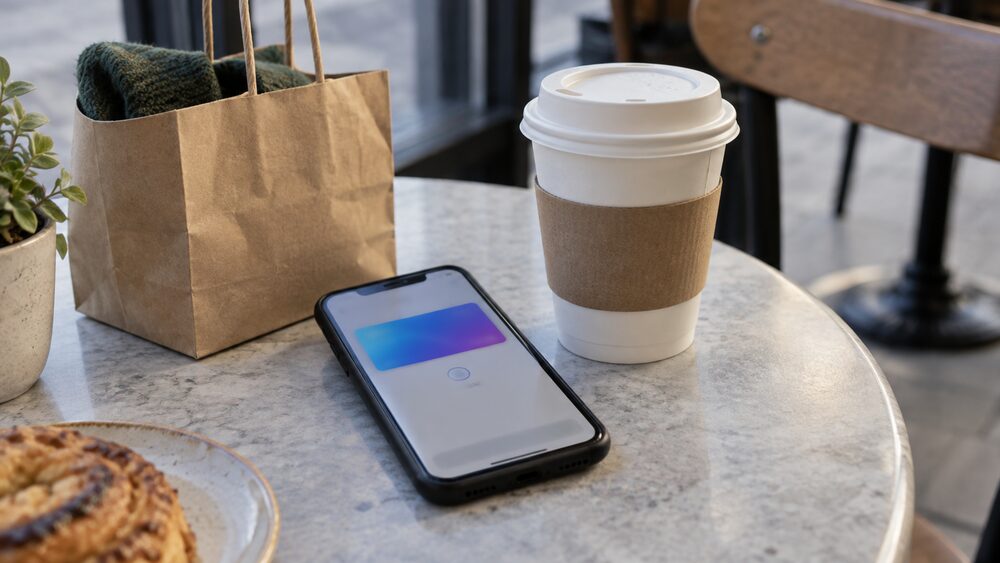
The Klarna Card is a Visa card, so the short answer is that it works anywhere Visa is accepted: in shops, online, over the phone and abroad. It is issued as a virtual card by default, which you add to your phone's wallet, and a physical card comes only with a paid membership1.
That single fact answers most of the questions people have about it. Because it carries the Visa logo rather than being tied to one retailer, it is not a store card and is not limited to shops that offer Klarna at the checkout. It also means the card is subject to the same practical limits as any other Visa card: a shop can decline it, a payment can be blocked by a security check, and some transactions, such as cash withdrawals, are not what it is built for.
Klarna itself is best known as a buy now pay later provider, and it offers both regulated lending products and unregulated BNPL products2. The card sits alongside those, and in the UK Klarna also provides regulated credit through its Klarna Financing and Klarna Credit Card1.
The Klarna Card runs on the Visa network
A card's network decides where it is accepted, and the Klarna Card uses Visa. That is the same position as most UK debit and credit cards: Barclays debit cards can be used wherever the Visa sign is shown, online and in store4, and C. Hoare & Co. describes its cards as usable wherever Visa is accepted, including shops, restaurants, hotels and cash machines3.
The practical effect is that acceptance is broad. Visa and Mastercard are the two dominant card schemes in the UK, and a retailer that takes cards will almost always take both. Where a business displays a Visa sign, the Klarna Card should work in the same way as any other Visa card.
There is one important difference in how the card arrives. Klarna issues it as a virtual card by default, and a physical card is only available with a paid membership1. A virtual card is a card number that exists digitally rather than as plastic, and it can be used online and added to a mobile wallet. Virtual cards generally cannot be used for cash withdrawals, gambling purchases, cryptocurrency exchanges or money transfers such as Western Union5. That is a limit of the format, not of the network.
Shops and websites that take the Klarna Card
Because acceptance follows the Visa logo, the Klarna Card works in the same places as a mainstream debit card. That includes supermarkets, high street shops, restaurants, online retailers and businesses that take card payments over the phone or by post. Credit cards generally can be used to buy goods anywhere, including over the phone, online or by post, and the same reach applies to a Visa debit card8.
It is worth separating the Klarna Card from a store card, because the two are easily confused. Store cards can usually only be used to buy goods in the store that issued the card or its partner stores8. Store branded credit cards are different again, and can be used anywhere, not just in the named store8. The Klarna Card is in the second category: it is not tied to any retailer.
For online shopping, the card works at any site that accepts Visa, whether or not that retailer offers Klarna as a checkout option. That matters because paying with the card is a different transaction from choosing Klarna at the checkout. Using a credit card with third-party payment systems can break the chain between you, the creditor and the retailer, which can mean losing Section 75 protection on items costing more than £100, and that list includes buy now pay later schemes such as Klarna9. If you want to understand how that protection works, Section 75 on loans, car finance and point-of-sale credit sets out the rules.
Using the Klarna Card abroad
The card works outside the UK for the same reason it works at home: Visa is a global network. Klarna states there are no foreign exchange fees when spending abroad or in other currencies1.
That is a meaningful difference from many UK cards. Fees and charges may apply when you use cards outside the UK, and providers set their own terms10. Nationwide notes there may be charges for using your card abroad11. HSBC says its credit and debit cards can be used abroad in the same way as at home, but that fees may apply10. Some cards are marketed on being free to use abroad, such as the Rooster Card, which the provider says can be used anywhere that accepts Visa and is free to use abroad12.
Two things to keep in mind. First, a foreign cash machine operator or retailer can add its own charge, which is separate from anything the card issuer does. Second, the exchange rate applied on the day is set by the card scheme, not chosen by the cardholder.
There is also a regulatory point that affects what cross-border payments cost behind the scenes. Consumer cross-border card payments between the UK and the EU, or any other third country, where either the acquirer or issuer is based outside the UK's jurisdiction, are no longer subject to the interchange fee caps established under either the UK or EU Interchange Fee Regulation6. That is a change in the fees merchants pay, not a fee charged directly to cardholders, but it is part of why the cost of using a card abroad can vary.
Where the Klarna Card may be refused
Acceptance is broad, not universal. A business can decide not to take a particular card, and some small traders accept cash only or a single scheme. Cards that are generally accepted wherever Visa or Mastercard is accepted may still have use restricted in certain countries or locations13. Monese describes its cards as usable in most places where Mastercard is accepted, which is a fair description of how acceptance works in practice14.
The bigger practical issue is the card's format. Because the Klarna Card is virtual by default, it cannot be used in situations that need a physical card, such as a shop that has no contactless reader and needs a chip and PIN transaction. Contactless cards can be used abroad wherever the contactless symbol is displayed, and where contactless is not accepted a card can still be used as a standard chip and PIN, chip and signature or swipe and signature transaction15. A virtual card in a mobile wallet depends on the terminal accepting contactless or a wallet payment.
Cash withdrawals are the clearest limit. Virtual cards generally cannot be used for cash withdrawals, gambling purchases, cryptocurrency exchanges or money transfers5. If you need cash, a standard current account debit card is the usual route, and cash machine operators may charge a fee.
Klarna Card or Klarna checkout: how each one works at the till
These are two different things, and the difference matters at the point of sale.
The Klarna Card is a payment card. It is a debit card with debit and credit options, plus cashback for members1. You use it the way you use any other card: tap, insert or enter the details online, and the money leaves your account or is added to a balance you owe.
Klarna checkout is the buy now pay later option you see on a retailer's payment page. Klarna has moved to a single Klarna button at the checkout alongside the other payment methods offered by the retailer, with the scheme choice made after selecting Klarna16. Klarna has also introduced new wording for retailers to use at the checkout, which it says will make it absolutely clear that BNPL options are credit products with consequences for missed payments16. A Pay Now option, allowing customers to pay immediately and in full wherever Klarna is available, was rolled out to the majority of UK retailers in 202216.
So at the till you have a choice. Paying with the Klarna Card is a card payment. Choosing Klarna at the checkout is a credit arrangement with Klarna, and the terms, late fees and protections that apply are those of the BNPL product rather than of a card payment. Klarna and PayPal both offer regulated lending products and unregulated BNPL products, so the same brand can sit behind either route2.
What to do if a payment is declined
A declined payment is not the same as a refused card. If your card is rejected, the usual first step is to find another way to pay and then contact your card provider to ask for an explanation17. Some providers send alerts when your card is declined, with an explanation and next steps18.
One common cause is a security check. If you know you have enough money in your account but a transaction is declined, trying again using a digital wallet such as Apple Pay or Google Pay, or contacting the retailer directly, can resolve it15. That is because the retailer may not have made all the necessary changes for strong customer authentication, and you may need to check whether they offer an alternative payment method19.
If you were sure you had funds in your account but your card was rejected, or you have spotted unusual activity such as purchases or withdrawals you do not recognise, treat it as possible fraud and contact your provider20. If you are expecting a new card and it does not arrive, contact your bank or provider immediately21.
There are protections if money goes astray. If your debit card provider can show that you acted fraudulently, it can refuse to give you a refund, but that is the exception rather than the rule22. If you paid by debit or credit card, you can ask your provider to reverse the transaction by making a chargeback claim23. If your card provider will not give you your money back, you can report them to Trading Standards24.
If a complaint is not resolved, the Financial Ombudsman Service can look at it. The ombudsman has published cases where a card was declined at a supermarket because of debts in the customer's name, which shows how a decline can reflect something on your credit file rather than a problem with the card itself26. For more on how borrowing shows up on your record, see How loans affect your credit file.
Sources26 cited
- Klarna launches debit card: how does it work? Which?, 2025-10-30
- Impact assessment legislation.gov.uk, 2025-05-19
- Cards C. Hoare & Co., 2026
- Debit cards Barclays, 2026
- What are virtual debit cards and should you use one? Which?, 2026-05-27
- The IFR and consumers Payment Systems Regulator, 2026-09-25
- Card payments Payment Systems Regulator, 2026-09-26
- Plastic cards Citizens Advice, 2026-09-25
- Should I get a credit card? Which?, 2026-09-18
- Using your credit card overseas HSBC UK, 2026
- Debit cards Nationwide, 2026
- Can I use the Rooster Card abroad? Ulster Bank, 2026-09-25
- Terms and conditions Currensea, 2026-09-26
- Products Monese, 2026
- Authenticating online payments Metro Bank, 2026-09-25
- Klarna overhauls buy now pay later service: what you need to know Which?, 2021-10-19
- How to complain about a takeaway and get your money back Which?, 2026-06-30
- Money management HSBC UK, 2026
- Strong customer authentication Santander, 2026-09-25
- Debit and credit card fraud Al Rayan Bank, 2026
- Card fraud Take Five, 2026-09-26
- Payment Services Regulations 2017 Which?, 2025-06-18
- Your refund rights when companies go bust Which?, 2023-09-25
- Digital content, debit and credit card declined complaints Resolver, 2026-09-26
- The fault in our cards: how freezing your debit card won't block all payments Which?, 2019-10-10
- Debts building recently, now card declined at supermarket Financial Ombudsman Service, 2026-09-26

 MoneyHelperFree, impartial money and pensions guidance, set up by government
 StepChangeFree debt advice and solutions from a charity
 National DebtlineFree debt advice by phone, webchat and online
 Financial Ombudsman ServiceFree, independent help when a complaint about a firm is not put right
 Citizens AdviceFree advice on money, consumer and legal problems in England and Wales