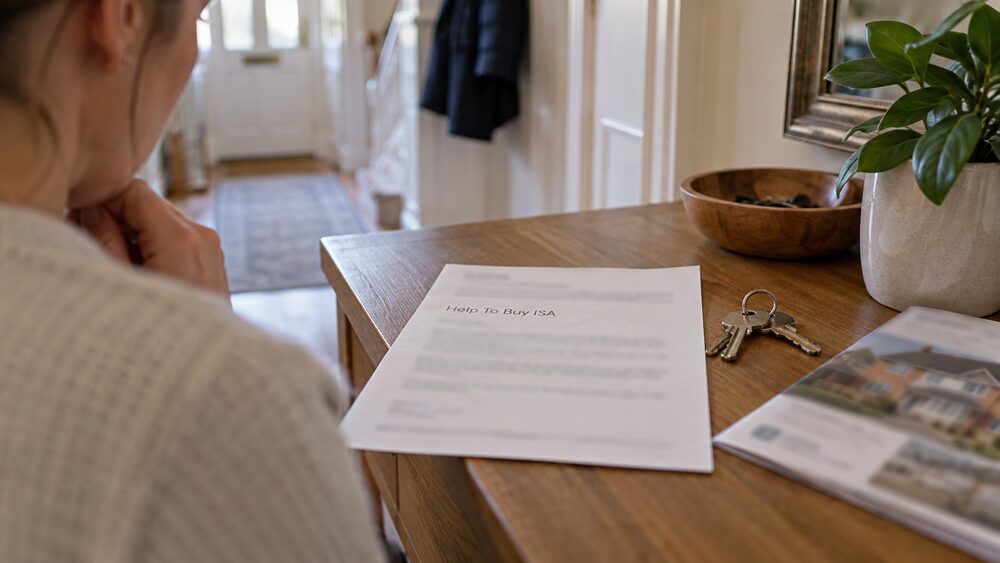
The Help to Buy ISA is a savings account for first-time buyers that pays a 25% government bonus on your savings when you buy your first home, up to a maximum of £3,0001. The scheme was launched on 1 December 2015 and closed to new accounts on 30 November 2019, so it cannot be opened today1. But if you already hold one, the account is far from finished: you can keep saving into it until 30 November 2029, and you have until 1 December 2030 to claim the bonus1.
The scheme was designed so that the government adds 25% to what you have saved, capped at £3,000 on savings of £12,0003. The bonus is paid when you complete the purchase of your first home, and it is claimed through the solicitor or conveyancer handling your purchase, not paid automatically3. The property must cost £250,000 or less, or £450,000 or less in London, and must be bought with a mortgage1.
If you are starting to save for a first home from scratch, the Help to Buy ISA is not available to you. The open equivalent is the Lifetime ISA, which also pays a 25% government bonus but with different limits and a withdrawal charge on money taken out for other reasons5. This page explains what existing Help to Buy ISA holders need to know: how the bonus works, the deadlines, how to claim, and what your options are if you are deciding whether to keep the account or move the money.
Closed to new savers, still open to existing holders
The Help to Buy ISA scheme was launched on 1 December 2015, with accounts available through banks and building societies1. It closed to new accounts on 30 November 2019, which means no one can open a Help to Buy ISA today1. Which? confirms the same position: Help to Buy Isas are closed to new applicants, and were replaced by Lifetime Isas4.
Closure to new savers does not mean the accounts themselves are shutting. The official statistics on the scheme state that existing Help to Buy ISA account holders can continue saving into their accounts, with the scheme closing to contributions on 30 November 20291. The original scheme guidance set no limit on how long an account can remain open3, and the government's policy statement confirmed the account would be open to new contributions until 20296. So an account opened in 2016 can still be paid into, and can still earn a bonus, more than a decade after the scheme stopped accepting new customers.
In practice, this means there are two very different situations. If you held an account before the closure date, your account continues on its original terms: you can save into it, earn interest on it, and claim the bonus when you buy. If you never opened one, there is no route in, and the Lifetime ISA is the scheme the government now offers for first-home saving4. The Welsh Government's quality report puts the closure plainly: the scheme closed to new customers in 20197.
One point worth knowing is that the account does not have to be used for a purchase at all. The money in a Help to Buy ISA is your own savings, and it can be withdrawn at any time for any purpose. What is restricted is the bonus: it only arrives if you complete an eligible first-home purchase, and only if that happens by 1 December 20301.
How the 25% government bonus works: up to £3,000
The core offer of the Help to Buy ISA is simple: the government adds 25% to your savings when you buy your first home1. The government's factsheet describes it as saving up to £200 a month towards a first home, with the government boosting savings by 25%, and a bonus of up to £3,0002. The maximum bonus of £3,000 is reached on savings of £12,000, because 25% of £12,000 is £3,0003.
The bonus is worked out on your account balance at the point of claim, not on what you paid in during any particular year3. That means every pound in the account counts towards it, including interest the account has earned, up to the £12,000 ceiling on which the bonus is calculated. Which? describes the same structure: a £50 bonus for every £200 saved, with a maximum government bonus of £3,000 on £12,000 of savings5.
| What you have saved | Bonus at 25% |
|---|---|
| £200 | £505 |
| £1,000 (the opening deposit) | £250 |
| £6,000 | £1,500 |
| £12,000 (the maximum that counts) | £3,0003 |
A few conditions frame the bonus. You must be a first-time buyer2, and the purchase must be of a home you will live in, bought with a mortgage4. The bonus is paid when you buy, not before: the scheme guidance states that the bonus will be calculated and paid when you buy your first home3. It is also a one-per-person, one-per-purchase bonus. If you are buying with someone else who also has a Help to Buy ISA, each of you claims on your own account, so a couple can receive up to £6,000 in total. Which? notes that a partner not being a first-time buyer does not affect the other person's ability to use their Help to Buy ISA for the house purchase4.
The bonus is not means-tested and there is no minimum balance before you can claim: even a small balance earns 25%. The trade-off is the ceiling. Because only £12,000 of savings counts, the bonus can never exceed £3,000, no matter how long you save. This is the main structural difference from the Lifetime ISA, which pays 25% on up to £4,000 saved each year, a maximum bonus of £1,000 annually, with no stated lifetime cap on the bonus across years8.
Saving limits: £200 a month on top of the opening deposit
The Help to Buy ISA has its own saving limits, separate from the general ISA allowance. When the account is first opened, there is an opportunity to deposit £1,000 in addition to the monthly limit3. After that, the monthly maximum saving limit is £2003. The government's factsheet summarises this as saving up to £200 a month towards a first home2.
The effect is that in the first year of opening a Help to Buy Isa you can save up to £3,400, and then £2,400 each year afterwards5. That £3,400 is the £1,000 opening deposit plus twelve months of £200 payments, and the £2,400 is twelve monthly payments of £200. For the maximum monthly saving of £200, the government contributes £503.
Reaching the full £12,000 takes time. At £200 a month plus the £1,000 opening deposit, an account opened in the scheme's early years would need roughly four and a half years of maximum saving to reach £12,000. Savers who opened accounts late in the scheme's life, or who saved less than the maximum, will have smaller balances, and the bonus is simply 25% of whatever is there at the point of claim3.
These limits sit inside the wider ISA rules. The overall ISA allowance is £20,000 a year across cash and stocks and shares Isas9, and you can have cash Isas with multiple providers and pay into each within the same tax year, provided you do not exceed that overall limit10. The allowance is set to change: the overall limit becomes £12,000 for under-65s from April 202710. The Help to Buy ISA's own £200 monthly cap applies to that account regardless of what you subscribe elsewhere, and the ISA allowance page explains the general rules in full.
Property price limits: £250,000, or £450,000 in London
The bonus is only payable if the home you buy falls under the scheme's price cap: £250,000 or less, or £450,000 or less in London1. The original scheme guidance set the same limits: a first home worth up to £450,000 in London or £250,000 anywhere else in the UK3. Which? states the condition in the same terms: the bonus is available only if you buy your first home for £250,000 or less, £450,000 in London, with a mortgage4.
The London distinction matters because the capital's average prices sit far above the rest of the country. A saver in London can buy a property costing up to £450,000 and still claim, while the same purchase in Manchester, Cardiff or Edinburgh would rule the bonus out above £250,000. The cap applies to the purchase price of the property, not to the mortgage or the deposit, so the whole price must fall within the limit.
This is one of the sharpest differences from the Lifetime ISA. The Lifetime ISA's property price cap is £450,000 across the whole of the UK, with no regional variation11. A report to Parliament noted that the £450,000 cap supports most first-time buyers across the UK13, and Which? describes the maximum house purchase price for a Lifetime ISA purchase as limited to £450,00014. For someone buying outside London in the £250,000 to £450,000 band, a Lifetime ISA can pay a bonus where a Help to Buy ISA cannot.
The price limit is not the only condition on the property. The purchase must be of a home you will live in as your first home, bought with a mortgage4. The savings and bonus can also be used alongside other housing schemes: the Scottish Government's guidance for its own schemes confirms that the amount saved plus any bonus can be used for the purchase, though only the government bonus from one ISA can be used15, and a Help to Buy ISA or Lifetime ISA can be used to pay a deposit for a home through Right to Shared Ownership or Rent to Buy16. The First Homes Fund in Scotland likewise allows a Help to Buy ISA or Lifetime ISA towards the deposit17.
Claiming the bonus through your solicitor or conveyancer
The bonus is not paid automatically and cannot be claimed by you directly. The scheme guidance states that the government bonus will be calculated by the scheme administrator on the account balance at the point of claim, and that the bonus will be calculated and paid when you buy your first home3. The claim is made through the solicitor or conveyancer acting in your purchase.
The process works like this. When you are ready to buy, you close the Help to Buy ISA and the provider issues a closing letter or document showing the balance. You pass that document to your conveyancer, who must be eligible to act in the claim. The conveyancer submits the claim to the scheme administrator, and the bonus is paid so that it forms part of the funds completing the purchase. The scheme is administered by National Savings and Investments (NS&I) on behalf of the Treasury18.
Because the bonus is calculated on the balance at the point of claim3, the timing of the closure matters. Close the account too early and you stop earning interest; leave it too late and the conveyancer may not have the closing document in time for the claim. The practical arrangement is agreed between you and your conveyancer, who will tell you when the closing statement is needed. The bonus is paid into the property purchase, not to you as cash.
The same conveyancer route applies to the Lifetime ISA, where the provider pays the funds directly to the conveyancer or solicitor acting in the purchase11. If you hold both accounts, note that the declaration your conveyancer makes is specific: the rules require the account investor to declare they are not also claiming a bonus under a Help to Buy ISA, or that any such bonus has been repaid in full22.
What the bonus cannot pay for
The bonus is tied to the purchase of an eligible first home, and the rules are narrow about what counts. The purchase must be of a home you will live in, bought with a mortgage, under the price cap4. A property you intend to rent out does not qualify, because it is not your first home to live in.
The bonus also cannot be used twice. The legislation governing Lifetime ISA withdrawals requires an investor claiming a first-home bonus to declare they are not also claiming a bonus under a Help to Buy ISA, and have not received payment of such a bonus unless its full amount has been repaid to the scheme administrator22. In other words, if you hold both a Help to Buy ISA and a Lifetime ISA, you can only use the government bonus from one of them to buy your first home11. The government's technical note states this directly: savers can save into both, but will only be able to use the government bonus from one account23.
There are further restrictions on the Lifetime ISA side worth knowing if you are weighing the two. A first-time residential purchase will not be a qualifying withdrawal from a Lifetime ISA if the purchase is funded by a loan from a person connected to the account investor24. And the bonus cannot be used for anything other than the purchase itself: it is paid into the completion funds, not handed to you to spend on furniture, moving costs or repairs.
Your own savings are different. The money you paid in is yours and can be withdrawn at any time for any purpose, without losing it. What you lose by withdrawing for a non-qualifying purpose is the bonus, which was never paid to you in the first place. The taking money out of an ISA page explains the general withdrawal rules.
Deadlines: pay in by 30 November 2029, claim by 1 December 2030
Two dates now govern every remaining Help to Buy ISA. The scheme closed to contributions on 30 November 2029: that is the last date money can be paid into an account1. And the Help to Buy ISA government bonus must be claimed by 1 December 20301. Which? gives the same position for savers: existing customers can continue to save into the Isa until November 20294.
The gap between the two dates is deliberate. After 30 November 2029 the account can no longer receive payments, but the balance stays in place, earning interest, until it is either used for a purchase or withdrawn. The claim deadline of 1 December 2030 means the purchase must complete, and the claim must be submitted, on or before that date. A purchase that exchanges in 2030 but completes in 2031 would fall outside the scheme.
There is no limit on how long the account can remain open3, so an unused account does not have to be closed by any particular date. But leaving a claim to the last months carries obvious risk: conveyancing delays, a collapsed chain or a slow claim could push completion past the deadline. Savers who expect to buy near the end of 2030 may want to consider the timing carefully with their conveyancer.
For comparison, the Lifetime ISA has no such closing dates, since it remains open, though the government has announced plans to replace it with a new First Time Buyer ISA, which once available will be offered in place of the Lifetime ISA25. The consultation documents describe a new, first time buyer only product that would provide the bonus when a person uses it to buy a house, removing the need for a withdrawal charge27.
If a purchase falls through
Because the bonus is calculated and paid when you buy your first home3, a purchase that falls through before completion simply means no bonus is paid. Nothing is lost from your own savings: the balance stays in the account, and the account stays open, since there is no limit on how long it can remain open3.
The position is straightforward in practice. If your purchase collapses, the claim that was in progress is not paid out, and you remain an account holder with the same balance and the same entitlement to claim on a future purchase. You can claim again when a later purchase goes through, provided it completes by 1 December 2030 and meets the price and eligibility conditions1.
The contrast with the Lifetime ISA is worth noting, because the two schemes behave differently when things go wrong. A Lifetime ISA withdrawal for a first home is charge-free only if the purchase qualifies; money withdrawn and then not used for a qualifying purchase can be returned to the account within a set window, and the rules treat a returned withdrawal in specific ways22. The Financial Ombudsman Service has also looked at how transfers between ISA types work in practice: in one published case, a customer could transfer an existing Help to Buy ISA into a Lifetime ISA and would receive the government bonus on the full amount transferred29. The general rules on cancelling an ISA and cooling off cover the position when you change your mind about a newly opened account.
Transferring, closing or moving to a Lifetime ISA
Existing holders have three broad options: keep saving in the Help to Buy ISA, close it and take the money, or transfer it to a Lifetime ISA. Each has different consequences for the bonus.
Keeping the account means continuing under the original terms: £200 a month until 30 November 2029, a bonus of up to £3,000, and the £250,000 or £450,000 London price cap1. Closing the account and withdrawing the money is always possible, but no bonus is paid on a withdrawal that is not an eligible first-home purchase.
Transferring to a Lifetime ISA is the option that preserves the government top-up. The official guidance states you can transfer money from a Help to Buy ISA to a Lifetime ISA; if you transfer money from a Lifetime ISA to a Help to Buy ISA you will have to pay the 25% withdrawal charge11. The Financial Ombudsman case study confirms the effect: a customer transferring an existing Help to Buy ISA into a Lifetime ISA would receive the government bonus on the full amount transferred29.
The transfer rules have a historical wrinkle. During the 2017-18 tax year only, those who already had a Help to Buy ISA could transfer funds into a Lifetime ISA, including balances built up before 6 April 2017, without those balances counting towards the Lifetime ISA annual contribution limit, and with the 25% bonus paid on the full value transferred23. The legislation put this beyond doubt: an amount held in a Help to Buy ISA on 5 April 2017 could be transferred to a Lifetime ISA during 2017-18 without counting towards the Lifetime ISA limit30. Contributions made on or after 6 April 2017 can still be transferred, but they count against the Lifetime ISA contribution limit for the year of transfer23.
That contribution limit matters. The Lifetime ISA accepts £4,000 of new savings a year, with a maximum bonus of £1,000 each year8. A large Help to Buy balance transferred today will use up the £4,000 allowance in the year of transfer, with the remainder carried over into later years, unless the transfer is structured otherwise. The dedicated page on moving a Help to Buy ISA into a Lifetime ISA works through this in detail, and how to transfer an ISA explains the mechanics.
Two protections apply around a transfer. Lifetime ISAs opened or transferred following a personal recommendation carry a 30 calendar day cancellation period under FCA rules31. And the Lifetime ISA's own withdrawal charge applies to money taken out for anything other than a first home or retirement, which is the main risk of moving money into one: the Lifetime ISA withdrawal charge page explains when the 25% charge bites and when it does not. Note also that if you hold both accounts, only one government bonus can be used on the purchase11.
Interest, tax and how your savings are protected
A Help to Buy ISA is a cash ISA, so its tax treatment follows the ISA rules. The scheme guidance is explicit that interest received on the account is tax free3. A cash ISA protects your savings from the income tax that would otherwise be due on interest32. This contrasts with ordinary savings outside an ISA, where interest is paid gross and you may have to pay tax on it if it is above your Personal Savings Allowance33.
The bonus itself is a government payment and is not interest, so it does not use any part of your savings allowance or count towards the ISA subscription limits. Your own subscriptions count towards the overall ISA allowance, which is £20,000 a year9, though the Help to Buy ISA's own £200 monthly cap means most holders are nowhere near it.
Protection of the money itself works in the usual way for a cash ISA. Cash held with a bank or building society is protected by the Financial Services Compensation Scheme, and the how your ISA is protected page explains how that applies across providers. The Help to Buy ISA scheme is administered by NS&I on behalf of the Treasury18, and accounts were available through banks and building societies3, so the protection that applies is that of whichever provider holds your account.
If something goes wrong with the account, a transfer or a claim, the route is the provider's complaints process first and then the Financial Ombudsman Service, which has published case studies on ISA transfers and unexpected charges29. The page on complaining about an ISA provider sets out the steps. Free, impartial help is available from MoneyHelper on savings questions generally33.
Who still offers Help to Buy ISAs
No provider offers Help to Buy ISAs to new customers, because the scheme closed to new accounts on 30 November 20191. The accounts were originally available through banks and building societies3, and the providers that offered them continue to service existing accounts: holders can keep saving until 30 November 2029 and claim until 1 December 20301. NS&I administers the scheme as a whole on behalf of the Treasury18, which is why bonus claims are routed through it rather than through your provider directly.
If you are looking to open something today, the Lifetime ISA is the open scheme, available from a range of providers, and the government has consulted on a First Time Buyer ISA that would replace it25. The Lifetime ISA explained page covers how that scheme works, and buying your first home with a Lifetime ISA covers the purchase process.
Sources33 cited
- Annual Savings Statistics 2025: background and methodology GOV.UK, 2025
- Help to Buy: ISA factsheet GOV.UK, 2015
- Help to Buy: ISA Guidance HM Treasury, March 2015
- Can my daughter still get her Help to Buy Isa bonus? Which?, 2024
- Cash Isa rules and allowances Which?, 2026
- Lifetime ISA policy paper GOV.UK, 2016
- Help to Buy Wales shared equity loan scheme quality report Welsh Government, 2024
- Lifetime ISA vs pension Which?, 2026
- What to do if you move into a higher tax bracket Which?, 2024
- Are Isas still worthwhile? Which?, 2026
- Withdrawing money from your Lifetime ISA GOV.UK, 2026
- Home ownership in England House of Lords Library, 2026
- Treasury Committee report on Lifetime ISAs House of Commons Treasury Committee, 2025
- How much deposit do you need for a mortgage? Which?, 2026
- Help to Buy (Scotland): information for buyers Scottish Government, 2016
- Right to Buy, Right to Acquire council and housing association homes Scope, 2026
- First Homes Fund: how to apply, eligibility Scottish Government, 2026
- Help to Buy: ISA scheme quarterly statistics to 30 June 2023 GOV.UK, 2023
- Help to Buy ISA FAQs Monmouthshire Building Society, 2026-09-26
- Key features of the Virgin Money Help to Buy: ISA Virgin Money, 2026
- Help to Buy: ISA Bank of Scotland, 2026-09-27
- Individual Savings Account Regulations 2017 (SI 2017/466) legislation.gov.uk, 2017
- Lifetime ISA technical note, September 2016 update HM Treasury, 2016
- ISA (Amendment No. 2) Regulations 2024 explanatory memorandum legislation.gov.uk, 2024
- Tax update 2026: simplification, modernisation and fairness summary GOV.UK, 2026
- Tax-free savings newsletter 22, June 2026 GOV.UK, 2026
- Tax-free savings newsletter 19, November 2025 GOV.UK, 2025
- First Time Buyer ISA consultation GOV.UK, 2026
- Unexpected withdrawal charge when transferring money between different ISA types Financial Ombudsman Service, 2026
- ISA Regulations 2017, regulation 21 legislation.gov.uk, 2017
- FCA Handbook COBS 15: cancellation periods Financial Conduct Authority, 2026
- What is an ISA? Trustnet, 2026
- Cash savings bonds MoneyHelper, 2026


 MoneyHelperFree, impartial money and pensions guidance, set up by government
 FSCSProtects your money if a bank, insurer or investment firm fails
 Financial Ombudsman ServiceFree, independent help when a complaint about a firm is not put right
 GOV.UKOfficial information on tax, benefits and government services
 Citizens AdviceFree advice on money, consumer and legal problems in England and Wales