
Most people who want to cancel an ISA have just opened one and changed their mind, or have realised they opened the wrong type with the wrong provider. Whether you can undo it depends mainly on what kind of ISA it is and how you bought it. A cash ISA is treated as a retail banking service, and the Financial Conduct Authority's rules give a banking customer the right to cancel the contract within 14 calendar days1. Other ISAs, including most stocks and shares ISAs, do not carry that post-sale right, but the rules replace it with a shorter pre-contract right to withdraw your offer before the account is set up2.
The second thing to know is that cancelling or closing an account does not always give back what you put in. Money taken out of an ISA loses its tax-free status3, and amounts you subscribed during the tax year still count towards your £20,000 annual allowance even if the account is later shut4. That is why the standard advice, from providers and from the rules themselves, is to transfer an ISA between providers rather than close it and withdraw the cash6.
Cooling-off: cancelling a new ISA within 14 days
The right to cancel an ISA depends on which rulebook the account falls under. Cash ISAs sit in the FCA's banking conduct rules, and those rules state that a banking customer has a right to cancel a contract for a retail banking service, including a cash deposit ISA, within 14 calendar days1. The same rules exclude a cash-only Lifetime ISA from that banking right, because Lifetime ISA cancellation is handled under the investment cancellation rules instead1.
For ISAs that are investment contracts, the position is different. The FCA's investment cancellation rules state that there is no right to cancel a non-distance contract to open or transfer an ISA, provided that for an ISA which is not a Lifetime ISA the right to cancel is replaced with a seven calendar day pre-contract right to withdraw the consumer's offer, and for a Lifetime ISA a fourteen calendar day pre-contract right to withdraw2. In practice this means that with a stocks and shares ISA bought face to face or online without advice, the window to change your mind comes before the account is opened rather than after.
There are two important qualifications. First, these cancellation rights arise only in certain circumstances: the FCA rules state that the rights arise only following a personal recommendation or ready-made suggestion of the contract by the firm or any other person13. Second, where the contract was made at a distance, by phone or online, separate distance-selling rules can apply, and providers often give their own cancellation window on top of the regulatory minimum.
Providers' own terms show how this works in practice. Loanpad tells customers they can cancel their ISA within 14 days of the day they opened the account, but that cancellation is not possible once the money has already been allocated to a loan, or once funds from a previous year's ISA have already been received14. NS&I's Junior ISA terms give 14 days from receiving confirmation that the account is open, and describe it as the only opportunity to cancel, with no right to change your mind afterwards15.
Lifetime ISAs have their own special rule, and it is more generous than it first looks. The regulations say a Lifetime ISA in relation to which an account manager has received notification of closure within 30 days after the latest applicable cancellation period start date is treated for all purposes as never having been such an account9. So if you cancel a Lifetime ISA promptly, the account is wiped from the record entirely: it does not count as having been opened, which matters because of the rules on paying into more than one Lifetime ISA.
Closing an ISA versus withdrawing money from it
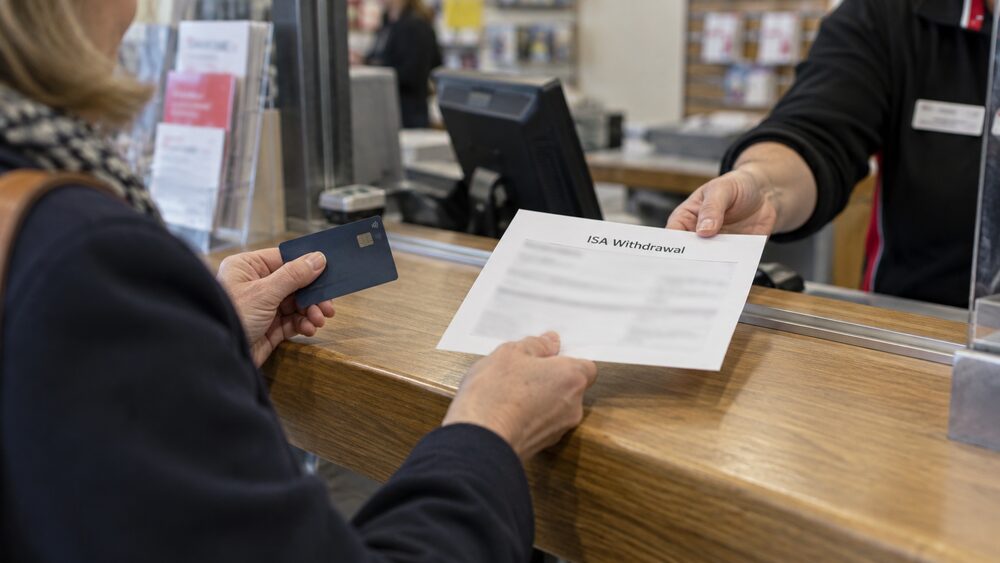
Closing an ISA and taking money out of an ISA are two different actions with the same core consequence for the tax wrapper. Which? puts it plainly: if you take money out of an ISA, it loses its tax-free status3. Once the money is outside the ISA, it is ordinary savings or investments, and any future interest or gains are taxed under the normal rules, subject to your personal allowances.
Closing the account adds a second consequence. The subscription, the amount you paid in during the tax year, has already been used. The annual ISA allowance is £20,0004, and NS&I's guidance confirms that you cannot carry over unused ISA allowance into the next tax year and that your allowance resets every 6 April10. So whatever you paid into a cash ISA before closing it still counts against that year's allowance, and closing the account does not refund it.
Withdrawing without closing is different again. Some cash ISAs are flexible, allowing you to take money out and put it back in within the same tax year without using more allowance, but that depends on the account's terms. The general rule from the official statistics on the scheme is that funds invested in a stocks and shares ISA can only be transferred to another stocks and shares ISA, while cash ISA funds can transfer to a stocks and shares ISA or to another cash ISA11. The page on flexible ISAs covers the withdrawal-and-replace rules, and taking money out of an ISA covers the tax position in more detail.
The practical distinction to hold on to is this: withdrawing money spends the tax-free status of the amount withdrawn, closing the account ends the wrapper but does not undo subscriptions already made, and transferring moves the wrapper intact to a new provider. Only the third option preserves everything.
Transfer, don't close: keeping your tax-free status
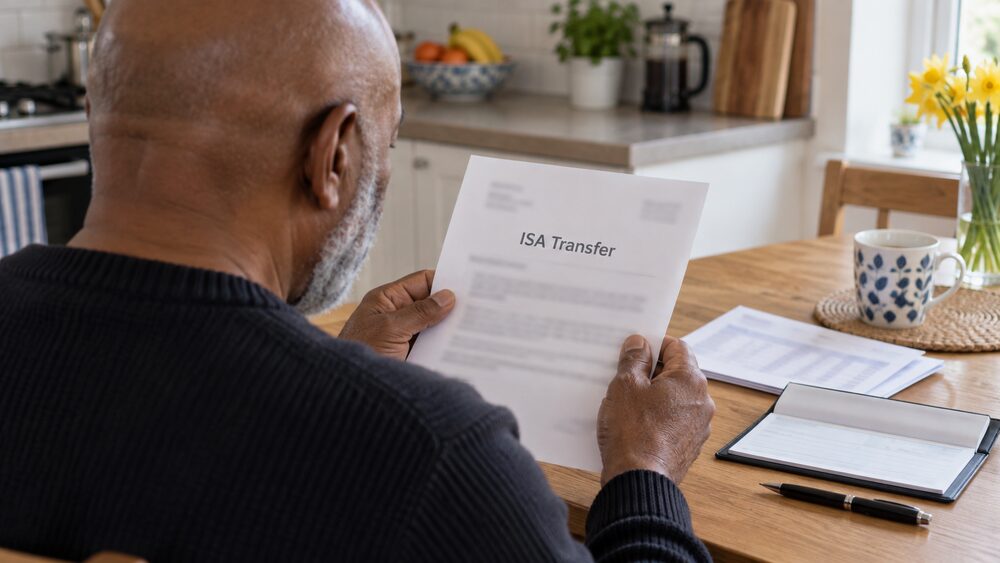
When you want to move an ISA to a different provider, the route that preserves the tax-free status is a transfer, not a closure. Yorkshire Building Society's guidance warns savers directly: make sure that you do not close the ISA and withdraw the money, or you might lose your tax-free status6. A transfer is done between the providers: you ask the new provider to arrange it, and the money moves from ISA manager to ISA manager without ever leaving the ISA wrapper.
Providers accept transfers out as a matter of course. NS&I, for example, confirms that you can transfer your NS&I ISA balance to another provider by contacting the new provider, who will arrange the transfer for you16. The rules also allow partial transfers: the 2024 regulations permit the partial transfer of subscriptions made in the current tax year17, so you can move part of an ISA and leave the rest behind.
Where the money can go depends on the type. Funds invested in a stocks and shares ISA can only be transferred to another stocks and shares ISA, while funds in a cash ISA can transfer to a stocks and shares ISA or to another cash ISA11. The ban on moving stocks and shares ISA money into a cash ISA was lifted in 2014, when the regulations were amended to permit transfers from stocks and shares ISAs to cash ISAs18. Draft legislation for 2026 goes further for older savers, providing that the current year's subscriptions and previous years' subscriptions in a stocks and shares or innovative finance ISA may be transferred to a stocks and shares account, an innovative finance account, a Lifetime ISA, or, if the investor is 65 or over at the end of the year, a cash account19.
The mechanics matter as much as the decision. A transfer must be arranged between providers: if you withdraw the money yourself and pay it into a new ISA, that is a fresh subscription using new allowance, not a transfer. The guides on how to transfer an ISA, how long a transfer takes and compensation for delayed transfers cover the process and your rights if it goes slowly.
ISA allowance: £20,000 a year across all your ISAs
The headline number is simple: the ISA Regulations currently provide a single overall annual ISA subscription limit of £20,0005, and the Treasury Committee's report on the scheme records that the annual ISA allowance will be kept at £20,0004. That £20,000 is a total across every ISA you pay into in the tax year, not £20,000 per account.
Two features of the allowance shape what cancelling and closing mean in practice. First, the allowance is use-it-or-lose-it: NS&I's guidance states that you cannot carry over unused ISA allowance into the next tax year and that your allowance resets every 6 April10. Second, the allowance counts subscriptions, not holdings. If you pay in the full £20,000 and the investments fall in value, you have still used the whole allowance; whatever you paid in before closing an account has used that much of the year's allowance and cannot be claimed back.
The government has also announced changes to how the allowance is divided. A factsheet on ISA reform from 2027 sets out an overall ISA limit of £20,000 alongside changes to the cash ISA limit20, and the page on changes to the cash ISA limit covers what that means for cash savers. The rules on whether transferring uses your allowance and whether unused allowance rolls over are covered in their own guides, as is the ISA deadline at the end of the tax year.
For anyone weighing up whether to cancel a just-opened account, the allowance is the reason to act quickly. A cash ISA cancelled within the 14-day banking window is treated as if the contract never existed, so the subscription does not stick. An account closed later, or an investment ISA withdrawn after the pre-contract window, leaves the subscription counted against the year's £20,000.
Opening more than one ISA of the same type
For many years the rule was one ISA of each type per tax year. That changed on 6 April 2024, when the regulations were amended to permit an individual to subscribe to more than one ISA account of the same type in a tax year17. The amendment also removed the requirement to make a fresh application to open an account that you already hold17, so returning customers can reopen an existing account without starting the paperwork from scratch.
NS&I puts the change in consumer terms: the ISA rules changed on 6 April 2024, and you can now open and pay into more than one ISA of the same type in a tax year16. Yorkshire Building Society adds that since the start of the 2026/27 tax year there is no limit on the number of ISAs you can open with different providers, apart from Lifetime ISAs, and that in the 2026/27 tax year you could open four different types of ISAs if you wanted to6. NS&I's guidance agrees that you can open as many different adult ISA accounts as you like, as long as you keep within the ISA allowance rules10.
The limits that remain are the total allowance and the Lifetime ISA rule. Everything you pay in across all your ISAs counts together towards the £20,000 limit4. Only one Lifetime ISA can be paid into in a tax year, which is one reason the special cancellation rule for Lifetime ISAs, treating a promptly closed account as never having existed, matters9.
This change also affects transfers. Because partial transfer of current-year subscriptions is now allowed17, you can split money paid into one cash ISA between two new providers mid-year, something that was not possible under the old one-account rule. The page on paying into more than one ISA in a year covers the detail.
What happens when a fixed-rate cash ISA matures
A fixed-rate cash ISA does not end when its term ends; it converts. Lloyds Bank's guidance is typical of how providers handle it: if you have a Fixed Rate Cash ISA and do not give an instruction, the bank will automatically change it to an Instant Cash ISA on your maturity date21. The fixed rate stops applying and the money moves to a variable-rate account, usually at a lower rate than the promotional one that attracted the money in the first place.
Maturity is therefore a decision point rather than an ending. Around the maturity date the provider writes to you with the options, which normally include moving to another fixed term, transferring to a different provider, or leaving the money in the easy-access account. Because the money is already inside an ISA wrapper, moving it to another provider should be done as a transfer, keeping the tax-free status, rather than as a withdrawal and a fresh subscription6.
The dates in providers' maturity notices are fixed. Examples from the market include accounts maturing on 1 November 2027, with funds moved to an instant access maturity account the following day, and accounts maturing on 30 November 2027 into an easy access account with a variable rate. The guide to fixed rate cash ISAs covers terms, early access charges and the maturity process in full.
One point connects maturity back to cancellation. If you open a fixed-rate cash ISA and cancel within the 14-day banking window, the contract is undone1. But the banking rules also state that there is no right to cancel a contract, other than a cash deposit ISA, where the rate of interest payable on the deposit is fixed for a period following conclusion of the contract1. The cash deposit ISA is deliberately carved out of that exclusion, which is why cash ISAs keep their cancellation right even when the rate is fixed.
Help to Buy: ISA deadlines for saving and claiming the bonus
The Help to Buy: ISA is a closed scheme with a long tail, and its deadlines are fixed in the official statistics. The scheme was closed to new accounts on 30 November 2019, though Help to Buy: ISA account holders can continue saving into existing accounts until 30 November 2029, and the government bonus must be claimed by 1 December 203011. The original policy statement confirms the same dates: open for new savers until 30 November 2019, open to new contributions until 2029, with the bonus claimable until 1 December 203023.
The bonus is worth 25% on savings, and it applies to more than the deposits. The government's guidance on the scheme states that the bonus will apply to both the amount a person saves into their Help to Buy: ISA and the interest that is built up during the period the account is open24. Because the account is an ISA, that interest has accumulated tax-free, and the bonus is calculated on the combined total.
For account holders, the practical points are these. You cannot open a new Help to Buy: ISA, and the scheme closed to new customers in 201925. You can keep paying in until 30 November 2029. The bonus is claimed through the conveyancer when you buy a qualifying first home, so the 1 December 2030 deadline is a hard stop on the whole scheme: after that date, an unclaimed bonus is lost, though the savings themselves remain yours.
There was a one-off connection to the Lifetime ISA. During the 2017-18 tax year only, holders of a Help to Buy: ISA could transfer funds built up before 6 April 2017 into a Lifetime ISA without the amount counting towards the Lifetime ISA contribution limit, with the 25% government bonus applied to the full value transferred23. The regulations record that an amount held in a Help to Buy: ISA on 5 April 2017 could be transferred to a Lifetime ISA during 2017-18 without counting towards the Lifetime ISA limit9. That window has long closed, but it explains why some savers hold both. The rules also prevent double claiming: a Lifetime ISA investor must declare they are not also claiming a bonus under a Help to Buy: ISA, or has repaid any such bonus in full9. The guide to moving a Help to Buy ISA into a Lifetime ISA covers the history, and the Help to Buy ISA page covers the scheme itself.
National Insurance numbers and age limits
Two administrative rules affect who can open an ISA and what they need to hand over. From 6 April 2027, ISA managers must obtain a National Insurance number from all investors who are eligible to have one when receiving a subscription26. The government's policy statement on the 2025 amendments sets out the same requirement, and confirms that those not eligible for a National Insurance number will continue to be able to subscribe to an ISA once they have confirmed their ineligibility to their ISA manager26. The regulations fill in the mechanics: an application to open an account that is not a Junior ISA or a Lifetime ISA must contain confirmation, if it is the case, that the applicant does not qualify for a National Insurance number27. Earlier rules had already required ISA managers to get a National Insurance number on new ISA applications from all investors eligible to have one28.
Age limits have been simplified. The regulations harmonised account opening for ISAs at 18 years29. For a Lifetime ISA the window is narrower: you must be 18 or over but under 40 to open one30, and NS&I's guidance describes the same 18 to 39 range10. Junior ISAs are the exception, opened on a child's behalf, and are covered in the guide to Junior ISAs. The narrow pages on who needs a National Insurance number and who can open an ISA cover both rules in detail.
Where cancelling or closing does not undo the rules
The final thing to understand is what cancellation does and does not achieve. Cancelling a cash ISA within 14 days undoes the contract1. Closing a Lifetime ISA within 30 days of the cancellation period start date means the account is treated as never having existed9. But beyond those windows, the ISA rules keep counting what happened.
Subscriptions are the clearest example. The £20,000 allowance is measured by what you paid in during the tax year, and closing the account does not claw it back4. The same principle applies to the Lifetime ISA bonus rules: the regulations allow an account investor, within 90 days beginning with the day after receipt of a notification, to apply to the Board for payment of a government bonus which has been refused9, and set the claim deadline for subsequent tax years at 6 April of each year up to and including the tax year in which the investor would reach age 5031. A closed or cancelled account does not restart those clocks.
The rules also change prospectively rather than retrospectively. The 2023 amendments on innovative finance ISAs state that the amendments are not retrospective, and that those who have already invested in a qualifying peer-to-peer arrangement can retain their investments32. The June 2026 tax-free savings newsletter summarises key changes taking effect from 6 April 202733, and the reform factsheet sets out the anti-circumvention rules arriving with them20. Whatever you cancel or close now happens under the rules in force at the time.
If something has already gone wrong, an account may hold subscriptions that break the rules, for example because the allowance was exceeded. That is covered in the guide to invalid subscriptions. If the problem is with the provider rather than the account, the route is the complaints process set out in complaining about an ISA provider, and the page on how your ISA is protected explains the FSCS position if a provider fails.
Sources33 cited
- BCOBS 6.1: The right to cancel FCA Handbook
- COBS 15: Cancellation FCA Handbook
- Can you inherit ISA savings tax free? Which?, 2024
- Treasury Committee report on savings House of Commons Treasury Committee, 2025
- Cash ISA limit reduction HM Treasury, 2026
- How many ISAs can I have? Yorkshire Building Society, 2026
- COBS 15.6: Exclusions FCA Handbook
- COBS 15 timeline FCA Handbook
- Individual Savings Account Regulations 2017 (SI 2017/466) legislation.gov.uk, 2017
- ISA basics NS&I, 2026
- Annual savings statistics 2025: background and methodology HMRC, 2025
- BCOBS 6 Cancellation FCA Handbook
- COBS 15.2: The right to cancel FCA Handbook
- Loanpad ISA FAQs Loanpad, 2026
- Junior ISA brochure NS&I, 2024
- NS&I Direct ISA NS&I, 2026
- Individual Savings Account Regulations 2024 (SI 2024/350) legislation.gov.uk, 2024
- Individual Savings Account Regulations 2014 (SI 2014/1450) legislation.gov.uk, 2014
- Draft ISA amendment regulations 2026 HMRC, 2026
- ISA reform 2027 anti-circumvention rules factsheet HM Treasury, 2026
- Fixed rate account maturity Lloyds Bank, 2026
- BCOBS 6 chapter view FCA Handbook
- Lifetime ISA final policy paper HM Treasury, 2016
- Help to Buy: ISA guidance HM Treasury, 2015
- Help to Buy Wales quality report Welsh Government, 2024
- ISA and CTF amendment regulations 2025 HMRC, 2025
- Individual Savings Account Regulations 2024 (SI 2024/1022) legislation.gov.uk, 2024
- ISA and CTF amendment regulations 2024 policy statement HMRC, 2024
- Explanatory memorandum to SI 2024/350 legislation.gov.uk, 2024
- Who can open a Lifetime ISA gov.uk, 2026
- FCA instrument 2017/12 FCA, 2017
- Explanatory memorandum to SI 2023/264 legislation.gov.uk, 2023
- Tax-free savings newsletter 22, June 2026 HMRC, 2026



 MoneyHelperFree, impartial money and pensions guidance, set up by government
 FSCSProtects your money if a bank, insurer or investment firm fails
 Financial Ombudsman ServiceFree, independent help when a complaint about a firm is not put right
 GOV.UKOfficial information on tax, benefits and government services
 Citizens AdviceFree advice on money, consumer and legal problems in England and Wales