
A share is a single unit of ownership in a company1. Buy one share in a company and you own a small slice of that business, alongside everyone else who holds its shares. The word "stock" means much the same thing in everyday use: it represents part-ownership in one or more companies1. Shares are bought and sold on stock exchanges, where their prices move constantly with supply and demand.
Owning shares can make you money in two ways: the price of the share can rise above what you paid, and the company can pay you a share of its profits, called a dividend. Both can also go wrong. The value of your investments can fall as well as rise, and you may get back less than you put in2. If the business you invest in fails, you are likely to lose 100% of the money you invested3.
Shares make you a part owner of a company
A share is not a loan to a company and not a savings product. It is ownership. The Financial Ombudsman Service, which handles complaints about investments, defines a share as "a single unit of ownership in a company"1. If a company has issued one million shares and you own one hundred of them, you own one ten-thousandth of that company: its buildings, its brands, its profits and its debts, in that proportion.
This is what separates shares from most other things a consumer holds. Money in a savings account is a promise from a bank to repay you, with interest. A bond is a loan to a company or government that is repaid on set terms. A share is neither: it is a stake, permanent unless you sell it, and its worth is whatever another investor will pay for it at the time.
One point of confusion worth clearing up early: the word "shares" is also used in shared ownership housing schemes, where you buy a stake in a property, usually between 10% and 75% of its full market value, and pay rent to a landlord on the share you do not own5. Those are shares in a home, not shares in a company, and they work completely differently: no stock exchange, no dividends, and the government describes them as part buy, part rent schemes6. This page is about company shares.
What owning shares gives you: dividends and a vote
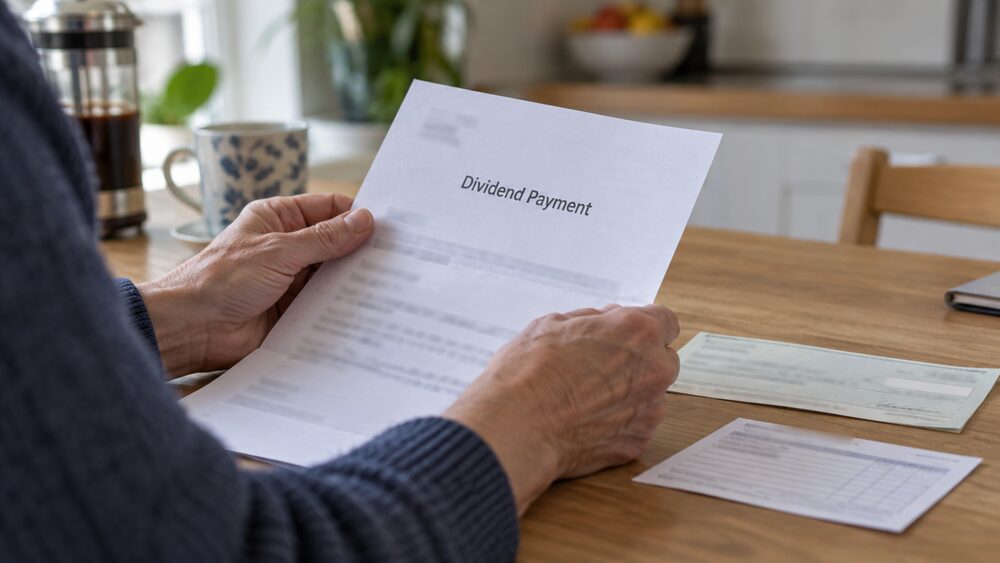
Ownership brings two practical rights. The first is a claim on the company's profits. When a company makes money, its directors decide whether to pay some of it out to shareholders as dividends, a fixed amount per share. To work out the value of a dividend, you multiply the number of shares you hold by the amount of dividend per share7. The second right is a say in big decisions: shareholders vote on matters such as appointing directors, and the size of your vote follows the size of your holding.
How much influence a shareholder has depends on how much of the company they control. HMRC's guidance on employee share schemes gives a benchmark: you have a "material interest" in a company if you can exercise at least 25% of the voting rights in it8. Most ordinary investors hold a tiny fraction of that in any one listed company, which is why their vote is rarely decisive, though it still exists.
Timing matters for dividends. If you buy shares when you are entitled to the most recently declared dividend, the shares are described as being "cum dividend"9. Buy after the cut-off point, marked "XD" in price listings, and that dividend goes to the previous owner, not you. The shares are then worth the dividend less, which is reflected in the price.
How shares make money: price growth and dividends
There are only two ways a share holding grows in value. The first is price growth: the share becomes worth more than you paid, and you realise that gain when you sell. The second is income: the company pays dividends, which are yours to take as cash or reinvest. Investment industry performance figures are almost always given on a "total return" basis, which means any dividends received are considered to be reinvested10. A share price chart alone understates what an investor actually earned, because it leaves the dividends out.
Some companies deliberately offer one route and not the other. Zero dividend preference shares, issued by some investment trusts, aim to deliver a fixed amount of capital growth over a set period and pay no income at all, and that fixed amount is not guaranteed11. At the other end, income-focused companies and funds prioritise paying dividends over growing their value.
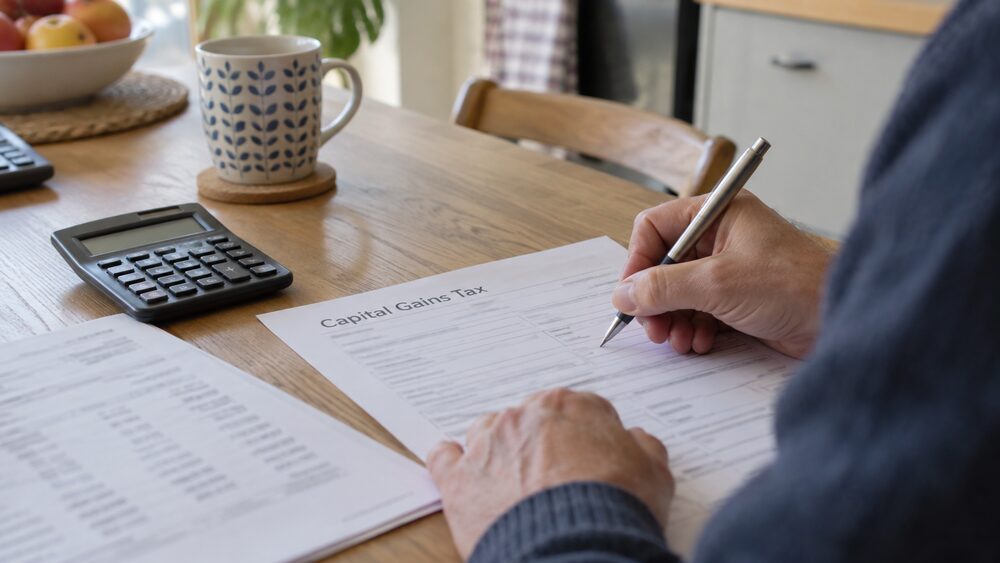
Tax treatment shapes what you keep. Any dividends and returns on shares and bonds held in an ISA are tax-free12. Outside a tax wrapper, dividends and capital gains are taxed under their own rules, covered in how investments are taxed.
Dividends: take them as income or reinvest them
When a dividend arrives, there is a choice: take it as cash to live on, or reinvest it by buying more shares. Reinvesting is the engine of compounding, because the new shares generate their own dividends in future. The choice is often built into the product you hold rather than made dividend by dividend. Funds come in share classes with different names for exactly this purpose: "Acc", short for accumulation, automatically reinvests dividends, while "Inc", short for income, and "Dis", short for distribution, pay dividends out to you13.
Which suits you depends on circumstance, not on any rule. Someone drawing an income in retirement often wants dividends paid out; someone still building a pot usually wants them reinvested. The dedicated guide to how dividends work covers the mechanics, and dividend reinvestment covers how to set it up.
Some workplace schemes have their own dividend rules. In a Share Incentive Plan, dividends can be used to buy more shares in the company, there is no limit on reinvestment into dividend shares, and no income tax is due on reinvested dividends as long as the shares bought with them are held in the plan for at least 3 years14. Dividend shares in such a plan are also not subject to National Insurance contributions14.
How shares are bought and sold on a stock exchange
Shares change hands on a stock exchange, a market where buyers and sellers are matched. The price at any moment is the price at which supply meets demand: with investment trusts, for example, the price of shares is determined by supply and demand in the stock market, so the price paid almost invariably differs from the value of the underlying assets6. The same market forces move the prices of ordinary company shares.
Most shares are held electronically, usually in the name of the share-dealing business, which means the shares are recorded on the company's register as belonging to that business rather than to you personally1. This does not weaken your ownership: it is how the system works, and your platform's records show your entitlement. You can value shares quoted on the London Stock Exchange by finding the price in the financial pages of a newspaper, on the newspaper's website, or on a commercial website7.
The practical route for most people is an investment platform or a stocks and shares ISA, an account where the money you put in is invested on the stock markets15. A stocks and shares ISA is a tax-free investment account that lets you put money into a range of different investments16. The step-by-step guide to buying and selling shares covers the process in detail, and how investment platforms work explains the account side.
Dealing fees and other costs of buying shares
Buying and selling shares is not free. Platforms charge dealing fees, one-off charges each time you trade, and these apply even where other things are cheap. Investment trusts are treated by platforms in a similar way to shares, so you will likely have to pay one-off fees when you buy and sell them, even if fund trading is free6. The same applies in reverse: selling shares and buying them back can incur platform fees each time17.
The main costs to expect are:
- Dealing fees: a one-off charge each time you buy or sell a share6
- Platform fees: an ongoing charge for holding investments on the platform, covered in investment platform fees and charges
- Stamp duty: a tax on buying shares, covered in stamp duty on shares
- Foreign exchange costs: when buying shares priced in another currency
Fees matter because they are certain while returns are not. A dealing fee is paid whether the share rises or falls, so frequent trading multiplies costs. The guides to dealing charges and fund charges and the ongoing charges figure set out how each cost is worked out and how to compare it.
Shares are higher risk: why prices rise and fall
Shares are riskier than savings, and the reason is structural. A shareholder stands last in the queue if things go wrong, after lenders, staff and suppliers. In return for that position, the price is free to rise a long way, and it is equally free to fall. The value of your investments can fall as well as rise, and you may get back less than you put in2. Investing in the stock market is risky, and when you invest you could lose money5.
Prices move for reasons that range from the company's own performance to the mood of the whole market. A profit warning can cut one company's price; a recession can cut nearly all of them at once. Nothing guarantees a recovery, and nothing guarantees you get your money back: the success of your investments will be dependent on the market, and as with all investments, there is no guarantee16.
The contrast with cash is worth stating plainly. Money in a cash ISA is not subject to the risks of investing in stocks and shares, because the money you put in cannot go down2. Shares offer the possibility of growth that cash does not, and that possibility is paid for with the risk of loss. The guide to investment risk and your attitude to risk helps with working out how much of that risk fits your circumstances.
When a company goes bust or performs poorly
If a company fails, shareholders are the last to be paid, which usually means they are paid nothing. The Financial Conduct Authority's rules for high-risk investments state it bluntly: "If the business you invest in fails, you are likely to lose 100% of the money you invested. Most start-up businesses fail"3. The same rules say investors in these shares or bonds often lose 100% of the money they invested3. That is the worst case for ordinary shares: the price falls to zero and the holding is worth nothing.
Poor performance short of failure is more common and less total. A share can fall heavily and stay down for years, or a company can stop paying dividends, cutting the income an investor was relying on. There is no compensation for poor performance: the Financial Ombudsman Service can look at complaints about how an investment was sold or administered, but not at the market itself1.
Two other situations change what a shareholder holds. When a company is taken over or reorganises and replaces your shares with new shares, you are not treated as if you have sold or disposed of them for Capital Gains Tax purposes18. And shares can simply be forgotten: one tracing exercise found around £2.5bn in lost shares affecting some 2 million people, an average of £1,250 each19. The guide to takeovers and share reorganisations covers what happens to your shares when a company is bought.
Spreading the risk: why diversification matters
Because any single company can fail, holding shares in many companies spreads the risk. The investment industry's own guidance puts it directly: investing in a collective investment fund such as an investment trust gives you access to a broad portfolio of shares, which spreads risk and minimises the impact of any one company going bust or performing badly5. One failure in a spread portfolio is a dent; the only share you hold failing is the whole investment gone.
Diversification can be built in several layers:
- Across companies: many firms rather than one
- Across sectors and countries: not everything exposed to the same economy
- Across asset types: shares alongside bonds, where bonds are loans that behave differently, as explained in bonds vs equities
The practical way most people achieve this is a fund, which pools money from many investors into a broad portfolio. The difference between the structures matters less than the principle: an investment trust issues a fixed number of shares when it is set up, which investors can buy and sell on the stock market6, while funds are "open-ended" investments that can issue or redeem units at any time to satisfy investors who want to buy into or leave them6. Investment funds, investment trusts and ETFs each have their own guide, and diversification and asset allocation covers the principle in depth.
Owning shares indirectly through funds and pensions
Most people who own shares never see a share certificate or place a trade. They own shares indirectly, and this is the normal state of things rather than the exception.
The main routes are:
- Investment funds and trusts: your money is pooled with other investors' and spread across a broad portfolio of shares5
- Stocks and shares ISAs: a tax-free account whose money is invested on the stock markets15
- Personal pensions: the money you pay into a personal pension is put into investments, such as shares, by the pension provider4
- Workplace schemes: share option schemes, where an employee can buy shares, and Share Incentive Plans, where shares are held in a trust20
Pension schemes invest in different types of assets, including bonds issued by corporations and governments, equities, which are shares in companies, property, infrastructure and other alternative investments21. A personal pension holder does not choose the individual shares: the provider does that4. A self-invested personal pension usually offers the widest choice of investment options, including company shares, for those who want control22.
Indirect ownership changes what you do, not what you own. A fund investor still bears the market risk, still sees values fall in a downturn, and still benefits when shares rise, but the choosing, dealing and paperwork are done by the fund manager or pension provider. The guides to fund managers and ready-made funds and model portfolios cover who does what.
Where to get free help
Free, impartial help exists for every stage. MoneyHelper, the government-backed money guidance service, explains pensions and the basics of investing22. The Financial Ombudsman Service handles complaints about shares, ISAs and how investments were sold or administered, and its service is free to consumers1. HMRC's guidance covers the tax side, including employee share schemes and how shares are valued8.
If you hold shares through a workplace Share Incentive Plan, your employer's plan documents set out the rules, and HMRC's guide for employees explains the holding periods, dividend shares and transfer options14. For lost or forgotten holdings, tracing services exist, and one exercise found an average of £1,250 per affected person19. For the wider picture of how investing works before choosing any route, see how investing works: risk, return and time and the complete investing guide.
Sources22 cited
- Stocks and shares Financial Ombudsman Service, 2026-09-26
- ISA basics NS&I, 2026-09-01
- COBS 4.16: risk warnings for high-risk investments Financial Conduct Authority, 2025-10-08
- Personal pensions: your rights HM Government, 2026-09-26
- What are funds and why invest in them The Association of Investment Companies, 2026
- Investment trusts explained Which?, 2025-05-14
- Valuing stocks and shares for inheritance tax HM Government, 2022-02-01
- HS287: Capital Gains Tax and employee share schemes 2026 HM Government, 2026-04-06
- Guides and glossary The Association of Investment Companies, 2026
- Investment company performance figures and what they mean The Association of Investment Companies, 2026
- Different types of investment companies: shares and securities The Association of Investment Companies, 2026
- How to invest for income Which?, 2026-09-25
- Investment funds explained Which?, 2026-07-23
- Share Incentive Plans: a guide for employees HM Government, 2025-10-20
- Individual savings accounts (ISAs) Financial Ombudsman Service, 2026-09-26
- The investments you can hold in a stocks and shares Isa Which?, 2025-03-28
- Have I accidentally committed tax fraud? Which?, 2025-01-27
- Capital Gains Tax: share reorganisation, takeover or merger HM Government, 2014-11-06
- Experian to close tracing service: how to search for lost cash Which?, 2022-08-24
- Tax on employee share schemes HM Government, 2026-09-26
- UK pension schemes: assets and investment House of Commons Library, 2026-07-08
- Personal pensions MoneyHelper, 2026-09-25




 MoneyHelperFree, impartial money and pensions guidance, set up by government
 FSCSProtects your money if a bank, insurer or investment firm fails
 FCA Warning ListCheck whether a firm is authorised before you deal with it
 Financial Ombudsman ServiceFree, independent help when a complaint about a firm is not put right
 Citizens AdviceFree advice on money, consumer and legal problems in England and Wales