
An investment platform, sometimes called a fund supermarket, allows investors to buy and hold a range of investments in one place online, and sometimes with a smartphone app1. Instead of opening separate accounts with each fund manager or stockbroker, you hold everything with one provider, deal through one website or app, and see your whole portfolio on a single screen. Platforms are online services that allow you to buy, hold and sell investments, including investment trust shares2.
Most platforms offer two broad ways to use them. With an execution-only service you choose the investments yourself and the platform simply carries out your instructions, with no advice given. With a do-it-for-me service, most ask you for your investment aims and assess your attitude to risk through a questionnaire, and then recommend a tailored portfolio of funds, gilts and bonds1. The difference between these services, and what protection each one gives you, is covered in execution-only, advisory and discretionary services compared.
What an investment platform does
An investment platform brings the practical parts of investing into one place. You open an account, pay money in, choose what to buy, and the platform handles the dealing, the record-keeping and the paperwork: confirmations, valuations and the tax documents you need each year. Because everything sits with one provider, you can see the value of your whole portfolio at once rather than chasing statements from several fund managers.
Platforms differ in how much help they give. An execution-only platform leaves every decision to you: it carries out your instructions but does not advise on them. A do-it-for-me platform sits at the other end. Most ask you for your investment aims and assess your attitude to risk through a questionnaire, and it then recommends a tailored portfolio of funds, gilts and bonds1. Between the two sit advisory services, where a human adviser recommends investments but you decide whether to act. The type of service matters for protection as well as cost: what a platform is responsible for, and what you are, depends on whether it advised you or merely dealt for you.
Some platforms charge nothing at all. These make their money in other ways, such as foreign exchange fees or keeping cash interest, or upgrading customers to paid products such as managed portfolios or premium tiers1. The page on commission-free trading explains how "free" platforms are paid for.
Account types: general investment accounts alongside ISAs and pensions
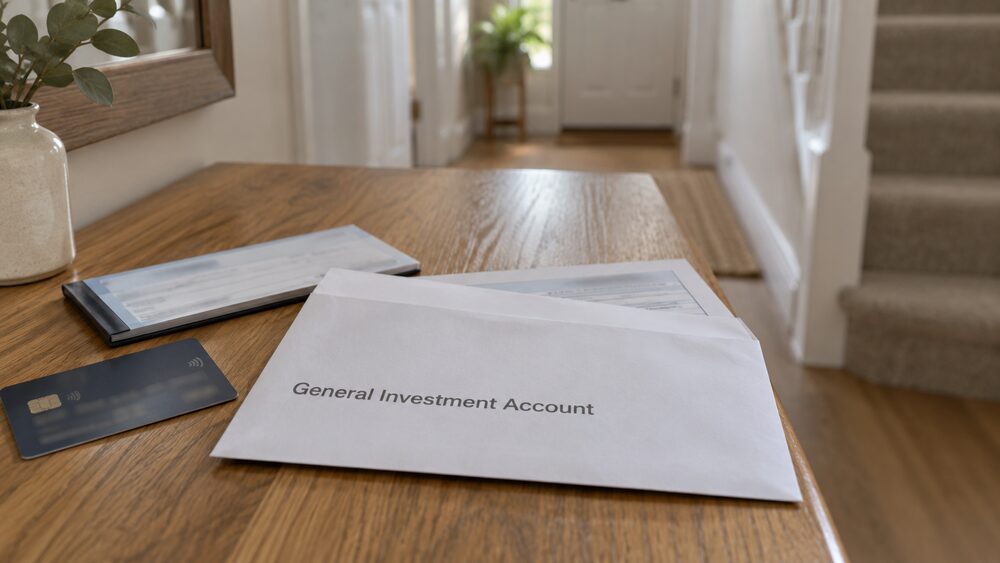
Many platforms offer you the ability to hold your investments inside an ISA, SIPP or Junior ISA, and all platforms will also offer an ordinary trading account with no special tax benefits, sometimes called a general investment account3. The wrapper you choose determines how the investments inside it are taxed, not how they perform: the same fund held in an ISA and in a general investment account is the same fund.
Individual Savings Accounts are products that allow tax-free investment into cash, funds and equities8. There are four types of ISA available: cash ISAs, stocks and shares ISAs, innovative finance ISAs and lifetime ISAs9. A SIPP (self-invested personal pension) is a pension wrapper you run yourself, with tax relief on contributions and rules about when you can withdraw. A Junior ISA is the children's version. The general investment account has no tax benefits, but also no limit on what you can pay in, which is why some investors use it once their ISA and pension allowances are used.
Most investment platforms will not charge extra for an ISA, although different platforms may have different funds and assets available within them10. The page on where investments can be held compares the wrappers in more detail, and general investment accounts covers the untaxed option.
What you can hold: funds, shares, ETFs, investment trusts and bonds
The range of investments on a platform usually covers the main types. Investment funds pool your money with that of other investors to give you a stake in tens or hundreds of stocks, bonds or other types of investments10. There are many types of fund, such as investment trusts, unit trusts and exchange traded funds (ETFs)10. Shares, bonds and gilts are dealt with directly rather than through a fund.
Investment trusts work differently from unit trusts. An investment trust is a way to make a single investment that gives you a share in a much larger portfolio11. One of their unique features is that they are public limited companies, whose shares are listed on a stock exchange12. Because they are companies, they have independent boards of directors whose duty is to look after investors' interests, meeting several times a year12, and their shareholders can vote on issues at the trust's annual general meeting, table motions, call extraordinary meetings and vote in new directors13. The practical consequence for a platform user is that investment trusts are treated in a similar way to shares, so you will likely pay one-off dealing fees when you buy and sell them even if fund trading is free14.
ETFs generally tend to have cheaper on-going charges, though they may incur extra trading fees from investment platforms10. It is also possible to invest in "active ETFs", which are tracker funds that track a custom-made index of suitable firms15.
Not every platform offers everything. A few platforms do not offer investment trusts3, so if a particular type of investment matters to you, check before opening an account. Investment trusts can be held in a stocks and shares ISA16. The dedicated pages on investment funds, investment trusts, ETFs, bonds and gilts explain each type.
Platform charges: percentage fees, flat fees or none
Investment platforms charge either a percentage annual fee or a fixed amount each year4. A percentage fee is worked out on the value of your portfolio, so it grows as your investments grow. A flat fee is the same whatever your portfolio is worth. Which works out cheaper depends on size: if you have a portfolio worth around £50,000 or less, a percentage-based charge will generally work out cheaper, while larger portfolios fare better with a flat fee4.
The platform fee is only one layer of cost. The full list of charges around a fund includes the ongoing charge figure (an annual percentage paid to the fund manager), performance fees charged by some funds, trading fees and stamp duty reserve tax, exit fees, and platform fees10. For workplace pensions there is an official cap: charges paid out of member savings in default investment arrangements must be no higher than 0.75% a year of the member's fund17.
One further charge arrives from April 2027: interest earned on cash held in investment ISAs will incur a charge from the government, and the investment platform or the asset managers will remove that charge on your behalf18. The pages on platform fees and charges and fund charges and the ongoing charges figure go deeper into each layer.
Dealing charges: what each trade costs
You might be charged each time you buy and sell a share, investment trust or exchange-traded fund. Less common are fees for buying and selling traditional funds1. Dealing commission varies considerably between platforms, but a typical amount would be approximately £10 per deal5. Some platforms offer free fund dealing and charge only for shares and ETFs; others bundle a set number of trades into a monthly fee.
Because investment trusts are treated by platforms in a similar way to shares, one-off fees are likely when buying and selling them even where fund trading is free14. ETFs generally tend to have cheaper on-going charges, though they may incur extra trading fees from investment platforms10.
Transactions on international shares and funds incur foreign exchange fees, and these vary by platform, ranging from 0.45% to 1.5% on amounts up to £5,0001. If you plan to buy overseas holdings, this fee can matter as much as the headline dealing charge. Buying US and overseas shares covers the practicalities, and dealing charges and stamp duty on shares cover the costs of each trade.
Minimums, top-ups and regular investing
Platforms set their own minimums, and they differ between a one-off lump sum and a monthly plan. For regular saving the entry point can be low: you can invest in investment trusts from as little as £50 a month19. Lump-sum minimums vary more widely, so check the platform's own terms before assuming a figure.
Regular investing suits people who want to build a portfolio gradually rather than commit a lump sum. Paying in monthly spreads your purchases across different prices, which is one way of managing the risk of investing everything at a bad moment. The page on investing a lump sum vs investing monthly compares the two approaches, and how to set up monthly savings explains the mechanics.
Top-ups are usually straightforward: most platforms let you add money whenever you like, subject to any minimum per payment. Within an ISA, the annual allowance limits how much you can subscribe across all your ISAs in a tax year; within a general investment account there is no such limit. How to add money to an investment account covers the practical steps.
Who can open an account and how long it takes
Opening an investment account starts with identity checks. The platform needs to verify who you are, and the time this takes varies. As a guide to how long account opening can take once documents are needed, NS&I aims to open accounts in 7 to 10 working days, and longer if identity documents are needed20. Platform account opening is often faster, but the same principle applies: the provider cannot let you deal until the checks are complete.
Age limits depend on the account type. To simplify the rules for investors and ISA managers, account opening for ISAs has been harmonised at 18 years21. Investors aged 16 or 17 as at 6 April 2024 will still be able to open an account under transitional protection21. For children's accounts, the rules work differently: grandparents are able to open and contribute to a child's Investment Account, but they will need to nominate someone to look after the child's account until they turn 16, and that person must be a parent or guardian22. A responsible person who has provided evidence of identity can then manage the child's account by post22. NS&I also has a postal-only account, the Investment Account23. Investing for children covers Junior ISAs, Junior SIPPs and bare trusts.
When a child's investments are held under a court order, the options at 18 are set: you need to say on the form whether you want your investments sold and the proceeds paid into your bank account, transferred into your name, or part sold and part transferred24.
Transferring investments between platforms
You might be charged if you transfer investments from one platform to another. However, many platforms have scrapped these fees, while others will offer to cover switching fees as an incentive to join them1. Where exit fees do exist on stocks and shares ISAs, they have been found ranging from £15 to £30 per holding, though most providers charge nothing6. Some pensions charge exit fees, which could wipe out any savings from switching, so check the details before moving pension money25.
Timing is regulated for ISAs: according to HMRC guidelines, a stocks and shares ISA transfer should be completed within 30 calendar days26. In practice it has not always worked that way. For years, investment platforms have struggled to get to grips with ISA transfers, with delays as extreme as 450 days26. Outside an ISA, share transfers can take longer still: one share dealing company told a customer that share transfers might take up to 12 weeks, and the transfer of his accounts to the new platform suffered a delay of over five months27. The Financial Ombudsman, which ruled on that case, is where complaints about transfer delays go if the provider cannot sort them out.
The rules on what can move where depend on the wrapper. Funds invested in a stocks and shares ISA can only be transferred to another stocks and shares ISA; however, funds invested in a cash ISA can transfer to a stocks and shares ISA or another cash ISA28. Under the ISA regulations, in the case of a stocks and shares account or an innovative finance account, the current year's subscriptions and the previous years' subscriptions may be transferred to a stocks and shares account, an innovative finance account, a Lifetime ISA, or a cash account if the account investor is 65 or over at the end of the year, belonging to the same account investor29. Transfers to an innovative finance ISA work differently: transfers take place in cash, so if you hold stocks and shares ISAs, all of your investments would be sold and the cash used to invest30. You complete a transfer form with the innovative finance ISA provider you want to switch to30.
Tax on investments held outside an ISA or pension
The whole point of the wrappers is tax treatment. Individuals do not pay tax on capital gains arising on their disposals of ISA investments31. The ISA regulations specify the individuals who may invest, the permitted investments, and the maximum investment limits, and provide for accounts to be managed by the account managers32. In a general investment account, none of that shelter applies: dividends and capital gains are taxed under the normal rules, which how investments are taxed explains.
One change is coming for cash held inside investment ISAs. From April 2027, interest earned on cash in investment ISAs will incur a charge from the government, and the investment platform or the asset managers will remove that charge on your behalf18.
For some higher-risk investments there is an additional warning the rules require firms to give: you may have to pay exit fees or additional charges to take any money out of your investment early33. That is a standard risk summary for non-mainstream pooled investments, and it is worth reading before committing money to anything outside the mainstream fund range.
Time, risk and what protects you
Investing through a platform does not change the basic bargain of investing: risk in exchange for return over time. The guidance for new investors is consistent. Investors are generally told to be prepared to keep their money invested for five to ten years, or longer, and to try to ignore the inevitable ups and downs7. The suggested timeframe is five, ten, or even 20 years, especially where the investment is very high risk34. Money expected to be needed within that horizon is generally better held in savings, a comparison covered in investing vs saving in a bank.
The protections around platforms come in layers. Regulated platforms must give you certain risk warnings before you invest, including the exit-fee warning for non-mainstream pooled investments33. If a platform gives you advice that turns out to be wrong, or mishandles a transfer, the Financial Ombudsman Service can look at your complaint: it dealt with a case where transfer delays caused a customer to claim a £30,000 loss27. If a platform fails, what happens to your money depends on how it was held, which what happens if an investment platform fails explains. Poor performance alone is not something compensation covers, as FSCS cover for poor performance sets out.
Finally, the most common mistakes new investors make are avoidable ones: not allowing enough time, not diversifying, and reacting to short-term falls. Investment risk and your attitude to risk and diversification and asset allocation cover how to think about those decisions, and how investing works explains the underlying relationship between risk, return and time.
Sources34 cited
- How investment platforms work Which?, 2026
- Ways to invest The Association of Investment Companies, 2026
- How to invest The Association of Investment Companies, 2026
- Are fund charges eating into your returns? Which?, 2026
- Choosing an investment company The Association of Investment Companies, 2026
- Stocks and shares ISA transfers Which?, 2026
- Common mistakes The Association of Investment Companies, 2026
- What is an ISA? Trustnet, 2026
- Lifetime ISA Financial Ombudsman Service, 2026
- Investment funds explained Which?, 2026
- Your guide to investment companies The Association of Investment Companies, 2026
- What are investment companies The Association of Investment Companies, 2026
- Why choose investment companies The Association of Investment Companies, 2026
- Investment trusts explained Which?, 2025
- Ethical investing explained Which?, 2026
- The investments you can hold in a stocks and shares ISA Which?, 2025
- What to look for in a pension scheme The Pensions Regulator, 2026
- Why is the government going to tax your ISA? Which?, 2026
- Risk vs rewards The Association of Investment Companies, 2026
- Direct Saver NS&I, 2026
- ISA amendment regulations 2024 explanatory memorandum legislation.gov.uk, 2024
- Looking after a child's savings NS&I, 2023
- For young savers NS&I, 2026
- Get court funds money when you turn 18 GOV.UK, 2026
- Why small pension pots could be costing you Which?, 2025
- What happens when a stocks and shares ISA transfer goes wrong Which?, 2024
- Customer claims account transfer delays cause £30,000 loss Financial Ombudsman Service, 2026
- Annual savings statistics 2025: background and methodology GOV.UK, 2025
- Individual Savings Account (Amendment) Regulations 2026 legislation.gov.uk, 2026
- Innovative finance ISAs explained Which?, 2026
- Non-structural tax relief statistics, December 2024 GOV.UK, 2024
- Individual Savings Account Regulations 1998 legislation.gov.uk, 2026
- FCA Handbook COBS 4.16 Financial Conduct Authority, 2025
- What are funds and why invest in them The Association of Investment Companies, 2026





 MoneyHelperFree, impartial money and pensions guidance, set up by government
 FSCSProtects your money if a bank, insurer or investment firm fails
 FCA Warning ListCheck whether a firm is authorised before you deal with it
 Financial Ombudsman ServiceFree, independent help when a complaint about a firm is not put right
 Citizens AdviceFree advice on money, consumer and legal problems in England and Wales