
When you buy an investment fund, you are not buying the underlying shares and bonds directly. A fund pools your money with that of other investors and a professional fund manager invests it across a range of assets1. What you actually hold is a slice of the fund itself, and that slice is called a unit or a share depending on the fund's structure2. Almost every fund you can buy in the UK is split into more than one of these slices, called share classes or unit classes, and the class you hold changes what you pay, what happens to the fund's income, and how currency movements affect you3.
The class is not a different fund. Classes of the same fund invest in the same portfolio of assets; what differs is the wrapper around your particular slice. One class reinvests the fund's dividends, another pays them out. One is priced in pounds, another in euros, and a third is hedged to smooth out currency swings. One charges more each year, another less, because it is aimed at people investing large amounts or investing through a platform3. This page explains each of those differences, how to move between classes, and where tax comes in.
What a share class or unit class is
A share class or unit class is one version of a fund, priced and administered separately from the other versions but investing in the same things. Fund managers create multiple classes because different groups of investor want different things from the same portfolio: some want income paid out, some want it rolled up; some invest directly with the manager in large sums, others invest small amounts through a platform; some want their returns measured in pounds, others in another currency3.
The class you hold is usually visible in the fund's full name. The abbreviations after the fund name tell you what the class does. "Acc", short for accumulation, is for reinvestment, while "Inc", short for income, and "Dis", short for distribution, pay dividends out to you1. Other letters and words in the name often mark the charge level or the currency, and these vary between fund managers, so the fund's own documents are the place to confirm what a particular class offers3.
Classes also explain some things that otherwise look odd. When the digital bank Monzo could not carry out in-specie transfers of the funds it offers, it was because those funds were held in a share class normally reserved for institutional investors, a class not available for transfer in the same way as retail classes6. Exchange traded funds, another type of fund that usually invests across an entire index such as the FTSE 100, sit alongside these structures and are usually cheaper than other funds known as mutual funds7.
Shares or units: OEICs and unit trusts compared
Whether your slice of a fund is called a "unit" or a "share" depends on the fund's legal structure, not on anything about the investments. In a unit trust, investors own units of the trust; in other types of fund, including SICAV funds, which are the common Luxembourg and Dublin structures, investors own shares of the fund8. Most investment funds sold in the UK are unit trusts, though some are exchange-traded funds9.
Unit trusts and OEICs (open-ended investment companies) are both open-ended: they issue new units or shares based on demand, and can issue or redeem units at any time to satisfy investors who want to buy in or cash out10. Investment trusts work differently. They are closed-ended, meaning there is a fixed number of shares available, and the share price moves with supply and demand rather than being struck directly from the value of the underlying assets10. There are many types of fund, including investment trusts, unit trusts and exchange traded funds11.
All of these can be held in a stocks and shares Isa: the permitted fund types include equity funds, tracker funds, unit trusts and OEICs12. The differences between the structures matter mainly for cost and behaviour. Investment trust fees tend to be lower than those for a unit trust or OEIC10, and investment trusts have frequently out-performed open-ended rivals in the past, which is sometimes explained by a combination of lower costs, the closed-ended structure and gearing13. On the other hand, investment trusts that invest in specialist assets such as property, private equity or infrastructure are likely to have higher charges than those investing in conventional assets like shares or bonds14.
Investment companies have their own class system too, separate from fund share classes. C shares, for example, exist to help an investment trust grow in a way that protects the interests of existing ordinary shareholders: the money raised is held in a separate pool and invested, and after a certain period, or when the pool is fully invested, the two portfolios are merged and the C shares are exchanged for ordinary shares15.
Accumulation or income: what happens to the dividends
Funds receive income from the assets they hold. For equity funds this income tends to come from excess profits distributed to investors in the form of dividends; for bond funds it comes from coupon payments17. What happens to that income is the biggest practical difference between classes, and it is the choice you see written as Acc versus Inc or Dis.
In an accumulation class, the income is reinvested back into the fund. The value of each accumulation share increases as a result, but the number of accumulation shares or units you hold remains unchanged17. In a distribution (income) class, the income received by the fund is passed on to the investors who hold shares in that class, paid out at regular intervals17.
Neither class is better in itself; they suit different circumstances. Accumulation classes suit investors who wish to maximise their total return, also known as investing for growth, such as those building up a pension pot many years from retirement. Distribution classes suit investors who rely on the income from their investments, such as those in retirement17.
Tax follows the income, not the label on the class. If you choose funds that invest in equities, the income you receive counts as dividend income, which is taxed differently from interest19. Where a company issues stock dividends and you take them as shares rather than cash, you pay Income Tax on them either way20. One workplace scheme works differently: under a Share Incentive Plan, you do not pay income tax on reinvested dividends as long as the shares you buy with your dividends are held in the plan for at least three years21.
The cleanest way round income tax on fund income is a wrapper. Buying your funds within a stocks and shares Isa, junior Isa, lifetime Isa or self-invested personal pension (Sipp) means you will not pay dividend tax or capital gains tax on them1. The guide to how investments are taxed covers the detail, and how dividends work explains dividend income itself.
Charges differ between classes of the same fund
The ongoing charge, the annual cost of running the fund, is not the same for every class. Fund managers price classes according to who they are aimed at, and the differences within one fund can be larger than the differences between some funds. Using one manager's class structure as an illustration:
| Class | Ongoing charge compared with other classes of the same fund |
|---|---|
| Class I | Lower than Class C3 |
| Class C | Typically higher than Class I3 |
| Class R | Higher than Class C and Class I3 |
| Class B (Lux) | Lower than the A classes3 |
The reason is distribution. Minimum investments apply to investors investing directly with the fund manager; if you invest via an investment platform or a financial adviser, you may be able to invest in the classes with the lowest ongoing charges without having to meet the minimum investment amount3. Some classes also allow smaller investments through a platform or adviser, subject to their terms and conditions3. This is why the same fund can carry a different price on different platforms: the platforms are offering different classes, and the class aimed at institutional or platform investors typically costs less than the retail class3.
Platform charges sit on top of the fund's own charges. You might be charged each time you buy and sell a share, investment trust or exchange-traded fund, though fees for buying and selling traditional funds are less common22. The guides to fund charges and the ongoing charges figure and investment platform fees cover these layers in detail.
Hedged and currency classes
Some funds offer classes priced in different currencies, and some of those are hedged. A currency hedged class tries to make the investment returns similar to those of the fund's base currency, by reducing the impact of changes in currency values between the share class currency and the base currency of the fund4. Hedged classes attempt to dampen the impact of currency volatility3.
Hedging is done with derivative contracts: legal agreements such as currency forwards, futures, options or swaps4. The hedged classes aim for a target hedge ratio of 100%, which means the class aims to be fully hedged, with a small allowance either side4. There are also portfolio-hedged classes, which are separately hedged for each currency the fund invests in, into the class currency4.
Two features of hedged classes matter to an ordinary investor. First, the costs are ring-fenced: any money gained or lost from the hedging transactions is borne separately by the investors in the currency hedged class, so unhedged investors in the same fund do not pay for it4. Second, the ring-fencing is not perfect protection for the rest of the fund: there is a chance that the hedging transactions in a hedged class could create problems that could affect the other classes in the same fund4.
Hedging is not the same as removing currency risk, and it is not free. A hedged class reduces the swings caused by exchange rate movements, but the cost of the hedging itself comes out of that class's returns, and hedging can help or hinder depending on which way currencies move. Usually, the currency-hedged classes have the word "hedged" in their name to make it clear4. If a fund invests overseas and you are unsure which class you hold, the name is the first place to look.
Switching to another class of the same fund
Moving between classes of the same fund is normally done as a conversion: the fund manager cancels your units in one class and issues units of another, within the same fund. You do not have to sell the fund and buy it back. Two situations bring this up most often: asking for a conversion directly, and transferring between platforms.
Platform switching has its own rules. Where you have chosen a discounted unit class, the receiving platform must request the fund manager to carry out, and take any other reasonable steps to bring about, the conversion of the units into the appropriate discounted unit class, provided units in that class are available for investment via the receiving platform5. The platform service provider must provide the option of, as part of the transfer, converting the units in an available scheme into units of a discounted unit class5. Where you have chosen an in-specie transfer and a unit class conversion is needed to enable it, the ceding platform must request the fund manager to carry out the conversion and take reasonable steps to bring it about5.
Transfers between Isa types follow separate rules. Funds invested in a stocks and shares Isa can only be transferred to another stocks and shares Isa; however, funds invested in a cash Isa can be transferred to a stocks and shares Isa or another cash Isa23. Under the current regulations, in the case of a stocks and shares account or an innovative finance account, the current year's subscriptions and the previous years' subscriptions may be transferred to a stocks and shares account, an innovative finance account, a Lifetime Isa, or a cash account if the account investor is 65 or over at the end of the year, belonging to the same account investor24. Flexible accounts add another wrinkle: they may allow replacement subscriptions using certain types of employee share scheme shares rather than cash, without those shares counting towards the annual overall subscription limit26.
Where Capital Gains Tax applies, and where it does not
Capital Gains Tax is paid if you made a profit on selling or disposing of certain assets, such as shares or a second home27. Whether a share class conversion counts as a disposal is the question that matters here, and the answer depends on how the change happens.
When a company replaces your shares with new shares in a share reorganisation, you are not treated as if you have sold or disposed of them for Capital Gains Tax purposes, provided certain conditions are met. One of those conditions is that the reorganisation applies equally to all holders of the class of shares being reorganised20. This is the treatment that applies to company-led reorganisations and takeovers: if the company taking over issues shares only, you do not pay Capital Gains Tax when you get the shares20.
A conversion you request between classes of the same fund is a different transaction, and the tax treatment is not settled by the reorganisation rules alone. HMRC's helpsheet HS284 covers the special rules for shares, including how to identify the shares disposed of, how to work out the gain under the "bed and breakfasting" rule, how to work out the gain if the shares are held in a Section 104 holding, and the treatment of units in a unit trust28. Where shares of the same class in the same company are bought on the day of a sale or in the next 30 days, you are treated as if you sold the shares bought on the same day first, then those bought in the next 30 days, using their actual costs20. Independent guidance on Capital Gains Tax on shares covers the same-day and 30-day rules as they apply to investors29.
Other disposals are more clear-cut. Selling units to move between funds or accounts is a disposal, and how you report and pay depends on whether you sold a residential property in the UK30. You pay Capital Gains Tax when you sell anything you inherited31. Transfers between spouses and civil partners have their own rules: recent changes apply to transfers of assets between spouses and civil partners who are in the process of separating32, and after the tax year of separation, transfers take place at market value in accordance with the normal Capital Gains Tax rules33. A separate measure deems shares and securities in a non-UK company received in exchange for shares or securities in a UK company to be located in the UK for Capital Gains Tax purposes34.
Income tax is a separate matter from Capital Gains Tax, and the two are sometimes confused because reinvested income can create a capital cost. Where stock dividend shares are taken instead of cash, you can include the net amount you have already included in your Income Tax as an allowable cost for Capital Gains Tax20. Income tax itself applies to things like money you earn from employment, profits from self-employed work, most pensions, rental income and interest on savings over your savings allowance35. The guides to how investments are taxed and Capital Gains Tax when transferring investments cover the practical detail.
Checking a class and getting help
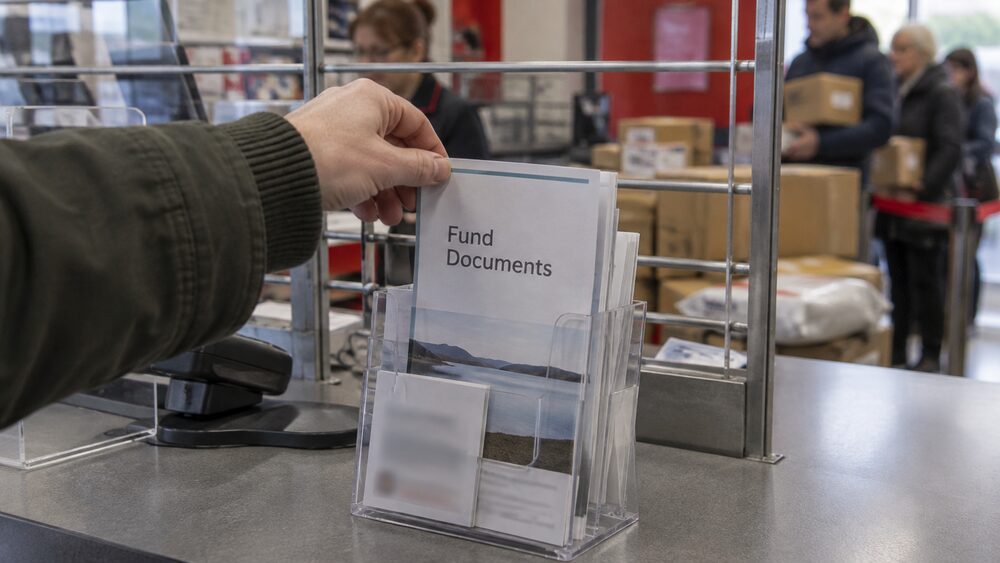
The reliable place to check what a class offers is the fund's own documents: the fund factsheet and prospectus set out each class, its currency, its income treatment and its charges, and the guide to fund documents explains what each document contains. Your platform's holding screen will show the class name, usually with the Acc, Inc or hedged label in it1. The Investment Association's guide for investors notes that there are many types of fund, and its guidance on choosing an investment company explains how sectors and objectives are used to classify investments11.
Fund documentation is also regulated. Rules on disclosure require a product summary for a fund investing in funds managed by the same person to disclose any actual or potential benefits to that person arising from the investment in the investee funds37. And if a fund is winding up, the rules exclude units in an authorised fund that is in the process of winding up or termination from certain activities, which is one reason a fund closure can change what you are able to do with your holding38. The guide to fund changes, mergers and closures covers what happens then.
For free, impartial help with the underlying decisions, MoneyHelper, the Money and Pensions Service's website, is the government-backed starting point; its Debt Advice Locator tool is one example of the help it signposts39. A financial adviser can tell you whether a class conversion or a transfer is right for your circumstances, and the guide to how much a financial adviser costs explains the charging models. If something goes wrong with a platform transfer, the guide to what happens when a stocks and shares Isa transfer goes wrong and the consumer protection pages explain the complaints route through the Financial Ombudsman Service.
Sources39 cited
- Investment funds explained Which?, 2026-07-23
- Risk vs rewards The Association of Investment Companies, 2026
- What are fund share/unit classes? Artemis Fund Managers, 2026-09-26
- What is currency hedging? Artemis Fund Managers, 2026-09-26
- COBS 6.1H Platform switching Financial Conduct Authority, 2019-12-12
- What happens when a stocks and shares Isa transfer goes wrong Which?, 2024-08-31
- Ethical investing explained Which?, 2026-08-11
- What are the different types of funds? Artemis Fund Managers, 2026-09-26
- Investment trusts explained Which?, 2025-05-14
- What is an investment trust? HSBC, 2026
- New to investing The Association of Investment Companies, 2026
- The investments you can hold in a stocks and shares Isa Which?, 2025-03-28
- Investment trusts explained Which?, 2025-05-14
- Costs of investment companies The Association of Investment Companies, 2026
- What are investment companies The Association of Investment Companies, 2026
- Why choose investment companies The Association of Investment Companies, 2026
- Income v accumulation classes Artemis Fund Managers, 2026-09-26
- Income vs growth Bank of Scotland, 2026-09-27
- Ask an expert: how will I be taxed on my cash bonds? Which?, 2018-01-15
- Capital Gains Tax: share reorganisation, takeover or merger HM Revenue and Customs, 2014-11-06
- Share Incentive Plans: a guide for employees HM Revenue and Customs, 2025-10-20
- How investment platforms work Which?, 2026-03-16
- Annual Savings Statistics 2025: background and methodology HM Revenue and Customs, 2025-09-18
- The Individual Savings Account (Amendment) Regulations 2026: draft legislation HM Revenue and Customs, 2026-07-16
- The Individual Savings Account (Amendment) Regulations 2026 legislation.gov.uk, 2026-09-10
- The Individual Savings Account (Amendment) Regulations 2016 legislation.gov.uk, 2016-04-06
- Tax when you come to the UK HM Revenue and Customs, 2026-09-26
- Shares and Capital Gains Tax (HS284) HM Revenue and Customs, 2014-07-04
- Capital gains tax on shares Which?, 2026-04-06
- Report and pay your Capital Gains Tax HM Revenue and Customs, 2026-09-26
- Tax on property, money and shares you inherit HM Revenue and Customs, 2026-09-26
- Capital Gains Tax: transfer of assets between spouses and civil partners in the process of separating HM Revenue and Customs, 2023-03-15
- OTS Capital Gains Tax review: simplifying practical, technical and administrative issues HM Revenue and Customs, 2021-05-20
- Capital Gains Tax: share or securities exchange HM Revenue and Customs, 2023-03-15
- Income Tax HM Revenue and Customs, 2026-09-26
- Choosing an investment company The Association of Investment Companies, 2026
- DISC 6 Financial Conduct Authority, 2026-04-06
- PRIN 2A.3.28 Financial Conduct Authority, 2023
- Powering up support University of Bristol Personal Finance Research Centre, 2025-10





 MoneyHelperFree, impartial money and pensions guidance, set up by government
 FSCSProtects your money if a bank, insurer or investment firm fails
 FCA Warning ListCheck whether a firm is authorised before you deal with it
 Financial Ombudsman ServiceFree, independent help when a complaint about a firm is not put right
 Citizens AdviceFree advice on money, consumer and legal problems in England and Wales