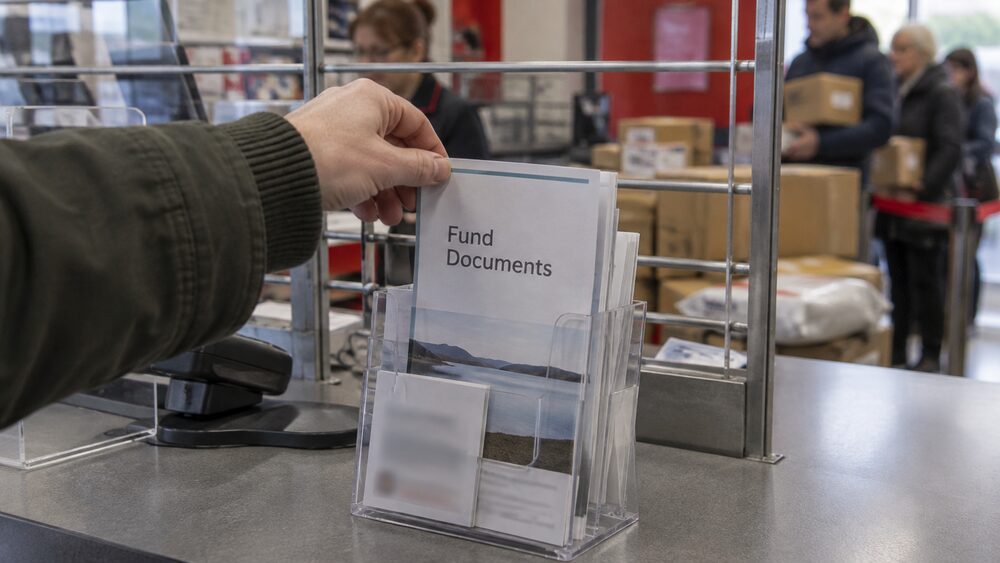
Every fund sold to UK retail investors comes with a set of documents, and the shortest of them, the key investor information document, is the one you are meant to read first. It is a two-page overview of a fund's main features, including its objectives, risks, charges and past performance, and it is designed to be read and understood by an investor before buying the fund1. Depending on the type of fund, this summary is called either a KIID or a KID, and the two are not quite the same document.
The difference matters when you compare funds. A KIID for an open-ended fund shows past performance, while a KID for an investment trust shows future performance scenarios calculated under a standard methodology, alongside the product's management fees and risk profile2. The charges figures also differ: KID charges include transaction costs, gearing costs and performance fees, which are not included in the ongoing charge figure that open-ended funds usually quote3. This page explains what each document shows, how to read its risk and cost figures, and where to find the fuller documents behind them.
What a key investor information document tells you
A fund is a collection of lots of different people's money, managed by a professional fund manager who invests it across a range of assets such as shares, property or other investments depending on the fund4. Because most people cannot inspect every holding themselves, the rules require a standard short summary so that every fund can be compared on the same layout.
That summary is the key investor information document. For open-ended funds it is called the KIID, and it runs to two pages covering the fund's main features: its objectives, its risks, its charges and its past performance1. The point of the fixed format is comparability. Every KIID answers the same questions in the same order, so you can put two funds side by side and see, on the same pages, what each one tries to do, how risky it is, what it costs and how it has performed.
The KIID is not optional reading in the way a marketing brochure is. It is described as a document which must be read and understood by an investor before buying a fund1. In practice, a platform or adviser will present it during the purchase process, and it is the fastest way to check three things before committing money: whether the fund's objective matches what you want, whether its risk level matches what you can tolerate, and what it will cost you each year.
What the KIID does not give you is detail. It will not list the fund's holdings, explain its full terms, or show how its performance fee works in practice. Those live in the factsheet and the prospectus, covered later on this page. The KIID is the entry point: enough to decide whether a fund is worth a closer look, and enough to compare a shortlist quickly.
KID or KIID: two names for the fund summary
The two names exist because two sets of rules apply to two kinds of fund. UCITS products, which cover most open-ended funds such as unit trusts and OEICs, were required to come with a "key investor information document", the KIID2. Separately, under the PRIIPs regime, providers must publish product information in a "key information document", the KID, for investors, which includes things like the product's management fees, risk profile and future performance scenarios calculated under a standard methodology2.
Investment trusts have been required to produce Key Information Documents since 1 January 20183. Open-ended funds, by contrast, have been told they do not have to produce KIDs yet, and in the meantime they continue to produce the Key Investor Information Document instead7. So if you buy a unit trust or OEIC you get a KIID, and if you buy an investment trust you get a KID.
The same idea, two documents: what each summary covers.
The practical difference is in what each document shows about performance and cost. The KIID included information about the product's past performance, rather than future performance scenarios2. The KID flips this around: it shows forward-looking scenarios worked out under a standard methodology, so every investment trust's scenarios are built the same way, but they are illustrations, not forecasts2. On costs, the KID's figures are broader: KID charges include transaction costs, gearing costs and performance fees where paid, which are not included in the ongoing charge figure that a KIID typically highlights3.
This means a direct comparison of the charge figures between a KIID and a KID is not like for like. A KID can look more expensive than a KIID for similar funds simply because it counts more costs. When comparing an investment trust with an open-ended fund, read the notes under each charges table to see what is included before concluding that one is cheaper.
Charges shown in fund documents: ongoing charge, initial fee and performance fee
Fund charges come at you from several directions, and each document shows a different slice of them. The headline figures most people meet first are the initial fee and the ongoing charge. Funds often levy an initial fee when you invest, of up to 5.5%, and an ongoing charge, typically around 1% of the fund's value each year1. On many platforms the initial fee is reduced or not charged at all, but the fund's own documents state it, so it is worth checking what applies to the share class you are buying.
The ongoing charge covers the cost of managing and administering the fund, but the fuller picture is wider. The rules on costs and charges information require several separate figures: a one-off entry costs figure, a one-off exit costs figure, an ongoing costs figure, a transaction costs figure, and any performance fees and carried interests8. So the ongoing charge you see on a factsheet is one component of a larger set, and the entry and exit costs of dealing in the fund's underlying investments are counted separately.
Where a fund invests in other funds, the costs cascade. The ongoing costs must include, where a fund invests its assets in one or more other funds, any costs and charges for each of the investee funds which the fund will incur itself as an investor in those funds9. In other words, a fund of funds has to show the costs it bears as a customer of the underlying funds, not just its own management charge. Certain costs are excluded from the ongoing costs figure, including costs incurred in the maintenance and commercial operation of real assets such as infrastructure, transport and real estate, and debt servicing or gearing costs8.
| Charge | What it is | Where you see it |
|---|---|---|
| Initial fee | A one-off charge when you invest, up to 5.5%1 | KIID, factsheet, platform |
| Ongoing charge | The annual cost of running the fund, typically around 1%1 | KIID, factsheet |
| Transaction costs | The costs of dealing in the fund's underlying investments8 | Costs and charges information, KID |
| Performance fee | An extra charge when the fund beats a benchmark10 | KID, product summary, prospectus |
Performance fees deserve particular attention because they are charged on top of everything else and their terms vary widely between funds. The rules require the manufacturer of a consumer composite investment subject to performance fees or carried interests to provide a concise explanation in plain English of how they operate, a summary of the applicable terms and conditions identifying any benchmark, and at least one example illustrating how much the fee could amount to on a hypothetical investment of £10,00010. Where the performance fee sits in an underlying fund rather than the one you buy directly, the product summary satisfies the requirement by including a general explanation of the performance fees applicable to those investee funds8.
The £10,000 worked example is the most useful part of this disclosure, because it converts a percentage into pounds. A performance fee of a few percent sounds small until you see it applied to a £10,000 holding in the fund's own illustration. If a fund you are considering charges a performance fee, look for that example in its documents before assuming the ongoing charge is the whole annual cost.
For investment trusts, the cost picture is different again. The costs of running the investment trust, such as fund manager fees and accounting costs, are reflected in the performance figures, whereas external costs such as stamp duty and dealing fees are not included3. This means an investment trust's published returns are already net of its internal running costs, which is one reason its figures cannot be compared directly with an open-ended fund's gross return before its ongoing charge.
Guidance on suitability reporting also lists the kinds of ongoing charges an investor can face across a product: ongoing product charges including those in relation to investments within the product, discretionary fund management charges and platform charges, with additional charges including initial product charges and charges associated with accessing existing funds or moving funds to a different scheme11. The platform's own charges sit on top of the fund's charges, and they appear on the platform's documents rather than the fund's. The pages on fund charges and the ongoing charges figure and investment platform fees and charges cover these layers in more detail.
Risk warnings and what they mean for your money
Every fund summary carries a risk indicator, and the warnings around it are there because fund values genuinely fall as well as rise. The risk indicator in a KIID or KID summarises how much the fund's value has moved up and down in the past, translated into a summary risk level. It is a starting point, not a guarantee: a fund's risk can change, and the indicator is based on history rather than on what happens next.
Some warnings are prescribed by the rules for particular situations. For drawdown pensions, the rules require a warning that the value of the drawdown fund is at risk of being eroded by inflation12. This is a reminder that even a fund that holds its nominal value can lose spending power over a long retirement, which is a risk that does not show up in a price chart.
Other warnings exist because a product's terms create a specific risk of getting back less than expected. For endowment policies, firms must send a high risk warning letter when there is a high risk the policy will pay out less than expected when it matures, and these letters must also show a calculation of the expected amounts, illustrating a shortfall against the target amount at all growth rates used13. The same principle of showing a worked shortfall, rather than a vague caution, runs through good fund disclosure: a warning with numbers in it is more useful than one without.
For funds generally, the guidance is blunt about timescale. Investors are told to plan to invest for five, ten, or even twenty years, especially if the investment is very high risk5. Risk and reward move together: the funds with the highest potential returns are the ones whose values can fall furthest on the way. The pages on investment risk and your attitude to risk and diversification and asset allocation explain how to think about this before choosing a fund.
Factsheets: prices, holdings and past performance
The factsheet is the fund manager's regular update, usually monthly or quarterly, and it shows things the KIID does not. Where the KIID gives a fixed two-page summary, the factsheet gives current detail: the fund's price, its top holdings, its sector weightings and its performance over recent periods. It is the document to read when you want to know what the fund actually owns right now, not what it says it does in general.
One thing factsheets make obvious is how fund pricing works. Unlike share prices, which change in seconds, most fund prices are set just once a day by the fund manager, usually at noon each working day1. The manager values everything the fund holds, divides by the number of units, and publishes a single price for the day. You can only buy or sell at that daily valuation point1, so an order placed in the afternoon is typically executed at the next working day's price. The page on how funds are priced and when your deal goes through explains this process in full.
Performance figures in factsheets come with their own conventions. Figures for investment trusts are almost always given on a "total return" basis, which means any dividends received are considered to have been reinvested7. This makes figures comparable between funds but means the number does not represent cash you could have drawn out: it assumes dividends stayed invested. The same total return convention is used for open-ended funds' cumulative performance tables.
Past performance in a factsheet is history, not a forecast. The KIID's past performance table and the factsheet's performance charts both show what has already happened1. They are useful for seeing how a fund behaved in falling markets as well as rising ones, which is often more informative than its best year. But the standard warning applies: performance that has been strong in the past does not tell you what you will get back, and the KID's forward-looking scenarios are illustrations worked out under a standard methodology, not predictions2.
The prospectus and annual report: the fuller rules of a fund
Behind the KIID and the factsheet sit the fund's legal documents: the prospectus, which sets out the full terms on which the fund operates, and the annual report, which shows the full accounts and the complete list of holdings at the year end. These are the documents that answer the questions a two-page summary cannot.
The prospectus is where the fund's rules live. It sets out the fund's investment objectives and policy in full, its borrowing powers, how and when it can be wound up, and the complete schedule of charges and how each is calculated. If a question about what a fund may or may not do matters to you, the answer is in the prospectus or it is nowhere.
The annual report complements it. It shows the fund's full accounts, the manager's review of the year, and the complete portfolio rather than the top ten holdings a factsheet shows. Between them, the prospectus and annual report are the documents to turn to when a summary has raised a question rather than answered it.
The disclosure rules recognise that some information only makes sense in the fuller documents. For example, where a fund invests in funds managed by the same person, the product summary must disclose any actual or potential benefits to that person arising from the investment in the investee funds8. This is a conflict-of-interest disclosure: it tells you when the manager of the fund you are buying also manages the funds it invests in, and may benefit from that arrangement. A two-page summary can state that this is the case, but the terms behind it are in the prospectus.
Details to check in the longer documents
Some details of a fund cannot be checked anywhere but the prospectus and the annual report. When reading a fund's documents, these are the ones worth going to the longer documents for.
- Performance fee terms. The full benchmark, the calculation method and the cap, if any, on the fee. The product summary must give a plain English explanation, the benchmark and a £10,000 example10, but the complete terms are in the prospectus.
- Borrowing and gearing. Whether the fund may borrow, how much, and in what circumstances. Gearing costs are counted in a KID's charges3 but the borrowing powers themselves are set out in the prospectus.
- Conflicts of interest. Where a fund invests in funds managed by the same manager, the benefits that arise from that arrangement must be disclosed8, with the underlying terms in the prospectus.
- The full holdings list. The factsheet shows the top ten; the annual report shows everything the fund held at the year end.
- Dealing and valuation rules. The exact daily valuation point, and any powers to suspend dealing, which the page on fund suspensions covers.
For pension products, the rules go further on charges disclosure. Where a client does not subsequently withdraw funds in full, the firm must provide the client with an "effect of charges" table and "reduction in yield" information14. These show, in pounds, what charges are projected to take out of a pension pot over time, which is the same spirit as the £10,000 performance fee example: turning percentages into money.
Where to find a fund's documents before you invest
Fund documents are free and, in most cases, easy to find. The rules require the key information to be published for investors6, and every fund manager publishes its KIIDs, KIDs, factsheets, prospectuses and annual reports on its website, usually under a documents or literature section for each fund. A platform will also link to the KIID or KID at the point of purchase, because it is meant to be read before buying1.
The order to read a fund's documents, from the two-page summary to the full terms.
A practical order for reading them:
- The KIID or KID first. Two pages covering the objective, the risk level and the charges1. Enough to decide whether the fund belongs on your shortlist.
- The factsheet next. Current price, top holdings and recent performance1, to check the fund is doing what its summary says.
- The platform's charges. The platform's own percentage or fixed yearly fee, which sits on top of the fund's charges11, on the platform's website.
- The prospectus and annual report last, for the details. Performance fee terms, borrowing powers, conflicts of interest and the full holdings list10.
Providers of index funds point investors to the same starting document: Vanguard, for example, directs investors to the Key Investor Information Document for full details of its tracker funds16. Whatever the fund, the KIID or KID is the document to begin with, and the prospectus is the one to finish with.
If you are new to funds altogether, the pages on investment funds, investment trusts and ETFs explain how each type works, and how investment platforms work explains the layer between you and the fund manager. Funds can be held inside an ISA or pension or in a general account, and the page on where to hold investments sets out the differences.
Sources16 cited
- Fund FAQs Hargreaves Lansdown, 2026
- How are investments regulated in the UK? House of Commons Library, 2025
- Investment company performance figures and what they mean The Association of Investment Companies, 2026
- New to investing The Association of Investment Companies, 2026
- Risk vs rewards The Association of Investment Companies, 2026
- PRIIPs, KIDs, UCITS: how are investments regulated in the UK? House of Commons Library, 2026
- Your guide to investment companies: choosing an investment company The Association of Investment Companies, 2026
- DISC 6 Financial Conduct Authority, 2026
- DISC 6.4 Financial Conduct Authority, 2026
- DISC 6.3 Financial Conduct Authority, 2026
- COBS 9.4 Suitability reports Financial Conduct Authority, 2020
- COBS 19.20 Financial Conduct Authority, 2026
- Time limits: mortgage endowments Financial Ombudsman Service, 2026
- COBS 13.8 Financial Conduct Authority, 2025
- Are fund charges eating into your returns? Which?, 2026-04-06
- Index tracker funds Vanguard Investor, 2026






 MoneyHelperFree, impartial money and pensions guidance, set up by government
 FSCSProtects your money if a bank, insurer or investment firm fails
 FCA Warning ListCheck whether a firm is authorised before you deal with it
 Financial Ombudsman ServiceFree, independent help when a complaint about a firm is not put right
 Citizens AdviceFree advice on money, consumer and legal problems in England and Wales