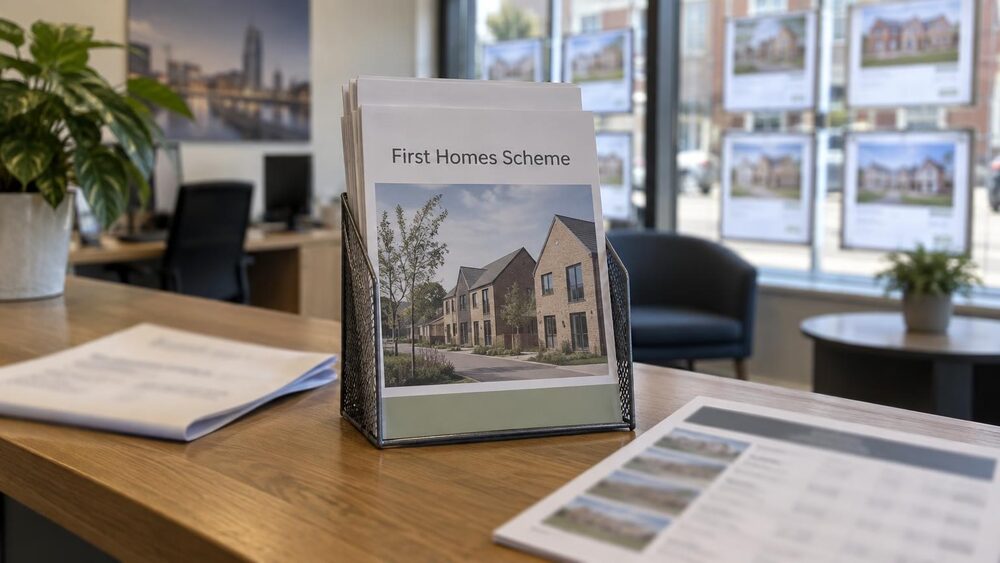
The First Homes scheme lets first-time buyers in England buy a new-build home at a discount of at least 30% against its market value. The discount is applied to the price before you buy, so you pay less from the start rather than paying it back later. It is not a loan and there is no rent to pay, unlike shared ownership1.
The First Homes scheme lets first-time buyers in England buy a new-build home at a discount of at least 30% against its market value. The discount is applied to the price before you buy, so you pay less from the start rather than paying it back later. It is not a loan and there is no rent to pay, unlike shared ownership1.
The scheme is delivered through the planning system. Developers offer these homes to first-time buyers with at least 30% of the market value taken off the price, and local areas can require a larger minimum discount of 40% or 50%3. Once fully operational, the scheme is expected to deliver at least 10,000 First Homes every year3.
The discount stays with the property when it is sold, so it helps future first-time buyers too. That means when you come to sell, you must pass on the same percentage discount you received, based on the home's market value at the time of sale2.
First Homes: a discount of at least 30% on a new-build home
The First Homes scheme is a discounted purchase scheme for first-time buyers in England. Developers offer new-build homes with at least 30% of the market value taken off the price2. The discount is a minimum: local authorities and neighbourhood planning groups can require a larger discount of 40% or 50% in their area3.
The scheme is not a loan and not a shared ownership product. You buy the home outright with a mortgage, and you own it. There is no rent to pay, unlike shared ownership2. The discount is built into the purchase price from the start.
The scheme is delivered through the planning system, through section 106 planning obligations and a First Homes exception sites policy3. That means developers provide the homes as a condition of planning permission, rather than the government buying and selling them directly.
First Homes are for first-time buyers only, and councils can prioritise local people and key workers5. The scheme is designed to help local first-time buyers and key workers across England to own their own home6.
The discount applies in perpetuity, meaning it will be passed on to the next buyer each time the home is sold3. This is different from some other schemes where the discount or equity share is repaid on sale.
Who can buy a First Home: income caps and local criteria
To buy a First Home, you must be a first-time buyer. You must have a household income not exceeding £80,000, or £90,000 in London3. You must use a mortgage or home purchase plan, if required to comply with Islamic law, to fund at least 50% of the discounted purchase price3. The home must be your sole or primary residence3.
Local areas have discretion to apply their own eligibility criteria. This may involve lower income caps, a local connection test, or criteria based on employment status3. That means the rules can differ from one council area to another, and a home that is available to you in one part of the country may not be available in another.
Local authorities can set their own criteria on who gets priority during the first three months a property is on sale7. Councils can prioritise local people and key workers during that period5. After the first three months, if the home has not sold, it becomes available to other eligible first-time buyers.
First Homes are for first-time buyers only, and councils will be able to prioritise them for local people and for key workers5. The scheme is designed to help local first-time buyers and key workers across England to own their own home6.
If you are buying in Scotland, Wales or Northern Ireland, different rules apply. The First Homes scheme operates in England only.
Price caps: £250,000, or £420,000 in London
New-build First Homes cannot cost more than £250,000, or more than £420,000 if the property is in London, after the discount has been applied2. The first sale must be at a price no higher than £250,000, or £420,000 in London, after the discount is applied3.
These caps apply to the price you pay after the discount, not the market value before the discount. So a home with a market value of £400,000 outside London would not qualify, because the discounted price would still be above £250,000 unless the discount brought it below the cap.
Some sources give different figures for the London cap. Independent guidance states that new-build properties valued at up to £250,000, or £450,000 in London, are eligible8. Another source states that buyers must be buying a home for £420,000 or less in London7. The official government guidance states £420,000 in London after the discount3.
For context, the average first-time buyer property in London costs around £469,00010. That is above the London price cap for First Homes, which means the scheme will not cover the average London first-time buyer purchase.
How to find and apply for a First Home
You can look for new homes in your area that are advertised by developers or estate agents through the First Homes scheme2. Enquiries about, and applications for, a First Home should be directed to the relevant site developer3.
The process is:
- Find a First Home advertised by a developer or estate agent in your area2.
- Check that you meet the eligibility criteria, including income caps and any local criteria set by the council3.
- Contact the developer to enquire about the home and apply3.
- Arrange a mortgage or home purchase plan to fund at least 50% of the discounted purchase price3.
- Get the property valued by a surveyor registered with the Royal Institution of Chartered Surveyors (RICS)2.
Every home that is sold is valued by an independent surveyor to make sure the discount is based on actual market value2. This protects both you and the scheme, because the discount is calculated on a verified market value rather than an asking price.
If you are buying in Scotland, the First Homes Fund works differently. You can read the First Homes Fund: guidance for buyers publication, which gives eligibility information and step-by-step instructions on how to apply11. The Scottish scheme is a shared equity scheme, not a discounted purchase scheme.
Selling or letting later: the discount stays with the home
The discount applies in perpetuity, meaning it will be passed on to the next buyer each time the home is sold3. The discount stays with the property when it is sold, helping future first-time buyers benefit too4.
You can usually only sell the property to someone who is eligible to buy a First Home2. You must give them the same percentage discount that you got, based on the home's market value at the time of sale2.
For example, if you bought with a 30% discount and the RICS valuation at the time of sale is £200,000, the discount is £60,000 and you can sell for up to £140,0002.
If you cannot find an eligible buyer, you can ask your local council for permission to sell your property at the full market price to any buyer if either you have tried unsuccessfully to sell your property as a First Home for 6 months or more, or selling it as a First Home will cause you severe difficulties, such as bankruptcy2.
If you sell on the open market, you must return to the council the same percentage discount you received, calculated on the sale price. For example, if you bought for £175,000 after a 30% discount and sold on the open market for £300,000, you must return 30% of the money you sold the home for, which is £90,0002.
Is the First Homes scheme available in Scotland, Wales or Northern Ireland?
No. The First Homes scheme operates in England only. Scotland, Wales and Northern Ireland have their own separate schemes.
In Scotland, the First Homes Fund is a shared equity scheme. It is open to all first-time buyers in Scotland12. You must be buying the property as your main and only home in Scotland13. You must have a mortgage that covers at least 25% of the purchase price of your property12. The Scottish Government does not allow you to rent or sublet a home purchased through the First Homes Fund14. The First Home Fund was a £200 million pilot shared equity scheme to help first-time buyers buy their first home15.
In Wales, Help to Buy - Wales is a shared equity loan scheme for new-build homes. In Northern Ireland, low-cost home ownership schemes are available16.
If you are buying outside England, check the scheme that applies where you live. The rules, eligibility criteria and price caps differ between the four nations.
Do I need a mortgage to buy a First Home?
Yes. Purchasers must use a mortgage or home purchase plan, if required to comply with Islamic law, to fund at least 50% of the discounted purchase price3. Buying with cash does not qualify.
First Homes must be used as a person's sole or primary residence, and buyers must use a mortgage or home purchase plan (if required to comply with Islamic law) to fund at least 50% of the discounted purchase price1. In Scotland, the First Homes Fund requires a mortgage on the property to protect the Scottish Government's share17. Whether a particular lender will lend to you depends on its own criteria and your circumstances.
The mortgage requirement is different from the Scottish First Homes Fund, where you must have a mortgage that covers at least 25% of the purchase price12. In Scotland, you will need to have a mortgage on the property to make sure the Scottish Government's share is protected17.
If you are buying with someone else, both applicants normally need to be first-time buyers. In Scotland, for joint applications to the First Home Fund, only one applicant needs to be a first-time buyer, provided neither applicant still owns a property by the date of completion of the property being purchased through the fund18.
Do I pay rent on a First Home like shared ownership?
No. Unlike shared ownership, there is no rent to pay on a First Home2. You buy the home outright at a discount, with a mortgage, and you own it.
This is a key difference from shared ownership, where you buy a share of the home and pay rent on the rest. For comparison, in a shared ownership example with a home valued at £400,000 and a 40% stake, rent at 2.75% would be £6,600 in the first year, or £550 a month19. First Homes do not work this way.
The discount on a First Home is built into the purchase price. You do not pay it back as rent, and you do not pay it back when you sell unless you sell on the open market outside the scheme.
If you are buying through the Scottish First Homes Fund, the Scottish Government does not allow you to rent or sublet a home purchased through the scheme14. The same principle applies in England: First Homes must be used as a person's sole or primary residence3.
How is the market value of a First Home worked out?
Every home that is sold is valued by an independent surveyor to make sure the discount is based on actual market value2. This valuation happens at the point of sale, so the discount is calculated on a verified figure rather than an asking price.
When you come to sell, you will need to get the property valued by a surveyor who is registered with the Royal Institution of Chartered Surveyors (RICS)2. The valuation determines the market value at the time of sale, and the discount you pass on to the next buyer is calculated as a percentage of that figure.
For example, if the RICS valuation is £200,000 and your original discount was 30%, the discount is £60,000 and you can sell for up to £140,0002.
The valuation requirement protects the scheme's purpose. It ensures that the discount is always based on actual market value, not on a price that has been inflated or deflated to suit either party.
What happens if I cannot find an eligible buyer when I sell?
You can usually only sell the property to someone who is eligible to buy a First Home2. If you cannot find an eligible buyer, you can ask your local council for permission to sell at the full market price to any buyer if either you have tried unsuccessfully to sell your property as a First Home for 6 months or more, or selling it as a First Home will cause you severe difficulties, such as bankruptcy2.
If the council grants permission, you must return to the council the same percentage discount you received, calculated on the sale price. For example, if you bought for £175,000 after a 30% discount and sold on the open market for £300,000, you must return 30% of the money you sold the home for, which is £90,0002.
The six-month period runs from when you first put the home on the market as a First Home. You would need to show that you have tried to sell it on those terms before asking for permission to sell on the open market.
A First Home must normally be marketed to eligible buyers for at least six months before open-market sale is considered.
Can local key workers get priority for First Homes?
Yes. First Homes are for first-time buyers only, and councils will be able to prioritise them for local people and for key workers5. Local authorities can set their own criteria on who gets priority during the first three months a property is on sale7.
That means if you are a key worker or have a local connection, you may have priority over other eligible buyers during the first three months. After that period, the home becomes available to other eligible first-time buyers.
The scheme is designed to help local first-time buyers and key workers across England to own their own home6. Local areas have discretion to apply their own eligibility criteria, which may involve lower income caps, a local connection test, or criteria based on employment status3.
If you are interested in a First Home, check with the local council whether it has set its own criteria and whether key workers get priority in that area.
Where to get help
If you are struggling to find a First Home or have questions about eligibility, your local council's housing team can explain the criteria that apply in your area. The government's First Homes guidance sets out the national rules2.
If you are buying in Scotland, the First Homes Fund guidance for buyers explains the Scottish scheme11. If you are buying in Wales or Northern Ireland, different schemes apply.
For free, impartial help with buying a home, MoneyHelper offers guidance on mortgages, deposits and the buying process. If you are in debt or worried about affording a mortgage, debt advice charities can help you work out what you can afford before you commit.
Sources19 cited
- First Homes scheme: selling the property GOV.UK, 2026-09-28
- First Homes scheme House of Commons Library, 2026-07-08
- First Homes scheme: how the scheme works GOV.UK, 2026-09-28
- Qualitative evaluation of the Scottish Government First Home Fund Scottish Government, 2021-02-24
- Shared ownership Which?, 2026-03-26
- The Right to Shared Ownership: a guide for tenants GOV.UK, 2025-09
- First Homes Fund: before you apply mygov.scot, 2026-08-31
- 7 first-time buyer schemes that are available now Which?, 2026-03-26
- Evaluation of the Help to Buy scheme GOV.UK, 2026-09-16
- Warm Home Discount eligibility Ofgem, 2026
- First Homes Fund: after you buy mygov.scot, 2026-08-31
- Low cost home ownership schemes nidirect, 2026-02-18
- How much deposit do you need for a mortgage? Which?, 2026-04-02
- Review of Land and Buildings Transaction Tax Scottish Government, 2026-03-25
- Help to buy a home mygov.scot, 2026-06-24
- First Homes mortgages Skipton Building Society, 2026-09-26
- LBTT first-time buyer relief worked examples Revenue Scotland, 2025-11-19
- First Homes Fund Scottish Government, 2026-09-26
- First Homes House of Commons Library, 2026-07-08




 MoneyHelperFree, impartial money and pensions guidance, set up by government
 Citizens AdviceFree advice on money, consumer and legal problems in England and Wales
 ShelterFree housing advice from a charity
 GOV.UKOfficial information on tax, benefits and government services
 Financial Ombudsman ServiceFree, independent help when a complaint about a firm is not put right