
Turning 18 changes what you are allowed to do with money in the UK. From your 18th birthday you can apply for a credit card or store card, take out a loan, have an overdraft, and apply for a mortgage1. You can also be made to pay council tax, as only people over 18 can be made to pay the bill2. It is also the age at which a Child Trust Fund, the tax-free savings account the government opened for children born between 1 September 2002 and 2 January 2011, matures and the money becomes yours to withdraw3.
Most of these applications involve a credit check, and from 18 onwards what you borrow and how you repay it starts to build a credit record that lenders will look at for years4. This page sets out what you can apply for at 18, what checks and charges come with each product, what happens to a Child Trust Fund or Junior ISA, and where to get free help if something goes wrong.
What you can apply for at 18: accounts, cards and contracts
At 18 the full adult range of financial products opens up. You must be 18 before you can apply for a credit card or store card, apply for a loan, have an overdraft, or apply for a mortgage1. Credit cards are explicitly an adult product: guidance for Northern Ireland consumers is aimed at people who are 18 or older, the age at which credit card debt first becomes possible7. Council tax liability also starts at 18, when a person can first be made to pay the bill2.
Beyond borrowing, 18 is when other money matters change. Once you are 18 you can usually claim universal credit to help with rent and living costs8. If money has been held for you by the court, perhaps from a compensation payment or inheritance, you can apply to the Court Fund Office to have it paid to you once you turn 18; before your 18th birthday, a litigation friend can apply to the court on your behalf9.
Not everything waits until 18. From age 16 you can open a bank account without asking your parents, and from age 11 you can have a bank account in your own name with your parents' permission1. Prepaid or top-up cards are also available earlier: parents or guardians can add money to them for people under 18 to use1. So the change at 18 is less about banking and more about borrowing, contracts and taking full control of long-term savings.
Opening a current account: eligibility, ID and proof of income
For a standard adult current account, you typically need to be aged 18 or over and a UK resident5. High street banks set a minimum age of 16 or 18 for standard bank accounts, and you may have to be 18 or over to open some accounts10. You will usually need ID to prove your identity, such as a driving licence, passport, recent bills or official documents12. Most banks ask for a driving licence or passport, or a photo if you are applying online, often along with a selfie5.
You can usually apply online, using an app, over the phone or in person, depending on the account5. The bank will usually run a credit check to see your credit history, including whether you have had problems paying money back, and it can refuse an application based on credit history5.
If you do not meet the opening criteria, which might include a credit check, you will usually be offered a basic bank account12. A basic bank account needs you to be at least 16, or over 18 for some banks, and you do not have to pass a credit check to be offered one, though banks use the check to confirm your identity14. Two other options exist if a standard account is out of reach:
- Credit union current accounts: you usually will not have to pass a credit check, even if you apply for an overdraft, because credit unions normally use manual checks to decide whether to lend15.
- Safe bank accounts: designed for people who cannot open a standard account, for example after financial abuse; the bank will usually first check whether you are eligible for its current account16.
If you are opening an account to receive universal credit, the same eligibility and ID rules apply, and a basic bank account is the usual fallback12. More detail on choosing between account types is in the current accounts guide, and free guidance on the whole process is on the getting started page.
Current account charges: overdrafts at up to 40% APR and fees abroad
An overdraft lets you spend more than is in your account, up to a limit set by the bank, and it is one of the most expensive ways to borrow through a current account. You will normally pay daily interest, often up to 40% APR (annual percentage rate), until the overdraft is paid back5. Interest on all overdrafts is charged at a single annual interest rate (APR), which makes it easier to compare charges between accounts18. That single-rate approach followed a consultation which proposed charging for overdrafts using one interest rate expressed in APR, replacing the previous complex charging models19.
Other charges can apply to a current account. If you do not have enough money to cover a payment, you may be charged an unpaid transaction fee5. Using your debit card abroad brings two further costs: a foreign exchange fee, often around 3% of the transaction amount, and a spending or cash machine charge, typically between £1 and £3 each time you use your card, except for euros in the EU5.
If you are heading to university, student bank accounts are a distinct choice. When comparing them, consider the amount of interest-free overdraft you can have, the charges and interest on authorised and unauthorised overdrafts and loans, and how long you can keep using the account after graduation20.
If overdraft debt becomes unmanageable, free help is available from a debt charity, and the debt guide sets out the options. The Current Account Switch Service guarantees that if anything goes wrong during a switch, you will be refunded any interest and charges on your old and new accounts5.
Your Child Trust Fund matures at 18
A Child Trust Fund (CTF) is a tax-free savings account created by the government for children born between 1 September 2002 and 2 January 2011 who were living in the UK and not subject to immigration control3. Each eligible child received an initial government deposit of at least £250, and if a parent or guardian did not set one up, the government automatically opened one3. The money belongs to the child and can only be taken out when they turn 18, though they can take control of the account from age 163.
From age 16 a child can legally take over responsibility for their CTF and make decisions about the fund24. The law backs this up: under the Child Trust Funds Act 2004, a contract entered into by or on behalf of a child who is 16 or over in connection with a child trust fund has effect as if the child had been 18 or over when it was entered into25.
The scale of the scheme is large. Between September 2020 and April 2026, around 3,784,000 CTF accounts matured in total, of which around 2,958,000 were claimed or automatically transferred26. As of 5 April 2026 there were around 2.9 million open CTF accounts, of which around 827,000 were matured accounts continuing as CTF accounts26.
If you do nothing at 18, the money does not disappear. On your 18th birthday the trust fund matures and is transferred to an HMRC-protected account, which keeps the tax-free status of the cash but will not let you contribute, and no one else has access until you withdraw or transfer it23.
Cashing in or moving a Child Trust Fund to an ISA
Once a CTF has matured, only the account holder, the child as was, can instruct a transfer of the matured fund to an ISA, not the Registered Contact who managed it while they were young. The money can go to any ISA type with any other ISA manager, or to the CTF provider if it offers ISAs27. Before 18, the options are different: the money can be left with the current provider, transferred to a different CTF provider, or moved into a Junior ISA, with no moving back to a CTF later23.
Junior ISAs have their own maturity rule: they automatically turn into an adult ISA when the child turns 1828. For a Junior ISA itself, children aged 16 or 17 can open their own account, while under 16 only a parent or legal guardian can open one29.
In practice, the choice at 18 is between three things: withdrawing the cash, leaving it in the HMRC-protected account where it keeps its tax-free status but cannot be added to, or transferring it into an adult ISA where it can continue growing tax-free and accept new savings23. The ISAs guide explains the adult ISA types the money can move to, and the savings guide covers how savings accounts compare.
How to find a lost Child Trust Fund
Many people reaching 18 do not know they have a CTF, or do not know which provider holds it. If you were born between 1 September 2002 and 2 January 2011, you may have one30. You can check by using the government's free Child Trust Fund finder tool on gov.uk3. The process is straightforward:
- Fill in the online form on the government's "find a child trust fund" tool, which needs a Government Gateway account31.
- HMRC will send you details of the CTF provider by post within three weeks of receiving your request24.
- Contact the provider to access or transfer the money.
The amounts involved are substantial. Over £1 billion was reported as unclaimed in Child Trust Funds, with hundreds of thousands of accounts sitting untouched24. The Money and Pensions Service has encouraged anyone between the ages of 16 and 18 to visit MoneyHelper for information about their CTF32. Forgotten money can also surface elsewhere, and the same tracking approach applies to other lost accounts31.
Credit cards at 18: how interest and repayments work
A credit card lets you buy now and pay the money back later, and from 18 you can apply for one1. The way interest is charged catches many first-time cardholders out. If you do not pay off the full amount every month, you will be charged interest on the whole lot, not just the unpaid amount7. Pay the statement balance in full each month and, on a standard card, you normally pay no interest at all on purchases.
Two rules help you compare cards. All credit card companies have to quote an APR, and the interest rate of any credit card should be clearly displayed on any application form and promotional material7. The APR and AER guide explains what that figure does and does not tell you.
Whether a first card is a good idea depends on circumstance. A credit card can be a flexible short-term borrowing tool and can help build a credit history, but it can also lead to expensive debt if the balance is not cleared each month33. The credit cards guide covers the types of card and how they differ.
Credit card fees and charges
Credit cards come with a range of potential charges beyond interest. You may be charged a cash handling fee of around 2% of the amount you withdraw when you use the card to take out cash34. Fees and charges must be shown before you take the card, and the APR gives a single headline figure for comparison7.
One protection is worth knowing about from day one. Section 75 of the Consumer Credit Act 1974 covers credit card and buy now, pay later purchases, and it applies to a single item costing more than £100 and no more than £30,0006. The lender is jointly liable with the seller, which matters most when the shop has gone bust or refuses to help. Where a credit card is held jointly, claims are made by the main card holder contacting the card provider6.
Cash withdrawals on a credit card cost more than purchases
Using a credit card to withdraw cash is treated very differently from using it to buy something. Cash withdrawals attract a withdrawal fee as well as a higher APR, and they do not enjoy the interest-free period available for purchases; they are also recorded on your credit report33. You may additionally be charged a cash handling fee of around 2% of the amount you withdraw34.
The practical effect is that cash withdrawn on a credit card starts costing money from day one, even for a cardholder who always pays purchases off in full. Because cash withdrawals appear on a credit report, frequent ones can also look to lenders like someone struggling for money33. For cash abroad, a debit card carries its own costs, typically a spending or cash machine charge of between £1 and £3 each time you use it, except for euros in the EU5.
Building a credit history and getting help with complaints
Your credit record starts when you first borrow. If you are 18 or older and have ever taken out a credit agreement, whether that is a mortgage, overdraft or mobile phone contract, you will have a credit report4. Everyone over 18 has a credit score35. This means the first overdraft, card or phone contract you take at 18 is the start of a record lenders will consult for years, which is why keeping up repayments matters from the first month.
If something on your credit file is incorrect, you can ask the credit reference agency to add a Notice of Correction, which lets you provide an explanation for any errors or inaccurate information36. If that does not resolve a complaint about a credit reference agency, you have the right to take it to the Financial Ombudsman Service37. Complaints about credit repair companies from October 2008 onwards can also be taken to the ombudsman38.
For complaints about a bank, the route is fixed. Contact the bank's customer services first, then make a formal complaint: the bank has eight weeks to investigate and give a final response, or 15 days if the complaint is related to a payment5. If you still do not agree, or the deadline passes, take the complaint to the free Financial Ombudsman Service5. The ombudsman can also help parents, guardians and others bringing a complaint on behalf of someone who is under 1840.
Complaints are common, and a meaningful share succeeds. In the first quarter of 2025/26 the ombudsman received 7,800 new complaints about current accounts with a 28% uphold rate, and 6,600 about credit cards with a 25% uphold rate41. In the first quarter of 2026/27, complaints opened included 8,945 about current accounts, 5,783 about credit cards, 228 about credit records and 33 about credit broking42.
| Complaint type | New complaints, Q1 2026/27 |
|---|---|
| Current accounts | 8,94542 |
| Credit cards | 5,78342 |
| Business credit cards | 6242 |
| Credit records | 22842 |
| Credit broking | 3342 |
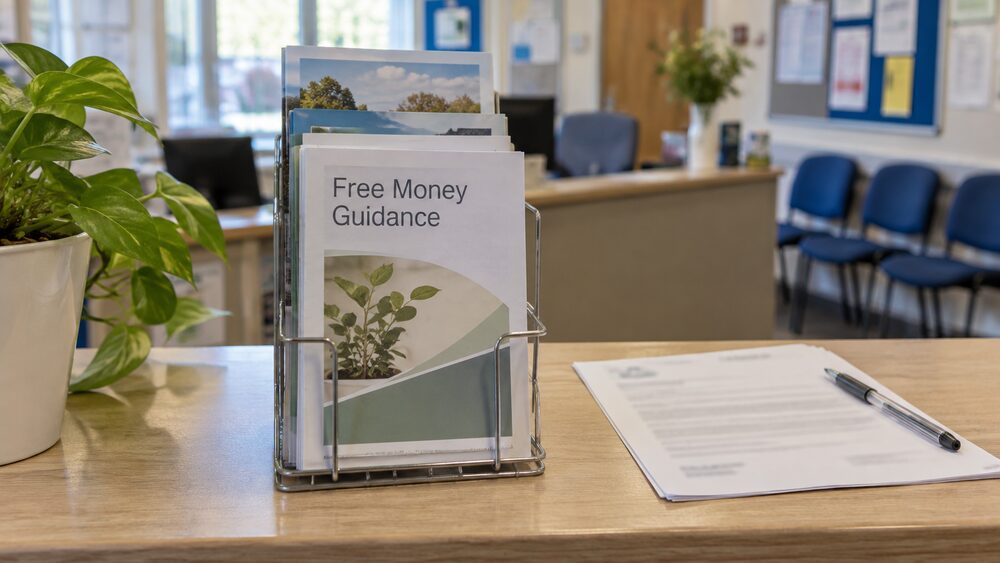
Free, impartial help is available at every step. MoneyHelper offers free guidance on banking and credit, and the free money guidance page lists where to find it. Debt charities provide free advice if borrowing has become a problem, and the debt guide sets out the solutions. If money is tight before you turn 18, a litigation friend can apply to the court for funds held for you9, and care leavers can usually claim universal credit once they are 188.
Sources42 cited
- Managing your own money Scope, 2025-08-18
- Your priority debts Business Debtline, 2026-09-26
- Child Trust Fund guide NS&I, 2026-09-18
- Credit reports: how they work and what's included Which?, 2025-10-24
- How to open, switch or close your bank account MoneyHelper, 2026-09-25
- Getting your money back if you paid by card or PayPal Citizens Advice, 2026-09-25
- Credit cards and debt nidirect, 2025-11-06
- Housing help and homelessness if you are a care leaver Shelter England, 2025-09-29
- Get court funds money when you turn 18 GOV.UK, 2026-09-27
- How to open a bank account online Which?, 2026-04-23
- Getting a bank account Citizens Advice, 2026-09-25
- Choosing a bank account for your Universal Credit payment MoneyHelper, 2026-09-25
- Overdraft debt StepChange, 2026-09-25
- Basic bank accounts MoneyHelper, 2026-09-25
- Credit union current accounts MoneyHelper, 2026-09-25
- Safe bank accounts National Debtline, 2026-09-25
- Current account MoneyHelper, 2026-09-25
- Overdrafts explained MoneyHelper, 2026-09-25
- Overdrafts and buy now pay later consultation StepChange, 2026-09-25
- Student money and debt National Debtline, 2026-09-25
- Annual savings statistics 2025: background and methodology GOV.UK, 2025-09-18
- Child Trust Fund Leeds Building Society, 2026-09-26
- Over 750,000 Child Trust Funds are unclaimed Which?, 2026-04-30
- Over £1bn unclaimed in Child Trust Funds Which?, 2024-10-02
- Child Trust Funds Act 2004, Section 3 legislation.gov.uk, 2026
- Commentary for annual savings statistics September 2026 GOV.UK, 2026-04
- CTF and JISA FAQs TISA, 2025-10-20
- Manage a Junior ISA GOV.UK, 2026-09-28
- Junior ISA NS&I, 2026-09-24
- Help for young people with experience of care mygov.scot, 2025-10-27
- How to track down forgotten money Which?, 2026-07-11
- Five simple ways to boost your savings Money and Pensions Service, 2025-09-22
- Should I get a credit card? Which?, 2026-09-18
- The costs and charges of credit cards Citizens Advice, 2026-09-25
- Credit scoring Consumer Council Northern Ireland, 2026
- Debt advice services Civil Service Association, 2026
- Credit reports and credit reference agencies Advice NI, 2026
- Credit reference agencies Business Debtline, 2026-09-26
- Joint accounts MoneyHelper, 2026-09-25
- Who we can help Financial Ombudsman Service, 2026-09-27
- Quarterly complaints data Q1 2025/26 Financial Ombudsman Service, 2025-08-07
- Quarterly complaints data Q1 2026/27 Financial Ombudsman Service, 2026



 MoneyHelperFree, impartial money and pensions guidance, set up by government
 Citizens AdviceFree advice on money, consumer and legal problems in England and Wales
 StepChangeFree debt advice and solutions from a charity
 Turn2usFree benefits calculator and grants search from a charity
 GOV.UKOfficial information on tax, benefits and government services