
A Child Benefit loan is a small loan from a credit union where the repayments are taken directly from your Child Benefit payments. Instead of remembering to transfer money each month, you have your Child Benefit paid into a credit union account, and the credit union takes the agreed repayment from it automatically. The loan described on the main product page of this kind lets you borrow £100 to £1,200, with up to £600 on a first loan and up to £1,200 on future loans, repaid over 3 to 18 months1.
The reason this arrangement exists is budgeting. Because Child Benefit is a regular payment, usually made every four weeks, a repayment taken from it is predictable for both sides: you know the money has arrived before the repayment is taken, and the credit union knows the repayment is funded. The product page for this loan describes repayments taken directly from Child Benefit as making it easier to budget1. Child Benefit itself is normally paid every four weeks, or weekly if you are a single parent or you or your partner get certain benefits2, and it is paid directly into your bank or building society account, or through the Payment Exception Service if you cannot open or manage one of those accounts3.
This page explains how these loans work, what they cost, who can get one, how to redirect your Child Benefit to a credit union, and what happens if the Child Benefit stops part way through the loan. For the benefit itself, see the benefits section; for credit unions generally, see the complete guide.
How a Child Benefit loan works
The mechanics are simple. You join a credit union that offers this type of loan, apply to borrow, and, if approved, arrange for HM Revenue and Customs (HMRC) to pay your Child Benefit into your credit union account rather than a bank account. Each time the Child Benefit arrives, the credit union takes the agreed loan repayment from it. What is left stays in the account for you to withdraw or transfer as you choose1.
The loan is a standard credit union loan in most respects: a fixed amount borrowed, a fixed term of 3 to 18 months, and interest charged on the reducing balance1. What marks it out is the repayment route. Because the money to repay arrives in the credit union's own hands, the credit union does not have to chase payments or rely on you making a transfer, and it can lend to people whose credit history might make a mainstream lender hesitate. Credit unions are set up to provide access to fair and affordable credit for people with a poor credit history and those who cannot access mainstream forms of credit4.
One point worth being clear about: the loan is not secured on your Child Benefit, and the benefit is not assigned to the credit union in a legal sense. You are simply choosing where the money lands. If you later changed your mind and had the Child Benefit paid elsewhere, the loan would not vanish; you would still owe the balance and would need to agree another way to repay. The redirection is the mechanism, not the security.
Loan amounts: typically £100 to £1,200
The product page for this loan sets the range at £100 to £1,200, with a first loan capped at £600 and the higher limit of up to £1,200 available on future loans once you have repaid the first1. The £600 first-loan cap is a common shape in credit union lending: the lender establishes a repayment record with a smaller amount before offering more.
These are deliberately small loans. For context, credit unions generally lend small loans of around £50 to £3,0005. A Child Benefit loan sits at the lower end of that range, sized against the benefit itself: Child Benefit is worth £27.05 a week for an eldest or only child and £17.90 a week for each additional child from 6 April 20266, so a repayment has to be affordable out of a payment of that order, usually arriving every four weeks2.
Whether you are offered the full £600, or anything at all, depends on affordability. The rate offered depends on the loan term and amount chosen, as well as your individual circumstances1, and the credit union will check that the repayment leaves you enough to live on. If £100 to £600 is more than you need, some credit unions also run smaller schemes for specific costs, such as school uniform loans, and Christmas loans for seasonal costs.
What it costs: APR, fees and a worked example
The rate you are offered on a Child Benefit loan depends on the term and amount, and your individual circumstances1. Interest is charged on the reducing balance, which means the interest you pay falls as the balance falls.
The product page gives this worked example:
| Item | Amount |
|---|---|
| Amount borrowed | £600.00 |
| Term | 9 months |
| APR | 42.58% |
| Total repayable | £693.541 |
So borrowing £600 over nine months at that rate costs £93.54 in interest in total, the difference between the £693.54 repaid and the £600 borrowed1. Other credit unions' versions of a Child Benefit repayment loan may be cheaper; the general guide to credit union loan costs explains how the interest is worked out and how to compare.
On this loan there are no setup charges and no early repayment fees1. That matters for the total cost: because interest is charged on the reducing balance, paying the loan off early reduces the interest you pay overall, and unlike many mainstream loans there is no penalty for doing so. Compare this with high-cost credit elsewhere: if you have a poor credit rating, a consolidation loan from some lenders may only be available at a high interest rate or secured against your home7. The interest rate cap page covers the legal maximum in more detail.
Who can get one: membership, age and credit history
The stated conditions for this particular loan are:
- Be a member of the credit union, or eligible to join1
- Be between 18 and 74 years old1
- Be prepared to have your Child Benefit paid into a credit union account, from which repayments are made automatically1
- Be receiving Child Benefit, since repayments come from it1
You need to be a member of a credit union to get a loan from it, and some credit unions ask you to build up savings first8. Membership depends on the credit union's common bond, which is usually where you live or work; see who can join a credit union and how to join. Rules have been widening: recent changes extend credit union eligibility to students, local workers and relatives of existing members9.
On credit history, the lender states it considers all credit scores and personal circumstances, and that what matters most is that repayments are affordable and sustainable1. This fits the wider purpose of credit unions, which exist to provide fair and affordable credit to people with a poor credit history4. In Scotland, a Scottish Community Lenders Fund supports credit unions and Community Development Financial Institutions that offer financial help to individuals with a poor credit history10. There are firm limits though: the lender states that in certain situations, such as if you are in an Individual Voluntary Arrangement or are bankrupt, it is unlikely to be able to lend to you1. How an IVA affects credit union membership and savings is covered separately.
Receiving Child Benefit also does something for your record beyond this loan: parents aged over 16 who receive Child Benefit and are caring for a child under 12 receive Class 3 National Insurance credits automatically, which protect your State Pension11.
Your Child Benefit paid into a credit union account
Redirecting the benefit is the step that makes the loan work. Child Benefit is normally paid directly into your bank or building society account, or through the Payment Exception Service if you are unable to open or manage one of those accounts3. A credit union account counts as an account for this purpose: Universal Credit, for example, is paid into your bank, building society or credit union account12, and Child Benefit can be paid into any account apart from a Nationwide cash builder account in someone else's name13.
Two rules shape the redirection:
- The Child Benefit Office can only pay Child Benefit into one account, though this can be a joint account you share with your child6.
- You can have benefits paid into an account in your own name, and you tell HMRC which account when you claim, or change it later2.
So the practical route is to open a credit union account first, then tell HMRC to pay the Child Benefit into it. HMRC pays Child Benefit into the account you nominate, and you change the nominated account through your HMRC account or by contacting the Child Benefit Office14. Once the benefit lands there, the credit union takes the agreed repayment automatically and the remaining balance is yours1.
One timing point to know: your Child Benefit payment is usually paid on a different date than usual if it is due on a bank holiday, and it might be delayed if the bank is closed for a public holiday on the day HMRC pays you15. In Scotland, local holidays in cities such as Glasgow, Edinburgh and Dundee can also shift payment dates15. If a repayment is due the same week, the credit union will take it when the money arrives, but it is worth knowing the payment may not land on the exact day you expect.
Savings built into your repayments
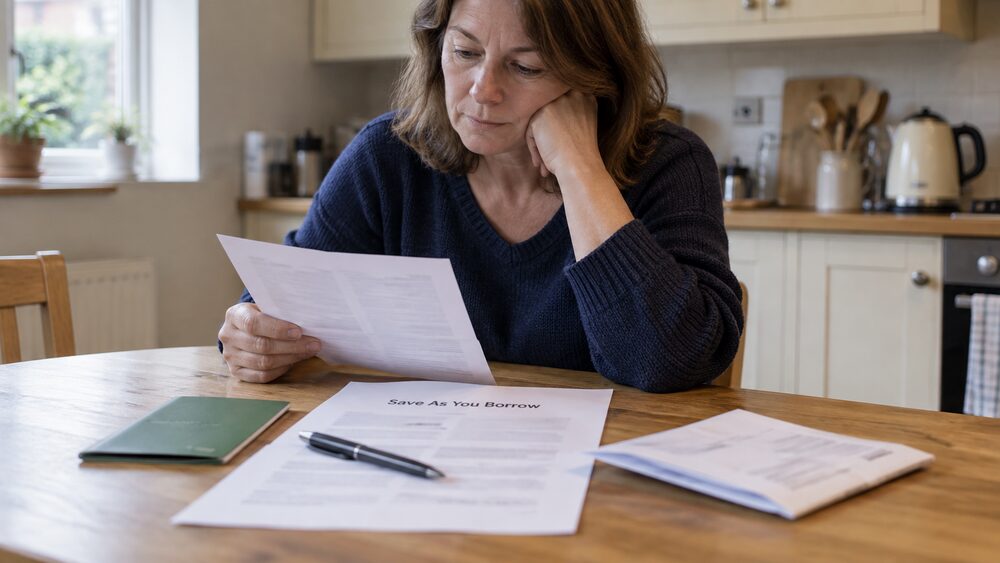
Each repayment on this loan includes a small savings amount, so by the time the loan is repaid you have also built up a pot of savings for your family1. This is the credit union movement's "save as you borrow" idea: rather than leaving a borrowing-only relationship, you finish the loan with something set aside. See Save As You Borrow for how the mechanism works generally.
The amounts are small by design, because the repayment has to stay affordable out of the Child Benefit. But over a 9 to 18 month term they add up, and the pot is yours afterwards: what happens to savings when a loan ends is covered in the savings guide. For many people who use this type of loan, the savings element is the part that outlasts the borrowing, because the habit of money landing in the account every four weeks continues after the repayment stops.
Credit unions may also choose to pay a loan interest rebate, which is a refund of loan interest paid to all members who borrowed during the preceding financial year16. Not every credit union pays one, and it is discretionary, but it can reduce the effective cost of borrowing for members.
Applying, and how quickly the money arrives
The application itself goes to the credit union, and runs along the lines of any credit union loan application: proof of identity, details of your income and outgoings, and the affordability check. See applying to borrow from a credit union for the general process.
The redirection of Child Benefit is a separate step with HMRC. You can apply for Child Benefit online through the HMRC account, or call the Child Benefit Office to request a claim form, or download a form and post it to HMRC17. If you are claiming rather than redirecting, timing has improved a lot: HMRC says payments could arrive in as little as three days if your online application is successful, whereas with the paper form it took up to 16 weeks to receive your first instalment18.
If you are waiting for a first benefit payment and need money sooner, there are official advances rather than high-cost credit: a short-term benefit advance is claimed by calling the helpline for the benefit you are claiming, and a Universal Credit advance can be applied for online or through your jobcentre work coach, usually paid the same or next day if approved19. These are loans repaid from the benefit itself, so they add to what leaves your payments later.
For the loan money itself, the speed depends on the credit union's own checks and when your first Child Benefit payment is due to land in the account. Because the repayment route depends on the benefit arriving, expect the credit union to want the redirection confirmed before releasing funds.
When Child Benefit changes or stops during a loan
Because the repayment comes out of the Child Benefit, anything that stops the benefit stops the repayment mechanism. The main trigger is a child's age and education. Child Benefit will stop on the last day of August on or after your child's 16th birthday, unless you tell the Child Benefit Office that they are staying in approved education or training20. For children of 16 or older in approved education, Child Benefit stops at the end of February, 31 May, 31 August or 30 November, whichever comes first, when they leave approved education, start to get Universal Credit themselves, start paid work of 24 or more hours per week, start a course of higher education, or reach the age of 2021.
Other changes can end the benefit mid-loan. When a child starts university, they no longer count as your dependant, so Child Benefit for them stops22. If your child starts working 24 hours a week or more, or leaves education altogether, Child Benefit will stop23. If a child who usually lives with you is in hospital, you stop getting Child Benefit for them after they have been in hospital for 84 days, unless you are still paying money for their needs24.
Only the person claiming Child Benefit can tell HMRC about a change of circumstances, and you can report changes online, or call or write to HMRC14. Reportable changes include a child going abroad for more than 12 weeks, going into care or residential accommodation for more than 8 weeks, going to prison or youth custody for more than 8 weeks, moving to or from Northern Ireland, or living away from you for 8 weeks in a row or more than 56 days in a 16-week period14.
If the benefit stops while the loan runs, the debt does not. You would still owe the remaining balance, and the sensible step is to contact the credit union immediately to agree a new repayment method, such as a direct debit or paying in yourself. See falling behind on a credit union loan for what happens next and how credit unions typically treat members who cannot pay as agreed.
Universal Credit and Child Benefit loans
Child Benefit and Universal Credit largely run alongside each other. Child Benefit will only affect your Universal Credit payments if the benefit cap applies25. Universal Credit is paid into your bank, building society or credit union account12, so if you claim both, both can land in the same credit union account, and money that has arrived is yours to use for loan repayments.
Be careful not to confuse a credit union Child Benefit loan with a Universal Credit Advance. An advance is a loan from the government: you will have to pay it back from your Universal Credit payments26, and if you stop getting Universal Credit, Debt Management will take repayments from your other benefit payments or your wages, or through a debt collection agency27. A credit union loan is repaid to the credit union on the terms you agreed, and there is other financial help available if you get Universal Credit, including budgeting advances28.
Two related points are worth knowing. First, when Child Benefit stops, the child element of your Universal Credit will also stop23, so a child leaving education can hit both the loan repayment route and your wider income at once. Second, if you are claiming Universal Credit with childcare costs, it can repay up to 85 per cent of registered childcare costs29, up to a maximum of £1,071.09 a month for one child or £1,836.16 for two or more children29. If a loan is being considered for childcare costs, that support may reduce what you need to borrow.
Where to get help if repayments become hard
The first call is to the credit union itself, before a payment is missed. Credit unions are member-owned and typically work with borrowers who talk to them early, and the options are set out in falling behind on a credit union loan. Ignoring the problem is the one approach that makes it worse.
Beyond the credit union, free help exists:
- StepChange Debt Charity and other debt advice charities give free advice on emergency funding options and on dealing with debts generally8.
- Hardship payments may be available if you are struggling: contact the Universal Credit helpline to apply if you are on Universal Credit, or contact Jobcentre Plus if you are on JSA or ESA30.
- Benefit advances can bridge a gap while waiting for a payment, usually paid the same or next day if approved19.
If money is short because of a change in circumstances, such as a child leaving education, it is worth checking whether other benefits or support apply, using the benefits section or an independent benefits calculator. And if you have a complaint about how the credit union has treated you, the consumer protection guide explains the Financial Ombudsman Service route.
Sources30 cited
- Child Benefit Loan, London Mutual Credit Union creditunion.co.uk, 2026-08-13
- How to have your benefits paid GOV.UK, 2026-09-26
- How much Child Benefit will I get Turn2us, 2026-09-26
- Save bank or borrow: credit union Welsh Government, 2026
- Short term loan debt StepChange Debt Charity, 2026-09-25
- Claim Child Benefit on behalf of someone else GOV.UK, 2026-09-27
- Consolidating debts nidirect, 2025-09-11
- Emergency funding StepChange Debt Charity, 2026-09-25
- Credit union changes will help more people to access affordable loans and savings Building Societies Association, 2026-03-18
- Report on the Scottish Community Lenders Fund Northern Ireland Assembly, 2025
- National insurance credits Which?, 2026-04-06
- How much Universal Credit you get and how you're paid nidirect, 2026-07-15
- How benefits and pensions are paid nidirect, 2026-07-15
- Report changes to Child Benefit GOV.UK, 2026-09-25
- Child Benefit payment dates and bank holidays GOV.UK, 2026-09-28
- About credit unions UFCU, 2026-09-26
- How do I claim Child Benefit Turn2us, 2026-09-26
- Child Benefit goes digital: can you make a claim Which?, 2024-01-14
- Managing financially Gingerbread, 2026-04-13
- Benefits when your child turns 16 Gingerbread, 2026-07-27
- What happens to Child Benefit when my child is 16 One Parent Families Scotland, 2026-04-06
- Will my Universal Credit be affected if my son starts university One Parent Families Scotland, 2026
- What happens to Universal Credit when my child is 16 One Parent Families Scotland, 2026-02-02
- Benefits for a child who is in hospital Turn2us, 2025-11-06
- Universal Credit if you have children GOV.UK, 2025-11-17
- Help while waiting for your Universal Credit payment nidirect, 2026-06-30
- More financial help if you get Universal Credit nidirect, 2025-12-02
- Universal Credit payments for children and childcare nidirect, 2026-06-30
- How much Universal Credit you get Shelter England, 2026
- Hardship payments StepChange Debt Charity, 2026-09-25





 MoneyHelperFree, impartial money and pensions guidance, set up by government
 FSCSProtects your money if a bank, insurer or investment firm fails
 Financial Ombudsman ServiceFree, independent help when a complaint about a firm is not put right
 StepChangeFree debt advice and solutions from a charity
 Citizens AdviceFree advice on money, consumer and legal problems in England and Wales