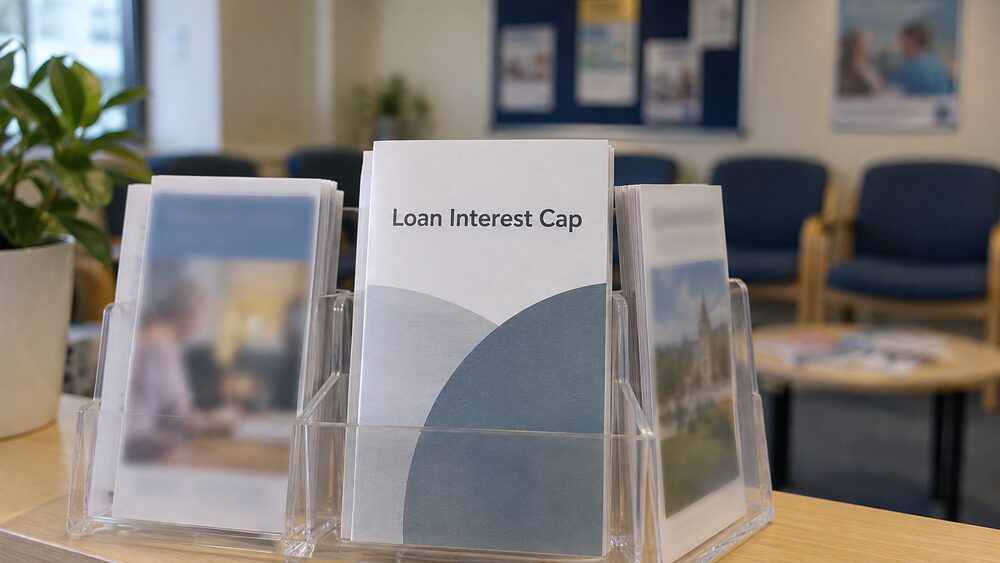
By law, the most interest a credit union can charge a member for a loan is 3% a month1. That monthly ceiling is quoted as an APR of 42.6%, and it is the absolute maximum, not a typical price2. Most credit union loans cost far less than that: many are priced at around 1% a month on the reducing balance, an APR of 12.7%3.
By law, the most interest a credit union can charge a member for a loan is 3% a month1. That monthly ceiling is quoted as an APR of 42.6%, and it is the absolute maximum, not a typical price2. Most credit union loans cost far less than that: many are priced at around 1% a month on the reducing balance, an APR of 12.7%3.
The cap has moved over time. The maximum was raised from 2% to 3% a month by the Credit Unions (Maximum Interest Rate on Loans) Order 20132. The rise was not compulsory, and credit unions were free to choose whether or not to increase their rates4. In practice, the ceiling matters most as a protection: it means a credit union loan can never become the kind of open-ended debt that a payday loan can.
Interest is charged on the reducing balance, so you pay interest only on what you still owe, not on the original sum. Repay early and you pay less. This page explains the cap, what credit unions actually charge, how the interest is worked out, and what happens if you fall behind.
The legal cap: 3% a month, an APR of 42.6%
The rule is set in legislation rather than by each credit union. By law, the maximum interest rate a credit union can charge its members for a loan is 3% per month1. The same ceiling applies in Great Britain, where the maximum interest a credit union may charge on loans is 3% per month5. Schedule 14 also caps the interest a credit union can charge on hire purchase agreements and conditional sale agreements at 3% per month5.
The cap is expressed as a monthly rate, but lenders and comparison tools usually talk in APRs, the standard yearly measure of the cost of borrowing. At the 3% monthly ceiling, the associated APR is 42.6%2. That figure is the one to hold on to: it is the highest APR a credit union loan can carry.
The cap has not always been at this level. The Credit Unions (Maximum Interest Rate on Loans) Order 2013 raised the maximum from 2% to 3% per month2. Before that change, the ceiling was 2% a month. The 2013 rise was permissive rather than automatic: the increase in the interest rate cap was not compulsory and credit unions were able to choose whether or not to increase their rates4. A credit union that wanted to keep charging less could do so.
The cap also covers more than the headline interest rate. The total charge for credit on a limited interest second charge credit union loan must not exceed 42.6%6. That matters because it stops a credit union from loading the cost of a loan with arrangement fees or other charges while keeping the interest rate itself low. The ceiling applies to the whole cost of the credit, not just the rate quoted in the advert.
What credit unions typically charge: around 1% a month
The legal maximum is a ceiling, not a price list. Many credit union loans cost 1% a month on the reducing balance of a loan, an APR of 12.7%3. That is a long way below the 42.6% cap, and it is the rate most borrowers actually meet.
The gap between the cap and the typical rate is the single most useful thing to understand about credit union pricing. The 3% figure exists to protect members from excessive charges; the 1% figure is what the market generally delivers. A credit union that charged the full 3% would be unusual, and one that charged 1% is following the common pattern.
The history explains why the numbers look the way they do. Before 6 April 2006, credit unions could not charge interest on loans exceeding 1% per month4. That old 1% ceiling is close to today's typical rate, which is why so many credit unions still price around that level even though the law now allows up to 3%. The rules were loosened to let credit unions cover their costs and lend more, not because the typical price changed.
There is a regional wrinkle in the older figures. Credit union interest in Wales was once capped at 2% per month on the reducing balance of a loan, or 26.9% APR8. That reflects the position before the 2013 change, and it shows how the cap has been described differently in different documents and at different times. If you are comparing what a credit union quotes you today, the current ceiling is 3% a month, which the law sets as an APR of 42.6%5.
Interest on the reducing balance, not the original loan
How the interest is calculated matters as much as the rate. Credit unions charge interest only on the reducing balance of a loan, meaning the amount you still owe falls as you repay, and the interest charged falls with it5. By law, credit unions cannot charge any more than 3% per month on the reducing balance of a loan7.
This is different from a flat-rate loan, where interest is worked out on the original sum for the whole term. With a reducing balance, the interest is charged only on the outstanding balance of the loan, so you pay even less if you repay in a shorter time9. The same principle appears across credit union lending: interest is only charged on the reducing balance10.
The practical effect is that paying a loan off early saves you money. Because the interest is calculated on what is left, not on what you originally borrowed, every extra repayment cuts the interest that follows. A borrower who clears a loan halfway through its term pays roughly half the interest a full-term borrower would, before any early repayment terms are applied.
How the cap compares with payday loans and banks
The legal ceiling on credit union interest looks high next to a bank loan, but it is low next to a payday loan. Payday lenders operate under a different cap: interest rates and fees charged must not exceed 0.8% per day of the amount borrowed13. Interest and fees must not exceed 0.8% per day of the amount borrowed, even when rolled over14.
The payday cap also limits the total. From 2 January 2015, there is an interest cap on payday loans of 0.8% per day, and no borrower should have to pay back more than twice what they have borrowed15. The cap on payday loans was introduced in January 201516. So a payday borrower can end up repaying double, while a credit union borrower's cost is bounded by the 42.6% total charge for credit6.
The comparison is not just about the headline rate. A credit union loan is repaid over an agreed term with interest on the reducing balance, so the total cost is predictable. A payday loan is designed to be repaid on the next payday, and the daily charge accumulates quickly if it is rolled over. The two products sit at opposite ends of the consumer credit market.
Against a bank, the picture is different again. A bank personal loan may carry a lower APR than a credit union for a large, long-term borrowing, but credit unions offer very competitive rates of interest on personal loans of up to about £3,000 and are happy to offer much smaller loans3. For small sums, the credit union model often competes well, and the cap guarantees the price cannot run away.
Who can borrow and how affordability is checked
The cap sets the price, but eligibility decides who can borrow at all. Credit unions are not-for-profit community lenders providing affordable loans and savings17. Each credit union serves a defined group, and membership rules are widening: eligibility will extend to include students, local workers and relatives of existing members18.
Affordability is checked before a loan is agreed. One credit union states plainly that you must be able to afford the loan, that it is a responsible lender, and that it does not lend to members who will become over-indebted19. Another notes that lending is subject to status and affordability, with membership eligibility criteria applying20. Some credit unions will lend to you as soon as you become a member, while others will only lend after you have saved for a set period, and affordability is checked against the money you have left after paying your bills21.
The amount you can borrow is often tied to what you have saved. If you are a member of a credit union, you can usually borrow at least two or three times the amount you have in savings, depending upon the loan policy of your credit union22. The same rule is described elsewhere as usually at least two or three times the amount held in savings, depending on the credit union's loan policy23. Credit unions are saving schemes run by their members which also allow you to borrow two or three times as much as you have saved at a low interest rate24.
A history of saving is often part of the deal. You usually need to have a history of saving with a credit union before you can borrow24. That is why the practical route to a larger loan is usually to join, save regularly, and build up both the savings balance and the track record the credit union looks at.
Where the usual consumer credit rules do not apply
Credit union lending sits inside the consumer credit framework, but not every rule reaches it. The Consumer Credit Act 1974 may not cover all credit union or buy now pay later debts, and it does not apply to companies providing gas, electricity, water or phone services, or to councils25. That means some credit union agreements fall outside protections that apply to other borrowing.
There is also a specific carve-out in the affordability rules. The FCA's CONC 5D rules, which govern creditworthiness assessments, do not apply to a credit union26. That is a technical point, but it explains why credit unions can assess affordability in their own way, using their knowledge of a member's savings and repayment record, rather than the standard checks a bank or payday lender must run.
The exemption has a history. Under the Consumer Credit (Exempt Agreements) Order 1989, the Act did not regulate a debtor-creditor agreement where the creditor is a credit union and the rate of the total charge for credit was below a specified level4. The 2006 amendment raised that specified rate to 26.9% so that credit unions could keep the exemption while charging more4. The rules have been adjusted over time to keep credit union lending workable.
For comparison, other caps work differently. For Plan 1 income-contingent student loans, the interest charge is affected by a cap at the bank base rate of +1%27, and the cap did not apply between 1 September 2015 and 31 August 2016 where the interest rate was 0.9%27. For Plan 5 student loans, the interest rate cap is not currently being applied28. These are separate schemes with their own rules, but they show that a "cap" can mean very different things depending on the product.
What happens if you miss a repayment
Missing a repayment on a credit union loan has consequences set out in the loan terms. One credit union states that should you miss more than two consecutive loan repayments without consultation or permission from the credit union, it reserves the right to periodically deduct any outstanding interest from your shares without prior notification29. In other words, the savings you hold can be used against the interest you owe.
The wider rule is similar. If you miss payments on a loan, the credit union may be able to use your savings to repay the loan23. Because savings and borrowing are held in the same place, a credit union has a route to recover arrears that a bank does not.
Default can be more serious still. Under one credit union's terms, on default, cessation of employment, a Trust Deed or bankruptcy, the entire balance outstanding will immediately become due and payable together with all the interest that would have been payable if the loan agreement had run its full term30. That means a default can accelerate the whole loan, including interest for the remaining term.
Protection if you die or cannot pay
Many credit union loans come with protection built in. One credit union includes free loan protection insurance up to a defined age as part of membership, so that if you pass away the outstanding balance may be repaid, subject to eligibility criteria and policy terms31. Another offers free loan protection insurance which will pay off the loan in the event of your death32.
The cover has limits. One policy states that it will not pay a life insurance benefit if a member dies outside the geographic area listed in the Loan Protection Policy30. There is also an age limit, and the credit union has the option of extending this age limit to the member's stated birthday by applying cover under the Over 70 Rider33. If you are near or over the age limit, it is worth asking what applies to your loan.
Savings are protected too. Loans and savings are protected by the Financial Services Compensation Scheme17. That protection applies to the money you hold with the credit union, and it is separate from any loan protection insurance attached to a borrowing.
Finding a credit union and checking the rate you are offered
Credit unions are built around a common bond, so the first step is finding one you are eligible to join. A finder website, www.findyourcreditunion.co.uk, can help you locate credit unions21. Membership is defined by where you live, where you work, or a trade or profession, and the rules are widening.
When you have found one, ask two questions before you borrow. First, what monthly rate is being charged, and is it on the reducing balance? Second, what is the APR? The APR lets you compare the offer with a bank loan or a credit card on the same basis. Remember that the legal maximum is 3% a month, an APR of 42.6%1, and that many credit union loans cost around 1% a month, an APR of 12.7%3.
If you are comparing borrowing options more widely, it helps to see how credit union loans sit alongside other products. The section on what a credit union loan costs covers interest, APR and early repayment in more detail, and credit union loans versus payday loans sets the two side by side. If you are already behind on repayments, falling behind on a credit union loan explains the options, and free, impartial help is available from MoneyHelper and from debt advice charities.
Sources33 cited
- Frequently asked questions Riverside Credit Union, 2026
- The Credit Unions (Maximum Interest Rate on Loans) Order 2013 legislation.gov.uk, 2013
- 10 tips on paying off your debts Which?, 2026
- Explanatory memorandum: Consumer Credit (Exempt Agreements) (Amendment) Order 2006 legislation.gov.uk, 2006
- Credit unions in Great Britain Northern Ireland Assembly, 2025
- The Consumer Credit (Exempt Agreements) Order 1989, article 61A legislation.gov.uk, 2026
- Loans Sefton Credit Union, 2026
- Credit union interest rates Senedd Cymru, 2012
- Loans Lisburn Credit Union, 2026
- Credit union loan HEY Credit Union, 2026
- Borrow Mid Tyrone Credit Union, 2026
- Car loan HEY Credit Union, 2026
- Payday loans nidirect, 2026
- Payday loans National Debtline, 2026
- Payday loans Citizens Advice, 2015
- Woolard Review report Financial Conduct Authority, 2015
- Save, bank or borrow Welsh Government, 2026
- Credit union changes will help more people to access affordable loans and savings Building Societies Association, 2026
- Loans Fintona Credit Union, 2026
- Payroll deduction Capital Credit Union, 2026
- Credit unions Building Societies Association, 2026
- Debt consolidation National Debtline, 2026
- Budgeting, saving and borrowing Business Debtline, 2026
- Credit union loans Shelter Cymru, 2026
- Credit agreements: getting information Business Debtline, 2026
- CONC 5D: creditworthiness assessment Financial Conduct Authority, 2024
- Income contingent student loan repayment plans: interest rates and calculations gov.uk, 2026
- How interest is calculated: Plan 5 gov.uk, 2025
- Loan terms and conditions Riverside Credit Union, 2025
- Loans and accounts: legal Capital Credit Union, 2026
- Personal loans Capital Credit Union, 2026
- Loan up to £1,200 Just Credit Union, 2025
- Loan protection insurance Lisburn Credit Union, 2026












 MoneyHelperFree, impartial money and pensions guidance, set up by government
 FSCSProtects your money if a bank, insurer or investment firm fails
 Financial Ombudsman ServiceFree, independent help when a complaint about a firm is not put right
 StepChangeFree debt advice and solutions from a charity
 Citizens AdviceFree advice on money, consumer and legal problems in England and Wales