
A debt becoming statute barred and a default dropping off your credit file are two different things, and they run on two different clocks. Statute barring is about time limits on a creditor enforcing a debt through the courts. The credit file entry is about how long a record of missed payments is kept. A debt can be statute barred and still appear on your credit file in some cases, which means lenders can see it and it may be harder to get future credit1.
A debt becoming statute barred and a default dropping off your credit file are two different things, and they run on two different clocks. Statute barring is about time limits on a creditor enforcing a debt through the courts. The credit file entry is about how long a record of missed payments is kept. A debt can be statute barred and still appear on your credit file in some cases, which means lenders can see it and it may be harder to get future credit1.
The credit file rule is simpler than most people expect. A default stays on your credit file for six years, and it is removed six years after the default even if the debt is not fully repaid2. Paying the debt off does not take the entry away early. Once the default is removed, the lender will not be able to re-register it, even if you still owe them money3.
The statute barring rule is about the courts. Most debts usually become statute barred if, during at least the last six years, no payment was made, no written admission of the debt was sent, and the creditor has not pursued the debt through the county court4. If a debt is statute barred, the creditor cannot obtain a county court judgment for it, and cannot make you bankrupt, though they can still pursue it in other ways such as through a debt collection agency or letters4.
No 'statute barred' label appears on your credit file
There is no field, flag or marker on a UK credit report that says "statute barred". The credit reference agencies record account conduct: whether payments were made, whether a default was registered, and when. Statute barring is a legal status under the Limitation Act 1980, which sets out the rules on how long a creditor has to take certain action against you to recover a debt6. It is not something the agencies are asked to display.
That mismatch is the source of most confusion. A reader checks their report, sees an old default, and assumes the debt is still live and enforceable. Or they read that a debt is statute barred and assume the record must have gone. Neither follows. The debt can still appear on your credit file in some cases, and the entry follows its own six-year timetable regardless of whether the debt could still be enforced in court1.
For most debts, the six-year limitation period starts from one of three points: the last time you acknowledged the debt in writing, the last payment, or the earliest date the creditor could start court action, such as the first default1. That last point matters, because it means the limitation clock and the credit file clock often start in the same place but are not the same clock.
The conditions are cumulative. For a simple contract debt, the creditor must not already have started a county court claim, you or anyone else owing the money must not have made a payment towards the debt during the last six years, and you must not have written to the creditor admitting you owe the debt during the last six years7. A single payment, or a letter acknowledging the debt, restarts the period.
Defaults stay on your file for six years, paid or not
The six-year rule is consistent across the guidance. A default stays on your credit file for six years8. It stays on your credit file for six years9. Defaults stay on your file for six years from the date added2. The Financial Ombudsman Service, in its payday lending report, states that a default will stay on the consumer's credit file for six years10.
The same period applies to the other adverse markers. Some information stays on your credit file for six years, like missed payments, defaults and court judgments11. Information such as missed payments, default notices and court judgments will generally stay on your credit file for six years6. A defaulted buy now pay later account will stay on your credit report for six years12. A mortgage default shows as a default on your credit file and stays there for six years13.
What people most often get wrong is the effect of payment. The debt is removed six years after the default, even if it is not fully repaid2. Selling assets to repay your debt does not remove any negative information from your credit file14. A full and final settlement is different: there, the creditor can be asked to amend your credit reference file to show the debt is paid off or satisfied, which changes the status of the entry rather than deleting it15.
What happens to the record when a debt is sold to a debt collector
Debts are routinely sold. The creditor sells or assigns the debt after the account defaults, and the collection agency becomes the legal owner of the debt, making its profit by collecting the full amount owed16. If the creditor does not tell you the debt has been sold, then the collectors are working for the original creditor, and the original creditor still owns the debt17.
For the credit file, the important point is that a sale should not extend the record. The Information Commissioner's Office, which enforces the rules on how credit information is recorded, has said that if entries are recorded on your credit file in a way that may look like they are two different debts, or that could make the debt remain on your credit file for longer than six years from the date of the original default, it is unlikely to consider this fair16.
If you want the paperwork behind a debt, the request goes to whoever now owns it. If the original creditor has sold the debt on to another company, the new company becomes the creditor and must deal with your request18. That applies whether you are asking for a copy of the credit agreement or disputing what is owed.
A sold debt showing twice is a common problem, and it is worth checking your report for it. The same underlying account should not appear as two separate defaults, because that would keep adverse information visible for longer than the six years the rules allow.
How an old default affects borrowing as it ages
A default notice will negatively impact your credit rating for six years, and would be quite damaging for future financing plans19. Your credit file will show that you did not make your agreed payments, which impacts your credit score20. Insolvency makes it harder to get new credit21.
The effect is not uniform across the six years. Lenders weigh recent conduct more heavily than old conduct, so a default in its final year carries less weight than one registered last month, even though both are visible. The entry drops off entirely at the six-year point, and from then on lenders cannot see it at all.
On mortgages specifically, the picture is more open than many people assume. Missed payments, reduced payments, county court judgments and decrees on your credit file do not mean a mortgage is out of reach, but the cost can be higher in interest and fees22. Lenders that specialise in applicants with adverse credit exist, and the practical question is usually timing: applying while the default is visible, or waiting for it to drop off.
A debt consolidation loan may help you repair your credit file over time, if you keep up with payments23. That is a statement about conduct after the event, not about removing the default. Nothing a borrower does shortens the six years.
If a debt is very old, it may be statute barred, which means the creditor is out of time to collect it24. That changes what a collector can do, but it does not change what a lender sees on the report until the six years are up.
Getting a default corrected, removed or explained
There are only a few routes to changing a default entry, and they are narrow.
If the entry is wrong. Contact the credit reference agencies to get a debt removed from your credit file25. This is for entries that are not yours, are duplicated, or are inaccurate. The agencies have a duty to look into a dispute, and the correcting your credit report process sets out how to raise one.
If a court order has been recalled. In Scotland, if you show a valid ground applies and the court does agree to recall the decree, you can request that the information on your credit reference file be corrected26. The recall itself is the trigger; the file correction follows from it.
If you settled the debt. A full and final settlement should include an agreement that the creditor amends your credit reference file to show the debt is paid off or satisfied15. Get that in writing before you pay.
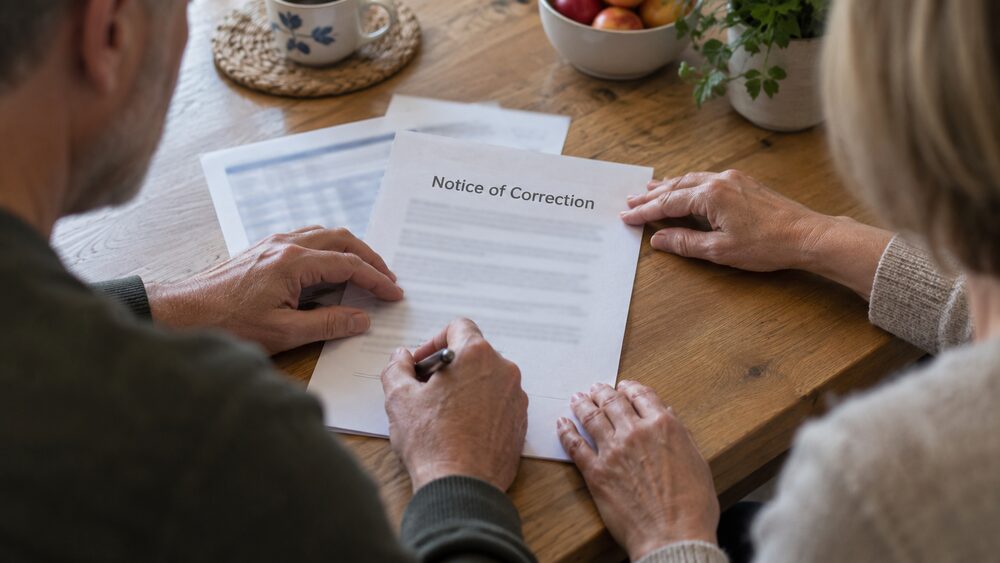
If you want to explain, not remove. A notice of correction lets you add a short statement to your file. It does not delete the default, but it puts your account of events alongside it for lenders to read.
If a debt is not yours, the position is different again. When you take out any type of credit for another person, if that credit agreement is in your name, the default will appear on your file28. The debt follows the name on the agreement, not who spent the money.
Free, impartial help is available. StepChange, National Debtline and Citizens Advice all give debt advice at no cost, and the Financial Ombudsman Service can look at complaints about how a lender or collector has treated you. For anything involving an unregulated debt, there are no set standards of behaviour and no independent body monitors treatment, but legal protection from harassment still applies29.
Sources29 cited
- Statute barred debt StepChange, 2026-09-25
- Debt management plans and your credit score StepChange, 2026-09-25
- Defaults guide Experian, 2026
- Whose debt is it? Shelter Cymru, 2026-08-30
- Statute barred debts (Scotland) Business Debtline, 2026-09-26
- How could my DMP fail? StepChange, 2026-09-25
- Statute barred debts (England and Wales) National Debtline, 2026-09-25
- Arranging payment with creditors StepChange, 2026-09-25
- Glossary StepChange, 2026-09-25
- Payday lending report Financial Ombudsman Service, 2026-09-27
- How does debt affect a credit file? StepChange, 2026-09-25
- Buy now pay later (England and Wales) National Debtline, 2026-09-25
- Mortgage shortfalls (Scotland) Business Debtline, 2026-09-26
- Selling assets to clear debt (Scotland) Business Debtline, 2026-09-26
- Sample letters StepChange, 2026-09-25
- Credit Information Commissioner's Office, 2026-09-25
- Debt passed to a collection agency StepChange, 2026-09-25
- Credit agreements: getting information (Scotland) Business Debtline, 2026-09-26
- Car finance Advice NI, 2026-09-26
- Default notices and missed payments StepChange, 2026-09-25
- Insolvency StepChange, 2026-09-25
- Mortgage term ending StepChange, 2026-09-25
- Getting credit card debt written off National Debtline, 2026-09-25
- Disputing debts with creditors StepChange, 2026-09-25
- Debts not in my name StepChange, 2026-09-25
- Recall of a decree (Scotland) National Debtline, 2026-09-25
- Consumer Credit Act 1974, Part VII: default notices legislation.gov.uk, 2026
- Credit Information Commissioner's Office (Welsh), 2026-09-25
- Regulatory bodies StepChange, 2026-09-25











 MoneyHelperFree, impartial money and pensions guidance, set up by government
 Financial Ombudsman ServiceFree, independent help when a complaint about a firm is not put right
 Citizens AdviceFree advice on money, consumer and legal problems in England and Wales
 StepChangeFree debt advice and solutions from a charity
 GOV.UKOfficial information on tax, benefits and government services