Marriage, a civil partnership or simply living at the same address does not link your credit files. Your partner's missed payments, defaults or debt management plan stay on their own credit report unless the two of you have taken out credit together. What creates the link is a joint financial product: a joint account, a joint loan, a joint mortgage, or a household bill in both names1.
Marriage, a civil partnership or simply living at the same address does not link your credit files. Your partner's missed payments, defaults or debt management plan stay on their own credit report unless the two of you have taken out credit together. What creates the link is a joint financial product: a joint account, a joint loan, a joint mortgage, or a household bill in both names1.
Once that link exists, it is called a financial association. It does not merge your reports and it does not by itself lower your score, but it lets a lender look at your partner's credit history when you apply, even if you are applying in your own name only3. That is where a partner's bad credit can start to matter: not because their file has become yours, but because a lender deciding on you can see it.
The practical answer, then, is that a partner's bad credit affects you only through shared borrowing. Keep your credit separate and their problems stay theirs. Take out a joint mortgage, a joint loan or a joint account and the two files are connected, so how each of you manages the debt affects the other5.
Marriage alone does not link your credit files
Being married or in a civil partnership is not a credit event. Your partner's poor credit does not always affect you, even if you are married or in a civil partnership, and it only reaches you if you have a joint account, loan or credit card with them9. Credit reference agencies should not include information about other people who happen to live with you in your credit report, even if you share a surname, unless a financial connection has been created6.
A credit card is a common source of confusion here. Adding your partner as an additional cardholder does not form a financial link with them, so their spending on your card does not attach their credit history to yours2. The account stays in the name of the main cardholder, and so does the liability.
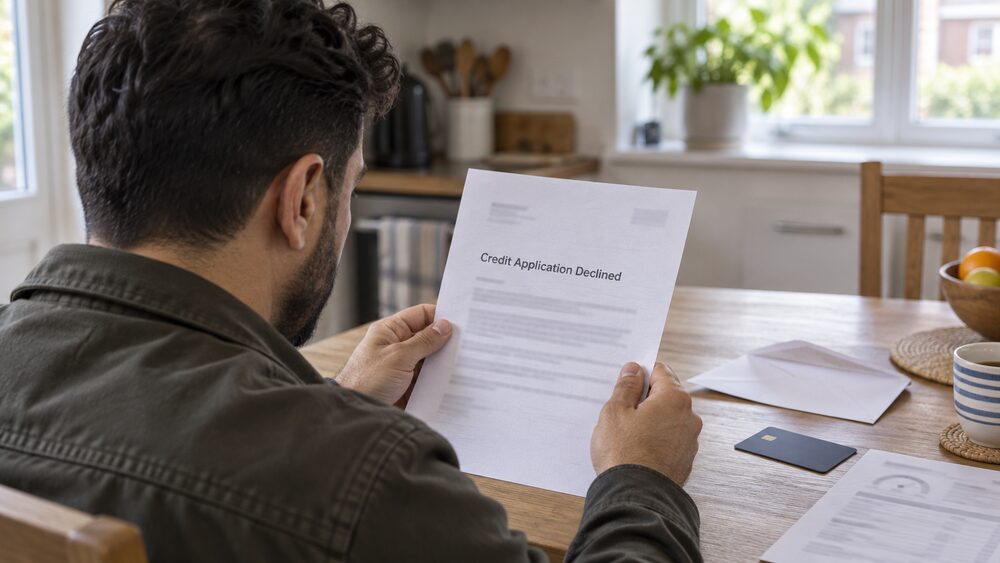
Two things follow from this. First, a partner's low score cannot stop you getting credit in your own name on its own, because your credit score is based only on the financial information on your own credit report4. Second, if you apply for credit in your own name and are refused, the reason will be something on your own file, not your partner's, unless you have a joint product with them.
Where a partner's finances do reach you without any borrowing is benefits, which is a different system. The calculation of Universal Credit is affected by living with a partner, and you may get less or more money depending on their income and savings10. That is a household income test, not a credit link.
How a joint account or loan creates a financial association
Opening a joint account adds a financial link to the other person1. From that point, companies look at both credit histories, and a poor history might lower your chances of acceptance1. A joint account can create a financial link with a partner which affects your own score, so it is worth considering their credit score too before you open one2.
A financial association arises from joint credit applications, joint bank accounts or joint financial products such as a loan or mortgage, and it continues after divorce or separation11. It is not limited to borrowing: a joint wedding loan creates a financial association on your credit report12, and a household bill in both names counts as a joint financial product8.
The association works in both directions. A good payment history towards joint debts helps both people named on the account and can make it easier to get credit in future5. A bad one does the opposite. The link is a record that the two of you are financially connected, and lenders use it to decide what risk they are taking.
When a partner's missed payments can drag your score down
On a joint debt, a missed payment is marked on both credit files regardless of who missed the payment5. A missed mortgage payment shows up on both credit reports, regardless of whose fault it was13. The same applies after a separation: if a payment is missed this will be recorded on your credit file as well as your ex-partner's credit file, even if the ex-partner had agreed to repay the debt11.
The size of the hit depends on what goes wrong. One late payment on a credit card or loan can dent your score by as much as 130 points, according to Experian, and defaulting on an account means a 350-point reduction7. Missed payments go on your credit file and can make it harder to get credit in future and to remortgage14. A default is recorded on your file as a failure to make agreed payments, which impacts your credit score15.
What does not cross over is debt in one name only. If your ex-partner falls behind on repayments to credit debts that only they are liable for, those missed payments will not show on your credit file11. Getting divorced does not change who is responsible for credit debts such as credit cards, loans or overdrafts: the person whose name the debt is in remains liable11.
The same principle covers other borrowing. Missed payments on buy now pay later agreements show on your credit score and can make it harder to get credit in the future16. If a debt consolidation loan becomes hard to manage and you miss payments, this shows on your credit file and affects your credit score17. In each case the entry lands on the file of the person liable, and on a joint file it lands on both.
Does a partner's debt management plan affect you?
A debt management plan is an arrangement to pay less than the agreed amount to the people you owe, spread across your debts. Making reduced payments on a DMP affects your credit rating, even if the people you owe accept the DMP18. Your credit rating is affected any time you pay less than you first agreed, and creditors might default your account after a few months of the DMP8.
The plan itself is personal to the person who owes the money. A DMP does not usually affect your partner's credit rating, but it could if you have a financial association, such as shared debts or guarantor debts19. A DMP only affects people you have joint debts or financial products with21. It will not affect the people you live with unless you share joint financial products or joint debts, such as loans, bank accounts or household bills in both names8.
Two details are worth knowing. Missed payments are recorded on your credit reference file by your creditor whether or not you then set up a DMP, and some creditors may add a note saying you are in a DMP22. And a DMP is a confidential service: PayPlan states it will never force you to tell your partner19.
Will a partner's low score stop me getting credit in my own name?
Not by itself. Your credit score is based only on the financial information on your own credit report, so it will not be affected by someone else's4. A lender assessing an application in your name alone looks at your file.
The exception is where you hold joint commitments. Even if the joint accounts themselves are managed well, if your partner's credit score is low, that could also impact yours and your ability to get credit25. Once you link your finances, your credit profiles become connected, and one person's poor credit or financial habits could affect your application and impact each other's credit score27.
For a mortgage this matters most, because lenders run a credit check on each applicant. If one party has a poor credit score, it could impact the lender's decision13. Getting a mortgage with a partner with a poor credit history can make it harder to be accepted for a mortgage28. A joint mortgage creates a financial link between the co-owners, and if one of you runs into financial problems this could affect everyone else's credit rating, which could make it difficult for you to borrow in the future29. It also means your credit file will be linked to your loved one's, so if either of you experiences a negative effect on your credit file it will impact the other too30.
A bad credit rating generally makes it more expensive and harder to borrow money31. That is true whether the problem is on your file or on a file a lender can see through a joint link. Where a joint application is likely to be refused, some lenders will consider a sole application instead, but the other person then has no claim on the property, which is a legal decision as much as a credit one.
Keeping your credit separate from a partner's
The clearest way to keep a partner's credit problems away from your own file is not to create a financial association. Accounts in one name only, credit cards where the other person is not a joint holder, and bills in a single name all avoid the link. Where you do want a joint product, the link is the price of it.
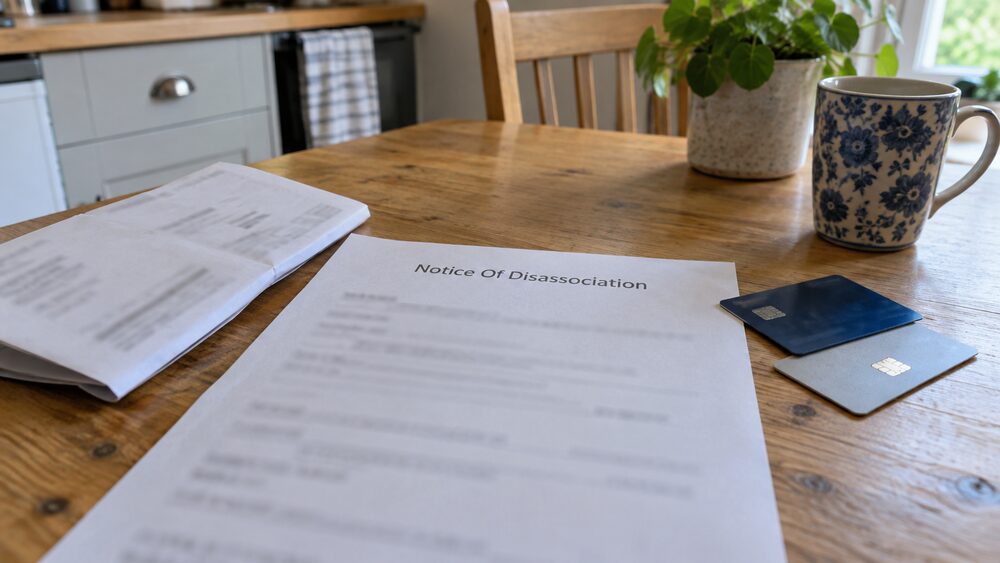
If a link already exists and you want it gone, closing the joint account will not remove the link to the other person from your credit file1. What removes it is a notice of disassociation, which takes any financial link with your ex-partner off your credit file32. It applies where there is no other financial connection between you, so a joint mortgage or loan still running will keep the association in place until it is settled.
Check your file with all the credit reference agencies so you do not miss anything33. If a link appears that you do not recognise, or a joint account is showing on your file after it should have been closed, that is a dispute to raise with the agency. The financial associations page explains how a link is recorded and how to have one removed, and what is on your credit report sets out what a lender can see.
Sources34 cited
- Joint accounts MoneyHelper, 2026-09-25
- Should you open a joint savings account? Which?, 2026-02-09
- How your partner's debt can affect you Experian, 2026
- Joint loans Experian, 2026
- How joint debts affect me StepChange, 2026-09-25
- Credit reference agencies Business Debtline, 2026-09-26
- How to improve your credit score Which?, 2025-10-24
- DMP questions StepChange, 2026-09-25
- How to rent with a poor credit history Shelter, 2026-05-01
- Living with a partner and benefits Advicenow, 2026
- What happens to debts when you get divorced National Debtline, 2026-09-25
- Wedding loans Experian, 2026
- Mortgage types explained Which?, 2026-04-02
- Mortgage payment holidays StepChange, 2026-09-25
- Default notices and missed payments StepChange, 2026-09-25
- Buy now pay later StepChange, 2026-09-25
- Debt consolidation StepChange, 2026-09-25
- How debt management plans work StepChange, 2026-09-25
- Debt management plan questions PayPlan, 2026-08-25
- Example DMPs PayPlan, 2026-02-26
- DMP and credit score StepChange, 2026-09-25
- Debt management plans (Scotland) Business Debtline, 2026-09-26
- Debt management plans (England and Wales) National Debtline, 2026-09-25
- How we help StepChange, 2026-09-25
- Declined applications Lloyds Bank, 2026-09-27
- Declined applications Halifax, 2026-09-27
- Joint mortgages Lloyds Bank, 2026-09-27
- What credit score do I need for a mortgage? Yorkshire Building Society, 2026-09-26
- Joint tenants vs tenants in common Which?, 2026-06-08
- Family lending a hand Santander, 2026
- What do I need to know about debt? Bank of England, 2025-08-19
- Divorce and separation StepChange, 2026-09-25
- Reduced income guide StepChange, 2026-09-25
- Help if your partner dies mygov.scot, 2022-05-13








 MoneyHelperFree, impartial money and pensions guidance, set up by government
 Financial Ombudsman ServiceFree, independent help when a complaint about a firm is not put right
 Citizens AdviceFree advice on money, consumer and legal problems in England and Wales
 StepChangeFree debt advice and solutions from a charity
 GOV.UKOfficial information on tax, benefits and government services