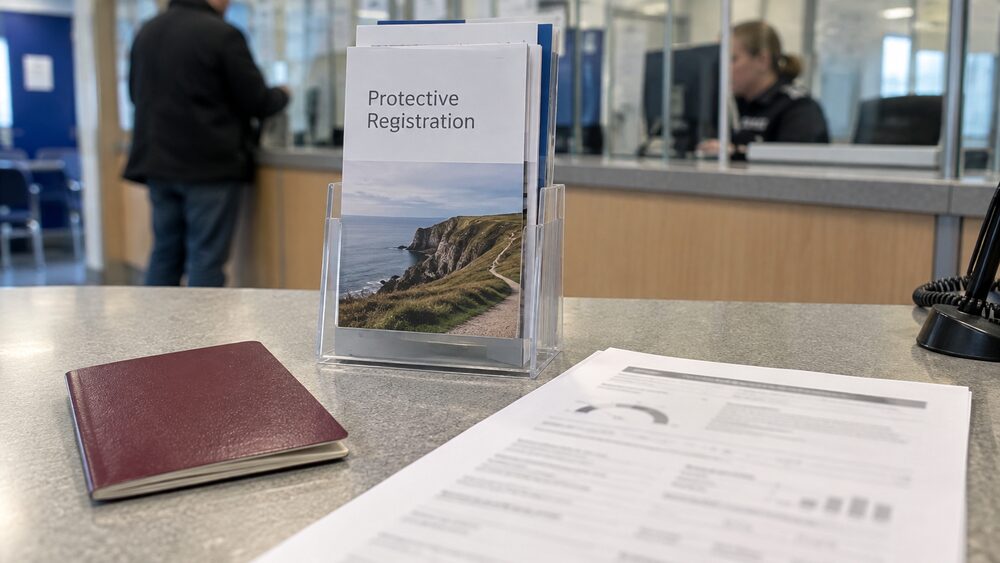
There is no UK equivalent of the American credit freeze. You cannot ring Experian, Equifax or TransUnion and ask them to lock your file so that no lender can look at it. What the UK has instead is a warning flag placed against your name and personal details on a fraud prevention database, run by Cifas, and a statement you can add to your own credit file, called a notice of correction.
There is no UK equivalent of the American credit freeze. You cannot ring Experian, Equifax or TransUnion and ask them to lock your file so that no lender can look at it. What the UK has instead is a warning flag placed against your name and personal details on a fraud prevention database, run by Cifas, and a statement you can add to your own credit file, called a notice of correction.
The two do different jobs. Cifas Protective Registration tells lenders to carry out extra checks before opening an account in your name. A notice of correction explains your circumstances to anyone reading your file. Neither one blocks credit, and neither one stops you applying for credit yourself.
Experian does offer something closer to a lock, but only as part of a paid subscription. With a CreditExpert or Identity Plus subscription you can lock your Experian Credit Report to help protect against fraudsters applying for credit in your name1. That lock applies to your Experian report only, not to the files Equifax and TransUnion hold on you.
The UK has no credit freeze like the US
A credit freeze in the United States lets a consumer shut down access to their credit file so that lenders cannot see it at all. Nothing in the UK works that way. The three biggest organisations for checking your credit report are TransUnion, Equifax and Experian, and none of them offers a general freeze7.
What people often mean when they ask about freezing a file is protecting themselves against fraud, and there is a separate misconception tangled up in that: the idea of a credit blacklist. There is no such thing as a credit blacklist8. Lenders assess each application on the information in front of them, and a poor record is not a permanent bar. Experian estimates 5.8 million people have a thin or non-existent credit file in the UK, which is a different problem from a bad one9.
It is also worth knowing that there is no universal score used by lenders or credit reference agencies8. Each agency produces its own score from its own data, and each lender applies its own rules on top. That matters here because it means no single company can switch your creditworthiness off, and no single company can switch it back on either.
Protective Registration with Cifas: the closest option
Cifas is the UK's Fraud Prevention Service, and its Protective Registration is the nearest thing the UK has to a freeze. Protective registration places a warning flag against your name and other personal details on their National Fraud Database2. The Information Commissioner's Office, which regulates how personal data is handled, directs people who have been affected by a data breach to contact Cifas to apply2.
The effect is that lenders who check the database see the flag and know to carry out more checks before opening an account or issuing credit in your name. Independent guidance describes it as a service you contact Cifas to sign up for, after which a warning flag is placed against your details10.
There is a fee to use the service2, described in independent guidance as a small fee10. Because Protective Registration is a commercial service rather than a statutory right, the fee is set by Cifas rather than by a regulator, and the sources here do not give a figure.
Will Protective Registration stop me getting credit myself?
No. It does not freeze, lock or block credit. If you have Protective Registration, you can still apply for credit, but lenders should carry out more checks to make sure it is really you1. That is the whole point of the flag: it slows the process down rather than stopping it.
Using Cifas does not affect your credit score, but due to the extra checks it can make your credit applications take a little longer10. That delay is the trade-off. If you are applying for a mortgage or a loan and time matters, the extra checks are worth knowing about in advance.
There is a separate point about applications that fail. If you apply for a mortgage and the lender rejects you, it will be recorded on your credit file11. A rejected application is not the same as a fraud marker, but it does leave a trace, which is one reason to use an eligibility checker before applying rather than applying speculatively.
Adding a notice of correction to your credit file
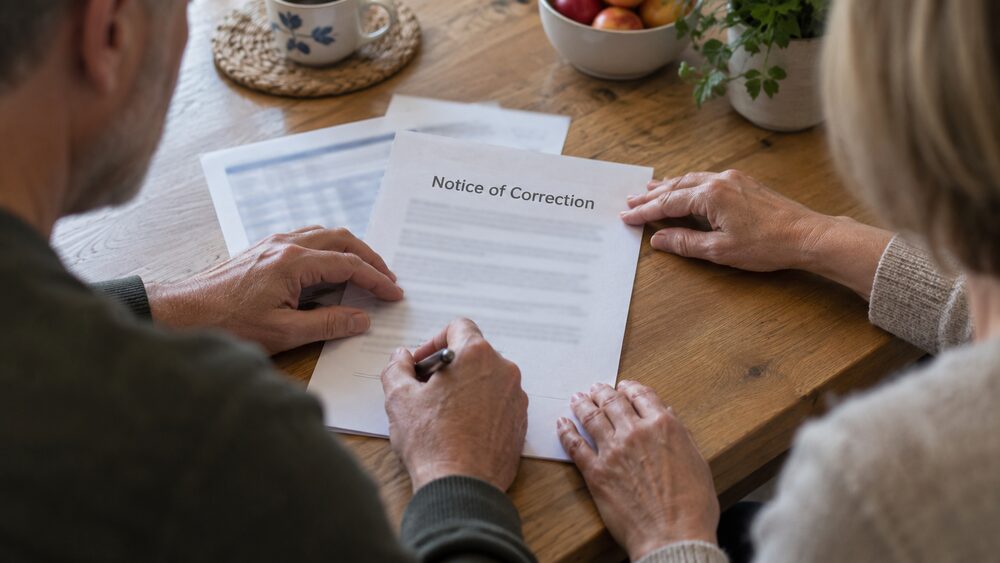
A notice of correction is a statement you write yourself and ask a credit reference agency to attach to your file. It allows you to write a statement explaining your situation which will be seen by anyone who looks at the entry on your credit reference file and should be taken into consideration if you apply for credit4. Independent guidance suggests asking the agency to add one if exceptional circumstances, like redundancy, led to your debt12.
The practical limits are these. A notice can be up to 200 words13, and it is free to add14. It can be added or removed at any time, and only organisations that check your credit reference file will see it5. Credit reference agencies will not remove adverse information if it is correct, although consumers may ask to submit a notice of correction to explain the circumstances15.
A notice of correction will not affect your credit score, but it may affect how quickly lenders deal with any new borrowing you apply for3. Once you add one to your credit report, any application for credit must be read by a person and not given an automatic decision by a computer5. That human review is the benefit and the delay at the same time.
How to check your credit file for signs of fraud
The single most useful habit is to look at your own file regularly. The ICO advises people to regularly check credit card and bank statements for suspicious activity and monitor their credit report16. If you suspect a county court judgment has been made against you, check your credit report with Experian, Equifax or TransUnion17.
You can do this through Experian, Credit Karma or Equifax18, and you can check your credit file for free for any credit taken out in your name fraudulently19. If there has been any fraud against you, for example if someone has used your identity, there may be a marker against your name to protect you, and you will be able to see this on your credit file20.
There are other records worth checking where fraud tends to show up. If you are checking whether deductions have been made from your pay, you can use your Personal Tax Account, HMRC app, National Insurance record, or Student Loan repayment account if you have one21. If you are trying to identify a lender from an old agreement, check old bank statements, contact the dealer where you got the car, or check your credit file, which you can access for free through Experian and TransUnion22.
What to do if someone has used your identity
Speed matters more than anything else here. Speak to your bank or building society straight away if you think your credit or debit card, online bank account or cheque book have been stolen or hacked24. Contact your bank, credit card company and the local police on the non-emergency phone number, 101, as soon as possible25.
Then report it. Contact Action Fraud using the Action Fraud online reporting tool26, or report it to Report Fraud or telephone 0300 123 20406. Request a copy of your credit file to check for any suspicious credit applications16, and contact Cifas to apply for protective registration16.
Be aware that your bank can act on its own account too. Payment services providers, for example banks and building societies, are allowed to block payments and freeze your current account if they suspect it has been used as part of fraudulent activity, for money laundering or other illegal activity, or if a court orders them to do so20. If that happens and you disagree with how it was handled, the Financial Ombudsman Service deals with complaints about frozen accounts and blocked payments20.
Where the protection stops
Neither option is a guarantee. Protective Registration does not block credit, and a notice of correction does not remove anything from your file. Credit reference agencies will not remove adverse information if it is correct15, so a notice explains a bad mark rather than erasing it.
The consequences of adverse information run on their own timetable. A default notice will negatively impact your credit rating for six years, and would be quite damaging for future financing plans27. A default notice itself does not affect your credit file, but the account defaulting does28. Getting a debt written off will have a negative impact on your credit reference file and may affect your ability to obtain credit for up to six years29.
In Scotland the position differs in places. A Protected Trust Deed will lower your credit score and will stay on your credit report for 6 years30, and a trust deed shows on your credit file for six years31. Where a mortgage has fallen into arrears, a notice of default says you have missed payments on your mortgage or loan32.
If money problems are behind the fraud or sitting alongside it, free and impartial help exists. StepChange, National Debtline and Citizens Advice all provide debt advice at no cost, and the Financial Ombudsman Service can look at complaints about how a bank handled a frozen account or a blocked payment20.
Sources32 cited
- How to lock or freeze your credit Experian, 2026
- What steps can I take if I've been affected by a personal data breach Information Commissioner's Office, 2026
- Notice of correction Experian, 2026
- Credit Information Commissioner's Office, 2026
- Debt and mental health Advice NI, 2026
- Guidance on HMCTS related suspicious phone calls, emails and text messages GOV.UK, 2026
- Bad credit mortgages Which?, 2025
- Understanding your credit information Equifax, 2026
- Credit score Equifax, 2026
- Dealing with fraud Business Debtline, 2026
- Self-employed mortgage squeeze Which?, 2025
- Completing a DPP StepChange, 2026
- Credit reference agencies National Debtline, 2026
- Will I be blacklisted? Mental Health and Money Advice, 2025
- Credit reference agencies and credit reports House of Commons Library, 2026
- Identity theft Information Commissioner's Office, 2026
- How to improve your credit score Which?, 2025
- Ways to make budgeting easier StepChange, 2026
- How to spot and avoid report scams StepChange, 2026
- Frozen accounts and blocked payments Financial Ombudsman Service, 2026
- How to avoid payslip fraud GOV.UK, 2026
- Car finance complaints: list of lenders Financial Conduct Authority, 2026
- How lenders decide whether to give you credit Citizens Advice, 2026
- Protect your identity nidirect, 2025
- What is identity theft Which?, 2026
- What to do if you are a victim of identity theft Experian, 2026
- Car finance Advice NI, 2026
- Default notices and missed payments StepChange, 2026
- Getting credit card debt written off National Debtline, 2026
- Protected Trust Deed information document Accountant in Bankruptcy, 2024
- Trust Deed Scotland StepChange, 2026
- Repossession letters Shelter Scotland, 2025






 MoneyHelperFree, impartial money and pensions guidance, set up by government
 Financial Ombudsman ServiceFree, independent help when a complaint about a firm is not put right
 Citizens AdviceFree advice on money, consumer and legal problems in England and Wales
 StepChangeFree debt advice and solutions from a charity
 GOV.UKOfficial information on tax, benefits and government services