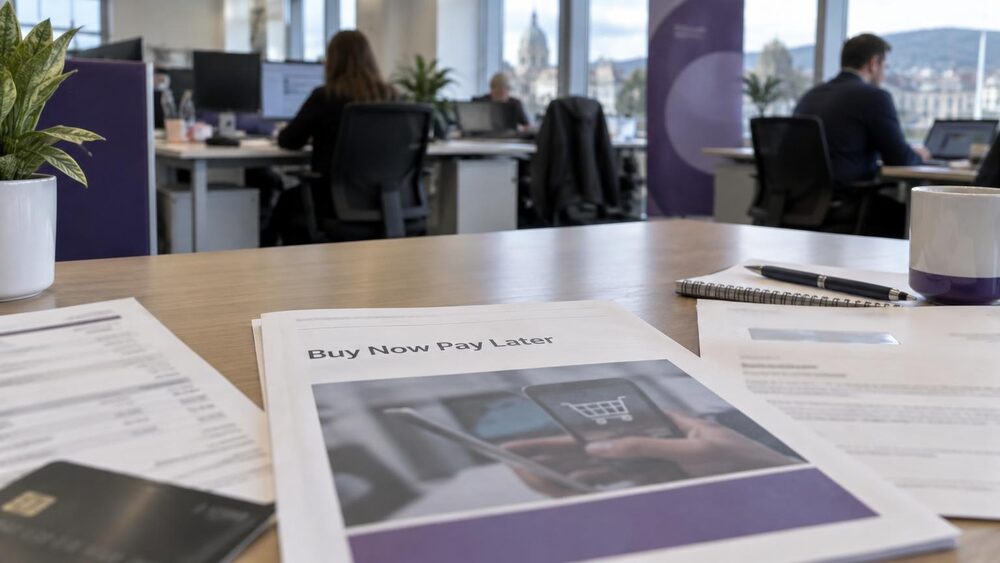
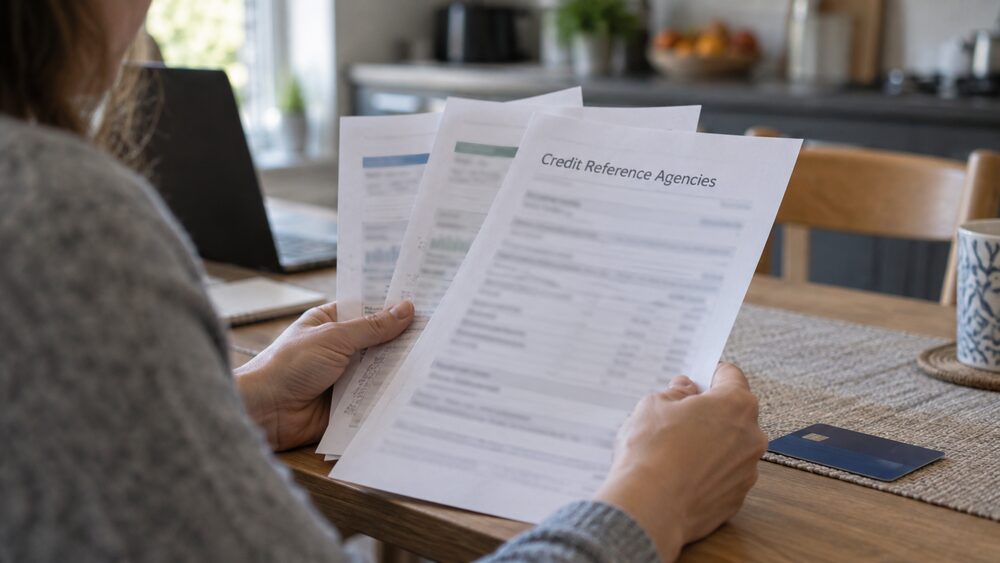
Yes. Buy now pay later is now recorded on your credit file, which it did not used to be1. Each new purchase is usually recorded on your credit report as a new credit agreement, and BNPL lenders are now sharing information with credit reference agencies, including details of purchases, late payments and unpaid purchases2.
Yes. Buy now pay later is now recorded on your credit file, which it did not used to be1. Each new purchase is usually recorded on your credit report as a new credit agreement, and BNPL lenders are now sharing information with credit reference agencies, including details of purchases, late payments and unpaid purchases2.
The rules changed on 15 July 2026, when the FCA began regulating most BNPL products4. From that date, lenders must check you can afford a BNPL purchase, even for smaller amounts, and must give you clear information about your agreement, the payment amount and due date2. BNPL is interest free, but missing a payment can lead to fees, debt collection and marks on your credit report that stay for six years6.
This page explains how each BNPL purchase shows up to lenders, what happens when you miss a payment, why different agencies see different information, and what the FCA rules changed.
Buy now pay later purchases are now recorded on your credit file
Buy now pay later is a way of spreading payments, interest free, for something you buy over a short period of time10. It is also called deferred payment credit, which is the formal name for the product11. Store finance, offered by catalogue brands, online shops and some high street shops, is another form of the same thing: finance on an individual purchase paid off over time12.
What has changed is the recording. BNPL lenders are now sharing information with credit reference agencies, including details of purchases, late payments and unpaid purchases3. Each new purchase is usually recorded on your credit report as a new credit agreement2. It has not been mandatory for lenders to report BNPL to the credit reference agencies in the past, but more accounts are showing up on credit reports15.
The scale of BNPL matters here. BNPL credit was held by around 20% of UK adults in 2024, and it accounts for 8% of all online and physical point-of-sale payments16. With that many people using it, the information now flowing to credit reference agencies affects a large share of consumers.
Your credit agreement is with the BNPL provider, not the retailer5. That matters if something goes wrong with the purchase, because your legal relationship is with the lender that financed it.
How each BNPL purchase shows up to lenders
Not every BNPL purchase appears in the same way. What a lender sees depends on the provider, the type of plan and whether the provider reports to the credit reference agencies.
A short-term plan repaid over weeks may show as a credit agreement with a small balance. A longer-term plan, repaid over months, is more likely to involve a hard credit check when you apply17. Some BNPL purchases may appear on your credit report, and missed payments could be recorded and seen by future lenders2.
For anything you buy using BNPL, a lender will carry out a credit check to make sure you can afford the repayments11. From 15 July 2026, lenders must check you can afford a BNPL purchase, even for smaller amounts2.
Repayment terms vary. BNPL services let you repay after 30 days, 3 months or longer depending on the item3. You might pay regular instalments over a period of weeks or months, or agree to pay by a fixed date and pay off the balance in full no later than the agreed date5.
| What the lender sees | When it applies |
|---|---|
| New credit agreement recorded | Each new BNPL purchase, usually2 |
| Purchase details shared with agencies | BNPL lenders now share purchases, late payments and unpaid purchases3 |
| Hard credit check | More likely on longer-term BNPL plans17 |
| Soft credit check | More common; does not appear on your credit report5 |
| Affordability check | Required from 15 July 2026, even for small amounts2 |
Missed payments: late fees, debt collection and six years on your file
Missing a BNPL payment has consequences that go beyond the payment itself. You may be charged a penalty fee if your payments are late or if you miss a payment, and your BNPL provider may pass information about the missed payment to credit reference agencies, which will affect your credit score5. Missed payments can lead to fees, debt collection and marks on your credit report6.
The duration is the part most people underestimate. Late payments stay on your credit history for six years, as do missed payments and defaults7. All missed, late or partial payments are recorded on your credit file for at least six years18. Some information stays on your credit file for six years, like missed payments, defaults and court judgments19.
If you fall behind with your payments for 90 days or more, the account may be reported as defaulted, and a defaulted account stays on your credit report for six years8. A creditor will soon think about sending a default notice for credit card or buy now pay later debts, and will consider other recovery steps20.
If you are struggling with BNPL debt, free and impartial help is available. StepChange, National Debtline and Business Debtline all provide free debt advice, and the Financial Ombudsman Service can look at complaints about BNPL agreements taken out on or after 15 July 202610.
Why different lenders and agencies see different information
Your credit file is not one document held in one place. Each credit reference agency gets different information from lenders, which means your credit file may not look the same at each one21. Lenders do not always choose to share the same information with all three agencies, so the report you get from each might be slightly different22.
This matters for BNPL because reporting is still uneven. It has not been mandatory for lenders to report BNPL to the credit reference agencies, though more accounts are showing up on credit reports15. The planned regulation of buy now pay later products means that lenders will be required to report these to credit reference agencies in the future23.
There is also no universal credit score. Each lender has its own system, so what one lender sees may differ from another24. Certain things will have a negative impact on your score regardless of the agency, for example not being on the electoral roll or making a late payment25.
You can check your score as often as you like without doing any harm25. Checking your own credit report is not the same as a lender searching it, and it does not affect your score.
What changed when the FCA began regulating BNPL
From 15 July 2026, interest-free buy now pay later products became subject to a new regulatory regime overseen by the FCA26. The FCA started regulating deferred payment credit, often known as buy now pay later, on that date4. Many BNPL products came under FCA regulation for the first time27.
The change brought several protections. BNPL now has similar protections to credit cards, which are covered under the Consumer Credit Act11. The FCA banned interest charges on credit that customers had already paid off during interest-free loan periods28. BNPL agreements are now classified as regulated credit agreements under article 60B(3) of the RAO29.
"We started regulating Deferred Payment Credit, often known as Buy Now Pay Later, on 15 July 2026."
The rules apply to purchases made using BNPL on or after 15 July 2026 only. If you made a purchase using buy now pay later before that date, these rules do not apply to you11. The Financial Ombudsman Service can look at your complaint if you took out the agreement on or after 15 July 202610.
Providers must now give you clear information about your agreement, the payment amount and due date, and must explain what happens if you miss a payment5. They must also disclose key details such as how much you are borrowing, the total cost of your purchase, how much and how often you will need to repay, what could happen if you miss a payment and whether your credit record may be checked27.
Section 75: purchases over £100 and up to £30,000
Section 75 of the Consumer Credit Act 1974 gives you protection when you buy a single item costing between £100 and £30,000 on or after 15 July 2026 using a BNPL provider5. Your BNPL provider is jointly liable in cases of faulty goods, non-delivery or if the retailer goes out of business5.
This is a significant change. Before regulation, BNPL sat outside the Consumer Credit Act, which meant Section 75 did not apply. Now that BNPL agreements are classified as regulated credit agreements, the same protection that applies to credit card purchases extends to BNPL29.
The protection has limits. It applies to a single item costing between £100 and £30,000, not to a basket of smaller items that adds up to more than £100. It applies to purchases made on or after 15 July 2026, not to earlier agreements5.
If you have a complaint about a BNPL purchase, the Financial Ombudsman Service can look at it if you took out the agreement on or after 15 July 202610. Complaints about earlier agreements fall outside the ombudsman's remit for BNPL.
Will lots of small BNPL purchases make it harder to get a mortgage or loan?
They can. A pattern of regular BNPL use may be fed into the affordability calculation when you apply for a mortgage, or lead to delays through further questions30. Lenders look at how you manage credit overall, not just whether you have missed payments.
From 15 July 2026, lenders must check you can afford a BNPL purchase, even for smaller amounts2. That means each BNPL application now involves an affordability assessment, and the lender may share repayment data with credit reference agencies31.
BNPL does not currently help build your credit score, even when used correctly. Unlike a well-managed credit card, BNPL services do not help you with your credit score, even when used correctly, and late or missing payments can lower your score32. Lenders may do a hard or soft search, may share repayment data with credit reference agencies, and missed payments could make future credit harder to get31.
If you are applying for a mortgage, it helps to know what is on your file before a lender sees it. You can check your credit report for free, and checking it does not affect your score25.
Where to get help
If BNPL debt is causing problems, free and impartial help is available. StepChange provides free debt advice, and its guidance covers buy now pay later, store finance and debt collection11. National Debtline and Business Debtline also offer free guidance on managing money and dealing with debt14.
The Financial Ombudsman Service can look at complaints about BNPL agreements taken out on or after 15 July 202610. If you are unhappy with how a BNPL provider has handled a complaint, the ombudsman is the next step.
If you are worried about your credit file, you can check it for free. There is no universal credit score, and each lender has its own system, so what one lender sees may differ from another24. Checking your own report does not harm your score25.
Sources32 cited
- Cost of living guides Royal London
- Buy now pay later guide Experian, 2026
- Costs of living: making the most of your money Business Debtline, 2026
- Buy now pay later FCA, 2026-09-26
- Buy now pay later Consumer Council, 2026
- Buy now pay later guide Experian, 2026
- Getting a mortgage with late payments and defaults Which?, 2025-08-20
- Buy now pay later guide Business Debtline, 2026-09-26
- Buy now pay later: trends in the UK UK Finance, 2026
- Buy now pay later complaints Financial Ombudsman Service, 2026-09-26
- Buy now pay later StepChange, 2026-09-25
- Store finance debt StepChange, 2026-09-25
- Home credit loan agreements complaints Resolver, 2026-09-26
- Cost of living: making the most of your money National Debtline, 2026-09-25
- Understanding credit: buy now pay later Lloyds Bank, 2026-09-27
- Research briefing: buy now pay later House of Commons Library, 2026-07
- Buy now pay later MoneySavingExpert, 2026-09-15
- Mortgage arrears StepChange, 2026-09-25
- How does debt affect a credit file? StepChange, 2026-09-25
- Debt collection StepChange, 2026-09-25
- Finding who I owe money to StepChange, 2026-09-25
- How do I check my credit rating? Debt Advice Foundation, 2020-05-28
- Buy now pay later Bank of Scotland, 2026-09-27
- How to check your credit score for free Which?, 2025-10-24
- How to check your credit score for free Which?, 2025-10-24
- The Deferred Payment Credit Regulations 2025 legislation.gov.uk, 2025-11-04
- 7 things you need to know about new buy now pay later rules Which?, 2026-07-15
- Research briefing: buy now pay later House of Commons Library, 2026-07-08
- The Deferred Payment Credit (Amendment) Regulations 2025 legislation.gov.uk, 2025
- 7 mistakes to avoid with your mortgage application Which?, 2026-06-05
- Debt myths: true or false StepChange, 2026-09-25
- About borrowing Lloyds Bank, 2026-09-27







 MoneyHelperFree, impartial money and pensions guidance, set up by government
 Financial Ombudsman ServiceFree, independent help when a complaint about a firm is not put right
 Citizens AdviceFree advice on money, consumer and legal problems in England and Wales
 StepChangeFree debt advice and solutions from a charity
 GOV.UKOfficial information on tax, benefits and government services