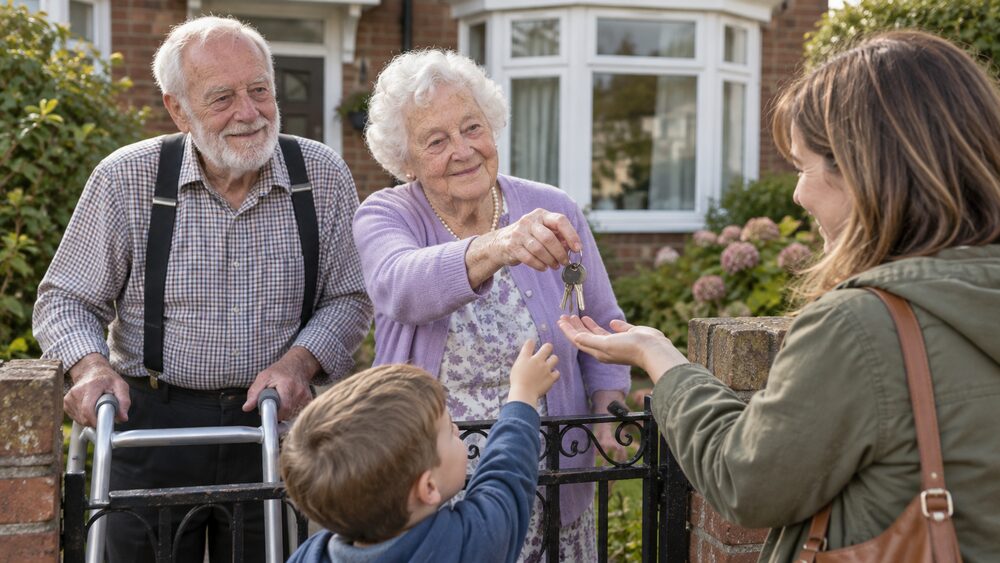
The residence nil-rate band is an extra inheritance tax threshold worth up to £175,000, available when a home is left to direct descendants such as children or grandchildren1. It sits on top of the standard nil-rate band of £325,000, so an individual can pass on up to £500,000 free of inheritance tax, and a married couple or civil partners can reach £1m between them by combining and transferring their allowances2.
The allowance was introduced in April 2017 and rose in stages to £175,000 by April 2020, where it has stayed since3. The government has fixed it at that level until 5 April 20312. It is not automatic in every estate: the home must go to a direct descendant, the estate must not be so large that the taper removes the band, and a claim must be made through the estate's inheritance tax paperwork.
Up to £175,000 on top of the nil-rate band
Inheritance tax is charged at 40 per cent on the value of an estate above the available thresholds. Everyone gets the nil-rate band, fixed at £325,000 since April 20094. The residence nil-rate band, sometimes called the main residence nil-rate band or additional threshold, adds a further £175,000 where a qualifying home passes to direct descendants1. Together they let an individual leave £500,000 tax-free4.
The band did not arrive fully formed. It was introduced in April 2017 and increased gradually between then and April 20203, starting at £100,000 for disposals before 6 April 2017, reaching £125,000 in the 2018-19 tax year, £150,000 in 2019-20, and £175,000 from 2020-21 onwards6. The government has since fixed the threshold at £175,000 until 5 April 20312, a freeze confirmed across successive Budget documents covering the tax years from 2021-22 through to 2029-307.
The band applies to only one home. That home must be included in the estate and must be one the deceased lived in at some stage, but there is no minimum ownership or occupation period, and the home need not be in the UK. Where an estate includes more than one qualifying residence, the executors can nominate which one the band is set against3.
Who qualifies: a home left to direct descendants
The residence nil-rate band only applies if the home is left to a direct descendant. Which? guidance sets out who counts: children, grandchildren and great-grandchildren, and their spouses or civil partners, plus stepchildren, adopted children, foster children and children under the guardianship of the person passing on the estate3. The same definition appears in the detailed breakdown of the rules: the spouses and civil partners of descendants are included in their own right, so a home left to a son-in-law or daughter-in-law can still qualify6.
Who does not count is just as important. Nieces, nephews and friends do not qualify, so a home left to them attracts no residence nil-rate band at all3. Siblings are likewise outside the definition. An unmarried partner is in a similar position: they can only benefit from the deceased's nil-rate band of £325,000 and not the £175,000 residence nil-rate band, because the home must be left to direct descendants for the extra band to apply4.
The definition is deliberately wider than bloodline. A stepchild who was never formally adopted still qualifies, as does a foster child and a child under guardianship6. But the line is drawn at descendants and their partners: anything left sideways in the family, to a brother, sister, niece or nephew, or outside it to a friend or unmarried partner, falls outside the allowance. For those situations the standard nil-rate band, and any transferred band from a late spouse, are all that is available4.
Married couples and civil partners: up to £1m between you
A married couple or civil partners can leave up to £1m before any inheritance tax is charged, thanks to the extra allowance introduced in April 20173. That figure is built from four parts: each partner's £325,000 nil-rate band and each partner's £175,000 residence nil-rate band, with any unused portion of the first partner's bands transferring to the survivor3.
The transfer works on percentages, not pounds. It is the unused percentage of the residence nil-rate band that is transferred, not the unused amount10. This matters because the band has changed over time: if the first partner died in 2018-19 when the band was £125,000 and used none of it, 100 per cent transfers, and that 100 per cent is applied to the full £175,000 band at the second death, not to the old £125,000 figure. The percentages transferred for the residence nil-rate band and the basic inheritance tax threshold can be different, because the two are not linked10.
A transfer can happen even if the first of the couple died before 6 April 2017, before the residence nil-rate band existed at all. In that case the unused residence nil-rate band and the total available are both deemed to be £100,000 for the calculation, and 100 per cent of the allowance is available for transfer unless the first estate was worth more than £2 million10. HMRC's worked example shows the effect: a husband dies before 6 April 2017 using none of his band; when his wife dies in 2019-20, when the maximum band is £150,000, her estate has £300,000 available, made up of her own £150,000 plus the transfer of 100 per cent of £150,00010.
Two limits shape the transfer. The percentage of transferred residence nil-rate band is capped at 100 per cent, and where someone has had more than one spouse or civil partner and claims from each, the total transferred cannot exceed 100 per cent of the maximum available amount10. Couples who are not married or in a civil partnership, or who have divorced, cannot transfer any unused residence nil-rate band to each other, though each can benefit from the band individually10. The rules on transferring thresholds between spouses are set out in more detail in inheritance tax for married couples and civil partners.
The home the surviving partner leaves to direct descendants does not have to be the same home the couple lived in together, and does not have to have been previously owned with or inherited from the late partner. The conditions are that the surviving spouse or civil partner lived in it at some stage before they died, and that the home is included in their estate10.
Estates over £2m: the £1 for every £2 taper
The residence nil-rate band is withdrawn from larger estates. If the estate is worth more than £2 million, the band tapers away, falling by £1 for every £2 above the threshold5. The taper threshold itself is set at £2 million and the government has confirmed it will continue to start at that level2.
The arithmetic is unforgiving. At £2.35 million the taper has removed the whole £175,000, so an estate valued at £2.35m or above receives no residence nil-rate band at all12. Which? puts the same point another way: if the estate is worth £2.4m, the residence nil-rate band is lost entirely5. The two figures describe the same cliff edge from different sources, and the earlier, lower figures reflect the years when the band itself was smaller: the whole band was lost at £2.25m in 2018-19, at £2.3m in 2019-20, and at £2.4m from 2020-21 onwards, when the band reached its full £175,0006.
One point catches people out: the taper is calculated before any gifts to charity are counted12. Charitable donations can reduce the value of an estate below £2m for other purposes, but they are not taken into consideration when calculating the residence nil-rate band12. So a large estate cannot buy the band back by leaving money to charity on death. The detailed mechanics of the withdrawal are covered in when the residence nil rate band is tapered away.
Downsizing, selling or giving away a home
The band is not lost automatically when someone sells or gives away their home before death. The residence nil-rate band can also apply if the deceased downsized to a less valuable residence, or sold or gave away a residence, on or after 8 July 201513. This is the downsizing addition, and it stands in for the band that the former home would have attracted.
Three conditions must all be met, according to HMRC's guidance9:
- The person sold, gave away or downsized to a less valuable home on or after 8 July 2015.
- The former home would have qualified for the residence nil-rate band if they had kept it until they died.
- Their direct descendants inherit at least some of the estate.
The addition only really bites where the value of the home at death is less than the main residence nil-rate band at that time3. Where the former home was worth the same as or more than the maximum band available at the time of the disposal, the lost band is treated as 100 per cent of the maximum band available when the person died9. The maximum band is measured at the date of the disposal: £125,000 in the 2018-19 tax year, or £100,000 if the disposal was before 6 April 20179.
The policy behind this was set out when the rules were designed: the band is available when a person downsizes or ceases to own a home on or after 8 July 2015 and assets of an equivalent value, up to the value of the additional nil-rate band, are passed on death to direct descendants14. In other words, the home itself need not be in the estate, but something of equivalent value must reach the descendants. The same relief can apply to a surviving spouse or civil partner who sold or gave away their home on or after 8 July 2015 and leaves other assets to direct descendants10.
One exclusion matters: if someone downsized but had never lived in the less valuable property, that property is not a home for these purposes9. The home must be one the person actually lived in at some stage. Property held in certain trusts is included within a person's estate for inheritance tax purposes, so the downsizing rules apply in those circumstances too9.
Where the residence nil-rate band does not apply
The band has clear boundaries, and estates outside them rely on the standard nil-rate band alone.
- The home is not left to direct descendants. The allowance only applies if the home goes to a child or grandchild in the wide sense of the definition; nieces, nephews and friends do not qualify3. It tapers for estates over £2m and does not apply if the property is left to other beneficiaries15.
- The estate is too large. At £2.35m or above, no residence nil-rate band is received at all12.
- The property was never lived in. The home must be one the deceased lived in at some stage; a buy-to-let or holiday home never occupied by the owner does not qualify3.
- The partner is unmarried. Unmarried partners can only benefit from the deceased's nil-rate band of £325,000 and not the £175,000 residence nil-rate band4.
- The disposal was before 8 July 2015. The downsizing addition only covers sales, gifts or downsizing on or after that date9.
The residence nil-rate band applies to only one home, so an estate with several qualifying properties must nominate one; the others attract nothing extra3. There is no minimum ownership period and the home need not be in the UK, which are the rare relaxations in an otherwise strict set of conditions3.
How the allowance is claimed and transferred
The residence nil-rate band is claimed against the estate of someone who has died using form IHT43513. The claim is made by the personal representatives as part of the inheritance tax return, and the band is set against the value of the qualifying home, or the assets standing in for it under the downsizing rules.
Where the deceased had a spouse or civil partner who died before 6 April 2017, or who died after that date without having used all the residence nil-rate band available to them, the executors fill in Schedule IHT436, the claim to transfer any unused residence nil-rate band16. The equivalent claim for the basic nil-rate band is Schedule IHT402, used where the deceased died on or after 9 October 2007 and had a spouse or civil partner who died before them16.
The deadline is easy to miss. There are 24 months after the end of the month in which the deceased died to make the claim17. After that, the transfer of an unused band is not available without HMRC agreeing to extend the time limit, so executors dealing with an estate late in the process should treat the claim as urgent.
Not every estate needs a full claim. Excepted estates, where there can be no liability to inheritance tax because the gross value does not exceed the nil-rate band, or twice the nil-rate band where there is a valid claim to transfer the unused band from a predeceased spouse or civil partner, follow a shorter process17. For those, the full nil-rate band must be available to transfer from the earlier death so that the deceased's own band is increased by 100 per cent16. How the thresholds are applied to the estate as a whole is explained in inheritance tax: thresholds, rates and who pays.
Frozen allowances: what the freeze means for your estate
Both thresholds have been frozen for a long time. The nil-rate band has been stuck at £325,000 since April 2009, and the residence nil-rate band, at £175,000, was last increased in April 20204. The government has fixed both at their current levels until 5 April 20312, through a series of measures covering the tax years from 2021-22 up to and including 2025-267, then 2026-27 and 2027-2818, and finally 2028-29 and 2029-308.
A frozen allowance shrinks in real terms as house prices and asset values rise. Which? has calculated the effect: had the residence nil-rate band risen with inflation, it would stand at £221,633 rather than £175,000, a shortfall of 27 per cent15. The same analysis puts the nil-rate band's inflation-adjusted figure far above its frozen level. The practical consequence is that more estates are drawn over the thresholds each year without anyone changing their will, a process known as fiscal drag.
For families, the freeze interacts with the other rules on this page. A home that would once have passed comfortably within a couple's combined £1m allowance can now push the estate towards the £2m taper threshold, where the residence nil-rate band starts to be withdrawn5. Planning around this is a matter of record-keeping as much as anything else: the transfer of a late spouse's unused band depends on paperwork from the first death, and the downsizing addition depends on evidence of when a home was sold and what it was worth9. The wider rules on giving assets away are covered in gifts and inheritance tax: the seven-year rule, and the taxation of trusts in how trusts are taxed.
Sources18 cited
- Budget 2025: rates and allowances annex HM Government, 2025
- Budget 2025: overview of tax legislation and rates HM Government, 2025
- Inheritance tax property changes Which?, 2026
- Why some families will be hit harder by new inheritance tax rules for pensions Which?, 2026
- 5 inheritance tax planning mistakes to avoid Which?, 2026
- Inheritance tax property changes: detailed rules Which?, 2026
- Inheritance tax nil rate band and residence nil rate band thresholds from 6 April 2021 HM Government, 2021
- Inheritance tax nil rate band and residence nil rate bands from 6 April 2028 HM Government, 2024
- How downsizing, selling or gifting a home affects the additional inheritance tax threshold HMRC, 2017
- Inheritance tax: transfer of threshold HMRC, 2016
- Autumn Budget 2024: rates and allowances annex HM Government, 2024
- Could donating to charity lower my inheritance tax bill? Which?, 2026
- Claim the residence nil-rate band HMRC, 2023
- Inheritance tax: main residence nil-rate band and the existing nil-rate band HM Government, 2015
- How much could frozen tax thresholds be costing you? Which?, 2025
- IHT400 notes, 2021 HMRC, 2021
- IHT400 notes, 2022 HMRC, 2026
- Inheritance tax nil rate band and residence nil rate band thresholds from 6 April 2026 HM Government, 2022




 GOV.UKOfficial information on tax, benefits and government services
 MoneyHelperFree, impartial money and pensions guidance, set up by government
 Citizens AdviceFree advice on money, consumer and legal problems in England and Wales
 Turn2usFree benefits calculator and grants search from a charity
 Citizens Advice ScotlandFree advice across Scotland