
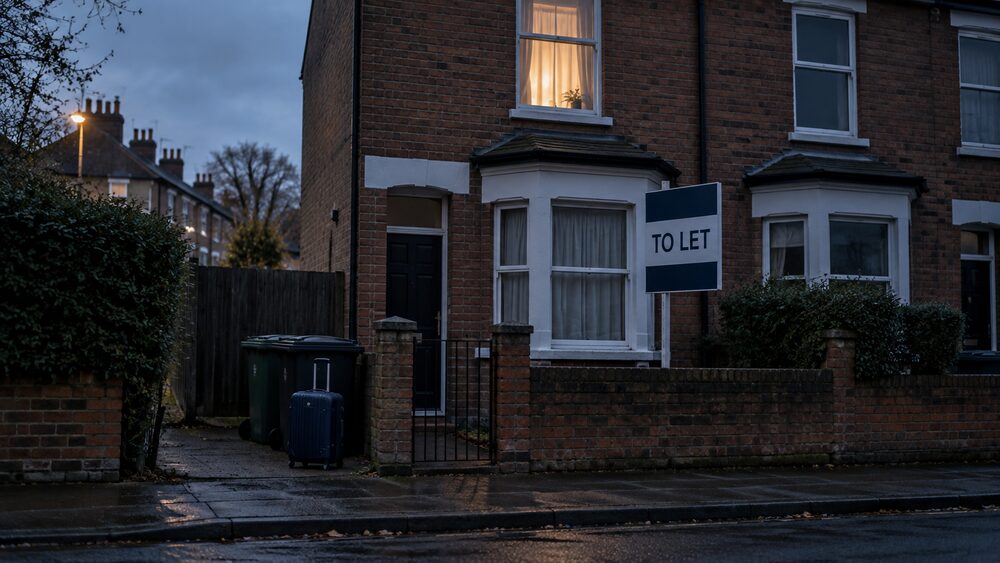
Rental income is taxable. If you let out a property, the rent counts as income, and you pay Income Tax on the profit at your normal rate1. The first £1,000 of income from property you rent is tax-free under the property allowance, unless you choose to claim your actual expenses instead2. Below that threshold you do not have to report the income at all3.
Rental income is taxable. If you let out a property, the rent counts as income, and you pay Income Tax on the profit at your normal rate1. The first £1,000 of income from property you rent is tax-free under the property allowance, unless you choose to claim your actual expenses instead2. Below that threshold you do not have to report the income at all3.
Above it, the tax you pay depends on your other income. For 2026/27, the basic rate of 20% applies to income from £12,571 to £50,270, the higher rate of 40% to income from £50,271 to £125,140, and the additional rate of 45% to income above £125,1404. Rental profit sits on top of your wages, pension or self-employed earnings, so it can push you into a higher band even if your salary alone would not5.
From 6 April 2027, the rates on income from property, including rental income, rise to 22% for basic-rate taxpayers, 42% for higher-rate taxpayers and 47% for additional-rate taxpayers6. The rates that apply in Scotland and Wales may differ, because the Finance Act 2026 makes provision for Scottish and Welsh property rates to be set by the Scottish Parliament and Senedd Cymru7.
Rental income is taxable above the £1,000 property allowance
The property allowance gives you £1,000 of tax-free income from rented property each tax year2. If you claim it, you deduct £1,000 from your rental income rather than working out your actual expenses2. Homeowners letting rooms on Airbnb can benefit from the same £1,000 allowance5.
There is a separate relief if you let a furnished room in your own home. Under the Rent a Room scheme, you can earn a certain amount tax-free, and if the rent exceeds £7,500 a year you can either pay income tax on the amount over £7,500, or pay tax on all the rent and claim tax back on any expenses9. For joint lettings, the tax-free amount is £3,75010.
If your total income from UK property is £10,000 or more for the tax year before expenses, you must complete the main tax return5. That is a reporting rule, not a tax threshold: it decides which parts of the return you fill in, not whether the income is taxable.
What rates apply: 20%, 40% or 45% on top of your other income
Rental profit is taxed at your marginal rate, the rate that applies to the top slice of your income. For 2026/27 those rates are 20% on income from £12,571 to £50,270, 40% on income from £50,271 to £125,140, and 45% above £125,1404. You pay Income Tax on income above your Personal Allowance, which is £12,570 for 2026/274.
Because rental profit stacks on top of your other income, a landlord with a salary near a band boundary can cross into the higher rate through rent alone. Nationwide's guidance for existing mortgage members puts it plainly: "You must pay tax on any profit you make from renting out property. This may mean your rent income moves you into a higher tax band"5.
From 6 April 2027 the rates on property income rise by two percentage points: 22% for basic-rate taxpayers, 42% for higher-rate taxpayers and 47% for additional-rate taxpayers6. These are new rates specific to property income, not a change to the main Income Tax bands.
If you hold property in a discretionary trust, the trust pays income tax at 45% on all interest or rental income if the total is over £50012. Some landlords incorporate and pay corporation tax on profits instead of income tax on rental income, but that brings its own filing obligations13.
Where rental income sits in your tax calculation
Rental profit is part of your total income for the year, alongside wages, benefits, self-employed earnings and money you make from renting out a property11. It counts towards the £100,000 threshold at which the Personal Allowance starts to be withdrawn: those earning more than £100,000 see their Personal Allowance reduced by £1 for every £2 earned over that figure11. You do not get a Personal Allowance at all if you earn over £125,14011.
Rental income can also affect means-tested benefit payments, because rent counts as taxable income14. If you let a room in your home, you might have to pay tax on the income you get from rent, though you can earn a certain amount tax-free1.
The tax is charged on profit, not on the rent you receive. You will need a summary of your gross rental income for the year, the amount you have received without taking away any of your expenses2. Keeping records matters because HMRC can ask to see them, and the figures you declare feed into the property rental income statistics that HMRC publishes from Income Tax Self Assessment returns15.
Reporting rental income through Self Assessment
Landlords need to file tax returns for their rental income through Self Assessment16. If the profit from renting property is over £2,500, you must register for Self Assessment by 5 October following the end of the tax year2. Landlords who do not already file a tax return must tell HMRC about any rental income by 5 October after the tax year ends5.
The process runs in this order:
- Tell HMRC about your rental income by 5 October after the tax year ends, if you do not already file a return5.
- Register for Self Assessment if your rental profit is over £2,5002.
- Keep records of your gross rental income and expenses for the year2.
- File your return and pay any tax due by the 31 January deadline.
If you are a non-resident landlord, you can apply to HMRC for approval to receive your rental profits with no tax deducted. In return, HMRC will ask you to complete a Self Assessment tax return once a year10. HMRC will also send a separate notice to any tenants or letting agents named on the application form, authorising them to pay rental income without deducting tax17.
If you live and pay tax in the UK, you must tell HMRC about any rental income you receive from any overseas properties you own10. You pay income tax on any profits at your normal rate10.
Making Tax Digital for landlords: who has to join
From April 2026, landlords and sole traders earning over £50,000 a year before tax and expenses must comply with new digital reporting requirements under Making Tax Digital for Income Tax8. The change takes effect from 6 April 202620. Making Tax Digital currently applies to self-employed people and landlords with qualifying income over £50,000 per year21.
The threshold reduces to £20,000 from April 2028. Taxpayers with qualifying income of more than £20,000 on their 2026/27 tax return must follow the Making Tax Digital rules from 6 April 202821. That brings in a further group of landlords who are below the current £50,000 threshold but above £20,000.
If you are affected, you keep digital records and send quarterly updates to HMRC through compatible software, rather than filing one annual return. The qualifying income test looks at gross income before tax and expenses, not profit, so a landlord with high rent and high mortgage costs can still be caught.
Jointly owned property and inherited property
If you own a rental property jointly, the income is generally split according to your share of ownership, and each owner reports their share. The Rent a Room scheme's tax-free amount is £3,750 for joint lettings rather than £7,500, which reflects that split10.
If you inherit a property and rent it out, you may have to pay Income Tax on the rental income22. Income Tax applies to any profit you earn from an inheritance, for example dividends on shares or rental income from a property22. Inheritance Tax is separate and depends on the value of the estate.
Scottish and Welsh landlords
The Finance Act 2026 makes provision for Scottish and Welsh property rates to be set by the Scottish Parliament and Senedd Cymru7. This means the rates that apply to property income in Scotland and Wales may differ from those in England and Northern Ireland.
Scottish Income Tax already operates on its own rates and bands, set by the Scottish Government24. Scottish landlords should check which rates apply to their property income, because the rates that apply to earned income in Scotland are not the same as those in the rest of the UK.
Average rents increased to £1,442 (3.4%) in England, £836 (4.7%) in Wales, and £1,009 (1.0%) in Scotland, in the 12 months to May 202626. Those figures come from rental price data collected by the Valuation Office Agency and equivalent bodies in the devolved governments27. Higher rents in England mean higher gross income for landlords there, though the tax treatment depends on profit and on the rates that apply.
What can go wrong, and where to get help
The most common problem is not registering in time. If you do not tell HMRC about rental income by 5 October after the tax year ends, you can face penalties even when no tax is due. Late filing penalties apply to Self Assessment returns, and they can be charged even if your rental profit is below the level at which tax becomes payable.
If you are struggling with an Income Tax bill, free and impartial help is available. TaxAid provides tax information and guidance for people on lower incomes2. Business Debtline offers guidance on income tax debt28. MoneyHelper provides free, impartial money guidance.
If you disagree with an HMRC decision about your rental income, you can ask for an internal review or appeal to the tax tribunal. The deadline for telling HMRC about rental income is 5 October after the tax year ends, and the filing and payment deadline is 31 January5.
Sources28 cited
- Income Tax GOV.UK, 2026-09-26
- Property rentals TaxAid, 2025-10-06
- Do I need to complete a Self Assessment tax return? TaxAid, 2026-03-23
- Finance Act 2026 legislation.gov.uk, 2026
- How rental income is taxed Which?, 2026-04-06
- Changes to tax rates for property, savings and dividend income GOV.UK, 2025-11-26
- Rent to Own Wales Welsh Government, 2026
- Self Assessment tax Which?, 2026
- Rent a Room scheme: letting a room in your home Which?, 2026-04-06
- Tax on overseas property Which?, 2026-04-06
- Tax if you come to the UK GOV.UK, 2026-09-26
- Wills, trusts and lifetime trusts Which?, 2026-03-23
- Buy-to-let mortgage tax relief changes explained Which?, 2026-04-06
- Do I have to sell my home to pay for care? Age UK, 2026-03-03
- Property rental income statistics GOV.UK, 2026-08-28
- Letting your property Nationwide, 2026
- Administrative memorandum 05/26 GOV.UK, 2026
- Self-employed VAT return Which?, 2026
- Paying tax when self-employed Which?, 2026
- Online tax returns Which?, 2026-04-06
- Making Tax Digital: when does it start for me? LITRG, 2028-04-06
- Tax on property, money and shares you inherit GOV.UK, 2026-09-26
- Inheritance tax property changes Which?, 2026-04-06
- Scottish Income Tax GOV.UK, 2026-09-26
- Scottish Income Tax rates and bands: 2026 to 2027 Scottish Government, 2026
- Private rent and house prices, UK: June 2026 ONS, 2026-06
- Calculating the household costs indices ONS, 2026-05-28
- Income tax debt Business Debtline, 2026-04-06









 GOV.UKOfficial information on tax, benefits and government services
 MoneyHelperFree, impartial money and pensions guidance, set up by government
 Citizens AdviceFree advice on money, consumer and legal problems in England and Wales
 Turn2usFree benefits calculator and grants search from a charity
 Citizens Advice ScotlandFree advice across Scotland