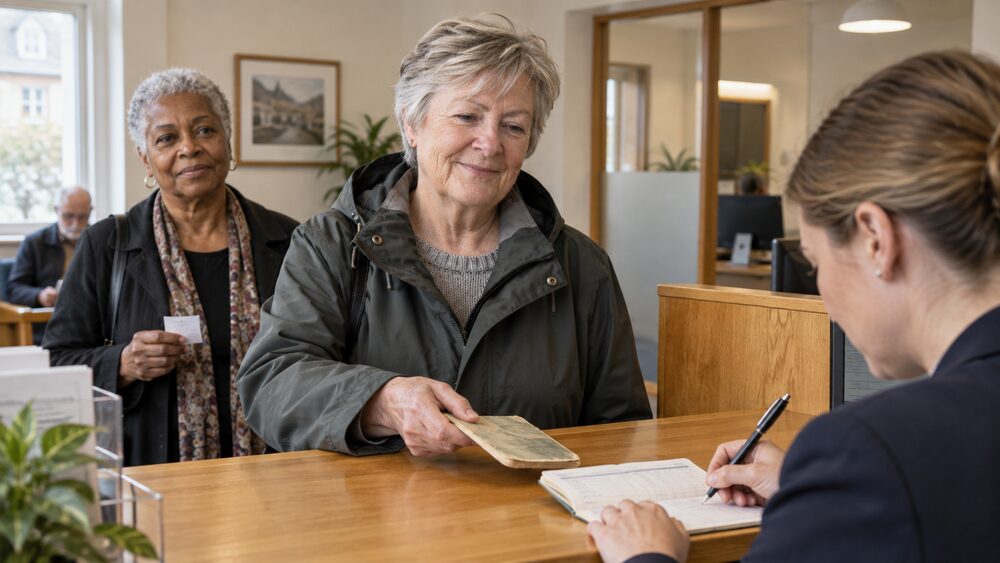
A passbook savings account is a savings account run through a branch, where a small book records what you pay in and take out. The passbook is not just a record: for many accounts it is the key to the money. One building society says plainly that withdrawals will not be allowed without the passbook if one was issued1, and another will not permit any withdrawals from the account until satisfactory evidence of identity is received and a replacement passbook issued2.
A passbook savings account is a savings account run through a branch, where a small book records what you pay in and take out. The passbook is not just a record: for many accounts it is the key to the money. One building society says plainly that withdrawals will not be allowed without the passbook if one was issued1, and another will not permit any withdrawals from the account until satisfactory evidence of identity is received and a replacement passbook issued2.
They are not available with every account. One building society says it can offer passbooks with most of its accounts, when opened in branch3, and several accounts issue a passbook only if you apply in person4. Accounts opened online, by post or by telephone often do not come with one at all7.
What follows covers what a passbook account is, how to open one, how paying in and taking money out works at the branch, whether you can check the balance without travelling, and what to do if the passbook goes missing.
What a passbook savings account is
A passbook account is a savings account where the record of your money lives in a physical book, updated when you pay in or take out. The book is issued when the account is opened: one building society says you will receive a passbook when you open your account11, and another issues one when the account is opened12. At a credit union, each member is issued with a pass book13.
The format is separate from the access terms. "Instant access" describes how quickly you can reach your money, and a passbook describes how the account is run and recorded. Some accounts are both: one building society labels its Instant Access Saver a passbook-based savings account14. Others are passbook accounts with strings attached, such as a notice period before withdrawal17 or a limit on how many withdrawals are allowed6.
Passbooks are not confined to savings. One bank describes its Service Account as a passbook current account18, so the format can appear on a current account too.
If you are weighing up formats, types of savings account sets out how easy access, notice and fixed-term accounts differ, and easy access savings accounts explains the access terms that a passbook account may or may not carry.
Opening a passbook account: done in branch
Passbook accounts are opened in person, and often by appointment. One building society asks you to look at its range of branch-based savings accounts and then call your nearest branch to book an appointment9. A bank lets you book an appointment to open an account in one of its branches, and asks for proof of your identity and address if you do not already bank with it19.
The passbook itself usually depends on where you apply. Several accounts issue a passbook when the account is opened in branch4, and one states that if you open the account online, a passbook will not be issued20. Some accounts go further: one Branch Saver can only be applied for in person at a named branch, and the passbook is required for all transactions21.
Not every branch-based account needs a passbook. One building society says that for telephone or postal accounts a passbook or card is not needed, and it is possible to make an investment without one3.
Paying in and withdrawing at the branch
At the counter, the routine is the same across most providers: bring the passbook, and staff process the transaction and update the book. One building society says to bring your passbook to your local branch and the team will process the withdrawal and update the passbook9. Another asks for the passbook and a form of ID22, and a third says a passbook or card is needed to make a withdrawal for branch-based members3.
The passbook requirement is strict on some accounts. One society states that withdrawals can be made in branch with the passbook, and that withdrawals will not be allowed without the passbook if one was issued1. Another requires the passbook to be presented for branch or postal withdrawals and branch closures23.
There are alternatives to a branch visit on many accounts:
- By post. Several accounts allow withdrawals by sending the passbook with written instructions2, and one notes that a postal account can be operated by post at your own expense20.
- By transfer to a nominated account. One regular saver allows withdrawals by branch visit, by sending the passbook with written instructions, or by transfer to a nominated account7.
- By telephone, app or online banking. One credit union lets members withdraw by bank transfer on online banking or its mobile app, by telephone, or by visiting the branch24.
- By cash machine. The same credit union offers cash at any cash machine with a prepaid debit card, if you hold a current account with it24.
Checking your balance online or in the app
A passbook used to mean a trip to the branch to see your balance. That is changing. One building society says its branch-based savings accounts can now be accessed online or in its app to view your balance and recent transactions9. Another invites passbook account holders to register for its online service, where they can check the balance, monitor transactions and contact the society online14.
Some accounts are digital by default. One bank issues no paper statements, with the balance and transactions viewable online around the clock or through its savings app, and a closing statement provided, with paper copies on written request25. The same bank lets customers manage the account through its website, its savings app or an online savings portal26.
Where online access exists, it usually sits alongside the passbook rather than replacing it. A credit union, for example, offers online balance viewing and transfer requests while still running the account through its branch and telephone service24. Basic bank accounts more generally allow you to check your balance at a bank, at a cash machine or online27.
If your provider does not offer online access, the passbook itself is the record, and the branch is where it is updated.
Is a passbook account the same as an instant access account?
No, though the two often overlap. Instant access is about how quickly you can get your money; a passbook is about how the account is recorded and operated. An account can be both, one or neither.
The overlap is real. One building society's Instant Access Saver is described as a passbook-based savings account14, and a Junior Saver lets you withdraw at any time without notice or penalty by visiting a branch with your passbook25. A Young Savers account allows withdrawals without notice or penalty by visiting a branch or by forwarding the passbook with written instructions7.
The difference matters when access is restricted. A notice account may require notice before you can take money out17, and a limited access account may cap the number of withdrawals6. Neither restriction is caused by the passbook; both would apply whatever the format.
If you are choosing between formats, easy access savings accounts and notice savings accounts set out the access terms side by side, and limited access savings accounts explains accounts that cap withdrawals.
If your passbook is lost or stolen
Report it to your bank or building society straight away. One building society asks you to visit your nearest branch as soon as you can so it can help secure a replacement and protect your account9. Another puts a hold on the account so that it cannot be used28.
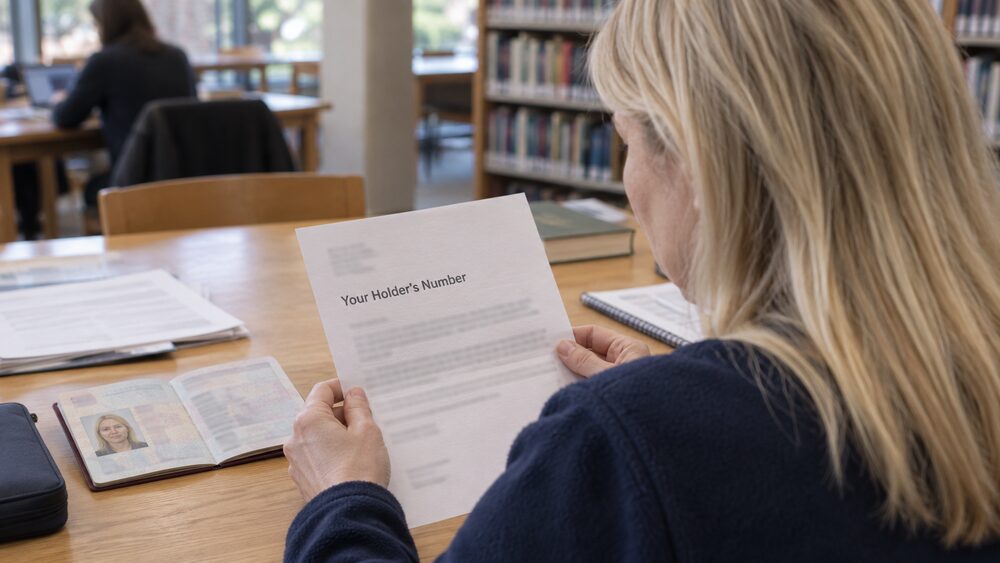
The consequences can be firmer than a replacement book. One society states that if you lose your passbook it will not permit any withdrawals from the account until satisfactory evidence of identity is received and a replacement passbook is issued8. In practice that means no access to your money until the identity checks are complete.
The same instinct applies to any lost financial document. Guidance on identity theft says that if a card, driving licence or passport is lost, it should be reported as lost immediately to the organisation that issued it29. Official advice on personal data breaches goes further: report lost or stolen documents to the issuer, check bank statements and your credit report, watch out for phishing, use strong passwords and multifactor authentication, and consider Cifas protective registration30. Northern Ireland-specific guidance says to speak to your bank or building society straight away if a card, online bank account or cheque book has been stolen or hacked31.
If a passbook is lost rather than stolen, and the account has been dormant for years, the My Lost Account service can help you search for forgotten savings pots from banks, building societies and National Savings and Investments32. The service is run by the British Bankers' Association, the Building Societies Association and NS&I33.
Where to get help
If a passbook account is not working for you, or you cannot get to a branch, the first step is to ask your provider what alternatives it offers, such as postal withdrawals, a nominated account or online balance viewing. Accessible banking guidance covers what banks and building societies are expected to provide for customers who find branches or standard processes difficult34.
For free, impartial help with savings and money decisions more broadly, MoneyHelper and the debt advice charities publish guidance on building an emergency fund and managing savings35. If you are tracing an old account, the My Lost Account service is the starting point32.
Sources36 cited
- Notice 180 SRBS, 2026
- Partnership Everyday Saver (Issue 4) Furness Building Society, 2026-09-26
- What is a passbook Newcastle Building Society, 2026-09-26
- Everyday Saver (Issue 4) Furness Building Society, 2026-09-25
- Furness Student Savings Account Furness Building Society, 2026-09-26
- Triple Access Saver (Issue 2) Furness Building Society, 2026-09-25
- Adcock Regular Saver Melton Building Society, 2026-03-31
- Managing your savings account Mansfield Building Society, 2026-07-20
- Passbook savings accounts Nottingham Building Society, 2026-09-26
- Are you sitting on a windfall? How to track down forgotten money Which?, 2026-07-11
- Young Savers Account Furness Building Society, 2026-09-26
- Pocket Money Saver (Issue 3) Furness Building Society, 2026-09-26
- Savings Beragh Credit Union, 2026-09-26
- Online Service Dudley Building Society, 2026-09-26
- Instant Access Saver Scottish Building Society, 2026-09-25
- Savings face to face or by post Scottish Building Society, 2026-09-26
- 150 Day Notice Saver (Issue 4) Furness Building Society, 2026-09-25
- Service Account TSB, 2026
- Reward Saver Barclays, 2026
- Access-One Saver SRBS, 2026-09
- Branch Saver (5) Family Building Society, 2025-12-18
- Regular Savings Account Kent Reliance, 2026-09-26
- Double Access Saver (Issue 2) Furness Building Society, 2026-09-25
- Payroll Savings Account Darlington Credit Union, 2026-09-26
- Young Savers Melton Building Society, 2026-05-11
- Online savings Scottish Building Society, 2026-09-26
- Safe bank accounts Business Debtline, 2026-09-26
- Savings FAQs Nottingham Building Society, 2026-09-26
- Identity theft Take Five, 2026-09-26
- What steps can I take if I've been affected by a personal data breach? Information Commissioner's Office, 2026-09-25
- Protect your identity nidirect, 2025-10-28
- Experian to close tracing service: here's how to search for lost cash Which?, 2022-08-24
- Fixed rate savings warning: what to do when your bonds mature Which?, 2026-04-15
- Accessible banking and financial services Scope, 2026-08-17
- How to save for an emergency StepChange, 2026-09-25
- Manage and maximise your money Consumer Council for Northern Ireland, 2026


 MoneyHelperFree, impartial money and pensions guidance, set up by government
 FSCSProtects your money if a bank, insurer or investment firm fails
 Financial Ombudsman ServiceFree, independent help when a complaint about a firm is not put right
 Citizens AdviceFree advice on money, consumer and legal problems in England and Wales
 GOV.UKOfficial information on tax, benefits and government services