
Paying into an NS&I account usually means moving money from a UK bank account you already hold. The main route is Pay by bank account, which uses the payment provider Ecospend: you confirm the amount, you are passed to your own bank to authorise it, and the money goes to NS&I. You can also open some accounts with a debit card in your own name issued by a UK bank, and set up a standing order from your bank for regular payments1.
Paying into an NS&I account usually means moving money from a UK bank account you already hold. The main route is Pay by bank account, which uses the payment provider Ecospend: you confirm the amount, you are passed to your own bank to authorise it, and the money goes to NS&I. You can also open some accounts with a debit card in your own name issued by a UK bank, and set up a standing order from your bank for regular payments1.
Two rules shape everything else. The money must be in pounds sterling and must come from a UK bank or building society account in your name, and NS&I does not accept credit cards or money from non-UK financial institutions2. Before any of it lands, NS&I has to be satisfied about who you are, which it normally does electronically through a credit reference agency5.
Paying in through your bank: how the Ecospend payment works
Pay by bank account is the everyday way to top up an NS&I account online. It needs two things: an NS&I account you can top up online, and a UK bank account you can access through your bank's app or website1. You start the payment on the NS&I side, confirm the amount, and are then transferred to your bank to approve it. Confirming the payment and selecting continue consents to the policy, gives Ecospend permission to start the payment, and gives permission for you to be transferred to your bank to make the payment2.
The information NS&I shares with Ecospend is narrow: the amount you want to deposit, and your NS&I account number or holder's number1. NS&I states plainly that it cannot access your bank account, and that neither it nor Ecospend has access to your bank login details1. The login step happens with your own bank, which is where the authorisation sits.
For regular saving, a standing order does the same job on a schedule. You contact your bank and give the details of how much you want to transfer and when; with most banks this can be done online or through their mobile banking app, or by filling out an NS&I form and giving it to the bank3. Some accounts can also be funded from another NS&I holding: if you have an NS&I Direct Saver, you can apply online for Green Savings Bonds and pay for it from your Direct Saver8.
Identity checks before NS&I accepts your money
NS&I is required by law to check your identity and address when you apply to invest or register for the online and phone service, and possibly at other times to keep its records up to date5. In practice it normally checks your identity and address electronically through a credit reference agency, and only asks for documents if that electronic check does not work5.
Where documents are needed, the requirement is two different documents, one from List A and one from List B, matching the name and address on the application and showing the issuing organisation's name and contact details5. Accepted identity documents include a passport copy, a certified national identity card, a certified passport card, a certified overseas driving licence showing an address, and a certified bank statement issued within the last three months. A certified translation into English may be requested if the document type is not obvious5.
Applications can involve more than one person. NS&I states that, in line with anti-money laundering legislation, it may verify the identity of everyone named in the application9. That matters for joint accounts and for anyone buying on someone else's behalf. If you are buying Premium Bonds as a gift for someone else's child, NS&I will ask the parent or guardian to provide proof of their own and the child's identity, and identity documents will need to be posted10.
Documents NS&I accepts and how to get copies certified
Certification is the part people get wrong. For a UK certifier, the wording to write on every page of the copied document, in English, is: "I certify that this a true and complete copy of the original [type of document] belonging to [your name]." It must be signed and dated on every page, with the certifier's full name, occupation, work address, daytime telephone number, an official stamp where available, and their professional registration number if they have one5.
For an overseas certifier the wording is slightly different: "I certify that this is a true copy of the original [type of document] belonging to [your name]." That is written on the copied document, signed and dated, with the certifier's occupation or capacity stated5.
The document requirements change with age and residence. Savers aged under 16 living outside the UK need one document: a certified copy of the child's birth certificate, or a copy of the child's passport. Savers aged 16 or 17 living outside the UK need one document: a certified copy of their birth certificate, or a copy of their passport5.
There is a useful precedent for getting copies certified without paying a solicitor, though it comes from a different government process. In Northern Ireland, a local Jobs & Benefits office can check original documents and make certified copies with their office stamp; claimants outside the UK, or unable to reach an office, must send originals11. It shows the kind of counter service that exists, but NS&I's own list of acceptable certifiers is the one that governs an NS&I application.
Paying in from outside the UK: a UK bank account is required
Living abroad does not automatically rule out saving with NS&I. Customers living outside the UK may still save with NS&I if they have a UK bank account5. That single condition does most of the work, because the funding rules still apply: deposits must be in pounds sterling from a personal account held in your name at a UK regulated bank or building society, and credit cards and non-UK money are not accepted4.
So the practical position for an overseas saver is that the money has to pass through a UK account in your name before it reaches NS&I. A euro or dollar account, or a transfer direct from a foreign bank, will not do. The identity requirements are also heavier from abroad, because the electronic check through a credit reference agency is less likely to succeed on a non-UK address, which pushes the application towards certified documents5.
Once an account is open, paying in works the same way as it does in the UK, provided the funding account is a UK one. For Guaranteed Income Bonds, for example, you need your NS&I or account number and bank account details to hand12. The same is true for Green Savings Bonds13.
Protecting your payments from fraud and scams
The payment itself is authorised inside your own bank, which is where the fraud controls sit. The Payment Systems Regulator publishes app fraud data covering reimbursement to victims, money sent from victims' accounts, and money received into fraudsters' accounts, from the largest 14 banking groups in Great Britain and Northern Ireland14. The regulator also points to additional interventions to improve data sharing to spot and prevent scams, and the roll-out of the name-checking service, Confirmation of Payee14. Confirmation of Payee is the check that tells you whether the name you typed matches the name on the account you are paying.
NS&I's own security promise says it will monitor your account 24/7 and will use technology to safeguard your savings15. If something goes wrong, its advice is direct: contact your bank immediately if you think you've fallen for a scam, and report it to Action Fraud15.
The Financial Ombudsman Service sets out the immediate steps for a scam victim: contact your bank or payment services provider immediately, contact the police on 101, report the scam to Report Fraud, and keep records of all contact and correspondence between you and the scammer16. Records matter because a reimbursement decision turns on what happened and when.
Scams also arrive dressed as official services. One recurring pattern is companies that promise to provide your National Insurance number online in return for a fee; the Trades Union Congress warns savers to be alert to them17. The same caution applies to anything that asks you to move money quickly to an NS&I-sounding account.
HM Treasury guarantee: 100% of what you pay in, with no limit
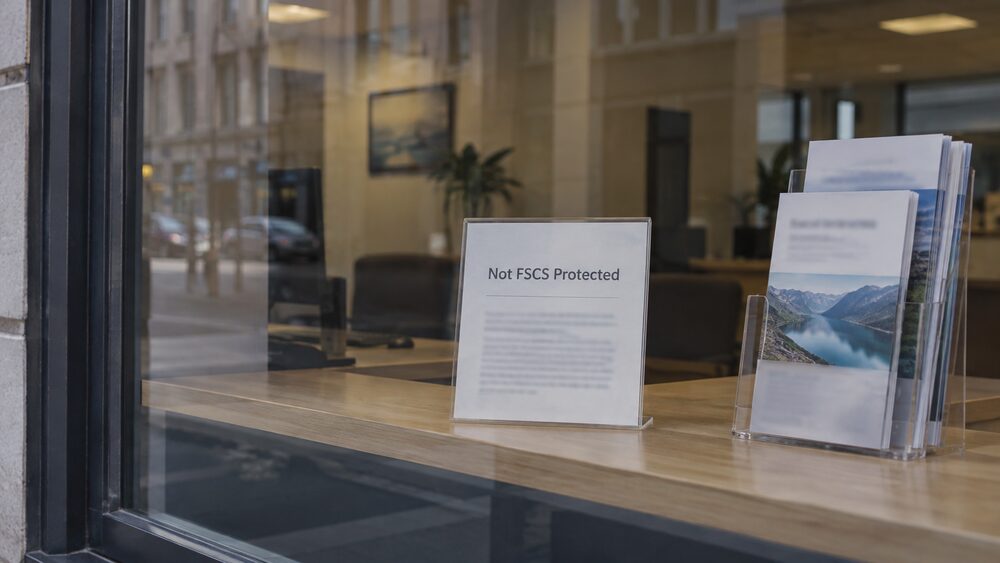
NS&I is backed by HM Treasury, the government's economic and finance ministry18. Because of that backing, it is not covered by the Financial Services Compensation Scheme, and 100% of all NS&I savings are fully protected6. There is no ceiling to plan around, and no need to split money between NS&I and other providers to stay inside a limit.
That protection is the main reason NS&I accounts come up for large sums. Independent guidance notes that NS&I's Guaranteed Growth and Guaranteed Income Bonds allow deposits of £1m per account19, and NS&I itself states a maximum of £1 million per person in each Issue for Guaranteed Income Bonds20. Premium Bonds are capped much lower, at up to £50,00021. The protection applies to the money you hold, not to the rate you earn on it.
What you need to log in and pay in
Access runs on two credentials: your NS&I number, and a password you create2. You need those to reach the account online, and you need an NS&I account that can be topped up online plus a UK bank account you can access through your bank's app or website to make a Pay by bank payment1. When you sign in, you may be told you need to prove your identity, which normally involves photo ID such as a passport or driving licence22.
Age changes who controls the account. As soon as you turn 16, you become responsible for your own NS&I account or accounts23. For a Junior ISA, only a parent or legal guardian can open an account for a child under 16, and a parent or guardian can manage it while the child is under 16; once the child reaches 16, they can manage it online after registering with a signed form24. Children aged 16 or 17 can open their own Junior ISA24.
Moving money between NS&I accounts
NS&I runs a switching service for moving money between its own accounts. You choose from the accounts listed and complete the relevant form, including the amount you want to switch and the NS&I account you are switching it from25. Holdings that can be switched include individual Savings Certificates, Direct ISA accounts, Direct Saver accounts and Premium Bonds26.
Some accounts are built for two names. A Direct Saver can be opened in your own name or jointly with one other person6, and Guaranteed Income Bonds can be invested in your own name or jointly with one other person20. Joint holding does not change the funding rules: the money still has to come from a UK account in your name, and NS&I may verify the identity of everyone named in the application9.
If you are moving money into an ISA, the tax wrapper has its own rules. The NS&I Direct ISA allowance is £20,000 per tax year, and you can invest from £1 up to that figure in the tax year 2026/2727. The Direct ISA is not a flexible ISA, which means all your deposits within the tax year count towards your allowance even if you withdraw the money28. You can transfer an NS&I ISA balance to another provider, but you need to contact your new provider and they will arrange the transfer for you28.
Where the rules come from, and what to do if something goes wrong
NS&I does not set its own rates. Its interest rates and the Premium Bonds prize fund rate are set by HM Treasury and may change from time to time4. The Premium Bonds prize fund rate is 4.35% variable from the July 2026 prize draw7. Prizes can be paid directly to your bank account or to an NS&I Direct Saver, or reinvested into more Bonds30.
If a payment goes wrong or a complaint is not resolved, NS&I is covered by the Financial Ombudsman Service26. For Direct Saver and Income Bonds, the key documents state that you may be able to refer your complaint to the Financial Ombudsman Service free of charge18. Complain to NS&I first, then escalate if the outcome is not what you expected.
For general help with savings decisions, MoneyHelper offers free, impartial guidance, and debt advice charities can help where savings sit alongside problem debt. On the payment side, the switching service required of payment service providers under the Payment Accounts Regulations 2015 applies between payment accounts denominated in the same currency and held with providers located in the United Kingdom31, which is a different process from NS&I's internal switching service and worth keeping separate in your mind.
Sources31 cited
- Pay by bank account NS&I, 2025-12-01
- Join NS&I NS&I, 2026-07-21
- How to save while you sleep NS&I, 2026-09-01
- Guaranteed Growth Bonds key features NS&I, 2025-06-30
- Evidence of identity NS&I, 2026-04-15
- Direct Saver NS&I, 2026-09-04
- Premium Bonds NS&I, 2026-09-04
- Green Savings Bonds NS&I, 2026-09-04
- Manage saving for an adult NS&I, 2026-04-02
- Gift NS&I, 2026-09-01
- Maternity Allowance claim form notes nidirect, 2026-01
- Guaranteed Income Bonds maturing investments NS&I, 2026-08-17
- Green Savings Bonds maturing investments NS&I, 2025-11-26
- App fraud performance data Payment Systems Regulator, 2026-09-26
- Our online security promise NS&I, 2024-02-05
- Scams involving unauthorised payments and identity theft Financial Ombudsman Service, 2026-09-26
- I have lost my National Insurance number, what do I do? Trades Union Congress
- What to do if your bank goes out of business Which?, 2025-12-01
- Are the proceeds of my house sale safe in a bank account? Which?, 2026-04-27
- Guaranteed Income Bonds NS&I, 2026-09-04
- Are you sitting on a windfall? How to track down forgotten money Which?, 2026-07-11
- Proof of benefits and State Pension GOV.UK, 2026-09-26
- Take ownership of savings NS&I, 2023-12-05
- Junior ISA NS&I, 2026-09-24
- Switching NS&I, 2026-06-10
- Complaints NS&I, 2026-09-24
- ISAs NS&I, 2026
- Direct ISA NS&I, 2026-09-04
- Income Bonds brochure NS&I, 2024-07-01
- Premium Bonds prizes NS&I, 2026-05-13
- The Payment Accounts Regulations 2015, Part 3 legislation.gov.uk, 2026










 MoneyHelperFree, impartial money and pensions guidance, set up by government
 FSCSProtects your money if a bank, insurer or investment firm fails
 Financial Ombudsman ServiceFree, independent help when a complaint about a firm is not put right
 Citizens AdviceFree advice on money, consumer and legal problems in England and Wales
 GOV.UKOfficial information on tax, benefits and government services