
A notice account pays a higher rate than an easy access account in exchange for one condition: you tell the provider in advance when you want your money. Give the notice and you pay nothing. Take the money sooner and the usual penalty is lost interest on the amount you withdraw, worked out over the notice period. On a 100 Day Notice account, for example, the penalty is equivalent to 100 days' interest on the amount withdrawn, at the gross rate payable at the time of withdrawal or closure1.
A notice account pays a higher rate than an easy access account in exchange for one condition: you tell the provider in advance when you want your money. Give the notice and you pay nothing. Take the money sooner and the usual penalty is lost interest on the amount you withdraw, worked out over the notice period. On a 100 Day Notice account, for example, the penalty is equivalent to 100 days' interest on the amount withdrawn, at the gross rate payable at the time of withdrawal or closure1.
That is the common shape of it, but not the only one. Some accounts let you withdraw immediately and charge the penalty; others refuse early access altogether. Newbury Building Society's Access 90 account requires 90 days' notice for all withdrawals and states there is no option to withdraw early with a penalty2. Chorley Building Society's 90 Day Notice Account says a penalty cannot be paid instead of providing the notice3. So the first thing to check is not the size of the penalty but whether the account allows early access at all.
Where early access is allowed, the penalty is normally expressed in days of interest rather than a flat fee, and it is charged on the amount you take out, not your whole balance1. Independent research on fixed-term accounts found providers that do allow earlier access charge interest penalties typically between 90 and 365 days4.
The usual penalty: lost interest for the notice period
The penalty is calculated as the interest you would have earned over the notice period on the money you take out. Cambridge Building Society sets it out plainly: on a 100 Day Notice account the penalty is equivalent to 100 days' interest on the amount withdrawn at the gross rate payable at the time of withdrawal or closure1. The Loughborough's 30, 60 and 120 day notice accounts follow the same pattern, each charging a penalty equivalent to the notice period's interest on the amount withdrawn7.
The rate used matters. Because the penalty is worked out at the gross rate payable at the time of withdrawal, a rate cut before you take the money out reduces the penalty as well as your interest1. The penalty is also charged only on what you withdraw, so taking out part of the balance costs proportionally less than closing the account.
The range across the market is wide. Independent research on fixed-term savings accounts found penalties typically between 90 and 365 days of interest4, and Which? reported the same range for fixed-rate cash ISAs, where penalties typically range between 90 and 365 days loss of interest for early closure or withdrawal10. Dudley Building Society's Two Year Fixed Rate ISA Issue 46 charges a penalty of 180 days interest on all requests, and notice cannot be served on that account at all11.
NS&I's older Fixed Interest Savings Certificates, for those starting their term on or before 22 July 2023, charged a penalty equal to 90 days' interest on any money taken out early, deducted from the payment12.
When early access is allowed and when it is not
Notice accounts divide into three groups, and the difference matters more than the size of any penalty.
Accounts that allow immediate withdrawal with a penalty. The Loughborough's notice accounts are typical: withdrawals are subject to the notice period, or you may withdraw immediately subject to a penalty equivalent to the notice period's loss of interest on the amount withdrawn7. HRBS's 120 day and 160 day notice accounts work the same way13.
Accounts that refuse early access entirely. GB Bank's notice accounts state that no penalties apply if you follow the notice period, and early access is not permitted, so you must wait until the notice term ends15. Newbury's Access 90 requires 90 days' notice for all withdrawals with no early option2, and Chorley's 90 Day Notice Account does not accept a penalty in place of notice3.
Accounts that allow early access only in narrow circumstances. Bank of London and The Middle East's Premier Deposit Account allows strictly no early withdrawals, except solely in the event that you or a joint account holder dies or is diagnosed with a terminal illness11.
There is also a cap on how much notice you can give. HRBS states that you cannot give notice to withdraw an amount greater than the balance of your account at the time of giving notice, taking into account any other notice period already being processed13. If you have already started a notice period, you cannot start another on the same money.
Cancelling a notice, and what happens to interest while you wait
Cancelling a notice is possible on some accounts but not others, and the timing is tight. Gatehouse Bank's savings terms say you may cancel your withdrawal notice by logging into your account online at least one business day before it expires, and a new notice period applies to subsequent withdrawals16. If you cancel and then change your mind again, you start the clock over.
Interest continues during the notice period. Family Building Society says you will still earn interest up until the date the withdrawal has been made5, and Santander International says your money will continue to earn interest up to the date of withdrawal17. The notice period is a waiting time, not a freeze.
Rates can move while you wait. AJ Bell's guidance says that if the bank is changing its rate, it will let you know18. Bank of Ireland UK's personal current account terms give at least two months' notice of interest rate changes other than those to your advantage or resulting from a reference interest rate change19. Savings account terms vary, so the notice you get depends on the account.
Ways to get money quickly without breaking the notice
If the money is needed sooner than the notice period allows, the options are limited and each has a cost.
- Take the penalty. Where the account allows it, withdraw immediately and accept the interest penalty on the amount withdrawn7. This is the simplest route and the cost is known in advance.
- Withdraw part of the balance. The penalty is charged on the amount withdrawn, not the whole balance1, so taking less costs less.
- Use a different account for the emergency. Keeping accessible money in an easy access account alongside a notice account avoids the penalty entirely. Instant access accounts can carry their own withdrawal penalty on some higher rate versions20.
- Check whether the account has a no-penalty route. NS&I's Index-linked Extension Terms allow the investment to be cashed in at any time with no penalty21, though this applies only to those specific terms.
Loanpad's Premium account shows a different model: 60 days' notice to take money out, or an early access fee when available of up to 0.5% of the amount22. That is a fee rather than lost interest, and it is not the norm for notice accounts.
What happens if the account holder dies
Banks will usually freeze the account once notified of the death, and money can only be taken out if the executor transfers it23. Marie Curie's guidance says the same: once notified, the banks will usually freeze your account24.
NS&I sets out its own approach for Direct Saver: if the account holder, or the last surviving account holder of a joint account, dies, no more deposits can be accepted, the balance becomes part of the account holder's estate, and the account continues to earn interest21. Some notice accounts allow early withdrawal specifically on death or terminal illness, which is the exception to an otherwise strict no-access rule11.
Where FSCS protection stops
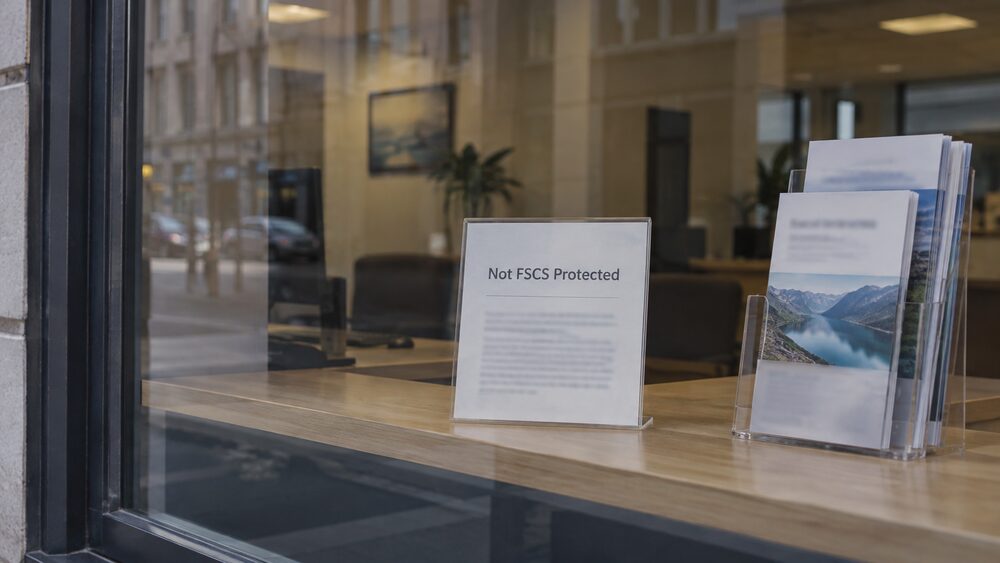
Notice accounts are deposits, so they fall under the Financial Services Compensation Scheme. Chetwood Bank's notice account, for example, states it provides the security of FSCS protection25.
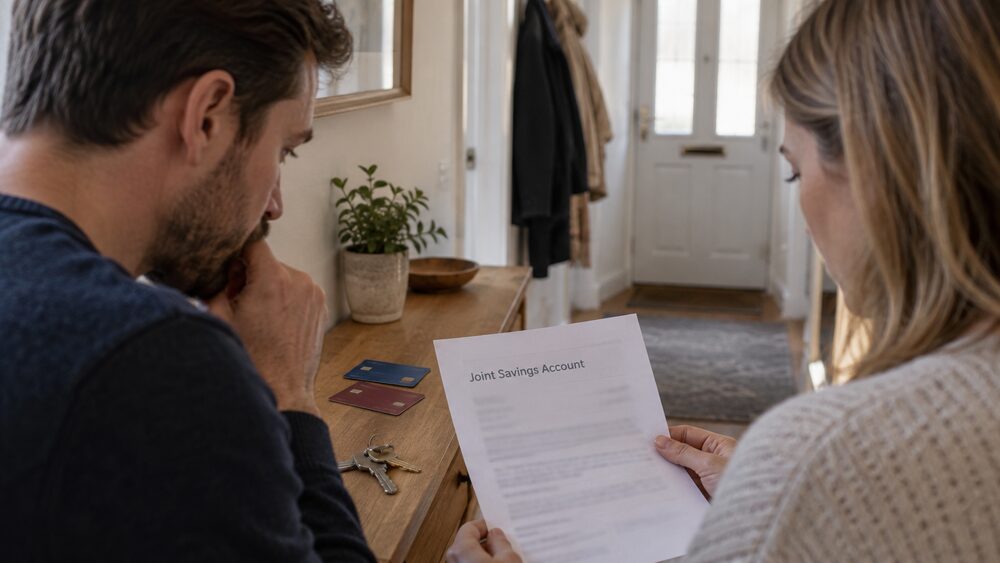
The limit is not per account. FSCS protection is across all accounts held within the bank or banking group, not per account26. If you hold an individual account and a joint account within the same banking group, the £120,000 compensation limit applies across all of them together, not to each separately6. That matters for anyone spreading money across brands that share a licence, and it is worth checking which brands count together before assuming each account has its own cover.
If you think a penalty has been applied wrongly
Start with the provider. The Financial Conduct Authority's guidance on unauthorised payments says to contact your bank as soon as possible and claim a refund, and if your complaint is about something your bank has done, such as refusing a refund, to contact the bank to make a complaint27.
If the bank does not resolve it, the Financial Ombudsman Service can look at the complaint. The ombudsman can order remedies such as missed payments plus interest up to the date of payment where an administrative error caused payments not to be received on time28. Penalties can be incurred if you break the conditions of the account, such as not giving sufficient notice for withdrawals29, so the first question in any complaint is whether the notice you gave met the account's terms.
Sources29 cited
- Savings glossary Cambridge Building Society, 2026-09-26
- Access 90 Newbury Building Society, 2026-09-25
- 90 Day Notice Account Chorley Building Society, 2026-09-26
- Trapped in a fixed-term account? Which?, 2022-11-14
- Notice accounts Family Building Society, 2026-09-26
- Check your money is protected FSCS, 2026-09-25
- 120 Day Notice Deposit Account The Loughborough Building Society, 2026-05-19
- 30 Day Notice Deposit Account The Loughborough Building Society, 2026-05-19
- 60 Day Notice Deposit Account The Loughborough Building Society, 2026-05-19
- Will fixing your ISA beat the tax-free allowance cut? Which?, 2026-06-21
- Two Year Fixed Rate ISA Issue 46 Dudley Building Society, 2026-09-26
- Fixed Rate Savings Certificates NS&I, 2024-05-15
- 120 Day Notice HRBS, 2026-06-18
- 160 Day Notice HRBS, 2025-12-19
- Notice account GB Bank, 2026
- Savings terms and conditions Gatehouse Bank, 2025-12-01
- Notice Account Santander International, 2026-09-25
- Notice account AJ Bell, 2026
- Personal current account terms Bank of Ireland UK, 2026
- Opening a savings account Raisin UK, 2026-09-28
- Direct Saver brochure NS&I, 2024-07-01
- FAQs Loanpad, 2026
- Bank accounts and finances Marie Curie, 2023-12-20
- Financial help at end of life Macmillan Cancer Support, 2022-09-01
- 35 Day Notice Account Chetwood Bank, 2026-09-25
- Deposit protection for banks FSCS, 2026-09-25
- Account information and payment initiation services Financial Conduct Authority, 2017-12-08
- Personal pensions complaints Financial Ombudsman Service, 2026-09-26
- Savings account jargon buster Teachers Building Society, 2026-09-26









 MoneyHelperFree, impartial money and pensions guidance, set up by government
 FSCSProtects your money if a bank, insurer or investment firm fails
 Financial Ombudsman ServiceFree, independent help when a complaint about a firm is not put right
 Citizens AdviceFree advice on money, consumer and legal problems in England and Wales
 GOV.UKOfficial information on tax, benefits and government services