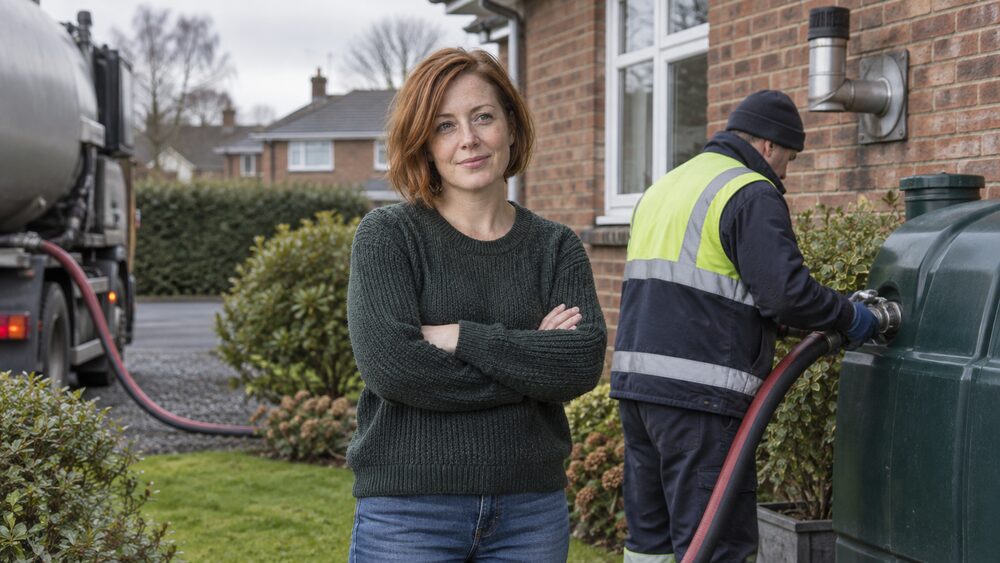
If you live in Northern Ireland, the energy price cap you read about in the news does not apply to you. Energy prices in Northern Ireland are not controlled by the price cap1. The cap set by Ofgem covers Great Britain only, because Northern Ireland has its own electricity and gas market, its own suppliers and its own regulator. When Ofgem announces a rise or fall in the cap, nothing automatically changes on a bill in Belfast or Ballymena.
That does not mean prices there are unregulated or that households have no options. There are 5 electricity suppliers in Northern Ireland, Budget Energy, Power NI, SSE Airtricity, Click Energy and Share Energy, plus 2 gas suppliers, and households can save money by switching supplier, billing method or tariff2. Roughly two thirds of homes rely on oil heating rather than gas or electricity for warmth3, so for many households the biggest energy cost is home heating oil, which is priced quite differently again.
The body to know about is the Consumer Council for Northern Ireland. It is the statutory consumer representative body for Northern Ireland4, it has statutory powers to investigate complaints about energy, water, transport and postal services5, and its service is free to use6.
The price cap stops at the Irish Sea
The energy price cap was introduced by Ofgem in 2019 to ensure fair prices for customers who don't actively switch energy provider8. It sets a maximum unit price per kWh and a maximum daily standing charge that energy suppliers can charge9. Those limits bind suppliers in England, Scotland and Wales. Northern Ireland sits outside the system entirely: its electricity market developed separately, with its own network and its own set of licensed suppliers, and prices there are not controlled by the cap1.
A few details of how the cap works in Great Britain are worth knowing, because they explain what Northern Ireland households are missing out on and what they are not. The cap varies by energy supply region, payment method and type of electric meter, for example standard or economy 79. A separate price cap is set for each of the 14 regions and applies throughout the region1. The cap also does not apply to fixed tariffs8, so even in Great Britain it protects households on standard variable deals rather than everyone.
In place of the cap, Northern Ireland has its own arrangements. During the energy crisis of 2022, when the record prices of that year would have led to an 80% increase in the cap in Great Britain without government intervention1, the UK government capped typical household energy bills at £3,000 under the Energy Price Guarantee, rather than £2,50010. Support reached Northern Ireland through separate legislation: the Energy Prices (Designated Domestic Price Reduction Schemes) (Northern Ireland) Regulations 2022, made on 3 November 2022 and in force from 5 November 2022, required designated suppliers in Northern Ireland to reduce the prices they charged domestic customers11. That was a temporary scheme, not a standing cap, and it has not been replaced by anything equivalent.
Day to day, oversight of the market sits with the Utility Regulator, which covers gas, electricity, water and sewerage in Northern Ireland12, while consumer interests are represented by the Consumer Council. Neither body sets a household price cap in the way Ofgem does.
How Northern Ireland prices compare with the cap in Great Britain
The clearest way to see the difference between the two markets is to put the numbers side by side. Since October 2023 the cheapest prices from Northern Ireland's largest supplier have been higher than prices under the cap in the rest of the UK1. So while households in Great Britain saw the cap fall from £1,849 in April 2025 to £1,641 in April 202613, and a typical household cap of £1,755 was set for the final quarter of 202514, households in Northern Ireland were comparing supplier tariffs against a different benchmark altogether.
The comparison is not flattering, but it is not the whole story either. Bills for typical consumption under the October to December 2026 price cap in Great Britain will be 58% higher than in winter 2021/221, and the average price of electricity under the direct debit cap in October 2026 is 26.3 p/kWh, a 1% increase1. Great Britain's cap was still 18% higher than its recent low of July to September 20241. In other words, the cap has not made energy cheap anywhere in the UK; it has limited how much standard variable prices can rise in Great Britain, a protection Northern Ireland households do not have.
For a Northern Ireland household, the practical points are these. First, when a news headline gives a new cap level in pounds, that figure is not your bill. Second, the way to know whether you are paying over the odds is to compare the tariffs actually on offer in Northern Ireland, which the Consumer Council's comparison tools let you do for electricity, gas and home heating oil15. Third, the gap between the markets is tracked publicly: the Consumer Council's Home Energy Index records gas and electricity tariffs every month and home heating oil prices every week16, so the comparison with Great Britain is visible rather than hidden.
Power NI and the largest supplier's tariffs
Power NI is the largest electricity supplier in Northern Ireland and the one most households think of first, partly because it is the successor to the old state electricity business and holds many long-standing customers. Its tariffs are the reference point against which the local market is judged. The uncomfortable finding, from the House of Commons Library's analysis of the two markets, is that since October 2023 the cheapest prices from Northern Ireland's largest supplier have been higher than prices under the cap in the rest of the UK1.
That gap matters for two kinds of household. If you are still with the largest supplier and have never switched, you are on the tariff that has sat above the Great Britain cap, and comparing the other four suppliers is the obvious first check. If you have already switched, the gap is a reminder that even the cheaper local tariffs have not matched what the cap allows in Great Britain, so savings from switching are real but limited by the market itself.
Tariffs in Northern Ireland also differ by how you pay. The cap in Great Britain varies by payment method and meter type9, and Northern Ireland suppliers similarly price differently for direct debit, keypad or pay-as-you-go billing and standard credit. The Consumer Council's electricity price comparison tool exists precisely for this: it lets you see whether there is a cheaper or more suitable provider available for your circumstances2. Because the local market is small, tariff changes by the largest supplier tend to move the whole market's baseline, which is why Power NI's price announcements receive so much attention.
Five electricity suppliers, two gas suppliers
There are 5 electricity companies in Northern Ireland: Budget Energy, Power NI, SSE Airtricity, Click Energy and Share Energy2. Alongside them there are 2 gas suppliers2. With a market that small, the range of choice is narrower than in Great Britain, but it is genuine choice, and the Consumer Council's advice is that it makes sense to shop around to compare prices and service2.
| Market | Number of suppliers | Suppliers named |
|---|---|---|
| Electricity | 5 | Budget Energy, Power NI, SSE Airtricity, Click Energy, Share Energy2 |
| Gas | 2 | not individually named in the Consumer Council's guidance2 |
| Home heating oil | many local distributors | prices vary by order and location, tracked weekly16 |
What each supplier offers differs in the detail: tariffs, billing methods, service arrangements and any bundled offers. The Consumer Council's comparison tool is the neutral way to see them side by side, because it is run by the statutory consumer body rather than by any supplier2. Nothing obliges you to switch, and there is no single right answer, but staying with a supplier out of habit is the one choice that is guaranteed not to respond to price changes in the market.
Switching supplier, tariff or billing method
You could save money by switching supplier, switching billing method, or switching tariff17. Those are three separate moves, and a household might make any one of them without the others. Switching supplier means moving your electricity account to one of the other four companies. Switching billing method means changing how you pay, for example from standard credit to direct debit or to a keypad meter. Switching tariff means staying with your supplier but moving to a different pricing plan.
One practical trap catches many Northern Ireland households: energy comparison sites in the UK will not work if you live in Northern Ireland18. The comparison services advertised nationally cover the Great Britain market only. To compare tariffs you will need to visit the Consumer Council website18, whose tools are built for the Northern Ireland market and cover electricity, gas and home heating oil15.
The steps for comparing and switching are straightforward:
- Gather a recent bill or your meter details, so you know your current supplier, tariff and billing method.
- Use the Consumer Council's electricity price comparison tool to see whether a cheaper or more suitable provider is available2.
- Check the appliance cost checker as well, which estimates the running costs of your appliances and provides tips on saving money and improving energy efficiency2.
- Contact the new supplier you have chosen, or ask your current supplier about a different tariff or billing method.
- Confirm the switch details, including any differences in how you will pay.
For oil households, a different kind of switching applies: the Northern Ireland Oil Buying Network negotiates discount prices with suppliers on behalf of its members on a weekly basis, and is run by the NI Housing Executive's Energy Advice Service19. Joining a buying network is not the same as switching energy supplier, but it is the closest equivalent for a fuel bought by the litre.
Comparing electricity, gas and home heating oil prices
Comparing fuels in Northern Ireland is harder than in Great Britain because so many households heat with oil. Approximately 62.5% of households have oil central heating16, roughly two thirds of homes, around 500,000 households in total3. Oil is not on a tariff at all: it is bought in bulk, by the litre, at a price that moves week to week. Recent price increases of nearly 100% in just a few weeks have been especially punishing there, in the words of the Department for Communities3.
The Consumer Council's Home Energy Index exists to make these fuels comparable. It tracks changes in household gas, electricity and home heating oil prices in Northern Ireland, recording gas and electricity tariffs every month and home heating oil prices every week16. For oil specifically, the Consumer Council gathers oil prices from across Northern Ireland so that you can check whether you are getting a competitive price for your order19.
| Fuel | How it is priced | How to compare |
|---|---|---|
| Electricity | supplier tariffs, varying by billing method | Consumer Council electricity comparison tool2 |
| Gas | supplier tariffs, 2 suppliers | Consumer Council comparison tools15 |
| Home heating oil | per-litre market price, moving weekly | Consumer Council oil price checker and weekly Home Energy Index16 |
Two budgeting options exist specifically for oil. PayPoint, with the Northern Ireland Oil Federation, offers a budgeting card which allows households to spread the cost of oil throughout the year19. The Northern Ireland Oil Buying Network negotiates weekly discounts for members19. Both are worth knowing about if a large oil delivery twice a year is what strains your budget, since spreading the cost is a different problem from reducing it.
Help with the cost of home energy
There are advice agencies, grants and schemes available to help with the cost of home energy17, and several have delivered direct payments to Northern Ireland households.
The most recent is the Household Electricity Discount Scheme. Around 860,000 households will receive a £63 discount off electricity bills, from 6 October 2026, worth annual electricity discounts of around £30 to households for three years20. The scheme is funded by £85.4 million of Treasury money covering 75% of the domestic cost of the Northern Ireland Renewable Obligation over three years20.
Older households have separate support. Winter Fuel Payments are broadly £200 for a household with someone of State Pension age and £300 for a household with someone aged 80 or over21. Regulations made in 2025 made Winter Fuel Payments universal again, increasing the number entitled in Northern Ireland to approximately 336,00021. Before that, in 2024/25, the Emergency Fuel Payment Scheme run by the Department for Communities provided a one-off payment of £100 to all pensioner households no longer eligible for the Winter Fuel Payment22.
Beyond payments, the Consumer Council publishes guidance on understanding your electricity and gas bill and how your meter works, on renewable electricity and heat, and on saving money generally17. For households struggling to make ends meet, it also offers money saving tips on household bills including electricity, oil, gas and food shopping, a free downloadable budget planner, and independent comparison tools for electricity, gas and home heating oil prices15.
The pressure is real and measured. The Consumer Council's Household Expenditure Tracker found that on average the spending power of households in Northern Ireland is 31.4% lower than in Q1 2021, in Q1 2026 prices23. For the lowest-spending quarter of households, housing, electricity, gas and other fuels take 10.0% of total basic spending23. Its earlier Cost of Basics research found energy costs were a concern for 91% of Northern Ireland consumers, with just 11% saying they have most control over their energy costs24. Low-income households there spend more on food, 21.2%, than on the combined costs of housing, water, electricity, gas and other fuels, 19.7%24.
Complaints about an energy supplier: when the Consumer Council can step in
The Consumer Council has statutory powers to investigate complaints about energy, water, transport and postal services in Northern Ireland5. Its investigations cover electricity and gas companies, for example billing issues, customer service failings or problems with your meter6. It has helped thousands of consumers, returning millions of pounds, from airline refunds to fixing electricity billing issues4.
The process starts with the supplier, not the Consumer Council. The Consumer Council normally works as a Stage 2 body, which means you are supposed to contact the service provider first7. Its own guidance is the same: make a complaint to them in the first instance to give them the opportunity to put things right6. Only if the complaint remains unresolved does the Consumer Council step in.
How an unresolved energy complaint travels from the supplier to the Consumer Council5.
Once involved, the Consumer Council's process is concrete. It requests copies of all communication between you and the company about your complaint, communicates by telephone, letter, email or in person, reviews the complaint, contacts the company, works on your behalf, keeps you informed and shows you the company's response5. If you would like someone else to act on your behalf, you give your permission in writing5.
Where the Consumer Council's help stops
The Consumer Council's powers have limits, and knowing them saves wasted effort. It cannot guarantee what the outcome of an investigation will be, or compel companies or organisations to take certain actions5. It investigates and presses; it does not adjudicate in the way a court or ombudsman might, and an energy supplier can in principle refuse to do what it asks.
Its territory is bounded too. The Consumer Council serves Northern Ireland's 1.9 million citizens4, and it can't help consumers who live outside Northern Ireland, unless the complaint is about a flight that departed from or arrived into Northern Ireland6. For general consumer questions rather than complaints about energy, water, transport or postal services, Consumerline is the advice service, and it is for Northern Ireland consumers only26.
Its remit also has edges within consumer finance. The Consumer Council does not have any statutory remit for insurance, and does not take or investigate consumer complaints regarding insurance4. It does, though, also handle some matters beyond the utilities, including complaints about parking charge notices received from private parking companies7. It was established in 1985 as a non-departmental public body7, operates under its sponsor department, the Department for the Economy, on behalf of the Northern Ireland Executive4, and draws its legal responsibilities from legislation, licences given to companies working in Northern Ireland, and cooperation agreements set in memorandums of understanding4.
For anything outside its scope, the route is different: complaints about financial services go to the Financial Ombudsman Service rather than the Consumer Council, and general consumer problems in Northern Ireland can be taken to Consumerline26. But for electricity, gas and home heating oil, the market this page is about, the Consumer Council is the statutory, free and first port of call5.
Sources26 cited
- Energy price cap research briefing CBP-9714 House of Commons Library, 2026
- Switching electricity or gas supplier Consumer Council for Northern Ireland, 2026
- Lyons announces agreement on home heating oil support Department for Communities, 2026
- Complaint handling process Consumer Council for Northern Ireland, 2026
- Our complaint handling process Consumer Council for Northern Ireland, 2026
- Get help with your complaint Consumer Council for Northern Ireland, 2026
- Who does what in consumer protection in Northern Ireland Advice NI, 2023
- What is the energy price cap Which?, 2026
- Fuel poverty scenario modelling based on Ofgem energy price caps Scottish Government, 2026
- Energy Price Guarantee research briefing CBP-9722 House of Commons Library, 2026
- The Energy Prices (Designated Domestic Price Reduction Schemes) (Northern Ireland) Regulations 2022 legislation.gov.uk, 2022
- Tell the CMA about a competition or market problem GOV.UK, 2016
- Insights from the 2026 energy affordability tracker Consumer Scotland, 2026
- Scottish economic insights September 2025 Scottish Government, 2025
- Worried about your finances: I am struggling to make ends meet Consumer Council for Northern Ireland, 2026
- Home Energy Index Consumer Council for Northern Ireland, 2026
- Save energy and money Consumer Council for Northern Ireland, 2026
- Switching utility providers StepChange Debt Charity, 2026
- Home heating oil Consumer Council for Northern Ireland, 2026
- Households to receive £63 cost of living support Department for the Economy, 2026
- Winter Fuel Payment (Northern Ireland) Regulations 2025 legislation.gov.uk, 2025
- Family Resources Survey report 2024/25 NISRA, 2025
- Household Expenditure Tracker Q1 2026 Consumer Council for Northern Ireland, 2026
- Cost of basics report Consumer Council for Northern Ireland, 2024
- Submit a complaint Consumer Council, 2026
- Contact Consumerline to make a complaint or ask advice nidirect, 2026




 MoneyHelperFree, impartial money and pensions guidance, set up by government
 Citizens AdviceFree advice on money, consumer and legal problems in England and Wales
 GOV.UKOfficial information on tax, benefits and government services
 StepChangeFree debt advice and solutions from a charity
 FSCSProtects your money if a bank, insurer or investment firm fails