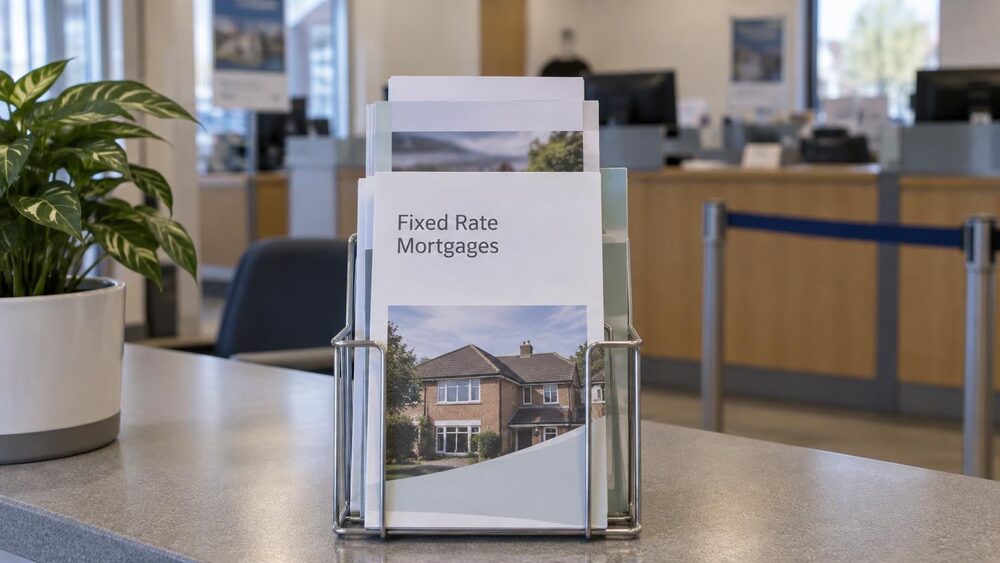
When the Bank of England changes Bank Rate, the effect on your mortgage depends entirely on which type of deal you have. If you have a fixed-rate mortgage, nothing happens: your payments stay the same until the fixed period ends. If you have a tracker, your rate moves in line with the change. If you are on your lender's standard variable rate (SVR) or a discount deal, your lender decides whether to pass the change on, and by how much.
The Bank of England states that raising or lowering Bank Rate mainly affects people with variable mortgages1. So the first question to answer is what kind of mortgage you have, and the second is what your lender's terms say about how quickly any change reaches your account.
What Bank Rate is and who sets it
Bank Rate is the single most important interest rate in the UK, and the Bank of England describes it as the core interest rate in the country, which it is its job to set7. It is sometimes called the "base rate", and it is the rate the Bank of England charges other banks and lenders when they borrow from it. Because it shapes what it costs banks to fund themselves, it feeds through into the rates those banks charge and pay their own customers. StepChange explains that the Bank of England sets an interest base rate for the whole of the UK8, and the Bank itself notes that it sets the interest rate, which impacts the cost of getting a mortgage9.
The rate is decided by the Bank's Monetary Policy Committee (MPC), a group that votes on Bank Rate usually eight times a year2, which works out as roughly every six weeks10. The MPC's aim is to keep inflation as close as possible to the government's target of 2%2. When inflation is above target, the MPC tends to raise Bank Rate to cool spending; when inflation is at or below target, it tends to cut it. The committee does not have to change the rate at every meeting, and it often holds it unchanged. It can also act between scheduled meetings: in March 2020 it cut the rate because of the potential effects of the coronavirus on the economy2.
Recent history shows how much the rate can move. Official statistics record that the Bank increased Bank Rate 13 times, from 0.25% to 5.25%, between January 2022 and August 202311. It was then cut four times during 2024, each time by 0.25 percentage points, in February, May, August and December2. Looking ahead, the Bank has indicated it will continue to slowly reduce the rate in 2026, with it possibly stabilising by the end of the year12. You can read more in the guide to the Monetary Policy Committee and the history of past Bank Rate changes.
Bank Rate changes mainly affect variable mortgages
The Bank of England is explicit about who feels a Bank Rate change: raising or lowering it mainly affects people with variable mortgages1. If your loan repayments are fixed, a base rate change does not touch them; if you are borrowing on a variable rate, your repayments may change when the bank's rate changes13.
There are three main kinds of variable mortgage, and they respond to Bank Rate in different ways:
| Mortgage type | What it follows | What a Bank Rate change does |
|---|---|---|
| Tracker | Bank Rate plus a set margin | Your rate moves in line with the change3 |
| Standard variable rate (SVR) | Your lender's own rate | No automatic change; the lender reviews and decides5 |
| Discount | Your lender's SVR minus a fixed margin | Moves only if and when the lender moves its SVR14 |
A fixed-rate mortgage sits outside this table entirely: the fixed part of your mortgage is not affected by any change in the Bank of England base rate during the fixed period3. Barclays puts the same point in terms of timing: a change will not affect your payments immediately, but probably will when your fixed period ends and your mortgage moves to the variable rate shown in your mortgage documents15.
Tracker mortgages: payments follow Bank Rate directly
A tracker mortgage is a home loan where the interest rate you pay is based on an external rate, usually the Bank of England base rate, plus a set percentage16. The Financial Ombudsman Service describes them simply: tracker mortgages follow, or track, the Bank of England's base rate4. With a tracker, the interest rate exactly follows the Bank of England base rate plus a specified percentage17. So if the base rate is 3.75% and your tracker is "base rate plus 1%", you pay 4.75%18.
Because the link is direct, the timing is more predictable than on an SVR. Virgin Money states that as tracker mortgages are directly linked to the Bank of England base rate, the interest rate on your mortgage will always move in line with any changes3. Barclays says the same for its tracker customers: it is likely the interest rate you pay will move in line with the base rate change15. The Building Societies Association explains that the lender sets the interest rate initially, and this can be set to be equal to, above or below Bank Rate; the rate then tracks, meaning it moves up or down with, changes to Bank Rate19.
Trackers usually run for an introductory deal period, most commonly two years14, though lifetime trackers, which track above the base rate for the whole mortgage term, also exist20. One thing to check in your terms is a collar. Some tracker mortgages come with a collar, which means the rate can only fall to a set level, so a Bank Rate cut below that point would not reduce your payments further14.
When Bank Rate falls, tracker borrowers feel it fastest. UK Finance estimated that borrowers on a variable or tracker rate would on average save between £25 and £40 a month on their monthly mortgage payment following a base rate cut21. How much any individual household saves depends on the size of the loan, the remaining term and the size of the cut. For more on how these deals compare with fixes, see the guide to mortgages.
Standard variable rate: the lender decides, not the Bank
The standard variable rate is the rate of interest usually charged once a fixed rate or tracker period ends, and it is set by the mortgage lender, not directly affected by Bank of England base rate changes22. StepChange puts the position plainly: the rates do not have to follow changes in the base rate set by the Bank of England, but they are often influenced by it, and lenders set their own rates, so they are not all the same23.
The base rate is only one of several factors a lender takes into account when setting its SVR, alongside its own cost of borrowing, its risk management and its internal targets5. A lender can raise or lower its SVR by any amount and at any time5. Some lenders might have an SVR "ceiling", guaranteeing that their SVR will not rise more than a certain percentage above the Bank of England's base rate5, and there may also be a collar, meaning the interest rate cannot fall below a certain percentage5.
Lenders' own terms show the range of approaches. first direct states that its SVR is not linked to the Bank of England base rate, or anything else; the rate is set by first direct24. HSBC states there is no automatic change to its standard variable rates because they are not directly linked to the base rate, but it does review them whenever the base rate changes25. Principality describes the SVR as a variable interest rate based on the Bank of England base rate, and notes that if the base rate changes, it may affect the SVR and your mortgage repayments would change26. Metro Bank says a variable rate account, including a mortgage on an SVR, is influenced by base rate and will most likely be affected by a change27.
In practice, when the base rate goes up, lenders often increase their SVR in the days and weeks after5. When the base rate goes down, there is no obligation to follow, which is one reason SVRs tend to sit significantly higher than the rates on other types of mortgage5. An SVR mortgage is also known as a reversion-rate mortgage, because it is the rate you revert to when a deal ends5.
Discount mortgages move with the lender's SVR
A discount mortgage is a variable-rate deal that charges your lender's SVR minus a fixed margin14. The Financial Ombudsman Service describes them the same way: discount mortgages charge your lender's SVR minus a fixed percentage4. Nottingham Building Society summarises it as a set discount off your lender's standard variable rate for a fixed period28.
The arithmetic is straightforward. If your lender's SVR is 5% and your deal charges the SVR minus 2%, you pay a rate of 3%18. If the lender's SVR is 5% and they offer a mortgage with a 3% discount, your initial interest rate is 2%29.
The catch is that your discounted rate tracks your lender's SVR, which can change by any amount and at any time, meaning your monthly repayments might not be the same each month29. A discount deal gives you no direct link to Bank Rate at all: you only benefit from a base rate cut if your lender chooses to cut its SVR. On the plus side, your rate will stay below your lender's SVR for the duration of your deal, and in certain economic circumstances you could be paying a very low interest rate29.
Collars can matter here too. In the worked example above, if there was a collar of 2%, even if the SVR later dropped to 3%, your rate would not go lower than 2%29. And when the discount period ends, your lender will usually transfer you onto its SVR automatically, which means your monthly repayments will increase29. Borrowers with large discounts may face a particularly large and sudden increase at that point, because the gap between the discounted rate and the SVR can be wide.
Fixed-rate mortgages are protected until the deal ends
A fixed-rate mortgage guarantees your rate for a set number of years14. The rate is set for an agreed period, often two or five years5, and borrowers most commonly take out two-year or five-year fixes, although three, seven, ten and even fifteen year terms are available14. During that period, even if interest rates change, your monthly payments will not be affected: they stay the same until the end of the fixed-rate period22.
Virgin Money states it directly: fixed rate mortgages are not affected by any change in the Bank of England base rate during the fixed rate period3. This protection works in both directions. If rates rise, you keep paying the old, lower rate. But if the lender's standard rate falls below your fixed rate, you lose out: you keep paying a higher rate than you would on a variable deal17.
The trade-off for that certainty is flexibility. Fixed deals usually have early repayment charges if you leave or overpay beyond an allowance during the fix, and they often carry arrangement fees. For home movers and first-time buyers, up-front fees of around £999 are common, while remortgagers are typically charged higher fees, with many close to £2,0006. The guide to fixed-rate mortgages covers these deals in more detail.
When your fixed rate ends: remortgage or move to the SVR
At the end of your fixed period, you need to remortgage. If you do not, you will be moved to your lender's standard variable rate, which is usually much more expensive14. StepChange describes the same outcome: you will usually be moved to a standard variable rate mortgage, and if you do not arrange another deal, your monthly payments could rise24. With average SVRs above 7%, remortgaging to another deal before the end of your fixed term matters unless you are happy to stay on the SVR2.
This is the moment when past Bank Rate changes finally reach a fixed-rate borrower. A rise that happened years earlier, while you were protected, is reflected in the variable rate you fall onto, and in the new fixed deals on offer at the time you remortgage. Barclays describes the mechanism: a base rate change will not affect your payments immediately, but probably will when your fixed period ends and your mortgage moves to the variable rate shown in your mortgage documents15.
The practical steps are simple and worth doing early:
- Check the date your fixed period ends, which is on your mortgage offer and annual statement.
- Start looking at new deals a few months before the end date, since many lenders let you book a rate ahead of time.
- Compare a new deal with your lender (a product transfer) against remortgaging to a different lender, as the fees and rates differ.
- If you do nothing, budget for the SVR, not your current payment.
The wider rate environment affects what you will be offered. The base rate was cut four times in 2024 and has fallen further since, and the Bank of England has indicated it will continue to slowly reduce the rate in 2026, possibly stabilising by the end of the year12. Forecasts can change, and the Office for Budget Responsibility has projected the base rate stabilising in 202610. The guide to average mortgage interest shows how rates on new deals have moved over time.
Early repayment charges and overpayments when rates change
When rates move, borrowers often think about overpaying to shrink the debt faster, or about escaping a deal that no longer suits them. Both can trigger early repayment charges (ERCs). On five-year fixes, ERCs often start at around 5% of the balance in the first year, before reducing by 1% each year thereafter6. On a £200,000 mortgage with a five-year fix, that structure works out at 5% (£10,000) in year one, falling to 1% (£2,000) in year five6.
Most fixed-rate mortgages allow you to overpay up to 10% of the balance each year, either in regular overpayments or on an ad-hoc basis; overpaying more than that in a 12-month period may trigger an ERC6. Lloyds Bank tells its interest-only mortgage customers that early repayment charges may apply and to check if they are unsure whether these apply to their mortgage30.
SVRs are different on this point: SVR mortgages tend not to have an early repayment charge, which provides the flexibility to pay off your mortgage quicker or move to a new deal without a penalty5. That flexibility is one of the few advantages of the SVR, and it is worth knowing if you are between deals and deciding whether to fix again immediately.
Will my lender tell me if my payment is changing?
Yes, if your mortgage is affected. first direct states that if you are a customer whose mortgage is affected by a base rate change, it will always write to you to confirm your new interest rate and monthly mortgage payments24. HSBC says the same for its customers: it will confirm the new interest rate and monthly mortgage payments in writing22.
The notice you get depends on the type of rate you have. On a tracker, the letter confirms a change that follows the base rate move. On an SVR, the letter follows the lender's own decision, which may come days or weeks after the Bank of England's announcement, and may be a different size from the base rate change, or nothing at all.
One group should watch for a different letter. HSBC notes that the Department for Work and Pensions (DWP) calculates the support some customers receive for their mortgage, and the DWP will let them know if there is any change following a base rate change; customers must also tell the DWP if their standard monthly payments change25. If you receive support for mortgage interest, a rate change affects both your payment and the support that helps cover it.
If you believe your lender has applied a rate incorrectly, or has not followed its own terms, you can complain to the lender and then to the Financial Ombudsman Service, which handles complaints about the interest rates applied to mortgages4.
If higher payments become hard to afford
A rate rise that pushes a variable payment up, or a fixed deal ending onto a high SVR, can make a mortgage hard to afford. The first step is to talk to the lender early, before payments are missed, because lenders have committed to options under the Mortgage Charter for borrowers who are up to date but worried about future payments. These include switching your mortgage to interest only for up to six months, which will not impact your credit file31.
Other options exist depending on circumstances. A payment holiday is possible in some situations, but it is not free money: after the break, your monthly payment rises to include the missed payments and extra interest, and the new amount depends on how long is left of your mortgage term32.
Free, impartial help is available. StepChange offers free debt advice and has a mortgage checklist for people worried about their payments, and the debt section of this site explains the options in full at debt help and your rights. The Financial Ombudsman Service also handles complaints from borrowers in financial difficulty with their mortgage31.
Fixed or tracker: how each one behaves when rates rise or fall
Choosing between a fix and a tracker is a choice about how much rate movement you want to be exposed to. A fixed-rate mortgage guarantees that the interest rate will not change for a stated period, say two to five years17. A tracker is a variable rate mortgage usually linked to the Bank of England base rate, which means your monthly payments can go up and down22.
| Fixed rate | Tracker | |
|---|---|---|
| When Bank Rate rises | No change during the fix3 | Rate and payment rise3 |
| When Bank Rate falls | No change during the fix3 | Rate and payment fall, unless a collar applies14 |
| Certainty | Payment known for the whole fix22 | Payment moves with each MPC decision |
| Leaving early | ERCs often apply6 | ERCs during the deal period; SVR has none5 |
The right choice depends on circumstances rather than on any rule. A fix tends to suit someone whose budget has no room for a rise, or who believes rates are more likely to go up than down while the deal runs. A tracker tends to suit someone who can absorb a rise and who wants to benefit automatically from cuts, without waiting for a lender to decide. Trackers have recently offered borrowers the lowest rates, though only marginally below 4%33, while fixes carry the certainty of an unchanged payment and fees that can be close to £2,000 on the best remortgage deals6.
Neither choice protects against everything. A fix ends, and the rate you are offered next time reflects whatever Bank Rate has done in the meantime. A tracker can be capped by a collar on the way down14, and its payments can rise at every MPC decision. The guide to mortgage types sets out the full range of deals, and the section on Bank Rate, inflation and the UK economy explains what drives the rate itself.
Sources33 cited
- What do I need to know about debt? Bank of England, 2025-08-19
- Bank of England base rate and your mortgage Which?
- Bank of England base rate Virgin Money, 2026
- Interest rates applied to mortgages Financial Ombudsman Service, 2026-09-26
- Standard variable rate mortgages Which?, 2026-04-02
- Fixed-rate mortgages Which?, 2026-04-02
- What are interest rates? Bank of England
- Understanding interest charges StepChange Debt Charity
- What's the Bank of England's role in the housing market? Bank of England
- Should you consider a product transfer for your next mortgage? Which?, 2025-07-31
- Households' finances and saving, UK: 2020 to 2024 Office for National Statistics
- What to do if you need to remortgage Which?, 2026-02-18
- Your business and household budget Business Debtline, 2026-09-26
- Mortgage types explained Which?, 2026-04-02
- Base rate information Barclays, 2026
- Tracker mortgages Which?, 2026-04-02
- Mortgage repayment options Shelter Cymru, 2026-08-28
- Mortgage types explained Which?, 2026-04-02
- About mortgages Building Societies Association, 2023-01-19
- Types of mortgage explained Santander, 2026-09-25
- Household Finance Review 2020 Q1 UK Finance, 2020
- Help with mortgage payments as living costs rise HSBC UK, 2026
- Mortgage term ending StepChange Debt Charity, 2026-09-25
- Cost of living support: more options first direct, 2026
- Bank of England base rate HSBC UK, 2026
- What is SVR? Principality Building Society, 2026-09-26
- What is the Bank of England base rate and how might it impact you? Metro Bank, 2026-09-25
- Repayment mortgages Nottingham Building Society, 2026-09-26
- Discount mortgages Which?, 2026-04-02
- Interest only mortgages: make a plan Lloyds Bank, 2026-09-27
- Financial difficulties with mortgages Financial Ombudsman Service, 2023-06-30
- Payment holiday for debt repayments StepChange Debt Charity, 2026-09-25
- Should you choose a 35 or 40 year mortgage? Which?, 2026




 MoneyHelperFree, impartial money and pensions guidance, set up by government
 Citizens AdviceFree advice on money, consumer and legal problems in England and Wales
 GOV.UKOfficial information on tax, benefits and government services
 StepChangeFree debt advice and solutions from a charity
 FSCSProtects your money if a bank, insurer or investment firm fails