A Dodl pension is an app-based personal pension from AJ Bell. It is a defined contribution pot: the money you pay in, plus any employer contributions and investment growth, is what you eventually draw on. You choose from a short list of ready-made investment plans rather than picking individual shares or funds, and you run the whole thing from a phone app.
It sits in the same family as other personal pensions. The pension provider may charge you for starting and running your pension, and usually takes a percentage from your pension fund1. That is how Dodl's own charge works too, alongside the ongoing charges of whatever investments you hold. The exact figures change, so Dodl's own website carries today's charges.
This page covers what the product is, who it tends to suit, how the charges are worked out, how to open one or move an old pension across, and what happens if something goes wrong. It does not give rates, because the site carries none.
What it is and who it is for
A personal pension is a defined contribution scheme: a pension pot based on what you or your employer paid in1. Dodl is one of these, wrapped in an app. You open it yourself, pay in what you choose, and pick from a short menu of investment plans. There is no employer running it for you and no salary-linked promise at the end.
That makes it different from a workplace scheme. A defined contribution workplace scheme also builds a pot, but the employer chooses the provider and often the default fund, and the scheme provider investing your pension may charge an amount based on the value of the pension5. A Dodl pension is yours to run, and you carry the investment decisions.
It tends to suit someone who wants a pension they can check and top up from a phone, who is happy with a small set of ready-made plans, and who does not want to research funds. It suits less well anyone who wants to hold individual shares, investment trusts or a wide fund range: that is what a SIPP is for, and it usually costs more and asks more of you. If you are comparing the two, SIPP or standard personal plan: how they differ sets out the trade-offs.
Dodl is part of AJ Bell, so the brand page for AJ Bell covers the wider business. Dodl also offers a Lifetime ISA, covered separately at Dodl Investment Lifetime ISA.
How it works
You pay money in, it buys investments, and the pot grows or shrinks with them. Because it is a defined contribution scheme, there is no guaranteed income at the end: what you get depends on what you paid in and how the investments performed1.
The investment side is deliberately narrow. Rather than a full fund supermarket, Dodl offers a set of ready-made plans, so the choice is which plan, not which individual holdings. That keeps the running simple, but it also means you cannot fine-tune the portfolio the way you could on a full platform.
When you reach the point of taking money out, the same rules apply as to any personal pension. You can normally take 25 per cent of your pot as a tax-free lump sum, and the rest becomes taxable income when you draw it. Pension Wise, the free government guidance service, sets out the two main routes: taking the whole pot, where the first 25 per cent is usually tax free and the rest is taxed as income6, or adjustable income, where you leave the money invested and take amounts as and when you need them7. Both have tax consequences, and taking a large amount in one go can push you into a higher tax band for that year.
How the fees and charges work
Dodl's charge is a percentage of the value of your pension, taken from the fund. That is the standard shape for a personal pension: the provider may charge you for starting and running your pension, and usually takes a percentage from your pension fund1. On top of that, the investments themselves carry ongoing charges, which come out of the fund rather than being billed separately.
Two things follow from a percentage charge. First, the cash amount rises as your pot grows, even if the rate never changes. Second, it is charged whether or not the investments do well, so a flat or falling market does not reduce it.
The exact percentages change, so check Dodl's own website for today's figures. What matters for comparing is the total: the platform charge plus the investment charges, added together. A low headline platform charge with expensive investments can cost more than a slightly higher platform charge with cheap ones.
There is also a withdrawal fee to watch for on some pensions. In a flexi-access drawdown fund, you pay a fee to your pension provider for each withdrawal2. If you plan to take money out in small, regular amounts, per-withdrawal charges add up quickly, so it is worth checking how Dodl handles this before you draw.
Awareness of charges is low across the market. Only 24 per cent of those currently contributing to a defined contribution pension have high levels of engagement with it, and 57 per cent are not aware that fees are charged on defined contribution pensions at all2. Checking the total charge once a year is a reasonable habit.
Who can apply and how to apply
You open a Dodl pension yourself, in the app, in your own name. There is no employer involvement and no eligibility test beyond the usual ones for a personal pension: you need to be a UK resident for tax relief, and you need to be old enough to hold one.
The minimum you can open with is not settled in the documents available here: one source gives £100 and another gives £25, and the two have not been reconciled. Check Dodl's own website for the current figure before you plan around it.
Once open, you can pay in regular amounts or one-off sums. Tax relief is added at your marginal rate, within the annual allowance. The lifetime allowance was abolished, and the measure applies to all members of registered pension schemes8, but the annual allowance still caps how much you can pay in each year and still get relief. If you are a higher or additional rate taxpayer, the extra relief is claimed through self assessment rather than added automatically.
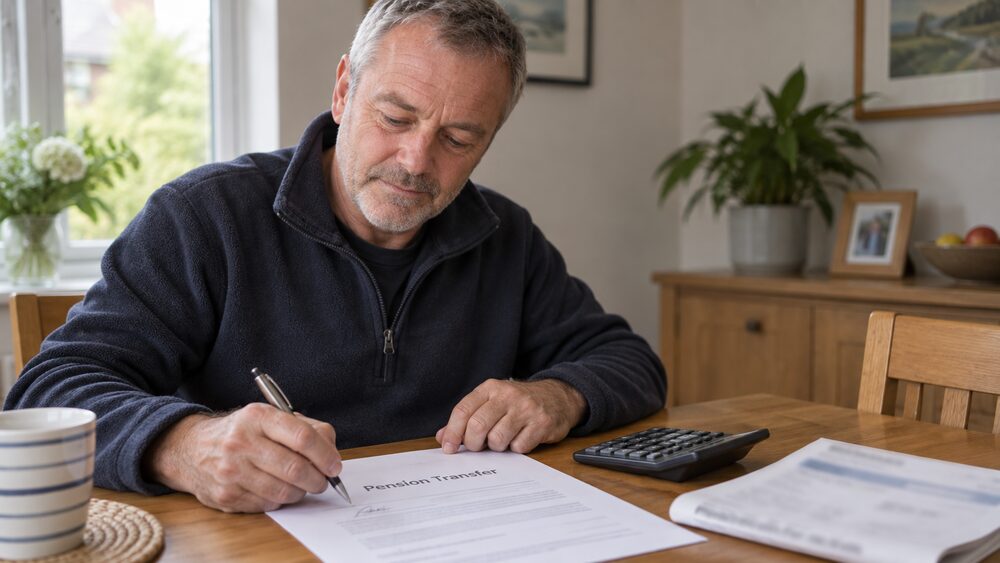
If you are moving an existing pot rather than starting fresh, the process is a transfer. Transferring pensions and investments to another provider walks through it. Before you move anything, check whether the old scheme charges an exit fee, and whether it carries any guarantee you would lose.
Moving an old pension across
Most old workplace pots and personal pensions are defined contribution schemes, and those can usually be transferred. The mechanics are the same as any provider-to-provider move: the new provider requests the transfer, the old one pays out, and the money buys investments in the new plan.
Defined benefit pensions are a different matter. These offer a regular pension income guaranteed by a sponsor, usually the employer, linked to salary and length of service9. Transferring out of one means giving up that guarantee for a pot you invest yourself. Anyone looking to transfer benefits out of a defined benefit scheme is sent a warning letter signed by The Pensions Regulator, the Financial Conduct Authority and the Money and Pensions Service, saying that transferring out is unlikely to be in your best long-term interest10. If the value is £30,000 or more, you must take regulated advice before the transfer can go ahead2.
There is a further risk worth naming: pension scams. A cold call or a message offering to "review" or "unlock" your pension is a warning sign, and the losses are usually permanent. Pension scams: warning signs, transfers and getting help covers how they work.
How your money is protected
Two separate things are protected, and it helps to keep them apart.
The first is the money itself. Your investments are held separately from AJ Bell's own assets, so if the firm failed, the investments would not be used to pay its creditors. Pension companies should ringfence your pension savings, which means that if they were to go bust, your pension would be safe3. Money and investments you have in pension accounts are held subject to the trust deed and rules of the pension scheme4.
The second is the advice. If you were advised to transfer out of a defined benefit pension and that advice was bad, the Financial Services Compensation Scheme can cover the advice you received to transfer out of your pension, though its protection does not include defined benefit pension schemes themselves, which are protected by the Pension Protection Fund3. The Pension Protection Fund is a statutory fund protecting members of defined benefit schemes if the scheme's sponsor becomes insolvent11, and it protects millions of people in the UK who are members of defined benefit pension schemes3. It does not cover personal pensions like Dodl.
What none of this covers is investment performance. The value of your pot can fall as well as rise, and no compensation scheme makes good a market loss. There is also a separate protection worth knowing about: money held in your pension usually cannot be claimed by anyone you owe money to, even if you are declared bankrupt or in a formal debt repayment plan, but money you have taken out can be6.
Problems, complaints and getting help
Start with Dodl. A complaint about how the pension is run, the charges, or a transfer goes to the provider first, and it has a set time to give you a final answer.
If you are not satisfied with that answer, the Financial Ombudsman Service is the next step. It is free and independent, and it can look at complaints about personal pensions4. It also handles complaints about group personal pensions4. The service publishes quarterly complaints data, and personal pensions accounted for 931 complaints opened in the first quarter of 2026/279.
The Pensions Ombudsman is a separate body, and it is easy to confuse the two. It can look at complaints about the administration of personal and occupational pension schemes11, and it deals with complaints and disputes concerning the administration or management of occupational and personal pension schemes12. Before applying, you must first make a formal complaint directly with the relevant party, such as the trustees or manager of your pension scheme, the administrator or an employer13. Complaints about the State Pension, including the contracted-out deduction, go to the Department for Work and Pensions instead14.
The most common topics of new pension complaints are contributions, retirement benefits and calculation of benefits15. The Pensions Ombudsman also publishes member guidance covering how to complain about a pension problem, common complaint topics, who can complain, and what it can and cannot do16. If your concern is about a workplace scheme rather than a personal pension, you can complain to MoneyHelper or the Pensions Ombudsman about how it is managed17, and The Pensions Regulator takes reports of concerns about workplace pensions online, by phone, email or post10.
For free, impartial help before any of this, Pension Wise offers guidance on pension options, and MoneyHelper covers the wider ground. Neither will tell you what to do, but both will explain what your choices are.
Sources17 cited
- Understanding personal pensions nidirect, 2025
- Protecting pension savers: proposals to amend the transfer regulations GOV.UK, 2026
- DB transfers Financial Services Compensation Scheme, 2026
- Pensions organised by employers Financial Ombudsman Service, 2026
- Types of workplace pension schemes nidirect, 2025
- Take your whole pot Pension Wise, 2026
- Adjustable income Pension Wise, 2026
- Abolition of lifetime allowance and increases to pension tax limits GOV.UK, 2023
- Quarterly complaints data Q1 2026/27 Financial Ombudsman Service, 2026
- Report concerns about your workplace pension The Pensions Regulator, 2026
- Defined benefit pension transfers Financial Services Compensation Scheme, 2026
- Signposting to The Pensions Ombudsman The Pensions Ombudsman, 2023
- How we handle complaints The Pensions Ombudsman, 2026
- What we can and cannot do The Pensions Ombudsman, 2026
- Year of record productivity and growing demand The Pensions Ombudsman, 31 March 2026
- Pensions Ombudsman promotes member guidance The Pensions Ombudsman, 14 September 2026
- Safety of workplace pension schemes nidirect, 2025

















 Pension WiseFree guidance on your options for a defined contribution pension, from age 50
 FSCSProtects your money if a bank, insurer or investment firm fails
 GOV.UKOfficial information on tax, benefits and government services