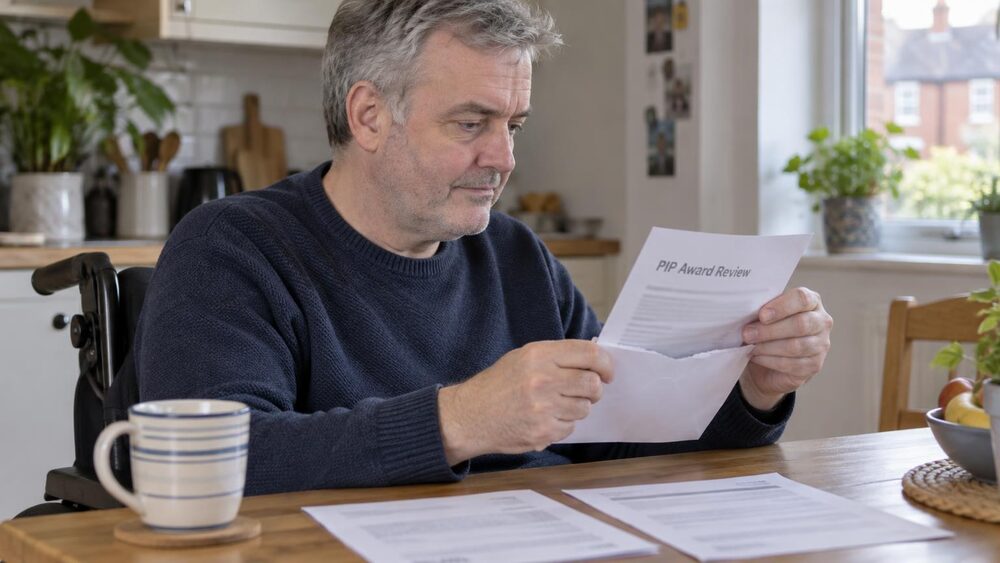
The Department for Work and Pensions has applied its changed Personal Independence Payment award durations to the existing caseload from 16 June 2026, according to its official statistics to April 2026, published on 16 June 20261. The same release reports that since April 2026 most new awards to people aged 25 or over are for four years with a review after three years1.
The department's figures cover Personal Independence Payment (PIP) claims in England and Wales. As at 30 April 2026 there were 4 million claimants entitled to PIP, a 2% increase on the number as at 31 January 2026. Of these, 3.3 million (83%) were of working age and 680,000 (17%) were of State Pension Age. Some 37% received the highest level of award, the same level as in January 20261.
In the quarter ending April 2026 there were 250,000 registrations and 240,000 clearances for new claims, 38,000 changes of circumstance reported and 31,000 cleared, 24,000 registrations and 23,000 clearances for Disability Living Allowance reassessments, 130,000 planned award reviews registered and 120,000 cleared, and 74,000 mandatory reconsiderations registered and 91,000 cleared1.
Over the five years from May 2021 to April 2026, 43% of normal rules new claims, 72% of normal rules DLA reassessment claims and 99% of Special Rules for End of Life claims received an award, excluding withdrawn claims. Some 78% of planned award reviews resulted in an increase or no change to the level of award, and 28% of mandatory reconsiderations cleared, excluding withdrawn, led to a change in award1.
"Since April 2026 most new awards to people aged 25 or over will be for 4 years with a review after 3 years."
"The changes will also apply to the existing PIP caseload from 16 June 2026."
A later report on the statistics to July 2026 states that most new awards for people aged 25 or over made since April 2026 are for four years, with the review taking place after three years, and that subsequent awards following a successful review will generally last six years, with another review after five years. It gives the date of the caseload change as 16 June2. The April 2026 release does not set out the six-year subsequent award period1.
| Award duration change | Detail |
|---|---|
| New awards, age 25 or over, since April 2026 | 4 years, review after 3 years1 |
| Existing PIP caseload, from 16 June 2026 | Same change applies1 |
The April 2026 release does not state how many existing claimants are affected by the change to award durations, and no figure for that group has been reported1.
Why it matters for households
Award duration determines when the department next looks at entitlement, so the change affects how often claimants in England and Wales complete a review. The department says people continue receiving PIP while their claim is being reviewed, that claimants are sent a PIP review form and are asked to return it, along with any supporting information they have not previously provided, within one month, and that they could be invited to an assessment, which can take place in person, over the phone or by video call2. Award types and review periods will continue to be decided on an individual basis, taking into account a claimant's needs and the likelihood of those needs changing2.
PIP in Scotland has been replaced by Adult Disability Payment, with Social Security Scotland completing the transfer of existing Scottish PIP claimants to the devolved benefit by the end of June 20251. The April 2026 statistics therefore cover England and Wales, plus abroad or unknown cases1.
The April 2026 release gives different measures over a different period, including that 34% of completed reconsiderations against initial decisions following an assessment went on to lodge an appeal and 3% of initial decisions were overturned at a tribunal hearing1.
What happens next
The next release of the PIP statistics is scheduled for 15 September 20261.
 Turn2usFree benefits calculator and grants search from a charity
 Citizens AdviceFree advice on money, consumer and legal problems in England and Wales
 GOV.UKOfficial information on tax, benefits and government services
 MoneyHelperFree, impartial money and pensions guidance, set up by government