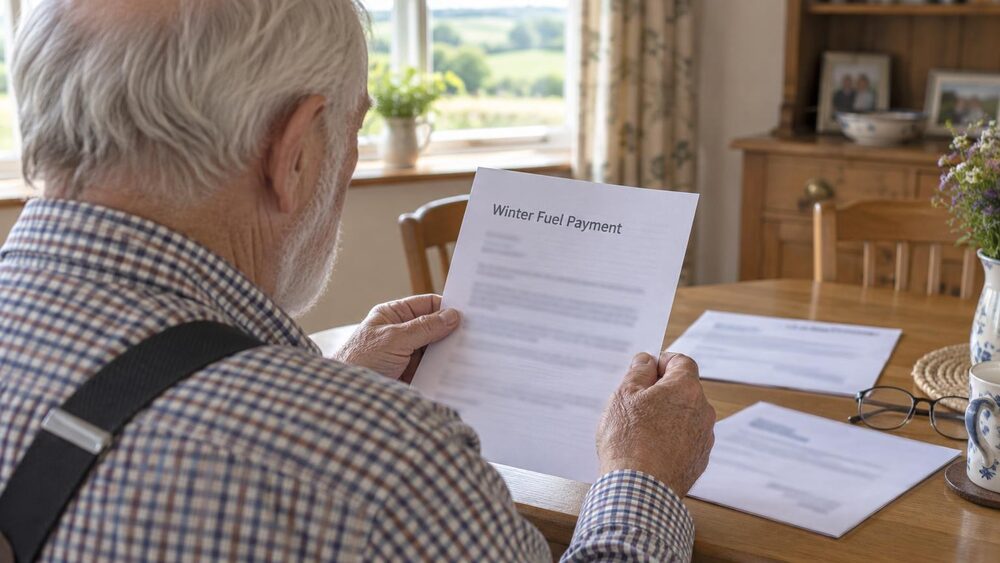
A Tax Information and Impact Note covering the Winter Fuel Payment Charge was published on 26 November 2025 alongside clause 55 and Schedule 10 to the Finance (No. 2) Bill 20251. The note accompanies the measure that created a new income tax charge equal to the full value of a Winter Fuel Payment received by pensioners with total income over £35,000, applying for the 2025-26 and subsequent tax years1.
The charge was legislated for through paragraph 1 of Schedule 10 to the Finance Act 2026, which amended Part 10 of the Income Tax (Earnings and Pensions) Act 20031. A separate statutory instrument, the Income Tax (Pay As You Earn) (Amendment No. 2) Regulations 2026 (2026 No. 610), amends the Income Tax (Pay As You Earn) Regulations 2003 to enable HMRC to determine an individual's tax code for the purpose of collecting the charge1. The instrument inserts a new regulation 14BA, which enables HMRC to determine a tax code to secure, through PAYE, the recovery of income tax payable and the repayment of amounts overpaid in respect of the Winter Fuel Payment Charge for a tax year1. Its extent and territorial application are the United Kingdom1.
The amendment aligns the treatment of the Winter Fuel Payment Charge with that of the High Income Child Benefit Charge, for which the PAYE Regulations already provide for collection through an individual's tax code during the tax year1. Before the instrument, the PAYE Regulations contained no provision enabling HMRC to determine a tax code to collect income tax arising from the charge in the tax year to which it relates; the charge would generally have been collected through Self Assessment or through PAYE coding adjustments made after the end of the relevant tax year1. An individual may object to a tax code adjustment by contacting HMRC or by making a formal objection under regulation 18 of the PAYE Regulations1.
"This instrument amends the PAYE Regulations by inserting a new regulation 14BA. That provision enables HMRC to determine an individual's tax code to secure, through PAYE, the recovery of income tax payable, and the repayment of amounts overpaid in respect of the Winter Fuel Payment Charge for a tax year."
No formal consultation was undertaken for the instrument1. The explanatory memorandum states there is no, or no significant, impact on business, charities or voluntary bodies because the instrument applies to individual PAYE customers, and that the legislation does not impact small or micro businesses1. It also states there is no, or no significant, impact on the public sector on the same basis1. The instrument does not include a statutory review clause because, in accordance with the requirements of the Small Business, Enterprise and Employment Act 2015, it is made in relation to the imposition of a tax, duty, levy or other charge1. As it is subject to negative procedure and does not amend primary legislation, no statement is required1.
Why it matters for households
The charge applies to pensioners whose total income is over £35,000 and equals the full value of the Winter Fuel Payment received, for 2025-26 and subsequent tax years1. The practical change described in the instrument is how the charge is collected: through an individual's PAYE tax code during the tax year in which the payment is made, rather than through Self Assessment or a coding adjustment after the tax year ends1. The explanatory memorandum states the £35,000 threshold is broadly in line with average earnings and well above the income level of pensioners in poverty1. HMRC guidance on the collection of Winter Fuel Payment liabilities through PAYE tax code adjustments has been published on the GOV.UK website1. The memorandum says HMRC will monitor the measure through its compliance and reporting systems, including PAYE and Self Assessment data, and will track opt-out rates and behavioural responses1.
What happens next
The instrument is subject to negative procedure1. The memorandum states the approach to monitoring is through HMRC's compliance and reporting systems, with opt-out rates and behavioural responses tracked, and that HMRC will use that data to assess the operation of the measure and keep its effectiveness under review1. No commencement date for the PAYE amendment is given in the document.
Sources1 cited
- The Income Tax (Pay As You Earn) (Amendment No. 2) Regulations 2026 legislation.gov.uk
 GOV.UKOfficial information on tax, benefits and government services
 MoneyHelperFree, impartial money and pensions guidance, set up by government
 Citizens AdviceFree advice on money, consumer and legal problems in England and Wales
 Turn2usFree benefits calculator and grants search from a charity
 Citizens Advice ScotlandFree advice across Scotland